
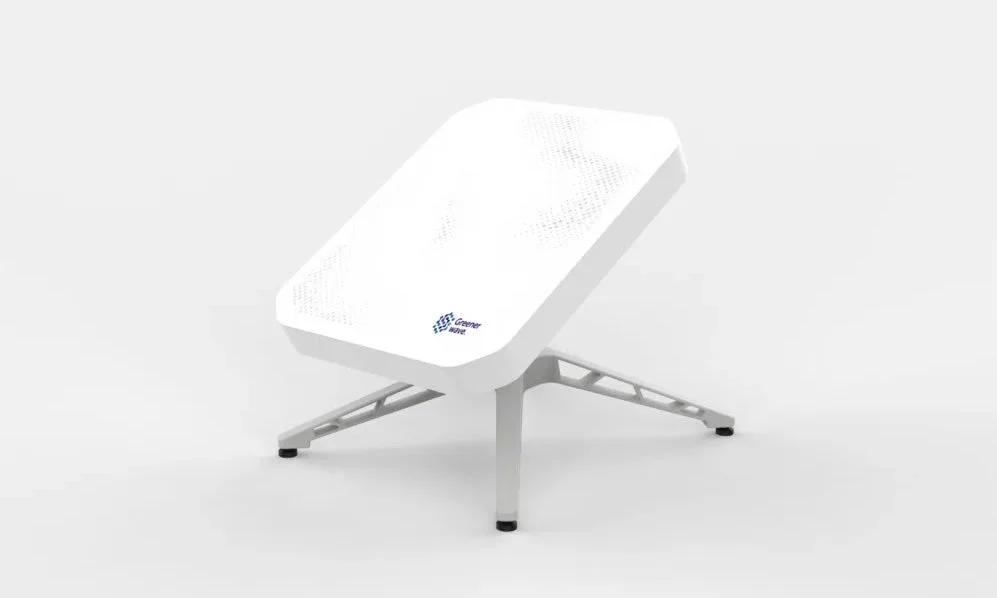

In a move set to significantly bolster the European Union’s strategic autonomy in space communications, Telespazio France and the innovative hardware developer Greenerwave have announced a comprehensive distribution and integration agreement. Under the terms of this partnership, Telespazio France will become a primary distributor of Greenerwave’s cutting-edge multi-orbit satellite terminals, specifically targeting the high-stakes government, defense, and security sectors across France, the United Kingdom, and the broader European continent. This collaboration marks a pivotal shift in the European satcom landscape, as it seeks to marry agile, low-power terminal technology with the robust infrastructure and market reach of one of the world’s leading space services providers.
The agreement focuses on the deployment of Greenerwave’s proprietary terminal technology, which is designed to seamlessly transition between Geostationary Orbit (GEO) and Low-Earth Orbit (LEO) constellations. By integrating these terminals into its existing service portfolio, Telespazio France aims to provide institutional users with a resilient, "always-on" connectivity solution that can withstand the rigors of modern electronic warfare and the logistical challenges of remote operations. The partnership comes at a time when the demand for sovereign satellite solutions is peaking, driven by geopolitical instability and the rapid evolution of digital battlefield requirements.
Technological Innovation: The Greenerwave Metasurface Advantage
At the heart of this agreement lies Greenerwave’s unique approach to antenna design. Unlike traditional phased-array antennas, which often rely on complex, power-hungry active electronic components to steer beams, Greenerwave utilizes Reconfigurable Intelligent Surfaces (RIS). This technology employs "metasurfaces"—engineered materials composed of thousands of tiny elements that can manipulate electromagnetic waves in real-time.
For the defense sector, the benefits of this technology are manifold. First, Greenerwave’s terminals are characterized by significantly lower power consumption compared to conventional Electronically Steered Antennas (ESAs). In field operations where power is a finite and precious resource, the ability to maintain high-throughput LEO and GEO links without draining mobile power units is a critical operational advantage. Second, the simplified architecture of metasurfaces allows for a flatter, more discreet profile, which is essential for vehicle-mounted applications and man-portable kits used by special forces.
The "multi-orbit" capability of these terminals is particularly relevant in the current technological climate. While GEO satellites offer stable, high-capacity broad-beam coverage, LEO constellations provide the low-latency communication necessary for real-time drone piloting, high-definition video streaming, and encrypted tactical data exchanges. The ability for a single Greenerwave terminal to switch between these orbits ensures that European defense forces remain connected even if one orbital layer is compromised or congested.
Chronology of Development and Strategic Alignment
The partnership between Telespazio and Greenerwave is the culmination of several years of intensive research and development within the French "DeepTech" ecosystem. Greenerwave, founded in 2016 as a spin-off from the Langevin Institute, initially focused on the fundamental physics of wave control. By 2020, the company had pivoted toward satellite communications, identifying a gap in the market for affordable and energy-efficient flat-panel antennas.
In 2022 and 2023, Greenerwave achieved several technical milestones, including successful field tests with various LEO constellation operators. These tests demonstrated the terminal’s ability to track fast-moving satellites across the sky without the need for mechanical gimbals, which are prone to failure in harsh environments. Simultaneously, Telespazio France—a joint venture between Leonardo (67%) and Thales (33%)—was looking to modernize its ground segment offerings to align with the European Commission’s IRIS² (Infrastructure for Resilience, Interconnectivity and Security by Satellite) initiative.
The formalization of this agreement in mid-2024 serves as a strategic response to the growing dominance of non-European satellite providers. By securing a domestic supply chain for high-end user terminals, Telespazio and Greenerwave are ensuring that European defense agencies are not solely reliant on American or other foreign-controlled hardware, which may carry risks regarding data sovereignty and supply chain vulnerabilities.
Market Context and Supporting Data
The European defense satellite communications market is projected to experience a compound annual growth rate (CAGR) of over 7% through 2030. This growth is fueled by increased defense spending among NATO members and the European Union’s commitment to building a "Space Strategy for Security and Defense." According to industry analysts, the shift from legacy hardware to software-defined, multi-orbit terminals represents the fastest-growing sub-segment of the ground equipment market.
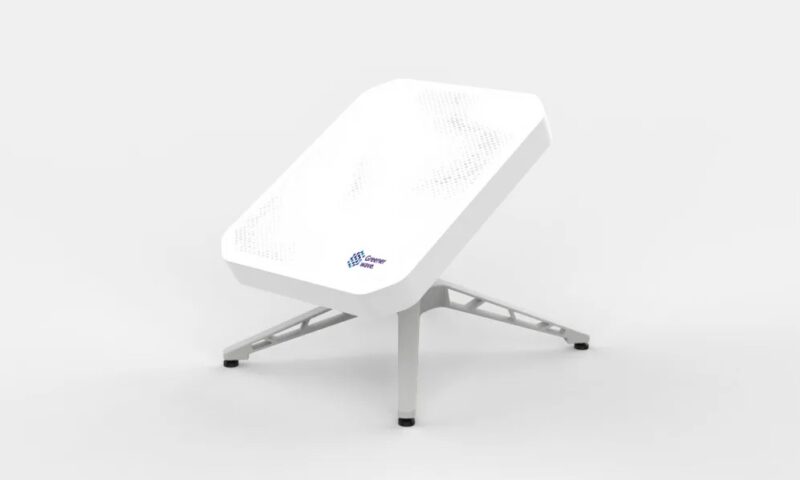
Data from recent defense procurement reports suggest that "resiliency" is now the number one priority for government satcom users. In the context of the conflict in Ukraine, the vulnerability of single-orbit systems to jamming and physical interference has become apparent. Consequently, the demand for terminals that can "hop" between different satellite frequencies (such as Ku-band and Ka-band) and different orbital altitudes has surged. Greenerwave’s technology addresses this specific need by offering a flexible aperture that can be reconfigured via software to meet changing mission parameters.
Furthermore, the European space sector is currently undergoing a period of "consolidation through partnership." As the EU prepares to launch its own multi-orbit constellation, IRIS², the requirement for high-performance user terminals that are "Made in Europe" has become a matter of policy. This agreement positions Greenerwave as a Tier-1 hardware provider and Telespazio as the vital link between innovation and end-user deployment.
Official Responses and Strategic Vision
Geoffroy Lerosey, CEO of Greenerwave, emphasized that the partnership is a transformative moment for the French startup. "This is a key milestone for Greenerwave as we scale the development and production of our terminals," Lerosey stated. "By combining our breakthrough technology with Telespazio’s strong presence in government and defense markets, we aim to provide sovereign, energy-efficient, and resilient connectivity solutions that meet the growing operational needs of institutional users. Strengthening Europe’s technological autonomy in satellite communications is at the core of our mission."
While Telespazio France has historically managed a wide array of satellite services, this agreement signals a deeper move into the hardware integration space. Sources close to the company indicate that Telespazio views the Greenerwave terminal as a "force multiplier" for their existing secure communication networks. By controlling both the service layer and a significant portion of the terminal layer, Telespazio can offer end-to-end encryption and performance guarantees that are difficult to achieve with third-party, off-the-shelf hardware.
The defense community has reacted positively to the news, noting that the "low-power" aspect of the Greenerwave terminal solves a long-standing issue for infantry units. Standard phased arrays often require dedicated cooling systems and heavy battery packs; if Greenerwave can deliver on its promise of high gain with low thermal and power footprints, it could redefine the "comms-on-the-move" (COTM) standard for European militaries.
Broader Impact and Future Implications
The implications of the Telespazio-Greenerwave deal extend beyond simple commercial distribution. This partnership is a bellwether for the future of the European space industry. It demonstrates a successful transition of academic research into a commercially viable defense product, a process often referred to as crossing the "valley of death" in innovation circles.
In the long term, this agreement will likely influence how the UK and European defense ministries approach their procurement strategies. Rather than purchasing "closed" systems from a single provider, there is a clear move toward "open architecture" solutions where hardware from companies like Greenerwave can be integrated into various network environments managed by operators like Telespazio.
Moreover, the focus on the UK market within this agreement is notable. Despite the geopolitical shifts following Brexit, the space and defense sectors remain deeply integrated. Telespazio’s commitment to distributing these terminals in the UK underscores the necessity of cross-border collaboration in addressing common security threats and maintaining a unified front in satellite technology.
As the deployment of LEO constellations continues to accelerate, the bottleneck is no longer the satellites themselves, but the ground terminals required to access them. Through this partnership, France and Europe are taking a significant step toward breaking that bottleneck, ensuring that their security forces are equipped with the most advanced, resilient, and sovereign technology available. The success of this rollout will be closely watched by global competitors, as it may provide a blueprint for how mid-sized space powers can compete with the massive industrial scale of the United States and China by focusing on high-efficiency, specialized hardware.
