
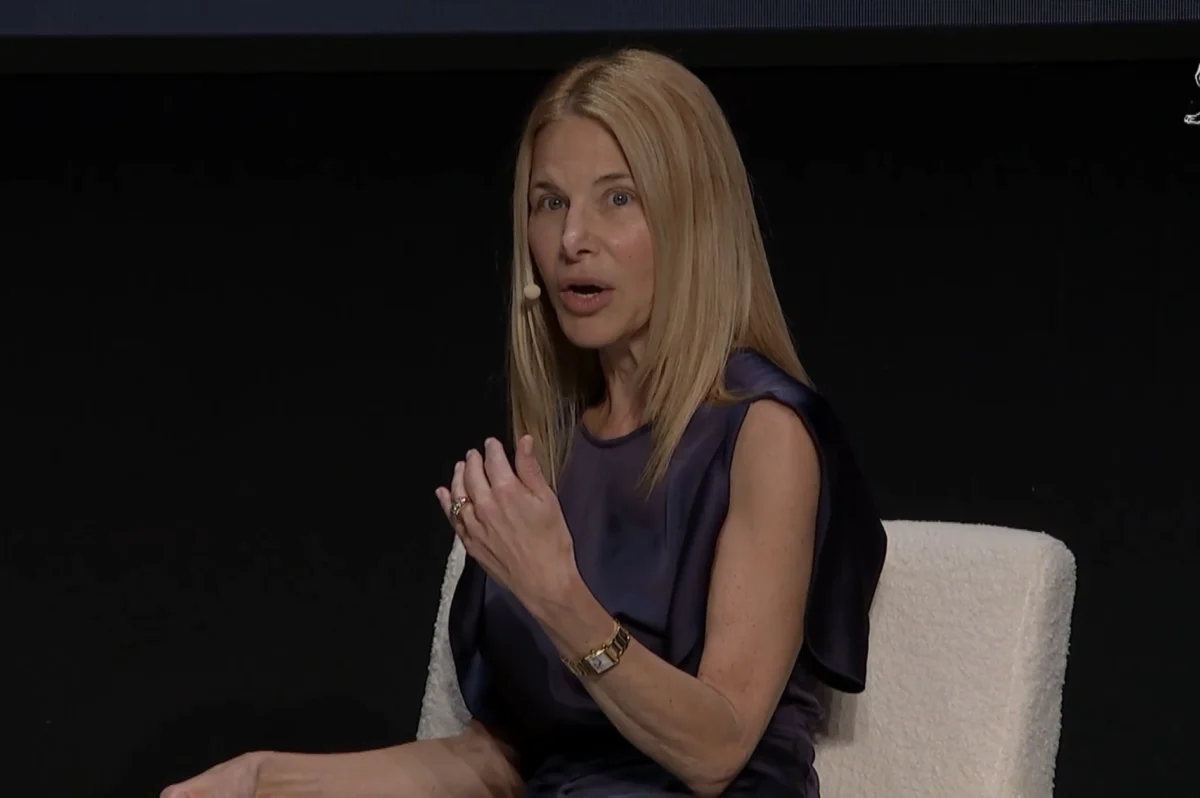

The landscape of generative artificial intelligence reached a significant turning point this week as OpenAI, the organization behind the ubiquitous ChatGPT, formally signaled its entry into the global advertising market. During the Cannes Lions International Festival of Creativity, an annual gathering often described as the "Oscars of the advertising industry," OpenAI’s Chief Revenue Officer Denise Dresser articulated a vision for a new commercial model. This move represents a stark departure from the company’s original stance on monetization, marking the transition from a purely subscription-based utility to a multifaceted media and technology powerhouse.
For much of its early history, OpenAI’s leadership maintained a cautious, if not outright hostile, posture toward traditional advertising. As recently as early 2024, CEO Sam Altman characterized advertising as a "last resort," citing a personal distaste for the aesthetic and structural influence ads exert on the internet. However, the economic realities of maintaining massive compute clusters and the pressure to deliver returns on a valuation exceeding $80 billion appear to have accelerated a strategic pivot. By April 2024, internal projections shared with investors suggested that OpenAI expects to generate approximately $2.5 billion in revenue this year, with a long-term goal of reaching $100 billion by 2030—a figure that would place it in the same echelon as legacy digital advertising giants like Meta and Alphabet.
A Strategic Pivot: From "Last Resort" to Core Revenue Stream
The timeline of OpenAI’s commercial evolution has moved at a pace consistent with the broader AI hype cycle. Following the late 2022 release of ChatGPT, the company focused primarily on its "Plus" subscription model and enterprise API sales. However, the cost of training and running Large Language Models (LLMs) is notoriously high, with some estimates suggesting daily operational costs in the millions of dollars.
The first concrete signs of an advertising strategy emerged in the spring of 2024, when the company began limited experimentation with sponsored content and brand integrations within the ChatGPT interface. Denise Dresser’s appearance at Cannes Lions serves as the official introduction of this strategy to the "Mad Men of Madison Avenue." Dresser, who joined OpenAI from Salesforce-owned Slack, is tasked with bridging the gap between cutting-edge research and the practical needs of the world’s largest brands.
In her address to industry leaders, Dresser framed the shift not as a compromise of values, but as a necessary step toward universal accessibility. "The mission of OpenAI is to bring intelligence to all of humanity, for good," Dresser stated. "One of the ways in which we do that is by scaling our business and providing an ads version of that, to make it more accessible."
Defining the "Intelligence Economy"
Central to OpenAI’s pitch is the concept of a shift from an "Awareness Economy" to an "Intelligence Economy." In the traditional digital ad model, success is often measured by impressions and "eyeballs"—the ability to interrupt a user’s flow to garner attention. Dresser argues that AI-native advertising will function differently, focusing on "utility" and "intent."
According to internal data cited by Dresser, approximately 20% of users currently interacting with ChatGPT are doing so with commercial intent. These users are not merely searching for information; they are looking to solve problems, plan trips, or research products. In this context, an advertisement is reimagined as a helpful suggestion within a collaborative dialogue rather than a disruptive banner.
"As users come in with deeper intent, thinking about the form and the way that you reach users with more usefulness in ads, that’s a new opportunity for all of us," Dresser explained. She suggested that ads in ChatGPT would feel "less attention-grabbing" and "more intelligent," integrating seamlessly into the conversation to provide immediate assistance at the point of need.
Case Studies in Generative Commerce: The Maybelline Example
To illustrate the potential of this new form factor, Dresser highlighted OpenAI’s collaboration with L’Oréal and its brand Maybelline. Currently, the brand utilizes AI on its own digital properties to allow customers to virtually "try on" products like mascara and lipstick through a camera interface. Dresser revealed plans to migrate these types of high-utility, interactive experiences directly into the ChatGPT environment.
This represents a move toward "agentic" advertising. Instead of clicking a link to visit a landing page, a user might ask ChatGPT for a makeup recommendation for a specific event. The AI could then offer a virtual try-on experience powered by a brand’s specific data, allowing the user to visualize the product and complete a purchase without leaving the chat flow. This "end-to-end" execution is a key component of what Dresser calls the "transformation of knowledge work."
The Role of Codex and Creative Automation
Beyond consumer-facing ads, OpenAI is pitching its technology as a foundational tool for the advertising agencies themselves. Dresser pointed to Codex—OpenAI’s model for code generation—as a transformative force for creative workflows. While Codex was initially designed to assist software developers, its application has expanded into the automation of complex marketing tasks.
Dresser detailed how agencies can use AI agents to automate the entire software development and campaign lifecycle. This includes:
- Research and Planning: Using LLMs to synthesize market trends and consumer data at scale.
- Execution and Iteration: Generating creative assets and variations for A/B testing in seconds.
- Go-to-Market Strategy: Automating the creation of client proposals, deliverables, and customer presentations.
By leveraging these tools, Dresser argues that marketers gain "empowerment and agency," allowing them to focus on high-level strategy while the AI handles the iterative and administrative burdens of campaign management.
Addressing User Experience and Market Feedback
The introduction of advertising into a tool used by millions for education, coding, and personal productivity carries significant risks regarding user backlash. OpenAI appears to be acutely aware of this, adopting a "slow and thoughtful" approach to deployment.
Dresser reported that the company is currently four months into an experimentation phase across seven countries. Early metrics are reportedly encouraging; OpenAI has seen a 50% reduction in the rate at which users close or dismiss ads, a metric the company uses to gauge "relevancy."
"We want to make sure that first of all, it is useful, is not intrusive, is helpful, and that it allows you to have this experience that is not invasive, but really within the flow of what you’re doing," Dresser emphasized. This feedback loop involves close collaboration with Chief Marketing Officers (CMOs) and advertising agencies to refine the "content and creative" that resonates best with the AI user base.
Broader Business Transformation: The Move to Exponentialism
Reflecting on the broader enterprise landscape, Dresser noted that many companies are currently in a state of "AI maturation." She observed that while the first wave of AI adoption focused on incremental productivity gains—such as hours saved on a specific task—the next wave must focus on "business transformation."
Dresser pointed out a significant disparity in the market: currently, 70% of the economic value generated by AI is concentrated in just 20% of companies. To bridge this gap, she argues that boards and CEOs must move beyond "incrementalism" toward "exponentialism." This involves re-imagining every workflow and industry through the lens of AI, rather than just adding AI as a layer on top of existing processes.
For enterprises looking to scale, Dresser outlined a maturity curve:
- AI Literacy: Ensuring every employee understands how to use the tools personally.
- Collaboration: Moving from individual productivity to sharing AI "agents" within teams.
- Workflow Embedding: Integrating AI into core business processes like software development or marketing campaign creation.
- Industry Transformation: Re-imagining the entire value proposition of the business.
Market Implications and Competitive Analysis
OpenAI’s entry into the ad market puts it on a collision course with other AI-driven search and discovery platforms. Perplexity AI, a "search engine" competitor, recently announced its own plans for a revenue-sharing advertising model. Meanwhile, Google has been aggressively integrating "AI Overviews" into its search results, which include sponsored links.
The challenge for OpenAI will be maintaining its reputation for objective, high-quality answers while introducing paid influence. Unlike traditional search, where ads are clearly delineated from organic results, the conversational nature of ChatGPT makes the distinction more nuanced. If users begin to perceive that ChatGPT’s advice is "bought," the trust that built the platform could erode.
However, the potential rewards are immense. If OpenAI can successfully capture the "commercial intent" of its hundreds of millions of users, it could disrupt the $600 billion global digital ad market. By providing a platform where "doing" and "buying" are integrated into a single conversation, OpenAI is betting that the "Intelligence Economy" will eventually render the "Awareness Economy" obsolete.
As Denise Dresser concluded her remarks at Cannes, she likened the adoption of AI to hiring a highly qualified employee who requires ongoing education. "When you use the capability, it gets smarter and smarter. It knows you personally," she said. For the advertising world, that personal knowledge represents the ultimate frontier—and for OpenAI, it represents the path to its ambitious $100 billion goal.
