
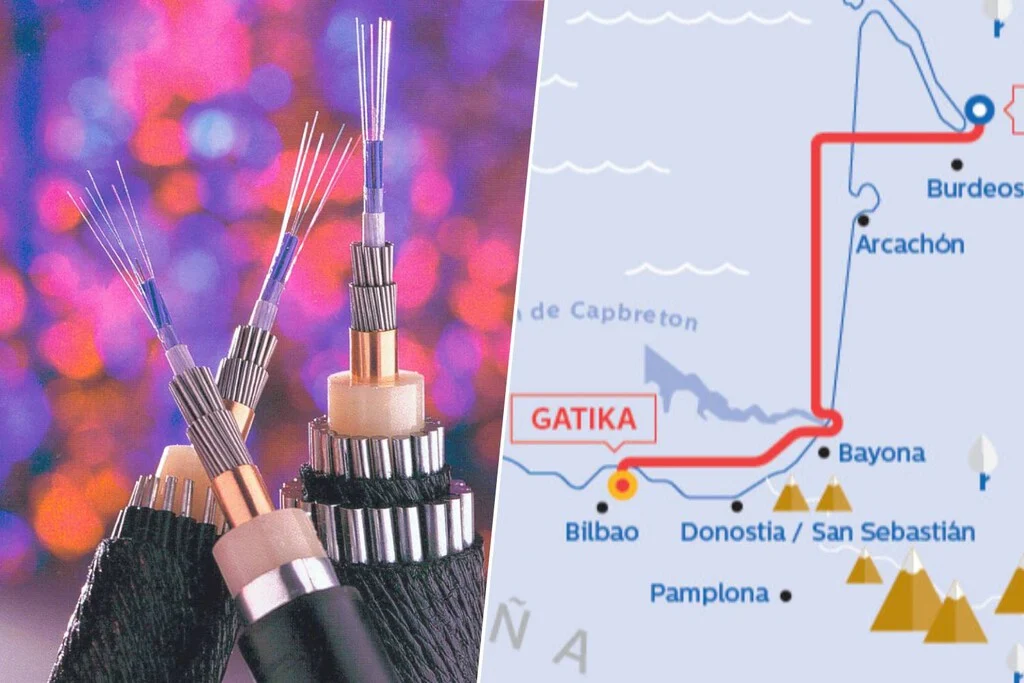

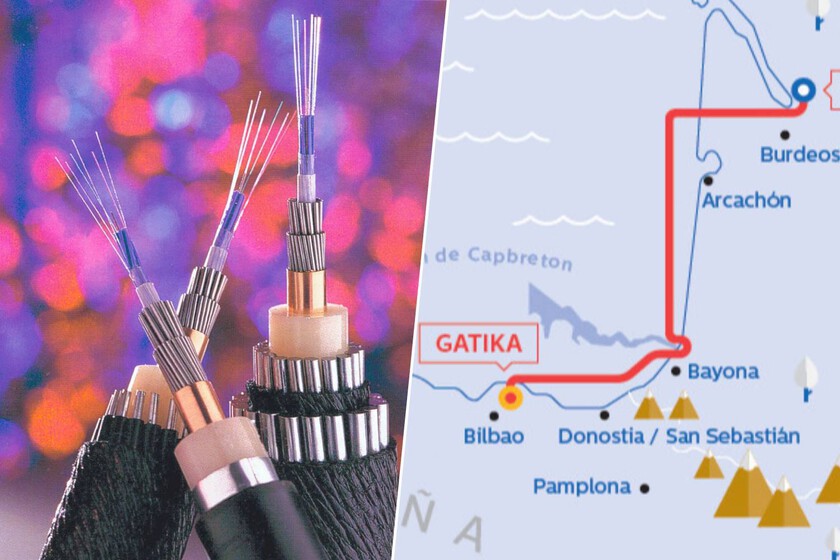
This ambitious undertaking, known as the Bay of Biscay project, is spearheaded by Inelfe, a joint venture between Spain’s Red Eléctrica (REE) and France’s Réseau de Transport d’Électricité (RTE). Representing a colossal investment of 3.2 billion euros, the project is not merely an incremental upgrade but a monumental leap in cross-border energy infrastructure. It involves the deployment of High Voltage Direct Current (HVDC) technology, a sophisticated solution specifically engineered to transmit electricity over long distances with minimal losses, a critical factor for the extensive submarine sections involved. Beyond the deployment of state-of-the-art cable-laying vessels, the project’s intricate design includes a complex terrestrial diversion to circumvent the notoriously unstable Capbreton Canyon, a major geological challenge that demanded innovative engineering solutions.
Addressing the Iberian Energy Island: A Historical Context
The concept of the "energy island" has been a persistent concern for Spain and Portugal within the European Union. Despite having immense potential for solar and wind energy, the Pyrenees mountains have historically acted as a natural barrier, limiting the number and capacity of electricity interconnections with France. For decades, Spain’s interconnection level hovered significantly below the European Commission’s target of 10% by 2020 and the more ambitious 15% by 2030, referring to the ratio of cross-border transmission capacity to installed generation capacity. This isolation has had tangible consequences: during periods of high renewable generation, Spain has frequently been forced to curtail clean energy production due to insufficient export capacity, leading to economic losses and hindering its decarbonization efforts.
Previous efforts to bolster interconnections, such as the Santa Llogaia-Baixas underground line completed in 2015, provided some relief but were insufficient to meet the growing demands and regulatory targets. The Bay of Biscay project, formally known as the Biscay Gulf HVDC Interconnection, was conceived as the definitive solution to this long-standing issue, aiming to drastically increase the energy exchange capacity and fundamentally alter Spain’s position within the European grid. Discussions for this high-capacity link began over a decade ago, with formal agreements between the Spanish and French governments, and their respective transmission system operators (TSOs), taking shape in the early 2010s to address the strategic imperative of enhancing European energy integration.
The Technological Backbone: Why HVDC is Indispensable
The choice of High Voltage Direct Current (HVDC) technology for the Bay of Biscay project is a testament to its advanced capabilities and the specific engineering challenges presented by the 300-kilometer submarine segment. Conventional Alternating Current (AC) transmission would be largely unviable for such a long undersea route. The capacitive effect of water surrounding AC cables would lead to prohibitive thermal losses and significantly limit the amount of power that could be effectively transmitted. This phenomenon necessitates the use of reactive power compensation stations, which become impractical and costly over vast submarine distances.
In contrast, HVDC technology, operating at ±400 kV in this specific project, offers a superior solution. It minimizes energy losses over long distances, particularly when traversing submarine or underground sections, making it ideal for connecting disparate grids across challenging terrains. The system comprises two converter stations, one located in Cubnezais, France, and the other in Gatika, Spain. These stations are crucial; they convert AC power from the national grids into DC for efficient long-distance transmission and then back into AC for distribution at the receiving end. This conversion process, while adding complexity, ensures optimal power flow and significantly enhances the stability and control of the interconnected grids.
The physical deployment of the cables itself is an engineering marvel. Specialized vessels, among the most advanced in the world, are utilized for laying the two HVDC cables along the seabed. The route also includes substantial terrestrial sections, necessitating intricate underground tunneling and careful environmental management. The Capbreton Canyon, a deep submarine trench off the French coast, presented a particular hurdle, requiring the cables to be routed around it to ensure long-term stability and prevent damage from underwater geological shifts. This intricate planning underscores the project’s complexity and the cutting-edge engineering solutions employed.
A Timeline of Strategic Integration
The Bay of Biscay project, a flagship initiative of European energy policy, has progressed through several critical stages:
- 2013: The project was officially designated as a Project of Common Interest (PCI) by the European Commission, highlighting its strategic importance for the integration of the internal energy market. This designation facilitated access to EU funding and streamlined regulatory processes.
- 2017: The intergovernmental agreement between France and Spain was signed, solidifying political commitment and paving the way for further development. Inelfe, the joint venture, formally took charge of the project’s execution.
- 2018: Following extensive environmental impact assessments and public consultations in both countries, the final investment decision was made, and preparatory works began.
- 2019-2021: Construction commenced on the converter stations and the onshore cable routes. This phase involved significant civil engineering works and the preparation of the land segments.
- 2022-Present: The focus shifted to the complex offshore operations, including the manufacturing and laying of the submarine cables. Specialized vessels are meticulously deploying the cables across the Bay of Biscay, navigating challenging underwater topographies.
- Expected Completion: The project is anticipated to be fully operational in the coming years, significantly transforming the energy landscape of Southwestern Europe. While the exact completion date can fluctuate due to the complexity of such large-scale infrastructure, the momentum indicates a nearing readiness.
Transformative Impact: From Energy Island to Energy Bridge
The completion of the Bay of Biscay HVDC link will fundamentally alter Spain’s energy profile. It will elevate the interconnection capacity between the Iberian Peninsula and the rest of Europe from the current 2,800 MW to an impressive 5,000 MW, marking a remarkable 78% increase. This surge in capacity has multifaceted implications:
- Unlocking Renewable Potential: Spain possesses some of Europe’s most abundant solar and wind resources. This enhanced interconnection will allow Spain to fully leverage its renewable generation, exporting surpluses to central and northern European markets, thereby reducing renewable curtailment and contributing significantly to the EU’s decarbonization goals. This positions Spain as a crucial green energy exporter, bolstering its economic prospects.
- Enhanced Energy Security: For both Spain and France, the link provides increased grid stability and resilience. Spain gains a vital safety net, allowing it to import electricity during periods of low renewable generation or unexpected outages. Conversely, France benefits from diversified supply, particularly from Spain’s complementary renewable profile.
- Market Integration and Price Convergence: Greater interconnection fosters deeper integration of national electricity markets, leading to more efficient price signals, reduced price volatility, and ultimately, lower electricity costs for consumers across the continent. France, as a transit nation, will play a critical role in this broader European energy market.
- EU Green Deal Alignment: The project is a tangible manifestation of the European Green Deal’s objectives, supporting the transition to a climate-neutral continent by facilitating cross-border renewable energy flows and strengthening the interconnected European electricity grid.
Powering the Digital Future: A Highway for AI and Data Centers
Beyond conventional energy trade, this HVDC superhighway holds profound significance for the burgeoning digital economy, particularly the rapidly expanding sectors of Artificial Intelligence (AI) and data centers. The insatiable electricity demand of these technologies requires an incredibly robust and reliable power supply. The increased interconnection capacity acts as an essential "electrical insurance" for these critical infrastructures.
AI models and data centers consume vast amounts of electricity. Projections suggest that the energy consumption of data centers globally could reach staggering levels, potentially accounting for a significant percentage of global electricity demand in the coming years. This surge necessitates not just more power, but highly stable and resilient power. Spain has actively positioned itself as a strategic location for data centers, leveraging its geographic location, connectivity, and increasingly, its commitment to renewable energy. This HVDC link directly supports Spain’s ambition to become a "bunker for data centers," providing a resilient and predictable electricity supply that can manage peak demands from these energy-intensive operations. The ability for predictive management of electricity flow across the border allows for optimized power allocation, crucial for maintaining uninterrupted service in data-critical environments.
Fortifying Grid Resilience and Cybersecurity
The need for robust and secure energy infrastructure extends beyond mere capacity. Recent global incidents have underscored the vulnerability of critical submarine cables, both for power and data. Taiwan, for instance, has reported over 20 cuts to its submarine communication cables in just five years, often necessitating emergency microwave communications. Similarly, incidents affecting submarine cables in the Baltic Sea have put the European Union on high alert, highlighting the dependence of modern economies on these unseen lifelines.

In response, the EU has initiated comprehensive strategies, including establishing surveillance centers to track threats to critical infrastructure in real-time and allocating significant funds – for example, 40 million euros – to enhance urgent repair capabilities. The Bay of Biscay project integrates these lessons into its design. The cables are equipped with fiber optic sensors that continuously monitor the cable’s temperature in real-time. This sophisticated monitoring system allows operators to detect potential anomalies or developing faults before they escalate into full-blown outages, enabling proactive maintenance and preventing costly disruptions. This layer of embedded intelligence transforms the cable into a smart infrastructure asset.
Moreover, the broader context of infrastructure resilience extends to national policies. The Spanish government recently formalized a new "digital right" that mandates telecommunications operators to maintain coverage during power outages. This regulation compels operators to implement redundancy plans and deploy backup batteries at their antenna sites, ensuring continuity of essential communication services even in the event of widespread blackouts. This holistic approach, combining robust cross-border energy links with national digital infrastructure resilience, aims to create an environment where the Spanish economy can withstand a wide array of potential crises, from energy market fluctuations to physical infrastructure threats.
A Vision for a Connected and Resilient Europe
The Bay of Biscay HVDC project is not an isolated endeavor but a cornerstone of a larger European strategy to build a fully integrated, resilient, and decarbonized energy market. Similar infrastructure developments are catalyzing technological hubs across the continent, such as in Sines, Portugal, where new submarine data cables are attracting significant investment and transforming the local economy.
Looking ahead, the success of this project paves the way for further ambitious interconnections, including potential new links between Spain and Italy, and even a speculative submarine cable extending from Spain to Ireland. These initiatives collectively aim to create a truly pan-European energy network, capable of balancing intermittent renewable generation, enhancing energy security, and fostering economic growth across member states. France’s role as a transit country will continue to evolve, balancing its own energy mix—heavily reliant on nuclear power—with the increasing flows of renewable energy from its southern neighbors.
In conclusion, the Bay of Biscay HVDC interconnection signifies a pivotal moment in European energy history. It represents a massive engineering achievement, transforming Spain’s historical status as an "energy island" into a vital "energy bridge." This project will unlock Spain’s immense renewable potential, enhance energy security for both Spain and France, and provide the robust electrical backbone necessary to power the next generation of digital technologies, including AI and data centers. By integrating advanced technology, strategic planning, and a commitment to resilience, Europe is laying the groundwork for an energy future that is not only greener and more efficient but also profoundly more secure against both physical and digital threats. This infrastructure, whether in the form of deep-sea cables coordinating energy flows or batteries bolstering national communication networks, is designed to ensure that the European economy, and particularly Spain’s, is fortified against any crisis.
Featured image | Composition with images from EES and Inelfe
