
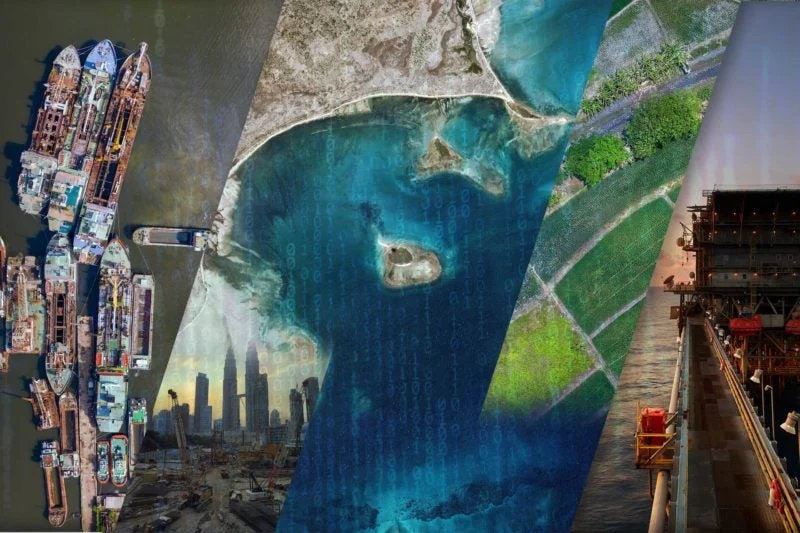

The Earth Observation (EO) industry stands at a critical juncture where the focus must shift from the technical specifications of orbital hardware to the measurable economic and operational value provided to the end user. At the recent EO Summit held in London, a gathering of prominent stakeholders, financiers, and technology providers reached a consensus: the sector’s future growth depends not on its ability to launch more sophisticated sensors, but on its capacity to translate raw data into actionable intelligence for traditional industries. As the global space economy matures, the narrative is pivoting away from the "New Space" hype of launch vehicles and lunar exploration toward the pragmatic "Downstream" applications that support global infrastructure, agriculture, and environmental stewardship.
Fani Kallianou de Jong, Space Economy Lead and Principal for the European Bank of Reconstruction and Development (EBRD), provided a sobering look at the financial weight behind this transition. The EBRD, which invested approximately 19 billion euros ($21.6 billion) across various projects in the previous fiscal year, views space technology—and specifically EO—as a fundamental pillar for modernizing private sector industries. For an institution like the EBRD, the utility of satellite data is no longer a peripheral interest; it is a core component of project efficacy in sectors such as large-scale agriculture, mining, and regional infrastructure development.
The Shift from Capability to Commercial Utility
According to de Jong, the challenge facing the EO sector is primarily one of communication and integration. While the engineering feats of the industry are undisputed, the "goldmine" of data currently being produced remains underutilized because the industry has historically focused on "capability" rather than "solution-oriented value." She emphasized that for stakeholders in the banking and development sectors, space is not merely an aspirational destination involving the Moon or Mars, but a terrestrial toolset designed to solve immediate, ground-level problems.
The EBRD’s strategy involves integrating EO data into real-world projects to demonstrate immediate benefits. This "penny-dropping" moment, as de Jong described it, occurs when a client realizes that satellite imagery can optimize irrigation in a drought-prone agricultural zone or monitor the structural integrity of a remote mining facility. The goal is to move beyond the novelty of space data and toward a state where EO is an invisible but essential layer of the global economy. To achieve this, de Jong urged the industry to "shout from the rooftops" about the practical applications of their satellites, tailoring the message to the specific needs of diverse stakeholders.
Addressing the Data Bottleneck and User Accessibility
Echoing the need for a more streamlined approach to data utilization, Awais Ahmed, founder and CEO of Pixxel, noted that while the market is evolving, it is not yet moving at the pace required by end users. Pixxel, a leader in hyperspectral imaging, is part of a new wave of companies attempting to provide higher-fidelity data that can detect chemical signatures and environmental changes invisible to traditional multi-spectral sensors.
Ahmed argued that the industry is currently at an inflection point. The primary hurdles are no longer just the number of satellites in orbit, but the ease with which that data can be consumed. For the market to scale, the process of taking complex, high-volume data and converting it into "real insights" must be simplified. The end user, whether a farmer in the Midwest or a logistics manager in Southeast Asia, should not need to be a remote sensing expert to benefit from the technology. The "democratization" of EO data requires a robust middle layer of software and analytics companies that can distill terabytes of imagery into simple binary or categorical answers: "Is the crop healthy?" or "Is the pipeline leaking?"
The End-User Perspective: Transparency, Trust, and Tactical Insights
One of the most revealing segments of the EO Summit involved feedback from major industrial players who are already integrating satellite data into their workflows. Mark Nightingale, Senior Remote Sensing Consultant and business advisor to the Chief Petroleum Engineer at Shell, described EO as a "superb, strategic tool." For a global energy giant like Shell, EO provides a unique advantage in gaining initial insights into geographies where deploying personnel on the ground is either logistically difficult or prohibitively dangerous.
However, Nightingale also highlighted significant points of friction between EO providers and corporate clients. He cautioned EO companies against "overselling" their technology, noting that transparency regarding the limitations of satellite data is just as important as highlighting its capabilities. He specifically pointed to the "dark art" of data pricing and the complexity of End User License Agreements (EULAs) as barriers to broader adoption.
"Don’t force us onto what you want us to drink," Nightingale remarked, suggesting that EO providers often push high-resolution data that may be unnecessary for the task at hand. In many industrial applications, such as pipeline monitoring, frequency of revisit (how often a satellite passes over a site) is often more valuable than the extreme spatial resolution of a single image. The message to the industry was clear: building trust through honest communication and transparent pricing is more important than marginal improvements in sensor resolution.
Case Study: Infrastructure and Utility Monitoring
The practical application of EO was further illustrated by Tom van Bezooijen, Asset Manager for Waternet, a Dutch water utility company. Waternet manages extensive stretches of pipeline and critical infrastructure that must function continuously to ensure water supply. Traditionally, monitoring these assets required expensive and intermittent helicopter flyovers.
EO has provided Waternet with a comparative dataset that allows for more consistent monitoring. The transition from aerial photography to satellite-based interferometric synthetic aperture radar (InSAR) and high-resolution imagery allows the organization to detect minute ground movements or "subsidence" that could indicate a potential pipeline failure before it occurs.
Interestingly, van Bezooijen noted that field technicians—the people actually performing repairs and maintenance—have little interest in the raw satellite data or the complex maps produced by analysts. "What they want is to know where to go," he explained. This highlights a recurring theme of the summit: the normalization of EO data depends on its ability to be integrated into existing work orders and maintenance schedules without adding layers of technical complexity for the workforce.
A Mindset Change: Squeezing Value from Existing Assets
Sven van Haver, CEO of Orbital Eye, provided a final strategic perspective, calling for a fundamental mindset change within the EO community. He argued that the industry is often too distracted by the "latest satellite capability" and the race to launch new hardware. Instead, he suggested that the industry should focus on "squeezing what we can out of what is already there."
The current orbital infrastructure already provides an unprecedented amount of data. According to industry reports, the global Earth Observation market is projected to grow from approximately $3.5 billion in 2023 to over $8 billion by 2030, driven largely by advancements in data analytics and artificial intelligence. Van Haver’s point is that the "value" for the customer is rarely found in the raw pixels, but in the intelligent processing of those pixels to provide historical context and predictive analytics.
Supporting Data and Broader Market Implications
The discussions at the EO Summit reflect a broader trend in the space sector. As launch costs have plummeted—largely due to the success of reusable rocket technology from providers like SpaceX—the barrier to entry for satellite operators has lowered. This has led to a "data glut." According to Euroconsult, more than 3,500 EO satellites are expected to be launched over the next decade.
The challenge for the industry is now one of commercial sustainability. To justify the billions of dollars in venture capital and institutional investment flowing into the sector, EO companies must prove they can generate consistent revenue from non-space industries. This involves:
- ESG Integration: Environmental, Social, and Governance (ESG) reporting is becoming a mandatory requirement for many publicly traded companies. EO is the only technology capable of providing independent, verifiable, and global data on carbon emissions, deforestation, and water usage, making it an essential tool for corporate compliance.
- Climate Resilience: As extreme weather events become more frequent, insurance companies and governments are turning to EO to model risk and assess damage more accurately.
- Food Security: With the global population rising, precision agriculture powered by satellite data is seen as a key solution to increasing crop yields while minimizing the use of fertilizers and water.
Conclusion: The Path to Normalization
The consensus from the London EO Summit is that the industry is moving out of its "experimental" phase and into a period of "normalization." For this transition to be successful, the dialogue between technology providers and end users must change. The industry must move away from technical jargon and toward a language of return on investment (ROI), operational efficiency, and risk mitigation.
As Fani Kallianou de Jong of the EBRD noted, the "penny has dropped" for many institutional players. The value of Earth Observation is no longer in doubt; the challenge now lies in the execution. By focusing on transparency, ease of use, and the specific needs of industries like energy and water utilities, the EO sector can move from being a "niche" space technology to a foundational component of the 21st-century global economy. The "goldmine" of data is ready for extraction, provided the industry can build the right tools to turn that raw material into the "refined gold" of actionable intelligence.
