
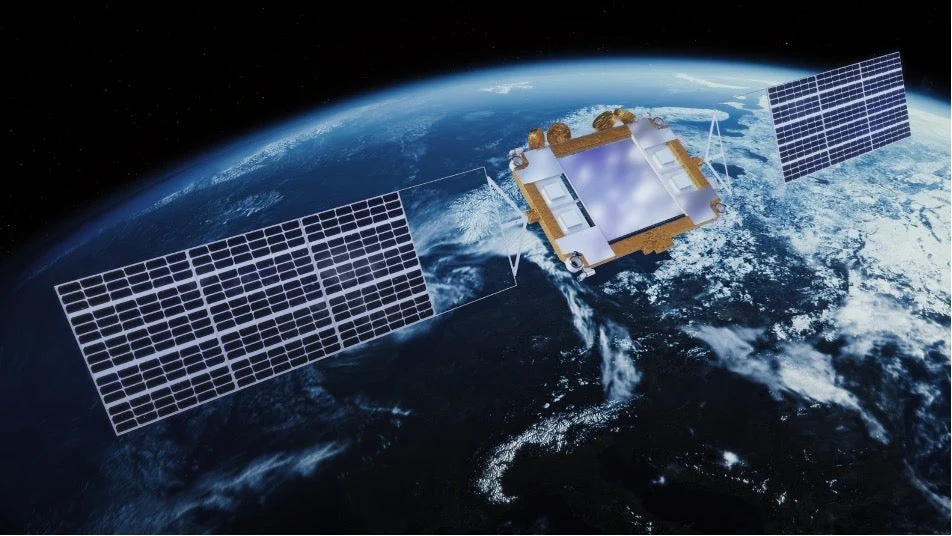

The French aerospace sector has reached a significant milestone in its pursuit of sovereign telecommunications capabilities with the announcement that Univity, a Toulouse-based startup, has successfully closed a 27 million euro ($32 million) Series A funding round. This substantial capital injection is earmarked for the development and launch of two pioneering demonstration satellites designed to operate in Very Low Earth Orbit (VLEO). The funding round saw participation from a diverse group of high-profile investors, including the Blast private investment club, the European venture capital firm Expansion, and the Deeptech 2030 fund, which is managed by Bpifrance on behalf of the French government under the broader "France 2030" initiative. Two undisclosed family offices also participated in the round, signaling strong private-sector confidence in Univity’s unique approach to the rapidly evolving satellite-to-smartphone market.
A Strategic Shift to Very Low Earth Orbit
Univity’s core mission centers on the deployment of a satellite constellation named uniSky, which aims to redefine the architecture of global connectivity by utilizing Very Low Earth Orbit. While traditional Low Earth Orbit (LEO) satellites typically operate at altitudes between 500 and 1,200 kilometers, VLEO satellites orbit much closer to the Earth’s surface, generally between 250 and 350 kilometers. This proximity offers several transformative advantages for telecommunications, particularly for the burgeoning Direct-to-Device (D2D) sector.
The physics of signal propagation dictates that signal strength diminishes with the square of the distance. By operating at roughly half the altitude of conventional LEO constellations, Univity’s satellites can achieve significantly higher link budgets. This allows for the use of standard, unmodified smartphones to connect directly to the constellation without the need for specialized hardware or bulky external antennas. Furthermore, the reduced distance minimizes latency, a critical factor for real-time 5G applications, high-frequency trading, and interactive cloud services.
However, VLEO is not without its technical challenges. At these altitudes, the Earth’s atmosphere—though extremely thin—is dense enough to create significant aerodynamic drag. Without continuous propulsion, a satellite in VLEO would deorbit within weeks or months. Univity is addressing this by developing advanced electric propulsion systems and streamlined satellite architectures designed to counteract drag, ensuring the longevity and stability of the uniSky constellation.
The Neutral Infrastructure Model: A Paradigm Shift for Telcos
Unlike SpaceX’s Starlink or Amazon’s Project Kuiper, which primarily target consumers directly, Univity is positioning itself as a "neutral space infrastructure" provider. This business model is specifically tailored to complement, rather than compete with, terrestrial Mobile Network Operators (MNOs). By acting as a wholesale provider of orbital capacity, Univity intends to allow telecommunications companies to extend their 5G coverage into "white zones"—remote areas, maritime regions, and airspace—where terrestrial infrastructure is economically or geographically unfeasible.
The uniSky constellation is designed to operate within existing telecom 5G spectrum bands. This interoperability is a cornerstone of Univity’s strategy, as it ensures that the satellite network functions as a seamless extension of the terrestrial 5G Non-Terrestrial Network (NTN) ecosystem. For telcos, this means they can offer global roaming and ubiquitous connectivity to their existing subscriber base using the same SIM cards and devices currently in use.
Industry analysts suggest that this "B2B" (business-to-business) approach mitigates the massive customer acquisition costs faced by consumer-facing satellite internet providers. By leveraging the existing billing systems, regulatory licenses, and customer relationships of established telcos, Univity can focus its resources on the technical deployment and maintenance of the orbital hardware.
Timeline and the Path to Demonstration
The newly secured 27 million euros will primarily fund the fabrication and launch of two "Pathfinder" demonstration satellites. These units are critical for validating Univity’s proprietary technology stack in the harsh environment of VLEO. The company has entered into a strategic partnership with the French National Centre for Space Studies (CNES) to facilitate these missions. CNES will provide technical oversight and support, ensuring that the demonstrators meet the rigorous standards required for long-term orbital operations.
The timeline for these demonstration missions is set for the coming 24 months. During this phase, Univity will conduct a series of tests to validate:
- 5G NTN Interoperability: Confirming that the satellite can successfully hand off signals to terrestrial towers and maintain a stable link with standard 5G protocols.
- Direct-to-Cell Capability: Testing the ability of the VLEO satellites to close the link with unmodified smartphones under various atmospheric and geographic conditions.
- VLEO Station-Keeping: Demonstrating the efficacy of the onboard propulsion systems in counteracting atmospheric drag over an extended mission duration.
- Spectral Efficiency: Measuring the throughput and latency of the data links to ensure they meet the ultra-high-speed broadband requirements promised to future partners.
Following a successful demonstration phase, Univity plans to begin the phased deployment of the full uniSky constellation, which could eventually comprise hundreds of satellites to provide continuous global coverage.
Strengthening European Space Sovereignty
The involvement of the Deeptech 2030 fund and Bpifrance underscores the strategic importance of Univity to the French and European space ecosystems. In recent years, European leaders have expressed growing concern over the continent’s dependence on American and Chinese satellite infrastructure for critical communications. The "France 2030" plan, a 54 billion euro investment program, specifically identifies space technology as a key pillar for maintaining national sovereignty and economic competitiveness.
By fostering domestic startups like Univity, France aims to secure its own "high ground" in the orbital economy. The uniSky project aligns with the objectives of the European Union’s IRIS² (Infrastructure for Resilience, Interconnectivity and Security by Satellite) program, which seeks to provide a sovereign, multi-orbital satellite constellation for both governmental and commercial use. Univity’s focus on VLEO and 5G integration provides a specialized capability that complements larger LEO and Geostationary (GEO) projects currently under development in Europe.
Charles Delfieux, the founder of Univity, emphasized this vision in a statement following the funding round: "The convergence between terrestrial and space networks is inevitable. Our ambition is to enable operators to leverage space as a natural extension of their terrestrial 5G networks, combining performance, competitiveness, and sovereignty."
Market Context and Competitive Landscape
The global satellite-to-phone market is projected to reach a multi-billion dollar valuation by the end of the decade. Univity enters a field that is becoming increasingly crowded but remains technologically nascent. Major players like AST SpaceMobile and Lynk Global have already launched test satellites and secured dozens of agreements with MNOs worldwide. Meanwhile, SpaceX has begun deploying "Direct to Cell" Starlink satellites in partnership with T-Mobile in the United States.
However, Univity’s specific focus on VLEO gives it a unique competitive edge. Most current competitors operate in higher LEO orbits, which require larger, more complex satellite antennas to communicate with low-power handheld devices. By operating at lower altitudes, Univity can potentially use smaller, more cost-effective satellites while maintaining superior signal quality.
Furthermore, the environmental impact of satellite constellations is a growing concern for regulators and the scientific community. VLEO offers a "self-cleaning" advantage: if a satellite fails or reaches the end of its life, the atmospheric drag at 250-350 kilometers ensures that the craft will naturally deorbit and burn up in the atmosphere within a very short timeframe, significantly reducing the risk of long-term space debris—a major selling point for sustainable space operations.
Analysis of Economic and Technological Implications
The successful Series A round for Univity is more than just a financial victory for a single startup; it is an indicator of the shifting priorities in the space economy. The transition from "broadband from space" to "direct-to-device connectivity" represents the next frontier of the mobile revolution. If Univity can prove the viability of its VLEO platform, it could lower the barrier to entry for telcos looking to achieve 100% geographic coverage without the prohibitive costs of building more terrestrial towers in rural or mountainous areas.
From a technological standpoint, the integration of 3GPP (3rd Generation Partnership Project) standards into satellite architecture is the key that unlocks this market. By adhering to the same standards used by the global mobile industry, Univity ensures that its orbital assets are future-proof and compatible with the global rollout of 5G and, eventually, 6G.
As the two demonstration satellites prepare for launch, the industry will be watching closely to see if Univity can overcome the thermal and aerodynamic hurdles of Very Low Earth Orbit. If successful, the uniSky constellation could become a vital component of the global telecommunications grid, fulfilling the promise of a truly connected world where "no signal" becomes a thing of the past. The 27 million euro investment provides the necessary runway to turn this ambitious vision into a functional orbital reality, solidifying France’s position as a leader in the New Space era.
