
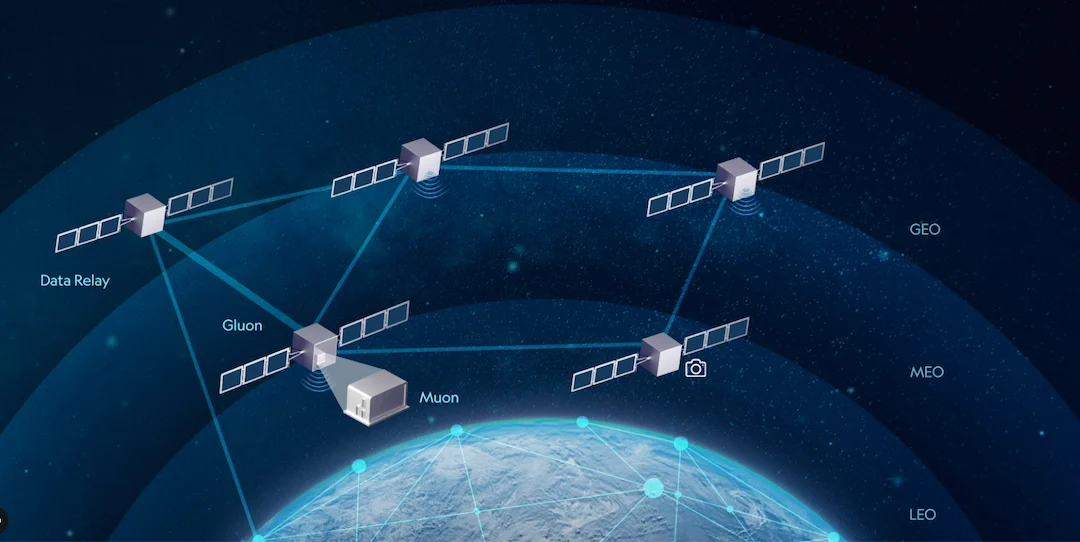

ReOrbit, a Helsinki-based provider of software-defined satellite technology, has officially launched its OrbitCloud Research and Development (R&D) program, a strategic initiative designed to establish a sophisticated space-based edge computing network. The program has received an initial funding injection of 4.6 million euro (approximately $5.3 million) from Business Finland, the Finnish government’s organization for innovation funding and investment promotion. This capital marks the beginning of a multi-phase development roadmap with a projected total value exceeding 40 million euro ($46 million), signaling a significant commitment to the next generation of orbital infrastructure.
The OrbitCloud initiative is positioned as a transformative solution in the satellite communications sector, aiming to bridge the gap between space assets and terrestrial end-users. ReOrbit describes the platform as a private satellite network that provides direct-to-device (D2D) connectivity specifically optimized for drones and mobile devices. A critical differentiator of this system is the integration of orbital AI inference, which allows for high-speed intelligence processing directly in space. By moving data processing from ground stations to the satellites themselves, ReOrbit seeks to drastically reduce latency and minimize the reliance on vulnerable or non-existent terrestrial infrastructure.
Technical Architecture and the Shift to Space-Based Intelligence
The fundamental architecture of OrbitCloud rests on three technological pillars: direct-to-device connectivity, orbital AI inference, and high-speed inter-satellite links (ISL). Traditionally, satellite communication has operated on a "bent-pipe" model, where data is captured by a satellite and immediately relayed to a ground station for processing and distribution. This model often introduces significant delays, particularly for time-sensitive applications such as autonomous drone operations or emergency response.
OrbitCloud intends to disrupt this paradigm by utilizing software-defined satellite platforms that can host complex algorithms and AI models. By performing "edge computing" in orbit, the satellites can analyze data—such as high-resolution imagery or sensor telemetry—and transmit only the relevant intelligence directly to a user’s mobile device or a drone’s flight controller. This capability is expected to be a game-changer for sectors requiring real-time situational awareness.
Sethu Saveda Suvanam, CEO and founder of ReOrbit, emphasized that this initiative is a response to the evolving demands of the global market. "OrbitCloud represents a fundamental shift in how satellite infrastructure delivers intelligence," Suvanam stated. "By combining direct-to-device connectivity with orbital AI inference, we are creating a space-based edge computing network that puts real-time intelligence directly in the hands of operators—without reliance on terrestrial infrastructure."
Strategic Importance and European Sovereignty
The launch of OrbitCloud comes at a time when the concept of "technological sovereignty" has become a priority for European nations. As geopolitical tensions rise and the reliance on digital infrastructure grows, the European Union and its member states are increasingly seeking to develop independent space capabilities. ReOrbit’s initiative aligns with these broader strategic goals by offering a secure, sovereign satellite system that reduces dependence on non-European providers.
Business Finland’s decision to provide the initial 4.6 million euro in funding reflects the national interest in fostering a robust space ecosystem. Finland has been steadily increasing its footprint in the "NewSpace" economy, leveraging its heritage in telecommunications and software engineering. The investment in ReOrbit is seen as a move to position Finland as a hub for satellite-based data processing and secure communications.
The projected 40-million-euro valuation of the program suggests a long-term vision that involves multiple satellite launches and the continuous refinement of AI algorithms tailored for the space environment. Industry analysts suggest that if successful, OrbitCloud could provide the blueprint for a decentralized space internet that is more resilient than current centralized architectures.
The Role of Direct-to-Device (D2D) Connectivity
One of the most ambitious aspects of the OrbitCloud program is its focus on direct-to-device connectivity. In recent years, the D2D market has seen a surge in interest, with major players like SpaceX (Starlink), AST SpaceMobile, and Lynk Global racing to connect standard smartphones to satellites. However, ReOrbit is carving out a niche by specifically targeting drones and specialized mobile devices with an emphasis on AI-driven intelligence rather than just basic messaging or voice services.
For drone operators, D2D connectivity via OrbitCloud could solve the problem of limited range. Currently, most commercial and industrial drones rely on radio frequency links that require a line of sight to a controller or a local ground-based mesh network. By connecting drones directly to an orbital network, operators can command and receive data from assets located thousands of miles away, even in remote or hostile environments where terrestrial cellular coverage is unavailable.
Integration with Google Cloud and the Data Ecosystem
ReOrbit is not working in a vacuum; the company has established strategic partnerships to bolster its technical capabilities. Earlier this year, ReOrbit announced a collaboration with Google Cloud aimed at optimizing secure data movement and processing in space. This partnership is a cornerstone of the OrbitCloud vision, as it integrates terrestrial cloud computing standards with orbital hardware.
The collaboration focuses on creating a seamless data fabric that extends from the Earth’s surface to Low Earth Orbit (LEO). By using Google Cloud’s expertise in data analytics and machine learning, ReOrbit can enhance the AI inference capabilities of its satellites. This allows for the deployment of sophisticated AI models that can be updated "over-the-air," ensuring that the satellite network remains relevant as new threats or operational requirements emerge.
The integration with Google Cloud also addresses the critical issue of data security. As satellite networks become more integral to national security and critical infrastructure, the need for end-to-end encryption and secure data handling is paramount. ReOrbit’s architecture is designed to meet these rigorous standards, providing a secure pipeline for sensitive information.
Timeline and Market Projections
While the initial R&D phase is currently underway, the roadmap for OrbitCloud involves a series of technical milestones. The first phase focuses on the refinement of the software-defined satellite bus and the optimization of the AI inference engine. Subsequent phases will likely involve the launch of a technology demonstrator mission to validate the D2D links and the inter-satellite communication protocols in the vacuum of space.
The global space-based edge computing market is expected to grow exponentially over the next decade. According to market research reports, the demand for "in-orbit processing" is driven by the sheer volume of data being generated by the thousands of new satellites scheduled for launch. Without edge computing, the bandwidth required to downlink all this raw data to Earth would become a significant bottleneck. ReOrbit’s OrbitCloud is positioned to address this bottleneck by ensuring that only high-value, processed information occupies the available downlink capacity.
Implications for Emergency Response and Defense
The practical applications of OrbitCloud are vast, particularly in the fields of disaster management and defense. In the aftermath of a natural disaster, terrestrial communication towers are often the first pieces of infrastructure to fail. A space-based network that provides direct connectivity to mobile devices would allow first responders to coordinate efforts and receive real-time aerial intelligence from drones without needing to wait for the restoration of ground networks.
In a defense context, the ability to process intelligence in orbit provides a tactical advantage. By reducing the "sensor-to-shooter" timeline—the time it takes to identify a target and take action—OrbitCloud could enhance the effectiveness of autonomous systems. Furthermore, the use of inter-satellite links makes the network more resilient to electronic warfare, as the data can be routed through multiple nodes in space to reach its destination.
Conclusion and Future Outlook
The launch of the OrbitCloud R&D program marks a pivotal moment for ReOrbit and the broader European space sector. With the backing of Business Finland and a strategic partnership with Google Cloud, ReOrbit is well-positioned to lead the transition toward more intelligent, autonomous satellite constellations.
As the program progresses toward its 40-million-euro goal, the industry will be watching closely to see how the integration of D2D and orbital AI performs in real-world scenarios. If ReOrbit can successfully deliver a network that provides real-time intelligence directly to the palms of operators, it will have achieved a milestone that fundamentally changes the utility of satellite technology. The shift from satellites as simple relay stations to satellites as intelligent, autonomous nodes in a global data network is no longer a futuristic concept—it is a tangible development currently being engineered in the labs of ReOrbit.
