


The competitive landscape within the Spanish mobile telecommunications sector is undergoing a significant transformation, with O2, Telefónica’s second brand, making strategic advancements that challenge the traditional dominance of low-cost operators like Digi. While both O2 and Digi leverage Movistar’s robust mobile network and present more economical tariffs than Telefónica’s premium offerings, critical distinctions in their value propositions are increasingly influencing consumer choice. Historically, Digi has held an edge on price, particularly in regions benefiting from its proprietary fiber network. However, O2 is now distinguishing itself through superior value-added services, most notably with its enhanced 5G+ access and a vastly expanded cloud storage solution, O2 Cloud.
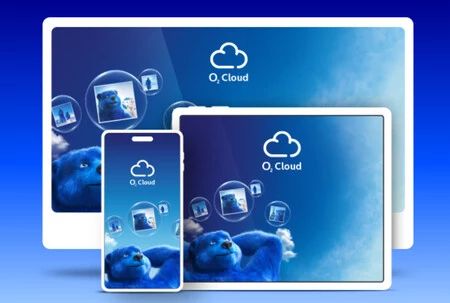
The provision of complimentary cloud storage has emerged as a key battleground, where O2 has decisively surpassed Digi. Although Digi Storage initially entered the market earlier, O2 Cloud has rapidly escalated its offering, now providing an impressive 10 terabytes (TB) of free storage to its customers, starkly contrasting with Digi’s 50 gigabytes (GB). This substantial difference highlights a strategic pivot by O2 to leverage high-value digital services as a differentiator, moving beyond mere price competition.
The Evolution of Cloud Storage in Spanish Telecommunications
The concept of operator-provided cloud storage gained significant traction in Spain with the introduction of Movistar Cloud by Telefónica. This service initially offered unlimited cloud backup, setting a high bar for value-added services within the premium segment. Recognizing the growing demand for digital storage solutions among consumers, particularly for photos, videos, and documents, other operators began to explore similar offerings.
Digi, a rapidly expanding player known for its aggressive pricing and focus on the low-cost segment, made its foray into cloud storage in the summer of 2022 with Digi Storage. This move was a strategic attempt to emulate the value proposition of its larger competitors while maintaining its low-cost identity. However, in a departure from Movistar’s unlimited model, Digi initially provided a more modest 50 GB of free storage. A year later, in response to market demand and competitive pressures, Digi introduced options to expand this capacity to 300 GB or even 1 TB, albeit for an additional monthly fee. This tiered approach aimed to cater to users with greater storage needs while still offering a baseline free option.
Almost concurrently, O2, Telefónica’s value brand designed to compete directly with low-cost rivals, launched its own cloud storage service, O2 Cloud. Initially, O2 Cloud offered a generous 500 GB of free storage to its fiber and mobile customers – already ten times more than Digi’s initial offering. This immediate advantage underscored O2’s intent to offer a premium experience within a more accessible price bracket. The capacity was swiftly doubled to 1 TB, positioning O2 as offering twenty times more free storage than its Romanian competitor at that time.

O2 Cloud’s Exponential Growth: A Game-Changer
Not content with these initial advancements, O2 has aggressively enhanced its cloud storage offering, dramatically increasing its capacity and expanding its accessibility. In a recent move that has sent ripples through the market, O2 multiplied its free storage capacity tenfold, bringing O2 Cloud to an unprecedented 10 TB for eligible customers. This monumental increase firmly establishes O2 as a leader in providing substantial free cloud storage among telecommunications providers in Spain.
Crucially, O2 has also broadened the eligibility criteria for O2 Cloud. Previously, the service was primarily available to customers subscribing to a converged fiber and mobile package. However, O2 Cloud is now accessible to customers with only a mobile line. This strategic decision democratizes access to this high-value service, making it available to a wider segment of the market. For instance, a customer can now subscribe to an O2 mobile plan costing as little as 7 euros per month and receive not only 5G+ connectivity, unlimited national calls, and 50 GB of mobile data, but also a staggering 10 TB of free cloud storage. This bundled value proposition is exceptionally compelling and represents a significant shift in the competitive landscape.
Digi Storage: A Different Strategic Path
In contrast, Digi’s approach to cloud storage remains more restrictive. While Digi offers a mobile tariff at a similar price point (e.g., 7 euros per month for 50 GB of data), this plan typically includes standard 5G connectivity (without the "plus" enhancements) and does not come with free Digi Storage. Digi Storage is primarily an exclusive service for customers who subscribe to its fiber optic services, which typically start from 10 euros per month. Furthermore, Digi imposes a limitation of one Digi Storage account per fiber customer, regardless of the number of mobile lines they may have. This contrasts sharply with O2, where each contracted mobile line can potentially grant access to an O2 Cloud account, effectively allowing a customer with multiple lines to accumulate even more free storage.
This divergence in strategy underscores the differing priorities of the two operators. Digi’s model appears geared towards leveraging its fiber infrastructure as the primary gateway for its value-added services, aiming to bundle offerings around its core fixed-line connectivity. O2, conversely, is demonstrating a greater flexibility and aggressiveness in integrating high-value digital services across its mobile-only portfolio, aiming to capture and retain customers across all segments.
The Power of 5G+ and Network Quality
Beyond cloud storage, the distinction in 5G connectivity further differentiates O2 from Digi. O2 provides access to Movistar’s advanced 5G+ network, which typically offers enhanced speeds, lower latency, and greater capacity compared to standard 5G. This "plus" designation often implies the use of standalone (SA) 5G architecture, which unlocks the full potential of the technology, as opposed to non-standalone (NSA) 5G that still relies on existing 4G infrastructure. For users demanding the absolute best in mobile connectivity for streaming, gaming, or high-bandwidth applications, 5G+ represents a significant advantage. Digi, while offering 5G, often provides the "standard" variant, which, while fast, may not always match the peak performance and low-latency benefits of 5G+.
The underlying network infrastructure is also a critical factor. Both O2 and Digi utilize Movistar’s network, which is widely recognized for its extensive coverage and reliability across Spain. However, O2, as a brand of Telefónica, has a more direct and integrated relationship with the network operator, potentially allowing for quicker adoption of new network features and closer alignment with network upgrades, such as the rollout of 5G+. Digi, while benefiting from the wholesale agreement, operates as an independent entity, which might introduce slight differences in feature rollout or prioritization.
Strategic Implications and Market Impact
The aggressive moves by O2, particularly with its 10 TB O2 Cloud offering and 5G+ access, carry significant strategic implications for the Spanish telecommunications market.
For Telefónica and O2, this strategy is multi-faceted. Firstly, it aims to reinforce O2’s position as a premium low-cost alternative, offering more than just competitive pricing. By bundling substantial value-added services like massive cloud storage and advanced 5G, O2 can attract customers who are price-conscious but also value quality and functionality. This helps Telefónica to combat churn to aggressive low-cost operators while retaining customers within its ecosystem, albeit under a different brand. Secondly, it differentiates O2 from other virtual mobile operators (MVNOs) that might offer lower prices but lack such comprehensive value propositions. This move could also serve as a form of "friendly fire" against Telefónica’s own premium brand, Movistar, by offering some high-end features at a lower price point, thus encouraging migration within the group rather than to external competitors.
For Digi, O2’s advancements pose a considerable challenge. Digi has historically thrived on its ultra-competitive pricing, particularly for its fiber-optic services, and has successfully carved out a significant market share by appealing to budget-conscious consumers. However, as competitors like O2 begin to offer compelling value-added services at competitive prices, Digi will face increasing pressure to enhance its own offerings or risk losing customers who are willing to pay a slight premium for significantly more features. Digi’s focus on its proprietary fiber network and its "Digi Smart" strategy (which includes localized customer service and specialized network deployment) remains a strong point, but the absence of comparable mobile-only value-added services could become a vulnerability. Industry analysts suggest that Digi may need to reassess its strategy for mobile-only customers, perhaps by unbundling Digi Storage from fiber contracts or increasing its free storage capacity to remain competitive.
The Broader Market and Consumer Impact

The intensified competition in value-added services ultimately benefits the consumer. The battle between O2 and Digi is pushing both operators, and by extension, the entire market, to offer more for less. Consumers now have access to unprecedented amounts of free cloud storage and advanced mobile connectivity at highly competitive prices.
This trend also highlights a maturing low-cost segment. What was once purely a price-driven market is now evolving to include a focus on value and service differentiation. Features that were once exclusive to premium brands, such as robust cloud storage and advanced 5G, are becoming more accessible across the board. This could lead to a broader "premiumization" of the low-cost market, where operators must offer a more complete package of services to attract and retain customers.
Furthermore, the availability of 10 TB of free cloud storage addresses a genuine need in an increasingly digital world. With smartphones capturing high-resolution photos and videos, and users relying on cloud services for document storage and backup, local device storage is often insufficient. Offering such a vast amount of cloud space eliminates the need for many users to subscribe to separate, paid cloud services, adding tangible economic value to their mobile plan.
Future Outlook and Competitive Dynamics
Looking ahead, the competition between O2 and Digi, and indeed across the entire Spanish telecom sector, is likely to remain fierce. Operators will continue to seek new ways to differentiate themselves, whether through further enhancements to network technology, innovative value-added services, or unique customer experiences.
The current situation suggests that while Digi may continue to dominate the ultra-low-cost segment, particularly in areas where its own fiber network provides a distinct advantage, O2 is strategically positioning itself to capture the segment of price-conscious consumers who are also looking for a richer, more feature-packed mobile experience. Services like O2 Cloud and the availability of 5G+ are potent tools that can sway the balance in O2’s favor, especially in the crucial mobile-only market, which has traditionally been a stronghold for Digi and other MVNOs. The battle for the discerning, yet budget-aware, Spanish consumer is far from over, but O2’s recent moves have undeniably raised the stakes, compelling all players to re-evaluate their value propositions.
