
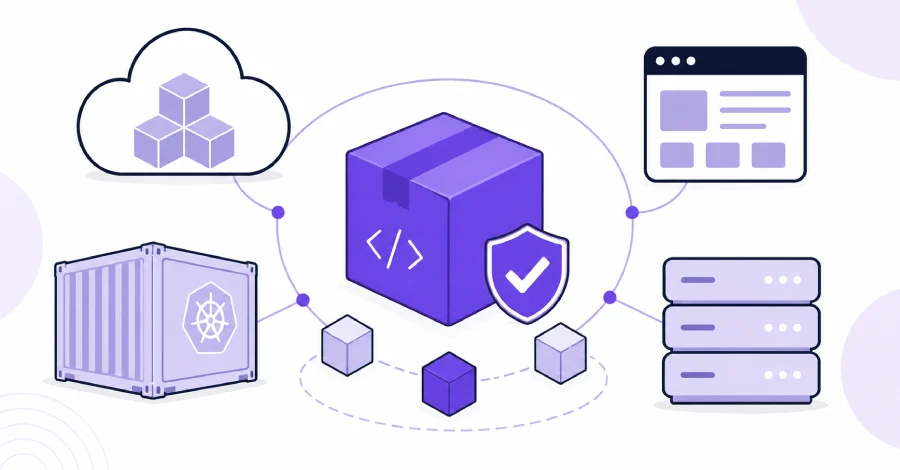

The cybersecurity landscape is experiencing a profound transformation, marked by a sudden proliferation of "clearinghouses" designed to manage vulnerabilities in open-source software. While numerous entities, from tech giants to government initiatives, have recently unveiled their versions of these data repositories, a critical distinction is emerging between mere aggregation and active, automated remediation. Amidst this flurry of announcements, Chainguard quietly launched its Athena clearinghouse, which stood apart by being fully operational months before its public debut, already actively identifying and fixing vulnerabilities at the behest of its customers. This operational head start underscores a pivotal argument: in the rapidly accelerating world of cyber threats, the true value lies not in the collection of vulnerability data, but in the swift and automated "actuation" – the process of turning a finding into a deployed fix.
The Rising Tide of Open Source Vulnerability Management
The concept of a clearinghouse for open-source vulnerabilities is not new. For decades, resources like the National Vulnerability Database (NVD) maintained by NIST, GitHub’s Advisory Database, and OSV (Open Source Vulnerabilities) have served as centralized pools of known vulnerability data. Every vendor with a security portal, tailored to its own software, also operates a form of clearinghouse. These traditional platforms fundamentally function as repositories of security advisories, providing a public-facing "front door" to vulnerability information.
However, the current wave of newly announced clearinghouses, including initiatives like Project Lightwell—a multi-billion-dollar commitment by IBM and Red Hat—and endorsements from the White House, signifies a shift in focus. This renewed emphasis is not merely on collecting public vulnerability data, but on aggregating pre-disclosure vulnerabilities, often scattered across the vast and intricate "long tail" of open-source projects. These vulnerabilities can reside in critical, widely used components or in obscure, rarely maintained dependencies. The crucial insight, rooted in the Unix process model, is that a flaw in the most minor, deeply nested dependency can grant the same level of access as a vulnerability in the main application, effectively compromising the entire process. The sheer volume and hidden nature of these pre-disclosure findings necessitate a new approach, moving beyond reactive patching to proactive remediation.
Chainguard’s Athena: A Pre-Emptive Strike
Chainguard’s Athena, launched amidst this crowded field, represents a different philosophy. Unlike many of its counterparts that were announced as future projects, Athena was a live, functioning system built months in advance. Its genesis stemmed directly from customer demand for managing non-public vulnerabilities, particularly from organizations involved in frontier model programs. This quiet development allowed Chainguard to refine its processes, turning initial findings into shipped fixes before public discourse began to define the problem. The public announcement was a strategic response to the burgeoning market, aiming to clarify that operational reality, not just press releases, should be the measure of a clearinghouse’s efficacy.
Beyond Data: The Primacy of Actuation
A core tenet of Chainguard’s perspective, and a critical differentiator in the emerging landscape, is that data alone is inert. A vulnerability entry in a database has never, by itself, patched a system or secured an application. The true value, and the historically challenging aspect, lies in "actuation" – the seamless, automated transformation of a vulnerability finding into a tested, signed, and deployed artifact. This includes backporting fixes to older versions of software actively used by customers and ensuring these fixes are available in registries where tooling can readily consume them. It moves beyond the traditional "here’s an advisory, good luck" model to a proactive "here’s a fix, delivered before you even look for it."
Chainguard has been honing this actuation capability for years through its "factory" build system. This sophisticated automation monitors thousands of open-source projects, triggering an immediate response the moment an advisory is published. The system fetches the source, rebuilds it, tests the fix, and digitally signs the new artifact. This process remediates most Common Vulnerabilities and Exposures (CVEs) within approximately two days, with the overwhelming majority handled without human intervention. The company boasts a stringent one-day Service Level Agreement (SLA) for vulnerabilities listed in CISA’s Known Exploited Vulnerabilities (KEV) Catalog, having remediated well over 100,000 such instances. For Chainguard, the clearinghouse data, whether public or pre-disclosure, serves as merely an input; the factory, with its automated pipeline, is the actual product. Athena, therefore, is not a revolutionary new core offering but rather an expanded "front door" to an already robust and operational remediation engine, extending its capabilities to manage non-public findings.
The AI-Driven Flood of Private Vulnerabilities
The sudden surge in private open-source vulnerabilities, leading to the demand for these new clearinghouses, is largely an unforeseen byproduct of advancements in artificial intelligence. Modern AI models, such as those employed in frontier model programs, are not simply scanning static code for patterns. Instead, they are increasingly deployed against running applications, often within sandboxed environments with debuggers attached, and given adversarial prompts like "break this." This dynamic, active testing allows them to uncover flaws not just in first-party code, but crucially, across the extensive web of open-source dependencies that constitute the vast majority of any real-world application.
These models demonstrate no regard for the boundaries between proprietary and imported code. They identify vulnerabilities that chain across multiple layers of dependencies, often exposing flaws in obscure, unmaintained components. The result is a stream of live, working exploits for code that development teams do not own and cannot directly fix. These "loaded weapons" are the specific problem that the new generation of clearinghouses seeks to address. This phenomenon also explains two peculiar characteristics of this new data: it is "private" because it represents active exploits, and it targets a "shared" set of common open-source libraries, as these are the components universally present in applications and thus universally scrutinized by AI models. While the specific findings may vary, the underlying vulnerable codebases frequently overlap, creating a shared challenge.
The Race Against Time: Exploit Timelines and Disclosure Dynamics
The urgency surrounding vulnerability management has been dramatically amplified by the escalating speed of exploitation. Recent data from cybersecurity firms like Mandiant, Google, and CrowdStrike paints a stark picture: the mean time to exploit a vulnerability is now estimated at a staggering negative seven days. This means that, on average, exploitation of vulnerabilities weaponized last year began a full week before the patch was even publicly available. This represents a radical shift from previous eras, where the mean time to exploit was often sixty days or more, crossing the zero-day threshold in 2024. CrowdStrike specifically notes that 42% of exploited vulnerabilities are leveraged before public disclosure. Attackers are no longer racing to patch; they are completing their operations before a patch even begins to be developed or publicly announced.
In this hyper-accelerated environment, a public patch or advisory often acts as a roadmap for attackers, providing a clear diff that points directly to the bug. Chainguard’s own experiments have demonstrated that an advisory can be converted into a working exploit, even without a public proof-of-concept, in under an hour. This reality transforms disclosure from a protective measure into a potential starting gun for malicious actors. Consequently, the critical objective becomes maximizing the number of systems protected at the instant disclosure occurs. This pre-disclosure protection can only extend to vetted entities bound by embargoes, but rapid action post-embargo can quickly expand coverage. This scale-dependent challenge brings into focus the optimal structure for these new clearinghouses.
The Challenge of Scale: Many, Few, or One?
The question of how many clearinghouses should exist is complex. The concentration of vulnerabilities in a few dozen widely used libraries suggests that "bigger pools win" for several reasons. Larger pools can more comprehensively map these shared components, as individual findings, while rarely identical, accumulate on the same foundational code. Every fix to one of these shared libraries protects all members who depend on it, exponentially increasing coverage. Scale also grants leverage with upstream maintainers, who are more likely to engage with a recognized, large security team than with numerous individual reporters. Furthermore, scale facilitates orchestration, enabling a broader, synchronized response across various security layers (CDNs, network rules, detection content, backports).
However, the idea of a single, monolithic clearinghouse holding all pre-disclosure exploits raises legitimate concerns about monoculture risk. Such a system would represent a "skeleton key" to the entire internet, an uncomfortable prospect for any single entity to hold, and one that regulators, competitors, and sovereign nations would likely oppose. For instance, Australia’s banking regulator, APRA, explicitly advises banks to manage concentration risk alongside embracing AI-speed operations. National security interests also preclude routing critical infrastructure vulnerability feeds through another country’s sole pool.
Conversely, dozens of fragmented clearinghouses would lead to chaos. Overlapping embargoes, competing fixes, and the potential for one pool’s disclosure to inadvertently compromise another’s operations would create a constantly expanding negotiation surface, undermining the very goal of coordinated security. The solution, therefore, likely lies in a middle ground: "a few large ones." This model, akin to root DNS providers, cloud infrastructure, or Certificate Authorities like Let’s Encrypt, offers stability without creating a hostage situation. Users can stop sending data and switch providers, maintaining a healthy competitive balance and mitigating concentration risk. The proliferation of many new clearinghouses, therefore, risks becoming mere "noise" in the absence of genuine operational capability.
Security Through Velocity: The Clearinghouse as a Flow, Not a Vault
The notion that a larger clearinghouse equates to a greater risk of data leakage is a common but flawed intuition. This premise holds true only if the clearinghouse functions as a static "vault." However, a truly effective clearinghouse operates as a "flow." Vulnerability findings arrive, are rapidly actuated into fixes, and then depart. The actual risk exposure at any given moment is not the cumulative total of all findings ever processed, but only those currently "in flight" – under embargo and awaiting remediation.
This inversion of intuition implies that risk is not reduced by limiting the number of findings, but by accelerating the actuation process. A dangerous clearinghouse is not necessarily the largest, but the slowest; one where findings accumulate under embargo due to an inability to push fixes out quickly. A backlog of unaddressed vulnerabilities is the primary leak surface. Therefore, a healthy clearinghouse maintains a steady state: what comes in goes out, keeping the standing size of the pool flat. A growing pool is not a sign of success, but an alarm indicating that actuation is losing the race against incoming findings. Throughput, not mere volume, is both the measure of value and the core safety property.
From Coordinated to Orchestrated Disclosure
Traditional "coordinated vulnerability disclosure" (CVD) was designed for a different era. It was a protocol involving a handshake between a single finder and a single maintainer, predicated on the assumption that bugs were discovered slowly and individually. The term "coordinated" itself implies a bilateral agreement on a timeline. This model is fundamentally inadequate for the current environment, where AI models can generate tens of thousands of findings at machine speed.
The paradigm must shift from coordinated to "orchestrated" disclosure. This involves leveraging the same automation that enables rapid vulnerability discovery to facilitate equally rapid remediation. Orchestrated disclosure moves beyond two parties negotiating a date, instead envisioning a "conductor" synchronizing every control point to deliver a unified, simultaneous response. The infamous Log4j vulnerability serves as a stark illustration of the absence of such orchestration. While disclosure worked and a patch existed early, the subsequent "lost month" was a consequence of hundreds of thousands of security teams manually performing the same emergency tasks: grepping for classes, writing WAF rules, flipping flags, and hunting shaded copies, often repeating the process when initial patches proved incomplete. This was not a disclosure failure but a critical absence of an orchestration layer.
In an orchestrated disclosure scenario, the conductor fires all necessary components simultaneously upon the embargo’s lift: WAF rules, network signatures, backports, VEX (Vulnerability Exploitability eXchange) data indicating non-affected systems, detection content, and upstream pull requests. This proactive, synchronized response aims to conclude the immediate firefight before most teams even fully awaken to the threat. While human coordination remains vital for negotiating embargoes and ensuring durable upstream fixes, everything downstream of that critical "downbeat" can and should be orchestrated.
Evaluating the Future: The Short and Long Game
The current surge in clearinghouse announcements represents a "short game" driven by immediate market demand and headlines. To discern genuine value from mere noise, a clear, actionable test is required for any vendor pitching a clearinghouse solution. Two crucial questions emerge:
- Throughput: From the moment a finding is identified to the delivery of a rebuilt, tested, and signed fix, what is the median time, and what fraction of this process occurs without human intervention? A vendor unable to provide these numbers has not measured the metrics that truly matter.
- Reach: Of the fixes shipped, how many were integrated upstream into the original source code, versus how many only reached customers directly pulling from the vendor? This metric distinguishes a vendor merely patching its own customers from one actively reducing the overall problem by contributing to the broader open-source ecosystem.
Chainguard, for its part, acknowledges the importance of these metrics. While it has processed over twenty thousand findings and shipped more than two thousand patches across five hundred projects, the company stresses that these are not the ultimate measures. Shipping a patch into its own registry is only half the battle; the more significant impact comes from fixes accepted upstream, benefiting everyone, regardless of their direct relationship with Chainguard. The company has committed to publicly publishing its median time from finding to fix, the degree of automation, and the share of fixes landed upstream, even as these numbers evolve.
The serious players in this space are identifiable by their investment in efforts that do not immediately generate revenue but build trust and broader ecosystem health: deep integrations, strategic partnerships, and upstream pull requests. Without a robust "factory" pipeline for fetching, rebuilding, testing, and signing, a clearinghouse is merely a "mailbox nobody’s checking."
Looking further ahead, the "long game" reveals that even the most efficient clearinghouses are temporary measures. Vulnerability patching is a treadmill, and the current pace is unsustainable. While clearinghouses provide a crucial safety net and might slightly reduce the speed, they do not offer an escape. The ultimate solution lies in "secure by design" principles – rebuilding libraries, frameworks, and tools to render entire classes of attacks fundamentally impossible, rather than patching them reactively. The endgame is an open-source base layer so resilient that AI models find nothing to exploit, allowing clearinghouses to finally sit idle. The true mark of a successful, forward-thinking clearinghouse, therefore, is its active effort to make itself obsolete. This summer of clearinghouses may be a necessary response to an immediate crisis, but if executed correctly, it will pave the way for a more inherently secure future.
