
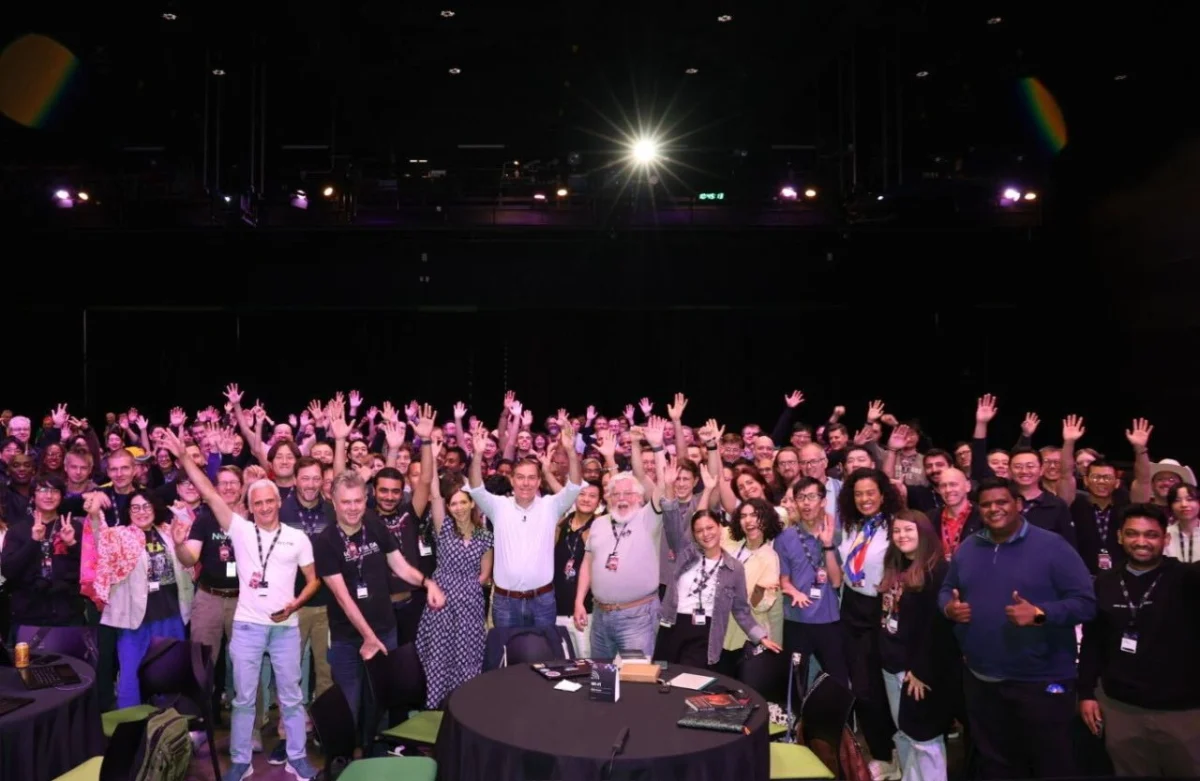

The annual AWS Heroes Summit convened last week, bringing together an elite cadre of global technology leaders, independent experts, and community advocates specializing in artificial intelligence, serverless computing, and container architecture. Hosted as an exclusive, invite-only gathering, the multi-day event served as a critical nexus for direct collaboration, rigorous technical scrutiny, and roadmap feedback sessions between external cloud practitioners and internal Amazon Web Services product and engineering teams. This year’s conference underscored the growing strategic importance of decentralized technical communities in shaping enterprise cloud infrastructure, optimizing developer workflows, and guiding the evolution of hyperscale cloud services.
Main Facts and Core Objectives of the Summit
The AWS Heroes program recognizes individuals who have demonstrated a profound commitment to sharing technical knowledge, fostering developer communities, and advocating for best practices within the global cloud ecosystem. The annual summit is engineered to bridge the gap between these frontline practitioners and the core development teams at Amazon Web Services. By gathering top-tier architects, developers, and researchers in a closed-door environment, AWS facilitates candid, high-bandwidth technical exchanges that are often impractical in large-scale public conferences.
Central to the 2026 agenda were intensive breakout sessions focusing on emerging paradigms in artificial intelligence integration, the scaling challenges of modern serverless microservices, and advanced orchestration strategies for containerized workloads. Participants engaged in rigorous evaluations of pre-release features, stress-tested proposed architectural frameworks, and provided actionable telemetry and qualitative feedback derived from large-scale enterprise deployments. This collaborative loop allows product teams to refine service capabilities, address latent operational friction points, and align upcoming feature releases with the real-world operational demands of global enterprises and high-growth startups alike.
Chronology and Key Event Milestones
The structured itinerary of the AWS Heroes Summit was designed to maximize high-level strategic alignment during the opening phases, transitioning subsequently into granular, service-specific engineering workshops.
The conference commenced on Day 1 with an eagerly anticipated fireside chat featuring AWS CEO Matt Garman. During his keynote address, Garman outlined the macro trajectory of cloud computing, emphasizing the accelerated convergence of generative artificial intelligence with foundational enterprise infrastructure. He articulated a strategic vision where cloud services must increasingly abstract operational complexity while offering unprecedented flexibility and determinism for developers building mission-critical systems. The fireside chat set a collaborative tone, encouraging attendees to challenge prevailing architectural paradigms and interrogate the long-term roadmap of cloud scalability.
Day 2 shifted toward rigorous technical interrogation and open-forum problem-solving, highlighted by an expansive Ask Me Anything session with James Hamilton, Vice President and Distinguished Engineer at AWS. Hamilton, a venerated figure in distributed systems and data center engineering, addressed complex inquiries regarding global network topologies, hardware acceleration, power consumption optimization, and the physical constraints scaling hyperscale cloud infrastructure. The interactive format allowed heroes to probe deep into the engineering trade-offs inherent in designing ultra-resilient distributed architectures.
Following these plenary sessions, attendees participated in specialized breakout tracks led by individual AWS product and service teams. These closed-door workshops fostered intense peer-to-peer knowledge sharing, where international experts compared regional deployment strategies, security compliance frameworks, and cost-optimization methodologies. According to attendee feedback shared across professional networks such as LinkedIn, the cross-pollination of ideas during these breakouts frequently yielded innovative approaches to persistent architectural bottlenecks.
Background Context of the AWS Heroes Ecosystem
To understand the operational significance of the AWS Heroes Summit, one must examine the historical evolution of developer advocacy within the cloud computing industry. Launched to formally acknowledge individuals who freely contribute their time, expertise, and thought leadership to public forums, user groups, and open-source projects, the AWS Heroes program has expanded in tandem with the complexity of the cloud landscape.
In the nascent stages of cloud adoption, community advocacy primarily centered on foundational infrastructure migration, cost management, and basic virtualization. However, as organizations transitioned to cloud-native architectures characterized by microservices, event-driven computing, and complex machine learning pipelines, the cognitive load on engineering teams increased exponentially. Today, AWS Heroes operate as vital translators of technological complexity, publishing architectural blueprints, authoring technical literature, and mentoring millions of developers worldwide.
The summit formalizes this relationship by granting these senior practitioners privileged access to early-stage product development. In an industry where technological obsolescence occurs at an accelerated pace, maintaining a direct communication channel between the architects building cloud primitives and the engineers deploying them at scale is a distinct competitive advantage for Amazon Web Services.
Supporting Data and Program Metrics
While specific headcounts for the invite-only AWS Heroes Summit remain tightly managed, the broader ecosystem it represents has grown substantially over the past decade. The global community now encompasses hundreds of designated heroes distributed across multiple specialized domains, including Machine Learning, Serverless, Containers, Data, and Community Leadership.
Industry benchmarks indicate that developer-led communities significantly influence enterprise software procurement and architectural standardization. Studies in developer relations and cloud economics suggest that peer recommendations and technical validation by recognized community leaders carry up to three times the credibility of traditional vendor marketing. Consequently, the investments made by hyperscale cloud providers in cultivating deep, collaborative relationships with elite practitioners yield measurable dividends in developer adoption rates, ecosystem health, and platform loyalty.
Furthermore, the output generated by attendees extends far beyond the confines of the summit itself. Insights, architectural patterns, and cautionary tales discussed during the event routinely translate into whitepapers, open-source tooling, conference presentations, and enterprise modernization strategies deployed across thousands of global organizations.

Statements and Inferred Industry Reactions
Although official press releases from Amazon Web Services regarding the internal deliberations of the summit are intentionally measured, observations from participating heroes and industry analysts provide clear insight into the prevailing sentiments of the event.
Participants widely noted a palpable shift in tone compared to previous iterations, with an overwhelming emphasis on pragmatic AI deployment over speculative experimentation. As enterprises move past the initial hype cycle of generative AI, engineers are grappling with the hard realities of data governance, latency reduction, inference cost management, and model orchestration within existing cloud pipelines. The presence of core AWS leadership allowed for direct, unfiltered dialogues regarding the operational hurdles of running high-throughput AI workloads at scale.
Industry analysts observing the outcomes of the summit suggest that the feedback loop established during these sessions directly accelerates the maturation timeline of new cloud services. When product managers receive synchronized, highly technical critiques from practitioners managing tens of thousands of instances across diverse regulatory jurisdictions, the resulting product iterations are inherently more resilient and enterprise-ready upon general availability.
Broader Impact and Strategic Implications
The implications of the AWS Heroes Summit extend well beyond the immediate community of attendees, influencing the broader trajectory of enterprise cloud architecture and software engineering standards.
As cloud computing enters its third decade of mainstream adoption, the differentiation between major hyperscalers increasingly relies on ecosystem vitality, developer ergonomics, and the seamless integration of advanced cognitive services. By empowering their most vocal and technically proficient advocates, Amazon Web Services effectively decentralizes its product feedback mechanisms, ensuring that service roadmaps remain anchored to the pragmatic needs of software engineers operating in the field.
Moreover, the collaborative ethos fostered at events like the AWS Heroes Summit establishes a cultural benchmark for the broader technology industry. In an era marked by rapid automation and shifting software paradigms, the preservation of human-centric technical collaboration, mentorship, and peer-to-peer knowledge sharing remains indispensable. The 2026 summit successfully reinforced these principles, setting a high standard for how technology enterprises can authentically engage with and learn from their most dedicated technical communities.
