


The landscape of mobile web browsing on the Android platform has reached a state of unprecedented saturation. With the Google Play Store hosting hundreds of applications designed to facilitate internet access, the average consumer faces a paradox of choice. Despite this proliferation, Google Chrome maintains a dominant market share, largely sustained by its status as the default pre-installed browser on the vast majority of Android devices globally. However, as user awareness regarding digital privacy, battery optimization, and interface ergonomics grows, a significant segment of the user base is actively migrating toward third-party alternatives. This shift reflects a broader trend in mobile computing where users are increasingly prioritizing specific feature sets—such as native ad-blocking, cross-platform synchronization, and integrated artificial intelligence—over default convenience.

The Evolution of Mobile Browsing: A Brief Chronology
The history of mobile browsing is a narrative of transition from simple WAP-based interfaces to the full-featured, desktop-class experiences provided by contemporary engines. In the early 2010s, mobile browsers were largely limited by hardware constraints and bandwidth, forcing developers to prioritize basic rendering. By 2015, the standardization of the Chromium engine began to reshape the ecosystem, offering a level of web compatibility that effectively ended the "mobile-optimized site" era.

Following the 2020s, the focus shifted from mere compatibility to data sovereignty. As mobile devices became primary computing tools, browsers began to incorporate "anti-tracking" measures as standard features rather than niche add-ons. The 2024-2025 period saw the integration of Generative AI, with Microsoft Edge and Opera leading the charge by embedding Large Language Models directly into the browser shell to assist with page summarization and content generation. This evolution marks a departure from the browser as a passive portal to the browser as an active productivity assistant.

Google Chrome: The Incumbent Giant
Google Chrome remains the industry benchmark. Built on the Chromium open-source project, it offers unmatched compatibility with web standards, ensuring that virtually every website functions as intended. Its primary strength lies in its ecosystem integration. For users invested in Google’s suite of services—including Gmail, Drive, and Search—the ability to sync bookmarks, passwords, and open tabs across desktop and mobile devices provides a seamless experience that few competitors can replicate.

From a technical standpoint, Chrome has made significant strides in security, implementing robust "Safe Browsing" protocols that alert users to malicious websites in real-time. However, the browser’s resource management remains a point of contention. Data from various performance benchmarks consistently indicate that Chrome is one of the more RAM-intensive applications available on Android. While this allows for rapid page loading and multi-process stability, it can lead to increased battery drain on mid-range and entry-level hardware. The recent introduction of customizable address bar placement acknowledges user feedback, yet it still lacks the deep, granular privacy controls found in dedicated secure browsers.

Firefox and the Movement for Web Independence
Mozilla’s Firefox holds a unique position as the only major browser not built upon the Chromium engine. Utilizing the Gecko rendering engine, Firefox represents a critical pillar of web independence. For users concerned about the monopolization of web standards by Google, Firefox is the preferred choice.
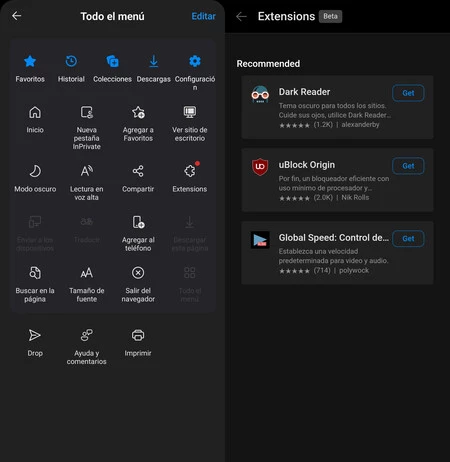
Beyond its philosophical value, Firefox offers distinct functional advantages. The browser’s robust support for extensions—a feature notably absent from most mobile versions of Chromium browsers—allows users to install powerful ad-blockers and privacy suites. Its "Enhanced Tracking Protection" is active by default, blocking thousands of trackers that attempt to build profiles on user behavior. Furthermore, the ability to sync via a dedicated Mozilla account ensures that privacy-focused users can maintain a consistent environment across different computing platforms without relying on Google’s infrastructure.

Niche Solutions: Focus, Brave, and Privacy-Centric Browsing
The demand for privacy has birthed a specialized sub-sector of mobile browsers. Firefox Focus, for instance, operates on a "disposable" model. By purging all cookies, history, and cache the moment the application is closed, it serves as an ideal tool for ephemeral, high-privacy tasks. While it sacrifices long-term convenience features like password management and cross-device syncing, its utility for secure, one-off searches is unparalleled.
Conversely, Brave has positioned itself as the "privacy-by-default" alternative for the general user. By stripping away ads and trackers at the network level, Brave significantly reduces page load times and data usage. Its integration of HTTPS Everywhere ensures that encrypted connections are prioritized whenever available. The browser’s business model, which includes a opt-in rewards system, offers a controversial but innovative take on the digital advertising economy, allowing users to support content creators while maintaining control over their data footprint.

Microsoft Edge and the Integration of AI
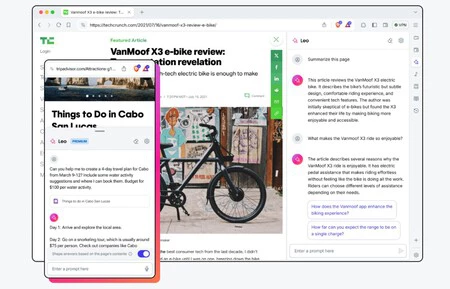
Microsoft Edge has undergone a radical transformation since its adoption of the Chromium engine. The current iteration is heavily optimized for users within the Windows ecosystem. The browser distinguishes itself through its integration of Copilot, an AI-powered assistant that can summarize long articles, draft responses, and navigate complex search queries.

In terms of ergonomics, Edge is highly regarded for its "bottom-bar" design, which places essential navigation controls within reach of the user’s thumb, a critical factor given the increasing physical size of modern smartphones. While the browser is undeniably efficient, some critics point to its cluttered "New Tab" page, which is often populated with news feeds and promotional content that may not align with the minimalist preferences of power users.

The Regional and OEM Landscape: Samsung and Xiaomi
Samsung Internet and Xiaomi’s Mint browser highlight the importance of OEM (Original Equipment Manufacturer) software in the Android ecosystem. Samsung Internet, in particular, is frequently cited by industry analysts as one of the best-performing browsers on the market. It excels in interface design, offering a "Video Assistant" that enhances media playback and a robust dark mode that effectively renders web content in inverted colors, regardless of the site’s native design.

Mint browser, by contrast, targets the budget-conscious segment. By stripping away extraneous features and focusing on core performance, it provides a lightweight experience that is particularly effective on devices with limited storage and processing power. While it lacks the advanced synchronization capabilities of Chrome or Firefox, it serves its intended demographic with high efficiency.

Comparative Analysis of Technical Features
| Feature | Chrome | Firefox | Brave | Edge | Samsung |
|---|---|---|---|---|---|
| Engine | Chromium | Gecko | Chromium | Chromium | Chromium |
| Syncing | Excellent | Very Good | Good | Excellent | Good |
| Ad-Blocking | Basic | Advanced | Native | Built-in | Extension |
| AI Integration | Limited | None | Minimal | Native | Minimal |
| Best For | Ecosystem | Privacy | Ad-Free | Productivity | Ergonomics |
Implications for the Digital Economy
The fragmentation of the mobile browser market suggests a shifting power dynamic. As users become more selective, the "default" advantage once enjoyed by Google Chrome is being eroded by the demonstrable benefits of specialized alternatives. This fragmentation forces major platforms to compete on merit rather than mere accessibility.

From a regulatory perspective, the rise of diverse browsers is a positive development for digital health. It prevents any single entity from dictating the evolution of the web, ensuring that privacy, performance, and innovation remain the primary drivers of user adoption. As we look toward the remainder of 2026, it is highly probable that we will see further integration of decentralized technologies and advanced AI, as browsers continue to evolve from simple viewing windows into sophisticated, highly personalized digital agents. Users are encouraged to test these options based on their specific needs, as the "best" browser is no longer a universal standard, but a personal choice defined by the balance between convenience, performance, and the protection of personal data.
