

The Paradigm Shift in Information Retrieval
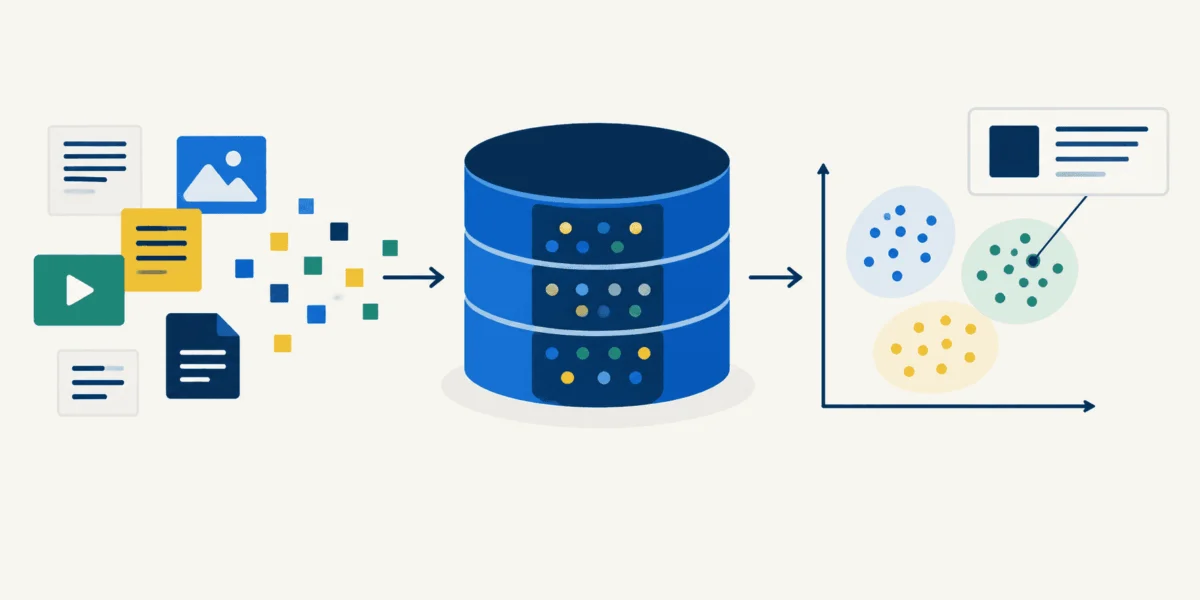
The evolution of search technology has transitioned from traditional keyword-based matching—which relies on exact term frequency—to semantic retrieval, which prioritizes the conceptual meaning of data. This shift is enabled by vector databases, which represent unstructured information like text, images, and audio as high-dimensional numerical vectors. When a user executes a query, the system converts the input into a similar vector and calculates the distance between the query and stored document vectors to find the most relevant matches.
This architectural change has become the cornerstone of modern generative AI and Large Language Model (LLM) applications. By grounding models in specific, private datasets through a process known as Retrieval-Augmented Generation (RAG), developers can significantly reduce the propensity for models to "hallucinate" information.
The Mechanics of the Ten-Step Implementation
The tutorial mandates a hands-on approach, requiring participants to construct a functional database, titled tutorial.py, using numpy and sentence-transformers. This methodology emphasizes that at the atomic level, vector search is an exercise in linear algebra.
The implementation process begins with the basic environment setup and the definition of helper functions. These helpers, such as show() and header(), are critical for maintaining readability as the database grows in complexity. The subsequent steps detail the creation of the index, where document embedding occurs. An important observation throughout this process is the predictability of memory usage; because each document is transformed into a fixed-length vector—regardless of its original text length—the index size remains consistent and highly efficient to scan.
Moving Beyond Keywords
One of the most profound demonstrations in the tutorial involves querying the database with phrases that share zero common words with the target documents. For example, a search for "why does my loaf taste sour" successfully retrieves documents about sourdough fermentation, despite the query containing no technical terminology found in the target content. This highlights the power of embedding models to capture linguistic nuances and thematic relationships that traditional inverted indexes would fail to surface.
Operational Guardrails and Scalability
As the tutorial progresses into more advanced stages, it addresses the "bookkeeping" aspects of database engineering that are often overlooked in theoretical discussions. This includes:
- Metadata Filtering: The implementation of a
whereclause allows developers to constrain search results by category. This prevents "semantic traps," such as a biology-related query accidentally matching a science fiction excerpt about biology simply because the vector similarity is high. - Data Integrity: The tutorial implements rigorous checks to ensure that document lists, metadata, and vectors remain in perfect alignment, preventing the silent corruption of indices.
- Persistence: The guide covers serialization, explaining why vectors are stored in
.npyfiles for efficient binary loading, while metadata is preserved in JSON for human readability.
Performance and Computational Analysis
A critical component of the guide is the analysis of scalability. By simulating a corpus of 100,000 documents, the tutorial demonstrates that the time required to perform a search is largely dominated by the efficiency of matrix multiplication in NumPy.
As the number of documents scales from 1,000 to 100,000, the scan time remains impressively low, measured in single-digit milliseconds. This provides empirical evidence for why vector databases can handle massive, real-world datasets with minimal latency. The data shows that while initial overheads exist, the underlying linear algebra operations are highly optimized for modern CPU architectures.
Broader Implications for the AI Industry
The surge in interest surrounding vector databases is directly correlated with the rise of AI-driven enterprise tools. Companies are increasingly moving away from "black box" solutions, preferring to build or customize their own retrieval infrastructure to maintain control over data privacy and retrieval accuracy.
Industry analysts note that understanding these low-level implementations is no longer just an academic exercise for computer science students; it is a vital skill for software engineers building the next generation of AI applications. By stripping away the API calls and managed services, developers gain a clear understanding of the cost, memory footprint, and computational requirements of their systems. This transparency allows for better resource allocation, especially when deploying models in cost-sensitive production environments.
The Future of Semantic Indexing
The design philosophy highlighted in the tutorial—that the fundamental structure of a vector database remains largely constant whether it contains twenty-five or twenty-five million documents—underscores why these systems are the industry standard for AI data retrieval. While production-grade systems add layers of approximate nearest neighbor (ANN) indexing (such as HNSW or IVF) to speed up searches across billions of vectors, the core mathematical engine remains the same: the dot product.
Summary of Key Findings
- Predictability: The fixed-dimension nature of vector embeddings makes memory planning straightforward.
- Semantic Depth: The ability to retrieve information without keyword overlap is the primary advantage of the vector approach.
- Mathematical Simplicity: At its heart, similarity search is effectively an exercise in high-speed matrix multiplication.
- Operational Necessity: Effective filtering and data validation are as important as the retrieval algorithm itself in a functional production environment.
For developers and organizations looking to bridge the gap between AI theory and practical implementation, this ten-step guide serves as a foundational blueprint. It reaffirms that the complexity of AI is often manageable when broken down into logical, modular, and mathematically grounded components. As the field continues to evolve, the ability to build and maintain these core indexing structures will remain a critical competency for engineers worldwide, ensuring that the next generation of intelligent software is both accurate and performant.
