
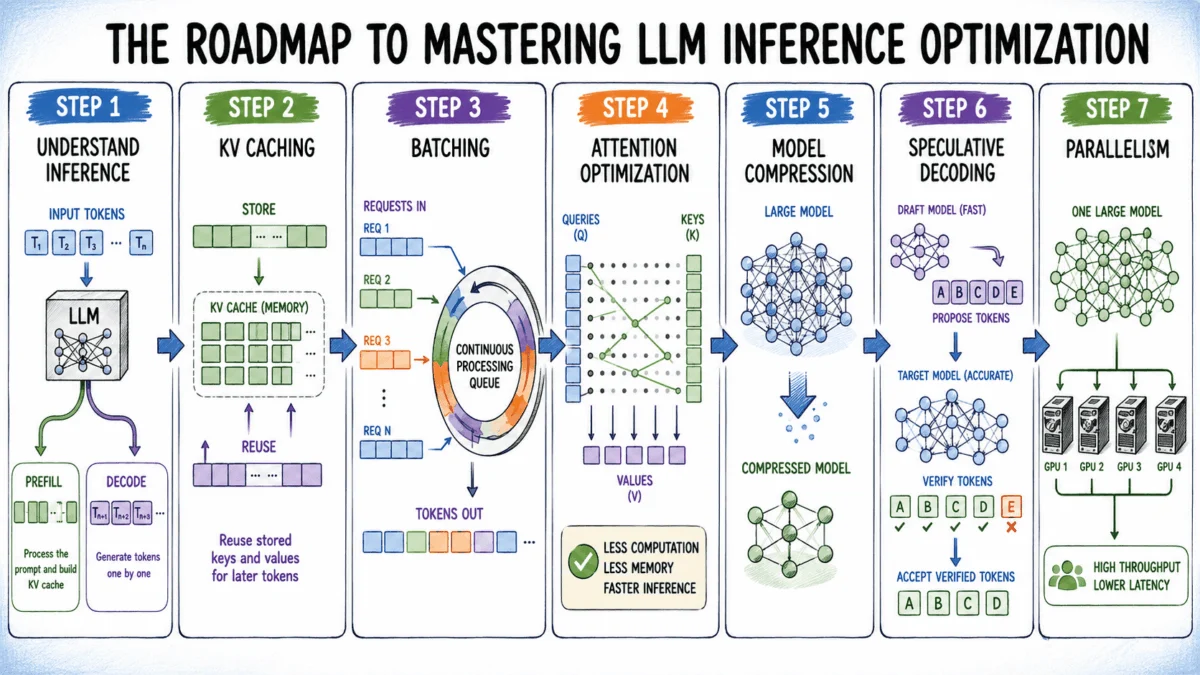

Large language models (LLMs) have transitioned from experimental laboratory artifacts to the backbone of global enterprise software, yet a significant chasm remains between training a model and deploying it effectively. While achieving high-quality output is increasingly standardized, maintaining that quality at scale while balancing latency, hardware costs, and reliability remains a formidable engineering challenge. In production environments, systems often falter under the weight of concurrent requests, where costs escalate linearly with context length and latency spikes become inevitable as queues lengthen. Inference optimization—the practice of maximizing throughput and minimizing latency without altering the core weights of the model—has consequently become the most critical discipline for AI infrastructure teams in 2026.
The Physics of Inference: Prefill and Decode
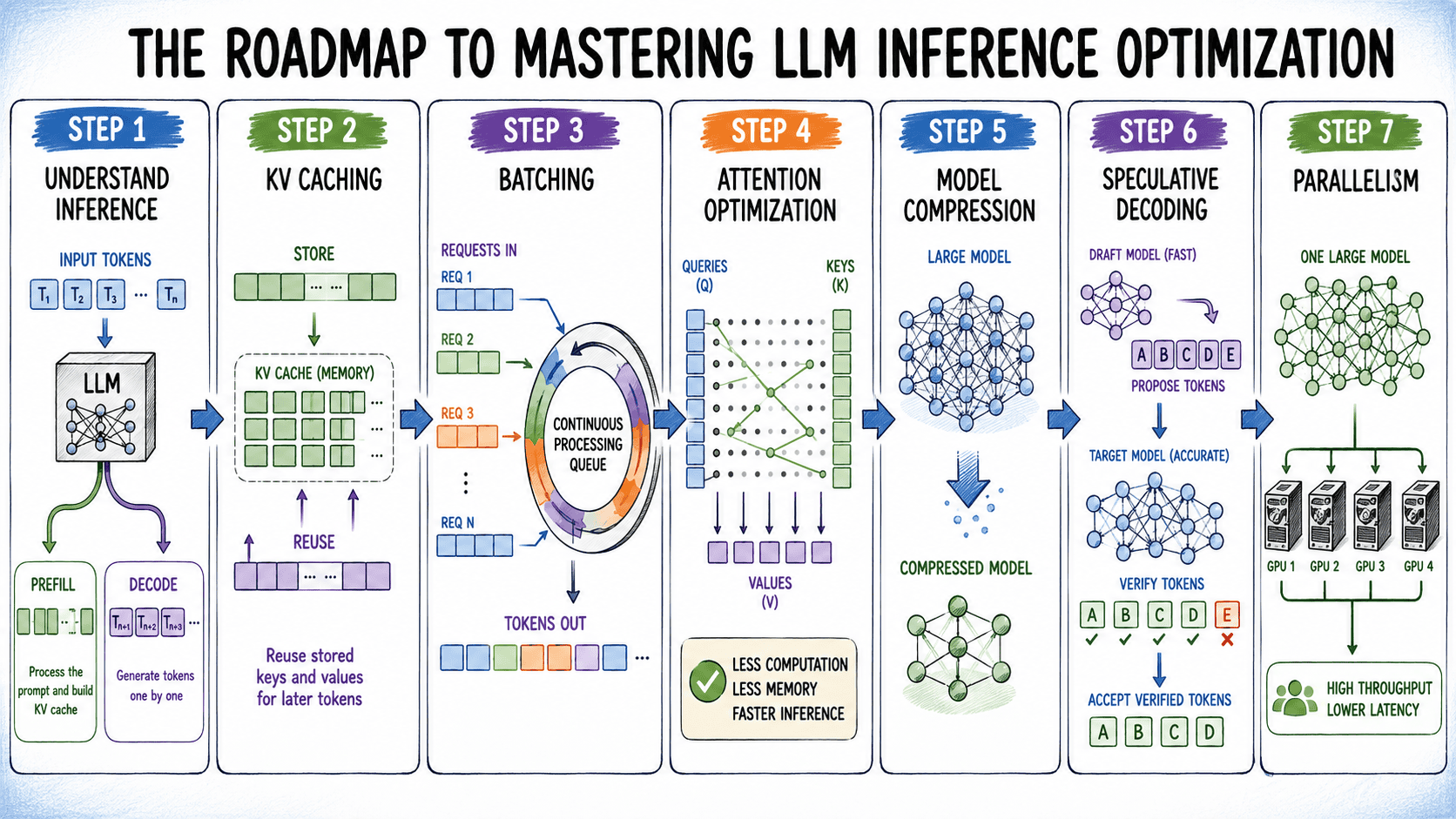
To optimize an LLM, one must first deconstruct the inference lifecycle into its two distinct operational phases. The first, the prefill phase, occurs when an incoming prompt is processed. During this stage, the model computes the intermediate key and value tensors for every token in the input simultaneously. Because the input sequence is known entirely at the start, this process is highly parallelized, effectively saturating the GPU’s compute cores. This phase is fundamentally compute-bound, meaning the time-to-first-token (TTFT) is largely a function of raw FLOPs and effective parallelization.
The second phase, the decode phase, follows a vastly different logic. As the model begins generating output, it functions autoregressively, producing one token at a time. Each subsequent token depends on the entire sequence generated prior to it, rendering parallelization impossible within a single request. Consequently, the bottleneck shifts from compute to memory bandwidth. The GPU must constantly shuttle massive weight matrices and KV cache data from high-bandwidth memory (HBM) to the processors to generate just a few bytes of output. In this stage, the system is memory-bandwidth-bound, and raw compute power provides diminishing returns.
The Memory Bottleneck and the Evolution of Caching
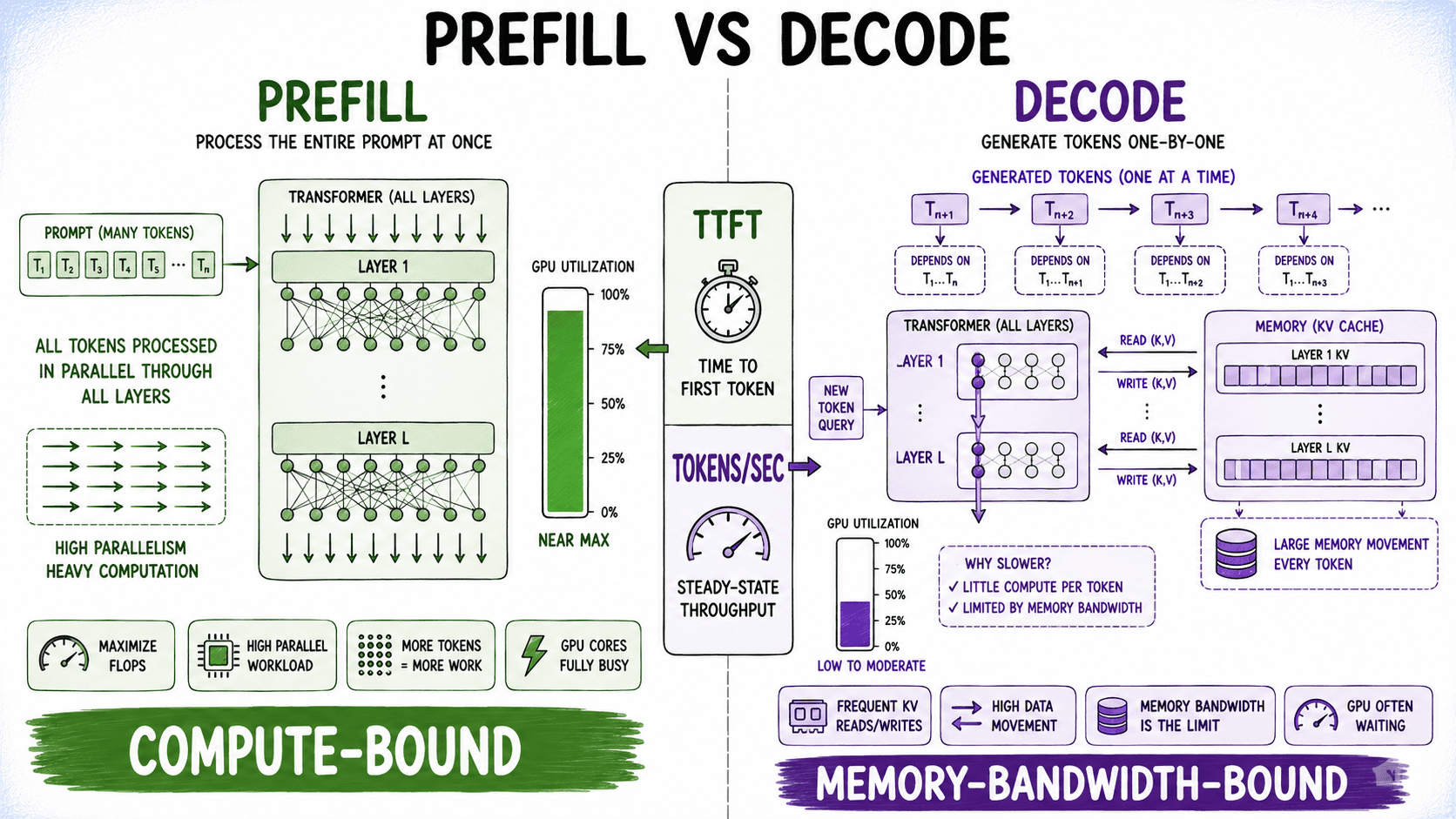
The most significant hurdle in the decode phase is the management of the Key-Value (KV) cache. By storing the attention states of previous tokens, the system avoids redundant recomputation, trading precious VRAM for speed. However, this cache scales quadratically with sequence length and linearly with batch size. In a 70-billion parameter model, the KV cache can consume a substantial portion of available memory, often limiting the number of simultaneous users a single GPU can support.
Historically, naive memory allocation strategies—where memory was pre-reserved for the maximum possible sequence length—led to severe fragmentation, wasting up to 60-80% of allocated VRAM in many production scenarios. The industry has since pivoted toward PagedAttention, a technique derived from operating system memory paging. By partitioning the KV cache into non-contiguous blocks, systems like vLLM have enabled near-zero memory waste, allowing for significantly higher batch sizes on existing hardware. Furthermore, the advent of prefix caching has allowed developers to store and reuse the intermediate states of recurring system prompts or long-context documents, effectively offloading a massive percentage of repetitive computation in RAG (Retrieval-Augmented Generation) pipelines.
Maximizing Throughput via Advanced Scheduling
Efficient GPU utilization is predicated on the ability to pack as many requests as possible into a single execution cycle. Static batching, the industry’s initial approach, proved inadequate because it required all requests in a batch to wait for the longest sequence to finish. This "tail latency" problem meant that shorter, simpler queries were effectively held hostage by complex, long-form generation tasks.
Continuous batching (or in-flight batching) has largely solved this by allowing the scheduler to inject new requests into the batch the moment an existing one completes. By decoupling request life cycles from the batch processing loop, engineers can ensure that the GPU remains at near-100% utilization. Recent benchmarks from major inference runtimes indicate that continuous batching can improve throughput by as much as 300% in high-traffic environments compared to standard static scheduling, fundamentally altering the unit economics of hosting LLMs.
Architectural Innovations in Attention
Attention mechanisms remain the most computationally expensive aspect of the transformer architecture. The transition from Multi-Head Attention (MHA) to Multi-Query Attention (MQA) and Grouped-Query Attention (GQA) represents a major shift in how models are designed for inference. By forcing query heads to share key and value heads, MQA drastically reduces the memory traffic required during the decode phase. GQA provides a middle ground, offering the memory-saving benefits of MQA while maintaining the nuanced modeling capacity of traditional MHA.
Complementing these architectural changes is FlashAttention, an algorithm that optimizes memory access patterns. By using tiling to keep intermediate data in the GPU’s high-speed SRAM rather than flushing it to global HBM, FlashAttention reduces the memory footprint of the attention operation by orders of magnitude. Because it is a kernel-level optimization, it acts as a "drop-in" speedup that requires no retraining, making it an essential component of modern inference stacks.
Precision Engineering: Quantization and Sparsity
When hardware limits are reached, engineers turn to model compression. Quantization—the process of reducing the bit-precision of weights from 16-bit to 8-bit or 4-bit—has moved from a research curiosity to an industry standard. While there is a theoretical loss in precision, modern techniques like GPTQ (Generalized Post-Training Quantization) and AWQ (Activation-aware Weight Quantization) ensure that the degradation in model intelligence is negligible for most real-world tasks. Reducing a model from FP16 to INT4 effectively halves the memory requirement, allowing larger models to fit on consumer-grade hardware or enabling more replicas on enterprise GPUs.
Sparsity adds another layer of efficiency. By identifying weights that contribute near-zero impact to the output, researchers can prune the model to create sparse matrices. Modern NVIDIA architectures, such as the Ampere and Hopper series, provide hardware-level acceleration for 2:4 structured sparsity, which can double throughput for specific matrix operations without requiring complex software workarounds.
Speculative Decoding and Parallelism
For latency-sensitive applications, speculative decoding has emerged as a high-impact solution. By utilizing a smaller, faster "draft" model to predict the next few tokens, and a larger "verification" model to check those predictions in a single parallel pass, developers can effectively "guess" the future of the sequence. If the draft model is accurate, the system gains a massive boost in tokens-per-second.
When a single GPU is insufficient, infrastructure teams must look toward parallelization strategies. Tensor parallelism splits the model’s internal layers across multiple GPUs, reducing the time required for a single forward pass. Pipeline parallelism, conversely, spreads the model vertically, with different GPUs handling sequential stages of the network. While pipeline parallelism introduces the risk of "pipeline bubbles"—idle time while waiting for data—micro-batching strategies have largely mitigated these inefficiencies. The emerging trend of prefill-decode disaggregation takes this further by routing prefill tasks to high-compute nodes and decode tasks to memory-optimized nodes, ensuring hardware is always matched to the specific bottleneck of the task.
Broader Implications and Strategic Outlook
The optimization of LLM inference is no longer an optional "value-add"—it is the primary determinant of business viability for AI-native companies. As models continue to grow in size and context windows expand into the millions of tokens, the cost of inefficient inference will become unsustainable.
Industry analysts project that by 2027, the primary competitive advantage in the AI sector will shift from training prowess to "inference engineering." Companies that master these techniques will be able to offer more responsive, feature-rich, and affordable services than competitors who rely on unoptimized, raw model deployments. By systematically addressing the two-phase nature of inference, optimizing memory access, and leveraging hardware-aware scheduling, organizations can transform their LLM deployments from expensive liabilities into high-performance, scalable infrastructure assets. The roadmap is clear: the future of AI is not just about smarter models, but about the relentless, methodical optimization of the systems that run them.
