

Amazon Web Services (AWS), the global leader in cloud computing, has officially announced a fundamental redesign of its onboarding and project initialization experience, specifically tailored for developers and builders operating at the fast-paced frontier of artificial intelligence. Historically celebrated for its unmatched breadth and depth of infrastructure services—ranging from foundational building blocks like Amazon S3 and Amazon EC2 to advanced enterprise networking and governance tools—AWS has long been the platform of choice for the world’s largest corporations and government entities. However, as the ecosystem matured to serve complex enterprise compliance and multi-region operational demands, the initial friction of setting up a cloud environment grew proportionally. For individual developers, early-stage startups, and AI innovators eager to test a concept, navigating intricate configuration menus, permission boundaries, and billing protocols often meant spending valuable hours on administrative tasks rather than writing code.

The newly unveiled streamlined experience effectively recalibrates the initial developer journey by introducing sensible defaults, simplified account administration, and deep integration with modern AI coding agents. By removing early configuration barriers, AWS aims to lower the barrier to entry for a new generation of creators, blending immediate usability with a seamless pathway to enterprise-grade scalability.
Main Facts and Architectural Mechanics of the New Onboarding Experience
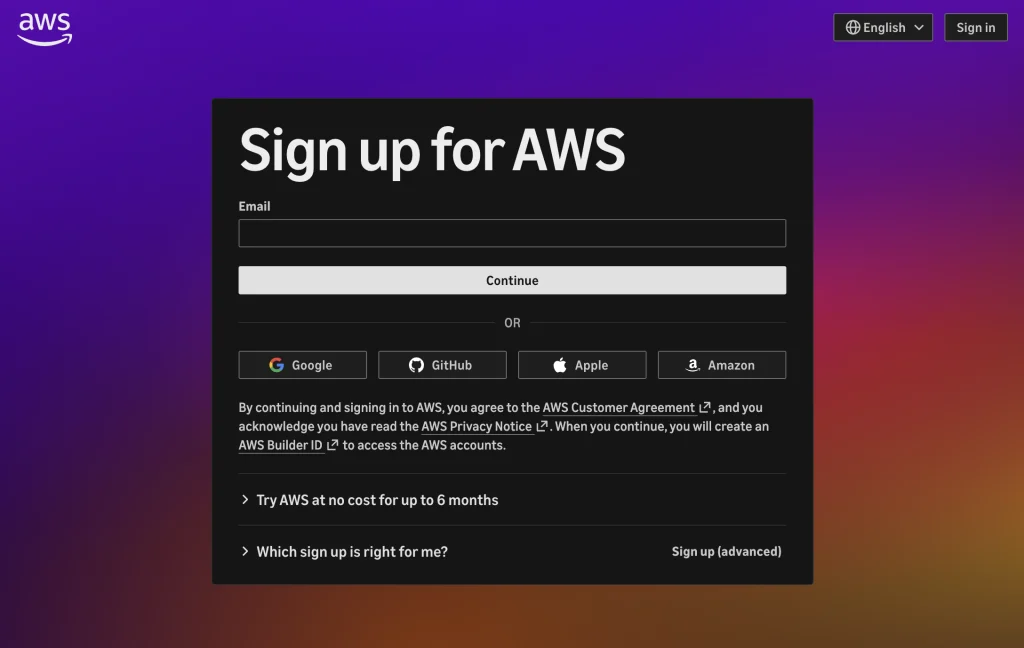
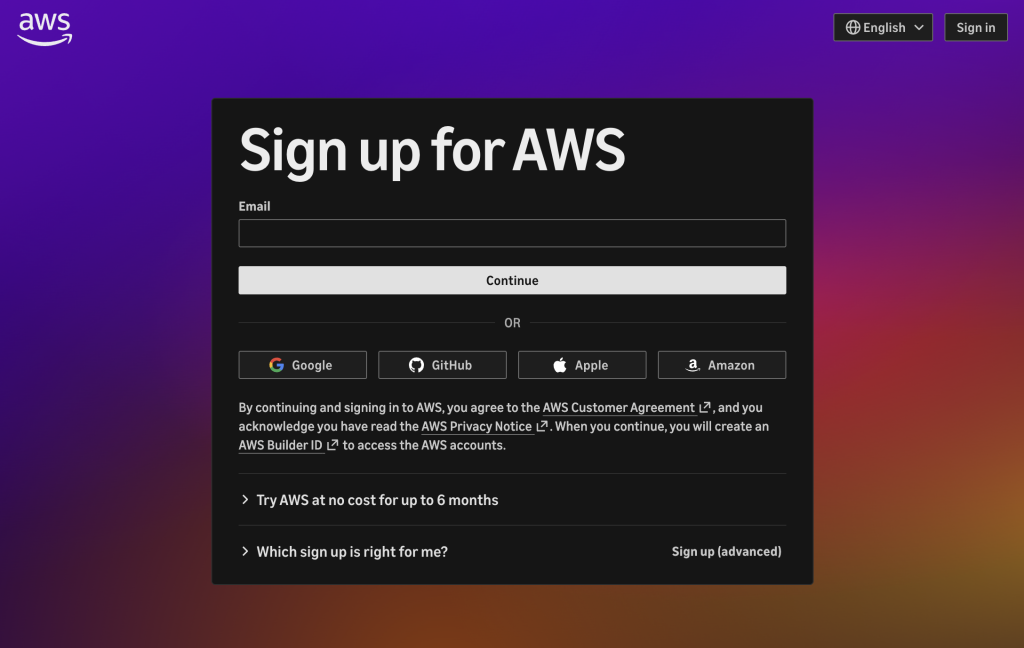
At the core of the newly launched experience is a reimagined signup and resource management model designed to eliminate friction. New users can initiate their AWS journey without immediately entering credit card information. Instead, they can authenticate using existing trusted identity providers, including Google, GitHub, and Apple. Upon successful authentication, new customers are automatically granted $100 in free credits through the expanded AWS Free Tier, allowing them to begin constructing and deploying applications instantly.

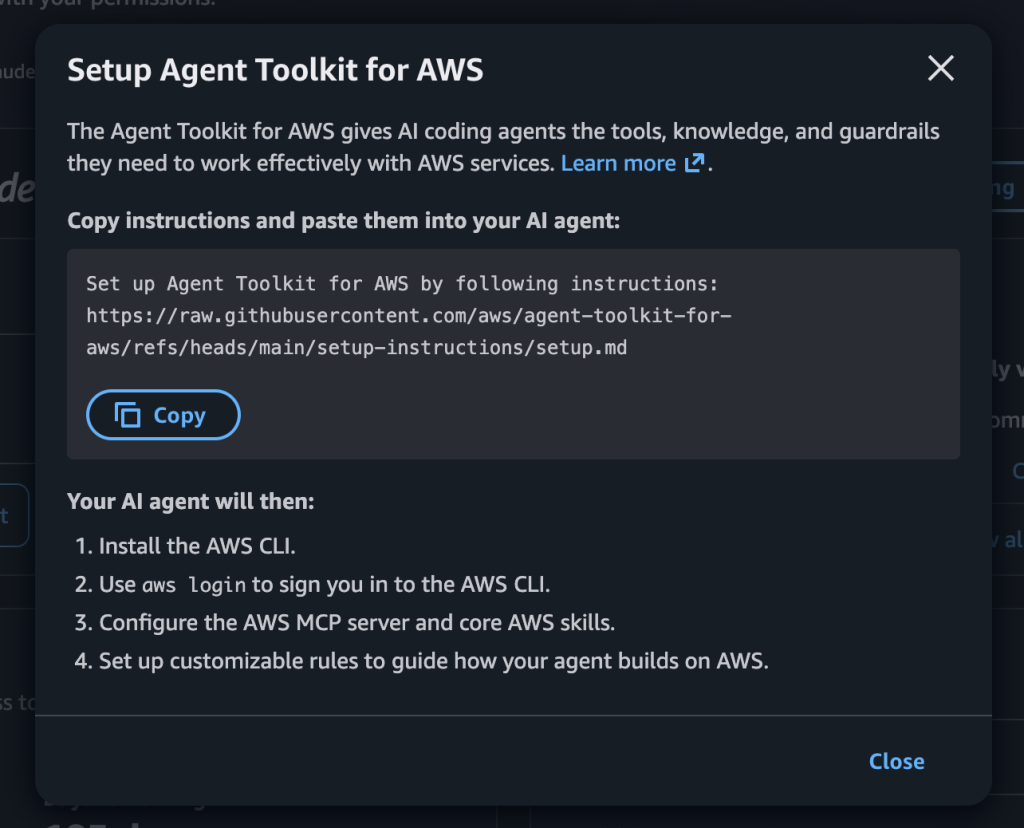
Rather than forcing users to manually provision and link disparate resources, the new workflow organizes work around the concept of a "project." When a user creates a project, AWS automatically provisions an underlying AWS account embedded with pre-configured security baselines and administrative controls. This structural automation extends directly into the development workflow via native support for coding agents. Upon signing in, developers are presented with a ready-to-use prompt that they can copy and paste directly into their preferred AI coding agent, such as Anthropic’s Claude.
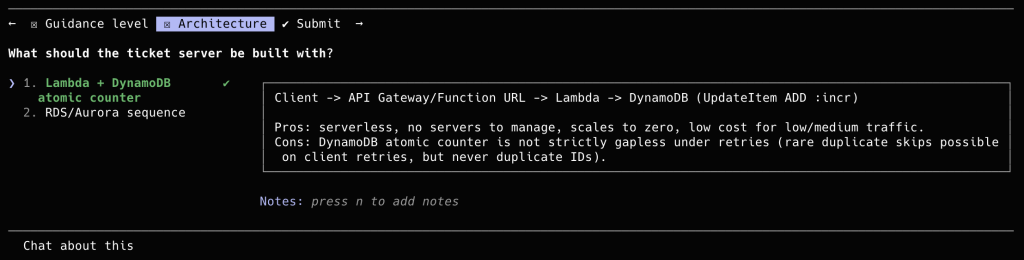
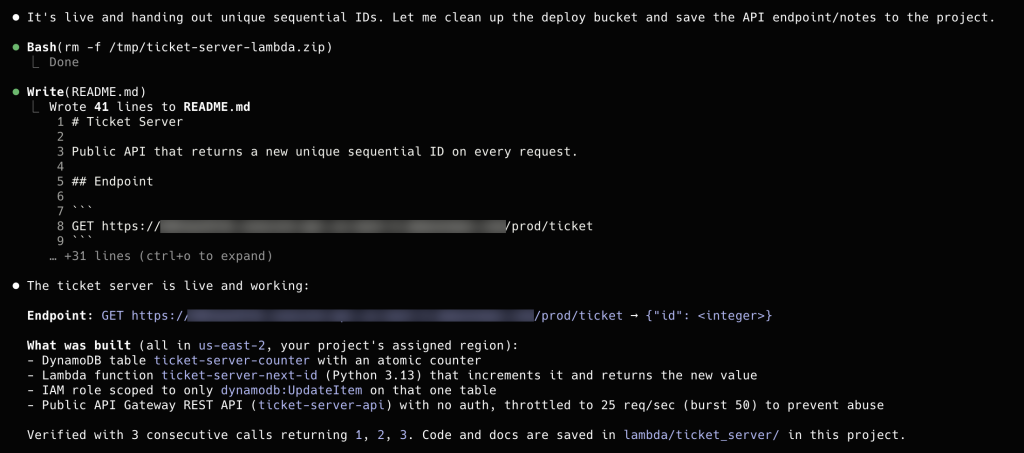
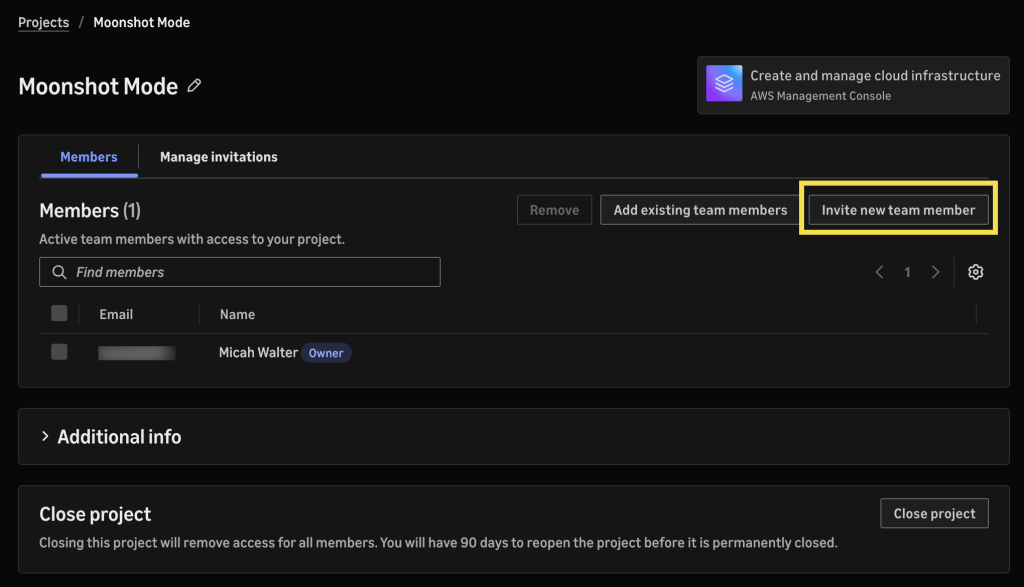
Once configured with the AWS Command Line Interface (CLI) and the Agent Toolkit for AWS, the coding agent gains the capability to autonomously deploy resources, manage workloads, and iterate on application logic in alignment with AWS cloud best practices. For instance, a developer can prompt an agent to construct a serverless API; the agent will subsequently design, provision, and link an AWS Lambda function, an Amazon DynamoDB table, and an Amazon API Gateway endpoint without requiring the user to manually configure Identity and Access Management (IAM) roles or resource permissions. Furthermore, collaborative development is streamlined through an email-based invitation system, permitting team members to access specific projects without needing to understand or manage complex organizational hierarchies.
Chronology, Rollout, and Historical Evolution of AWS Accessibility
The genesis of Amazon Web Services dates back to the mid-2000s, when the platform debuted with a handful of foundational storage and compute primitives designed to democratize software development. Over the subsequent two decades, the platform scaled dramatically, driven by enterprise demands for high availability, granular security policies, multi-region compliance, and rigorous cost governance controls. While these capabilities cemented AWS as the backbone of the modern internet and corporate infrastructure, they inadvertently created a steep learning curve for solo innovators and rapid prototypers.
Recognizing the paradigm shift introduced by generative AI and autonomous coding agents—where application development cycles have compressed from weeks to minutes—AWS leadership initiated a strategic pivot to reconsider day-one usability. The development of this simplified experience marks the culmination of months of internal architecture redesigns aimed at separating the initial prototyping phase from heavy enterprise administration.
The rollout is currently underway as a phased release targeting new AWS customers globally. As the deployment progresses, AWS plans to gather user telemetry and community feedback to refine default settings and expand the compatibility matrix for additional coding assistants and development environments.
Supporting Data, Financial Guardrails, and Project Economics
To alleviate the financial anxiety frequently associated with cloud prototyping—where unmonitored scripts can occasionally generate unexpected expenses—AWS has introduced structural spending controls natively integrated into the project management console.

Under the new financial model, projects operating on free credits or transitioning to paid tiers benefit from customizable monthly spend limits. When a user elects to upgrade beyond free credits by supplying a payment method, they can establish a hard budget ceiling starting as low as $20 per month based on usage projections and historical trends.
The economic safeguards operate transparently:
- Predictable Budgeting: The spend limit functions as a strict financial cap for an individual project. If a project incurs charges that exceed the designated limit, AWS halts the specific project workloads rather than allowing charges to accumulate uncontrollably.
- Proactive Notification Systems: As a project’s resource consumption approaches the configured financial threshold, AWS dispatches automated alerts to the project owner, providing adequate time to evaluate scaling needs or adjust limits.
- Isolated Project Economics: Because spend limits are configured on a per-project basis, developers can allocate larger financial boundaries to production-bound workloads gaining market traction while strictly containing experimental or sandbox concepts within minimal budgets.
Additionally, AWS incentives reinforce active deployment; for example, specific resource milestones—such as deploying a serverless function via a coding agent—can automatically trigger supplementary promotional credits, further reducing the friction of early-stage iteration.
Official Responses and Strategic Industry Implications
While formal executive statements accompanying the rollout emphasize a return to the foundational ethos of AWS—where anyone with an initial concept can begin building immediately—industry analysts and enterprise strategists are closely examining the broader market implications of this move.
For years, alternative cloud providers and specialized Platform-as-a-Service (PaaS) startups have attracted early-stage developers by offering streamlined, opinionated onboarding experiences that stood in stark contrast to the perceived complexity of hyperscale clouds. By introducing automated account provisioning, built-in AI agent tooling, and frictionless identity federation, AWS is effectively neutralizing this competitive advantage.
From an analytical perspective, the strategy addresses a critical funnel challenge in cloud computing: capturing developers during the ideation phase. By allowing builders to remain within the AWS ecosystem from prototype to enterprise scale, Amazon eliminates the arduous migration overhead that typically occurs when a successful startup outgrows a lightweight hosting provider and transitions to an enterprise-grade cloud.

Crucially, the architecture of this new experience ensures that growth is additive rather than disruptive. When a project eventually outgrows the simplified environment and requires sophisticated governance structures, multi-region redundancy, or custom compliance policies via AWS Organizations, administrators can activate advanced features instantly. This transition requires zero migration, incurs no downtime, and preserves all previously provisioned infrastructure assets within the underlying services.
Broader Impact on the Software Engineering Landscape
The integration of automated AI workflows directly into cloud provisioning infrastructure signals a profound evolution in how software engineering teams will operate over the next decade. As coding agents transition from experimental text generators to autonomous deployment entities capable of orchestrating serverless microservices, databases, and API gateways, the bottleneck of software creation shifts away from manual configuration and toward architectural oversight.
By providing a secure, sandboxed runway complete with predictable financial guardrails, AWS has effectively bridged the gap between rapid prototyping and industrial-strength reliability. For independent developers, academic researchers, and corporate innovation teams alike, the new onboarding paradigm lowers the cognitive load of cloud adoption, ensuring that the primary limitation to building innovative software remains human creativity rather than infrastructure complexity.
