
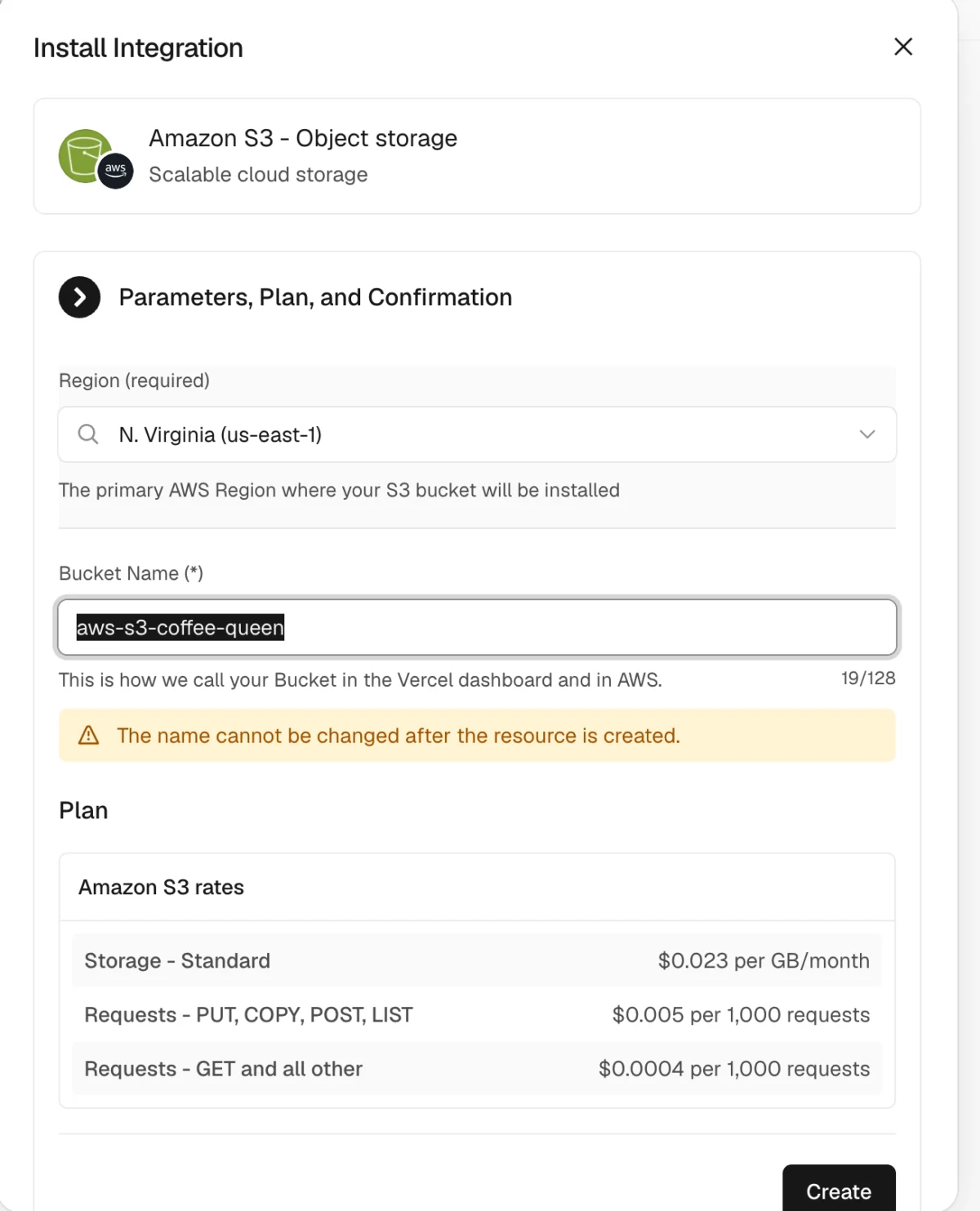

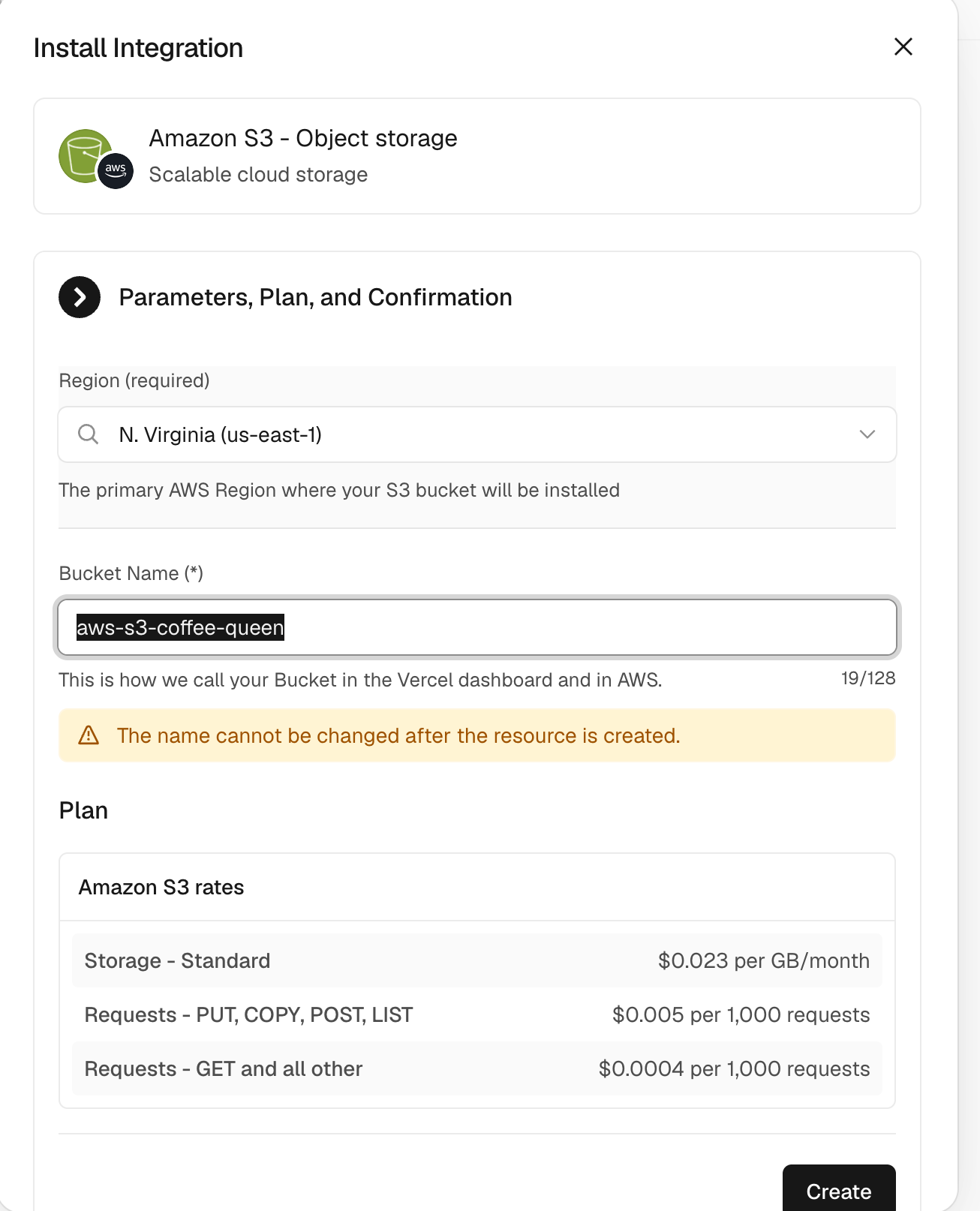
The landscape of modern web development and artificial intelligence engineering shifted significantly as Amazon Web Services (AWS) and Vercel announced the native integration of Amazon Simple Storage Service (Amazon S3) directly into the Vercel Marketplace and v0. This strategic collaboration allows developers to provision, configure, and manage scalable cloud storage, high-performance analytics, and vector databases without ever leaving the Vercel ecosystem or manually navigating the AWS Management Console.
By bridging Vercel’s frictionless developer provisioning workflow with the enterprise-grade durability and performance of Amazon S3, the partnership addresses three core pillars of modern application architecture: everyday object storage, big data analytics via S3 Tables, and semantic search capabilities powered by S3 Vectors. This unified approach drastically reduces operational overhead, removes traditional configuration bottlenecks, and aligns cloud infrastructure deployment with the rapid pace of modern continuous integration and deployment pipelines.
The Evolution of Cloud Infrastructure Provisioning
For years, developers building full-stack applications faced a persistent friction point: managing infrastructure across disparate control planes. While platforms like Vercel revolutionized front-end deployment, serverless rendering, and edge computing, backend data persistence and object storage typically required manual intervention in secondary cloud consoles. Engineering teams had to independently generate Identity and Access Management (IAM) policies, configure cross-origin resource sharing (CORS) rules, manage access keys, and securely handle long-lived static credentials.
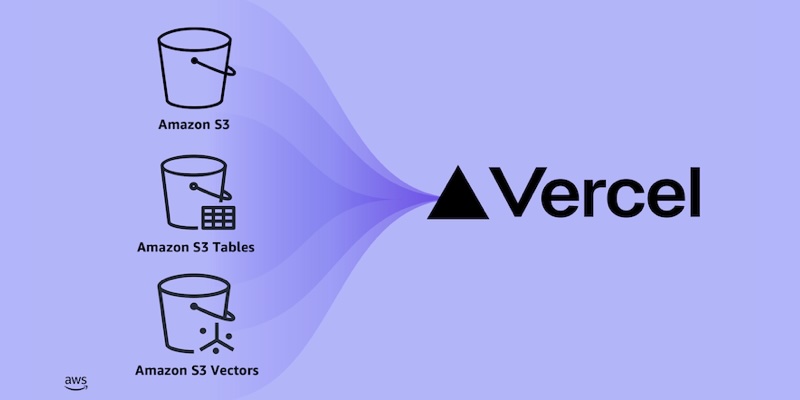
The integration of Amazon S3 into the Vercel Marketplace represents a maturation of cloud-native development workflows. Historically, AWS and Vercel have expanded their interoperability through prior integrations involving managed relational and NoSQL databases, including Amazon Aurora, Amazon DynamoDB, and Amazon OpenSearch Serverless. However, the addition of object, table, and vector storage completes the application stack within a single pane of glass.
Industry analysts note that this convergence addresses a vital developer experience (DevEx) priority. As applications grow increasingly complex—incorporating large language models (LLMs), real-time analytics, and heavy media assets—the time spent on non-differentiated infrastructure tasks drains engineering velocity. By automating resource provisioning and leveraging secure, short-lived OpenID Connect (OIDC) tokens for runtime authentication, the new integration eliminates the risk associated with static access keys while preserving granular AWS security controls.
A Comprehensive Three-Tier Storage Solution
The newly available Amazon S3 capabilities on Vercel are categorized into three distinct operational workloads designed to support everything from traditional web applications to advanced generative AI architectures.
1. Everyday Object Storage
For standard web applications requiring file uploads, media hosting, and document management, developers can instantiate general-purpose Amazon S3 buckets directly from the Vercel dashboard. Using standard AWS SDKs alongside Vercel’s OIDC credential provider, applications can execute basic CRUD operations—such as putting, listing, and getting objects—with minimal boilerplate code. This setup ensures that applications inherit S3’s industry-standard eleven nines (99.999999999%) of durability and global scalability out of the box.

2. High-Performance Analytics via S3 Tables
Modern data-driven applications frequently demand real-time analytics over massive datasets. To address this, Amazon S3 Tables have been integrated to provide purpose-built storage optimized for data lakes and analytics engines. S3 Tables feature fully managed Apache Iceberg tables equipped with automated table maintenance, compaction, and optimization routines.
Developers can seamlessly query these tables using embedded engines like DuckDB directly inside serverless Vercel Functions. By attaching table buckets via their Amazon Resource Names (ARNs) and passing temporary session tokens securely, applications can execute complex aggregate queries, process clickstream data, or analyze business intelligence metrics at scale without provisioning dedicated external data warehouse clusters.
3. Semantic Search and AI Workflows with S3 Vectors
With the rapid proliferation of generative AI agents, retrieval-augmented generation (RAG) systems, and semantic search interfaces, vector storage has become a mandatory component of modern tech stacks. Amazon S3 Vectors delivers cost-optimized, purpose-built vector storage directly within S3, removing the requirement for a separate, dedicated vector database for many workloads.
While S3 Vectors does not generate embeddings—leaving that step to the developer’s model of choice—it provides native capabilities for storing, indexing, and querying high-dimensional vectors. Applications can perform low-latency similarity searches over millions of data points, enabling use cases such as intelligent PDF support bots, semantic product recommendation engines, and context-aware conversational AI agents directly from the edge.
Automated Architecture Generation via v0
One of the most transformative aspects of the new partnership is its integration with v0, Vercel’s natural language generation tool. Rather than manually configuring storage buckets, defining schemas, and wiring up environment variables, developers can describe their functional requirements in plain English, and v0 handles the underlying infrastructure provisioning and code generation.
For instance, a developer prompting v0 for “a photo gallery where users upload images using AWS” will automatically trigger the creation of a general-purpose S3 bucket, configure the requisite environment variables, and generate the corresponding Next.js route handlers. Similarly, requesting “a support bot that answers questions from my PDFs” provisions an S3 Vectors index and builds the necessary RAG pipeline, while an “analytics dashboard for clickstream data” automatically provisions S3 Tables and integrates query logic.
This capability lowers the barrier to entry for building complex, enterprise-ready cloud applications. By abstracting the initial scaffolding phase, engineering teams can focus entirely on business logic and user experience design, trusting that the underlying AWS resources are correctly configured and securely connected.
Security, Authentication, and Enterprise Integration
Security remains a paramount consideration in any cloud-native architecture. The Vercel-AWS S3 integration abandons traditional static credentials in favor of a modern, token-based authentication model. At runtime, the awsCredentialsProvider utility from @vercel/functions/oidc exchanges a short-lived OpenID Connect token with the AWS Security Token Service (AWS STS). This generates tightly scoped, temporary credentials specific to the executing function and requested resource.
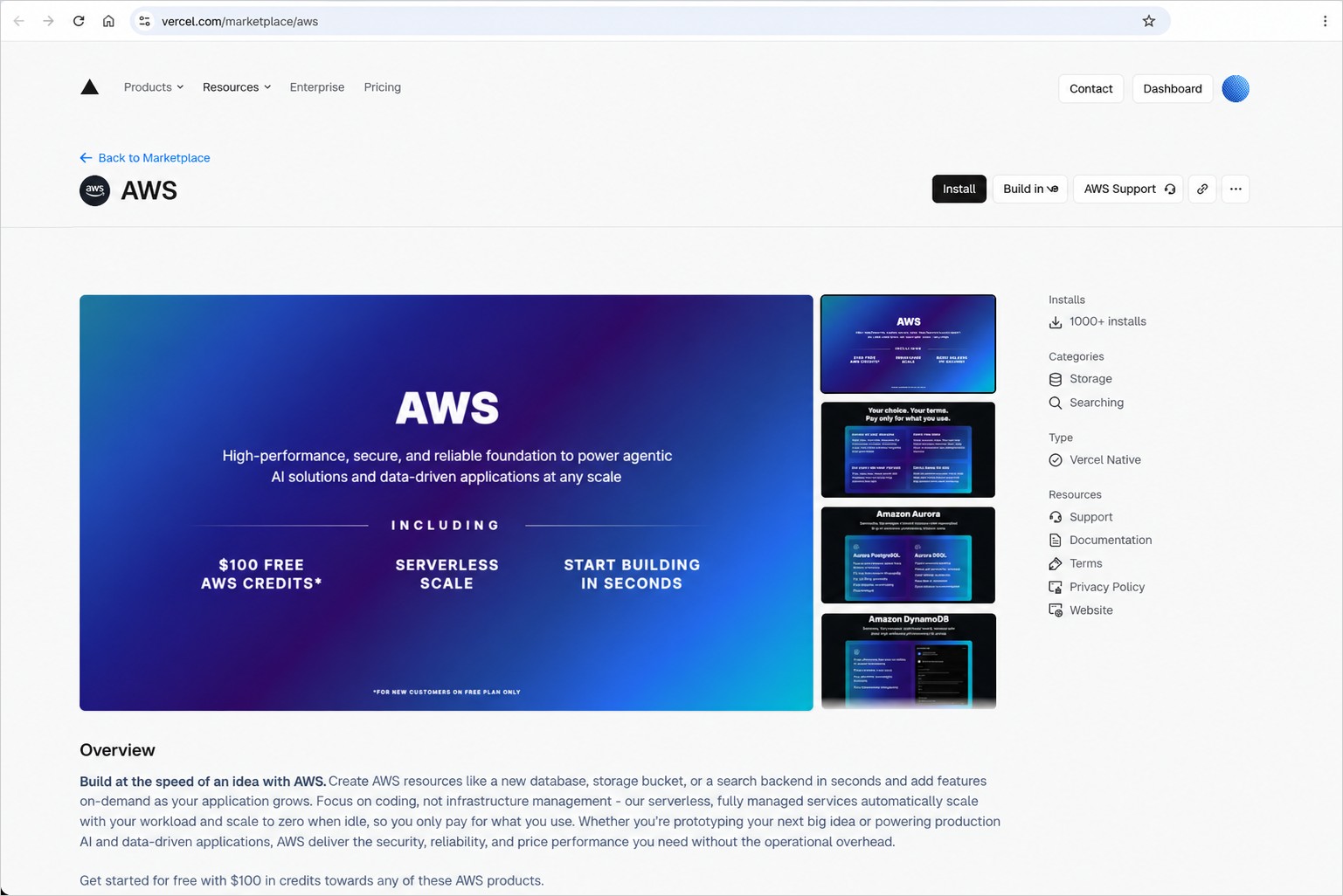
Furthermore, the integration provides architectural flexibility regarding account management. Organizations can either establish a brand-new AWS account directly through the Vercel platform—benefiting from promotional incentives such as $100 in AWS credits valid for six months—or link their existing corporate AWS accounts. When linking an existing account, Vercel confines its automated provisioning to new buckets created explicitly through the platform, ensuring that legacy infrastructure remains undisturbed while maintaining centralized billing and native AWS governance tooling.
Broader Industry Implications and Future Outlook
The convergence of Vercel’s edge deployment model with Amazon S3’s robust storage tiers signals a broader industry trend toward unified, multi-service developer platforms. As enterprises increasingly migrate mission-critical workloads to serverless and edge architectures, the demand for frictionless interoperability between compute and storage layers has intensified.
By consolidating the application stack—spanning relational databases, NoSQL datastores, search services, object storage, open table formats, and vector indexes—under a single management interface and billing stream, AWS and Vercel have established a compelling benchmark for modern cloud economics. For startups and Fortune 500 enterprises alike, this reduces administrative overhead, accelerates time-to-market, and ensures that scalable cloud infrastructure remains accessible to development teams of all sizes.
Developers interested in exploring the new integration can access Amazon S3, S3 Tables, and S3 Vectors immediately through the Vercel Marketplace or by utilizing v0 for natural language application scaffolding across all commercial AWS regions supported by Vercel. Additional technical documentation, agent toolkits, and community feedback channels are actively maintained via AWS re:Post and the official AWS Machine Learning and Cloud architecture repositories.
