
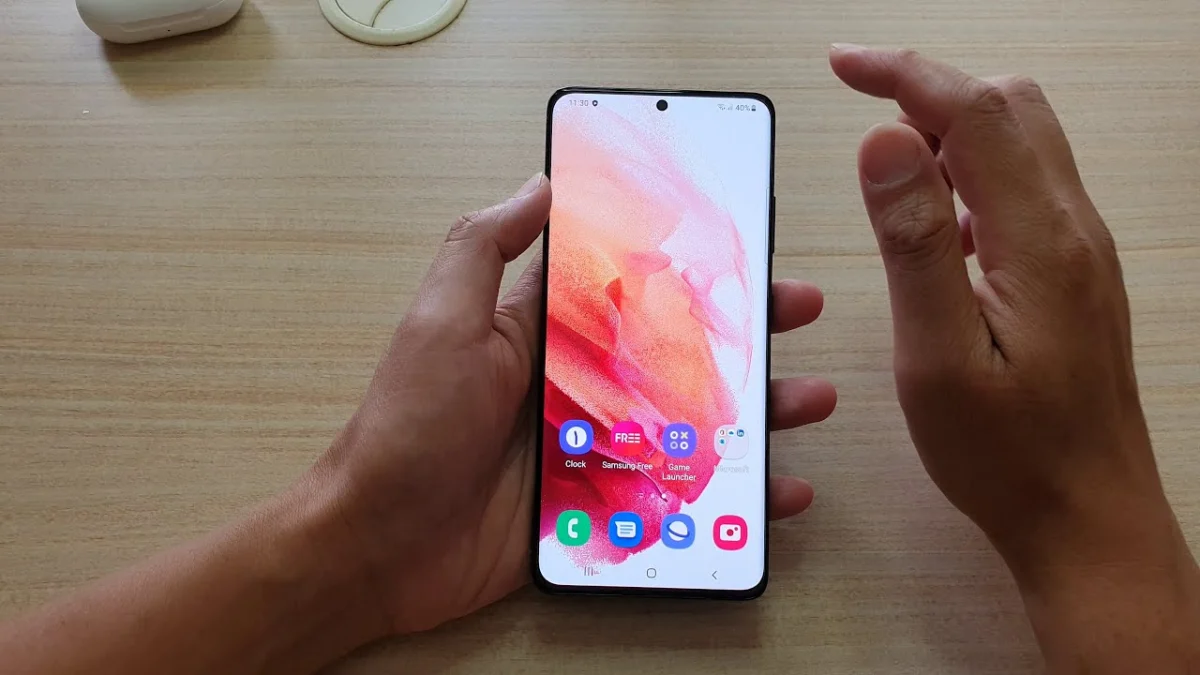

The global telecommunications landscape is currently undergoing a fundamental shift as physical hardware gives way to software-defined solutions, with the embedded SIM, or eSIM, leading this digital transformation. For users of Samsung Galaxy devices, this technology represents more than just a convenience; it is a total reimagining of how mobile identity and connectivity are managed. As Samsung continues to integrate eSIM technology across its flagship and mid-range portfolios, understanding the mechanics, benefits, and industry implications of this transition becomes essential for consumers and enterprise users alike.
The Evolution of the Subscriber Identity Module: A Brief Chronology
To understand the significance of the eSIM on Samsung devices, one must look at the trajectory of SIM technology over the last three decades. The original SIM card, introduced in 1991, was the size of a credit card. Over the subsequent years, the industry saw a consistent downsizing to the Mini-SIM, Micro-SIM, and eventually the Nano-SIM in 2012. Each iteration aimed to save internal device space to accommodate larger batteries and more complex sensors.
The eSIM represents the final stage of this evolution. Rather than a removable plastic card, the eSIM is a small, permanent chip—specifically a Vacuum-sealed Component—soldered directly onto the device’s motherboard during the manufacturing process. Samsung first embraced this technology in its wearable line, specifically the Gear S2 Classic 3G in 2016, before bringing it to its primary smartphone lineup with the Galaxy S20 series in 2020. This move signaled a major pivot for the Android ecosystem, as Samsung’s adoption forced global carriers to accelerate their digital provisioning infrastructure.
Technical Mechanics: How eSIM Functions on Samsung Hardware
On a Samsung Galaxy device, the eSIM operates as a rewriteable piece of hardware that stores the International Mobile Subscriber Identity (IMSI) and the related key used to identify and authenticate subscribers on mobile telephony devices. Unlike traditional SIMs, which are "read-only" regarding their carrier branding, the eSIM is designed to be "Remote SIM Provisioned" (RSP).
When a user activates an eSIM on a Galaxy S24 or Z Fold 5, the device communicates with a Discovery Server (SM-DS). This server holds the digital profile provided by the carrier. By scanning a QR code or using a carrier-specific app, the user triggers a secure download of the profile onto the eUICC (Embedded Universal Integrated Circuit Card). This profile contains the same data found on a physical SIM but exists as a secure software file.
One of the most significant technical advantages of Samsung’s implementation is the ability to store multiple profiles. While only one or two (in Dual SIM configurations) can be active at a time, a Samsung device can typically hold up to five or more virtual SIM profiles in its memory, allowing users to switch between different carriers or data plans via the software settings menu without ever touching a SIM tool.
Comprehensive List of eSIM-Compatible Samsung Devices
As of 2024, Samsung has expanded eSIM support beyond its premium "S" and "Z" series to include select "A" series models in specific regions. The following models currently support eSIM technology:
- Galaxy S Series: Every model from the Galaxy S20, S21, S22, S23, and S24 series (including Plus and Ultra variants).
- Galaxy Z Series: All generations of the Galaxy Z Fold and Galaxy Z Flip.
- Galaxy Note Series: Galaxy Note 20 and Note 20 Ultra.
- Galaxy A Series: Select mid-range models such as the Galaxy A54 5G and A55 5G (regional variations apply).
- Galaxy Tablets: Galaxy Tab S9, S9+, and S9 Ultra (5G models).
It is important to note that regional variations exist. For instance, some Samsung devices sold in the United States or South Korea may have different eSIM configurations compared to those sold in Europe or the Middle East, often dictated by local carrier requirements.
Supporting Data and Market Trends
The transition to eSIM is backed by significant market data. According to reports from the GSMA (Global System for Mobile Communications Association), the number of eSIM-capable consumer devices surpassed 1 billion units globally by the end of 2023. Furthermore, it is projected that by 2025, over 50% of all mobile connections globally will utilize eSIM technology.
Samsung’s role in this growth is pivotal. As the world’s largest smartphone manufacturer by volume in many quarters, its decision to standardize eSIM across the Galaxy line has reduced the manufacturing cost of the components and pressured smaller carriers in emerging markets to upgrade their systems. Market analysis suggests that the "eSIM-only" trend, popularized by certain competitors in the US market, is a direction Samsung is closely monitoring for future iterations of its hardware.
Security Implications and the Rise of Digital Safety
Security is a primary driver for the adoption of eSIMs on Samsung devices. Traditional physical SIM cards are susceptible to "SIM swapping" and physical theft. If a device is stolen, a thief can easily remove the physical SIM and place it in another device to intercept two-factor authentication (2FA) codes.
With an eSIM, the digital profile is locked to the device hardware and protected by Samsung’s Knox security platform. If a Galaxy device is stolen, the thief cannot remove the SIM to use the number elsewhere. Furthermore, the process of transferring an eSIM requires biometric or passcode authentication, adding a layer of defense against unauthorized porting of phone numbers. Samsung Knox provides a "TrustZone" environment where the eSIM’s sensitive cryptographic keys are stored, ensuring that the digital identity remains tamper-proof even if the operating system is compromised.
Step-by-Step Activation and Carrier Landscape
The process of activating an eSIM on a Samsung device has been streamlined through the "SIM Manager" located within the Connections menu of the Settings app.
- Preparation: Ensure the device is connected to a stable Wi-Fi network, as the eSIM profile must be downloaded from the carrier’s server.
- Navigation: Open Settings > Connections > SIM Manager.
- Addition: Select "Add eSIM."
- Verification: The device will offer to "Scan QR code from service provider." If the carrier provides an activation code instead, it can be entered manually.
- Confirmation: Once the profile is detected, the user confirms the download. The device may require a restart to finalize the registration on the cellular network.
The carrier landscape, however, remains fragmented. While Tier-1 carriers in the US (Verizon, T-Mobile, AT&T) and Europe (Orange, Vodafone, Deutsche Telekom) offer robust eSIM support, many prepaid and smaller MVNOs (Mobile Virtual Network Operators) are still catching up. Users are advised to verify that their specific plan supports eSIM, as some carriers may charge a "re-issue fee" for moving a plan from a physical card to an eSIM.
Broader Industry Impact: Sustainability and International Travel
The environmental impact of the shift to eSIM is a significant, yet often overlooked, factor. The production of billions of plastic SIM cards annually contributes to plastic waste and requires carbon-intensive logistics for shipping. By moving to a digital-first model, Samsung and the broader tech industry can significantly reduce their plastic footprint.
For the international traveler, the eSIM is revolutionary. Historically, travelers had to find a local kiosk, provide a passport, and swap physical cards upon arrival in a new country. With a Samsung Galaxy device, travelers can now use third-party marketplaces like Airalo or Holafly to purchase and install a local data plan before they even board their flight. This "dual-active" capability allows the user to keep their primary home number active for calls and texts (via the physical slot) while using the eSIM for affordable local data.
Challenges and Limitations
Despite the advantages, the transition is not without hurdles. The most prominent issue is the "lock-in" effect. Transferring an eSIM between an Android device and an iOS device, or even between different Android manufacturers, is currently more cumbersome than simply moving a physical card. While Google and Samsung are working on a standardized "eSIM Transfer Tool" for Android, the process still relies heavily on carrier cooperation.
Additionally, in the event of a total device hardware failure (e.g., the screen dies or the phone won’t power on), a user cannot simply "pop out" the SIM to stay connected. They must contact their carrier to have the profile deactivated on the broken device and reissued for a new one, a process that can take time and requires access to another communication method.
Conclusion: The Path Toward a Portless Future
The integration of eSIM technology in Samsung devices is a clear indicator of the industry’s trajectory toward a portless, fully digital future. By eliminating the SIM tray, manufacturers can reclaim valuable internal space for larger batteries, improved thermal cooling, or more advanced camera optics. For the consumer, the eSIM offers a level of flexibility and security that physical cards simply cannot match.
As 5G networks continue to mature and the Internet of Things (IoT) expands, the ability to manage multiple digital identities on a single Samsung device will become the standard rather than the exception. While the industry navigates the remaining challenges of carrier interoperability and cross-platform transfers, the eSIM stands as a cornerstone of modern mobile engineering, redefining the relationship between the user, their device, and the global network.
