
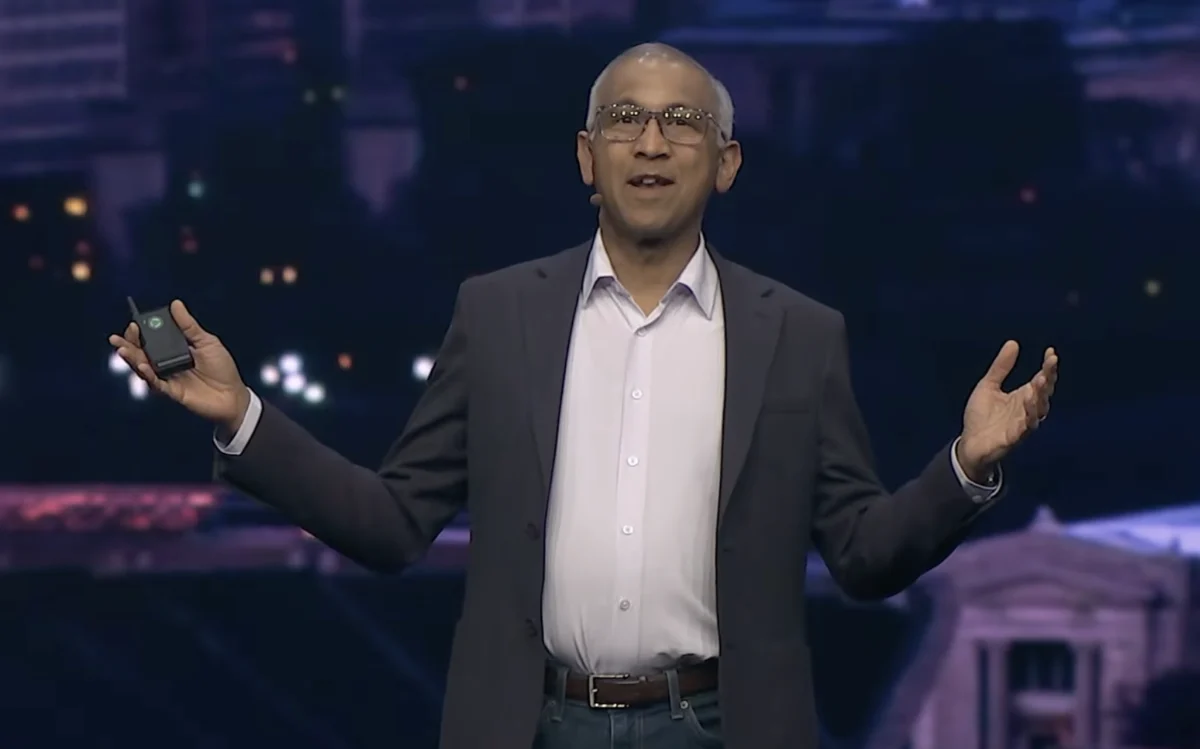

Nutanix officially commenced its annual .NEXT 2026 user conference in Chicago this week, unveiling a strategic roadmap designed to transition global enterprises into the era of agentic artificial intelligence. During a series of keynote addresses and analyst briefings, the company detailed an expansion of its cloud platform, aiming to bridge the gap between traditional mission-critical applications and the burgeoning demands of autonomous AI agents. The announcements center on a unified architecture that facilitates the deployment of "AI factories" across private, public, and "neo-cloud" environments, reflecting a broader industry shift toward decentralized but integrated computing models.
The conference serves as a pivotal moment for Nutanix as it seeks to capitalize on the increasing complexity of the enterprise IT landscape. CEO Rajiv Ramaswami addressed a gathering of industry analysts and stakeholders, articulating a vision where the Nutanix platform acts as a stabilizing force for Chief Information Officers (CIOs) grappling with fragmented AI strategies. Ramaswami emphasized that while the public cloud remains a critical component of the modern enterprise, the rise of agentic AI—systems capable of autonomous reasoning and task execution—requires a hybrid approach that prioritizes data sovereignty, low-latency inferencing, and cost efficiency.
The Strategic Pivot to Agentic AI and Hybrid Frameworks
The core of Nutanix’s 2026 strategy is the recognition that the initial wave of generative AI, characterized by centralized chatbots and large language models (LLMs), is evolving into a more complex ecosystem of autonomous agents. These agents do not merely provide information; they execute workflows, interact with various software suites, and require constant access to real-time enterprise data. Ramaswami argued that for these applications to be viable at scale, they must operate within a "true hybrid" environment.
According to Nutanix leadership, the "AI Everywhere" phenomenon has created a paradox for modern enterprises. While the availability of AI services has never been higher, the difficulty of operationalizing these services while maintaining security and achieving a tangible return on investment (ROI) has grown exponentially. Ramaswami noted that CIOs are currently struggling to manage AI workloads that are scattered across different platforms, leading to "AI silos" that hinder the ability to gain a holistic view of corporate intelligence.
To address this, Nutanix is positioning its platform as a "turnkey experience." This model is intended to alleviate the burden on infrastructure administrators and platform engineers, who are increasingly viewed as a constrained resource within the enterprise. By providing a pre-integrated stack—comprising AI services, a Kubernetes-based container orchestration layer, and a high-performance data foundation—Nutanix aims to allow companies to become "consumers of infrastructure" rather than "integrators of technology."
Technical Architecture of the Nutanix AI Factory
The technical foundation of the Nutanix announcement rests on three primary pillars: AI services, data streaming, and multi-tenant management. The "AI Factory" concept, as defined by Nutanix, is not a single product but a cloud operating model applied specifically to the needs of AI inferencing and training.
- AI Services and Kubernetes Integration: Nutanix has deepened its integration with its native Kubernetes platform to support the orchestration of AI workloads. This allows for the dynamic scaling of resources as agentic AI applications demand more compute power for complex reasoning tasks.
- Data Foundation for Real-Time Inferencing: A critical challenge for agentic AI is the need for low-latency access to proprietary data. Nutanix’s data foundation is engineered to stream information with high performance, ensuring that AI agents can make decisions based on the most current data available without the delays inherent in moving massive datasets across geographic regions.
- Unified Management and Governance: As the number of AI agents within an organization grows, the risk of "agent sprawl" increases. Nutanix’s platform provides a centralized control plane to manage shared infrastructure across multiple tenants. This includes built-in security protocols and governance frameworks to ensure that AI agents operate within defined ethical and legal boundaries.
Ramaswami highlighted that this architecture is specifically tuned for the "cost per token," which he described as the fundamental unit of intelligence in the modern economy. By optimizing the underlying hardware utilization—whether it be existing on-premises servers or specialized AI hardware—Nutanix claims it can significantly lower the operational costs of running advanced AI models.
Sovereignty and the Rise of Neo-Clouds
A recurring theme throughout the .NEXT 2026 conference is the escalating importance of data sovereignty. Driven by geopolitical tensions and increasingly stringent regulatory environments, particularly in the European Union and parts of Asia, enterprises are moving away from a "cloud-first" to a "sovereign-first" mindset for sensitive data.
Nutanix identified a growing trend in the emergence of "neo-clouds"—specialized service providers that offer high-performance AI infrastructure tailored to specific regional or industrial requirements. Unlike the "hyperscalers" (Amazon Web Services, Microsoft Azure, and Google Cloud), these neo-clouds often focus on providing specialized GPU clusters and localized data residency.
Ramaswami noted that the need for real-time inferencing at the "edge"—such as in manufacturing plants, healthcare facilities, and retail hubs—further necessitates a hybrid model. Agentic AI applications in these sectors cannot afford the latency of communicating with a distant public cloud data center. Consequently, Nutanix is focusing on capturing the opportunity to manage workloads across these diverse environments, ensuring a consistent operating experience regardless of where the physical hardware resides.
Chronology of Innovation: From Virtualization to Agentic AI
The strategy unveiled at .NEXT 2026 represents the latest stage in Nutanix’s decade-long evolution.
- Phase 1 (2009–2015): Nutanix pioneered Hyper-Converged Infrastructure (HCI), disrupting the traditional storage market by integrating compute and storage into a single software-defined platform.
- Phase 2 (2016–2021): The company expanded into multi-cloud management, launching Nutanix Cloud Clusters (NC2) to allow customers to run their Nutanix environment on public cloud providers.
- Phase 3 (2022–2024): Nutanix introduced "GPT-in-a-Box," a simplified solution for enterprises to deploy large language models on-premises, addressing early concerns about data privacy in the generative AI era.
- Phase 4 (2025–Present): The current focus on Agentic AI and AI Factories signifies a shift from providing the "plumbing" for AI to providing a comprehensive "operating system" for autonomous enterprise intelligence.
This progression reflects a broader market trend where infrastructure providers are moving up the software stack to provide more value-added services. By integrating AI services directly into the platform, Nutanix is attempting to make AI deployment as seamless as deploying a traditional virtual machine was a decade ago.
Market Context and Competitive Landscape
Industry analysts observing the .NEXT conference have noted that Nutanix’s aggressive push into AI comes at a time of significant upheaval in the virtualization market. The acquisition of VMware by Broadcom has led many enterprises to re-evaluate their long-term infrastructure partnerships due to changes in licensing models and product portfolios. Nutanix has positioned itself as a primary alternative, offering a modernized path for customers looking to migrate away from legacy virtualization stacks.
Market data suggests that the demand for hybrid AI infrastructure is poised for significant growth. According to recent projections from International Data Corporation (IDC), spending on AI centric-systems is expected to surpass $300 billion by 2027. Furthermore, Gartner reports that by 2026, more than 80% of enterprises will have used generative AI APIs or deployed generative AI-enabled applications in production environments, up from less than 5% in 2023.
Nutanix’s focus on "agentic" AI aligns with these projections, as the industry moves from experimentation to full-scale production. Competitors such as Dell Technologies, Hewlett Packard Enterprise (HPE), and NetApp are also vying for dominance in the AI infrastructure space, often through partnerships with hardware giants like NVIDIA. Nutanix’s differentiator remains its software-defined approach, which promises hardware agnosticism and a unified management layer across different silicon architectures.
Case Study: Sovereign Digital Services in EMEA
To illustrate the practical application of its new strategy, Nutanix cited a significant deployment by an unnamed digital services provider based in the EMEA (Europe, Middle East, and Africa) region. This provider, which serves a variety of government and private sector clients, serves as an exemplar of the "sovereignty-first" approach.
The provider’s journey with Nutanix began with standard infrastructure modernization, migrating existing databases to the Nutanix HCI platform. In the second phase, they consolidated the majority of their enterprise applications onto the stack to achieve operational efficiency. In the current third phase, the provider is utilizing the Nutanix Agentic AI stack to create a shared AI infrastructure for its multiple tenants.
By using Nutanix, the service provider is able to maximize the utilization of its GPU resources across different clients while maintaining strict data isolation and compliance with local regulations. This "shared AI service" model is expected to become more common as organizations look for ways to offset the high costs of AI hardware by sharing resources in a secure, governed manner.
Broader Implications for the Future of Enterprise IT
The announcements at .NEXT 2026 signal a fundamental change in how enterprise IT departments will be structured in the coming years. As AI becomes embedded into every facet of business operations, the role of the infrastructure administrator is shifting from managing hardware to managing "intelligence workflows."
The emphasis on simplicity and a "turnkey experience" suggests that the industry is moving toward a future where the underlying complexities of AI—such as model fine-tuning, retrieval-augmented generation (RAG), and vector database management—are abstracted away. For Nutanix, the goal is to ensure that its platform remains the "operating system" of choice for this new era, regardless of whether the workloads are traditional databases or autonomous AI agents.
As the conference continues, industry observers expect further details on specific hardware partnerships and deeper integrations with open-source AI frameworks. While the transition to agentic AI is still in its early stages, the roadmap laid out in Chicago suggests that Nutanix is committed to providing the foundational architecture for the next generation of enterprise computing. The success of this strategy will likely depend on the company’s ability to maintain its reputation for simplicity and customer support while navigating the rapidly changing technological requirements of the AI era.
