
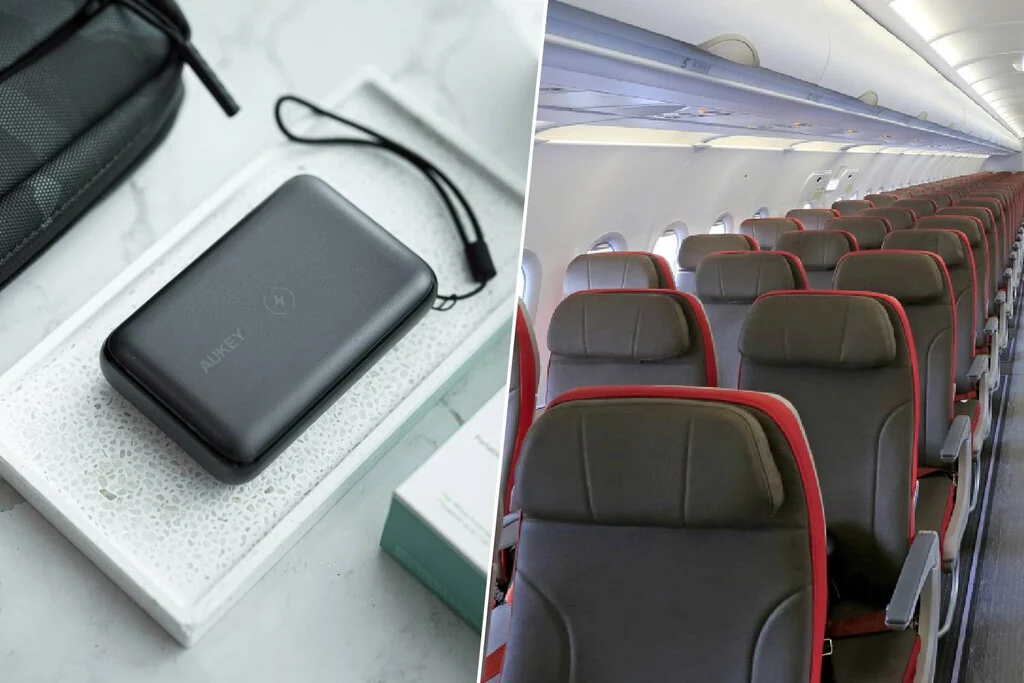

A significant shift in air travel safety protocols is underway, fundamentally altering how passengers interact with portable electronic devices, particularly external battery packs, commonly known as power banks. Effective March 27, 2026, the International Civil Aviation Organization (ICAO), the principal global body governing aviation standards across 193 member states, will introduce comprehensive new regulations. These measures, promptly echoed by the International Air Transport Association (IATA) in its Dangerous Goods Regulations, mark a critical escalation in efforts to mitigate fire risks posed by lithium-ion batteries in flight. While the full regulatory force is slated for 2026, major airlines, including Iberia and the Lufthansa Group, have already begun implementing stringent guidelines, signaling a proactive industry response to persistent safety concerns.
The Evolving Landscape of In-Flight Device Regulations
For years, air travelers have navigated a complex web of regulations concerning items permissible in cabin and checked baggage. From restrictions on liquids and aerosols to prohibitions on dangerous objects, security checkpoints have become synonymous with meticulous scrutiny. Among these, the rules surrounding portable electronic devices (PEDs) and their power sources have steadily evolved. It is a lesser-known fact, for instance, that IATA’s Dangerous Goods Regulations already impose a maximum limit of 15 portable electronic devices per person. Furthermore, the transportation of power banks has long been subject to specific stipulations, primarily mandating their carriage in hand luggage due to the potential for thermal events. The latest update, however, represents a decisive step towards an even more controlled environment, directly addressing the inherent risks of these ubiquitous charging accessories.
Key Changes to Power Bank Regulations
The core of the updated normativa centers on a complete prohibition of power bank usage within the aircraft cabin. Passengers will no longer be permitted to charge their personal devices using external batteries or even utilize the aircraft’s built-in USB ports to recharge their power banks once on board. While these devices remain permissible in the airport terminal, both pre and post-security, their functionality is suspended the moment a passenger steps onto the aircraft.
Beyond the prohibition of use, the new regulations introduce further restrictions on the quantity and capacity of power banks carried by individual travelers. Previously, the emphasis was primarily on capacity; now, a strict limit of two external batteries per person has been instituted. This limit applies regardless of individual capacity, provided they meet other criteria.
Capacity remains a crucial factor. Power banks must possess a maximum power rating of 100 Watt-hours (Wh) to be transported without prior authorization. Devices falling within the range of 100 Wh to 160 Wh will require express approval from the operating airline before travel. Crucially, any power bank exceeding 160 Wh is now unequivocally prohibited from carriage on commercial flights, whether in cabin or checked baggage. This tiered approach aims to balance passenger convenience with the imperative of safety, allowing for common, lower-capacity power banks while severely restricting larger, higher-risk units.
Proactive Airline Measures and Enhanced Safety Protocols
Even with the official ICAO implementation slated for 2026, several airlines have demonstrated a proactive stance. Xataka Móvil sources confirm that carriers like Iberia have already begun issuing pre-departure announcements detailing the new restrictions. These advisories emphasize the prohibition of in-flight power bank use, the mandate to store them exclusively under the seat (never in overhead compartments), and the critical instruction to immediately alert cabin crew if a power bank is lost, becomes swollen, or falls between seats – all potential indicators of a thermal incident.
The rationale behind storing power banks under the seat, rather than in overhead lockers, is rooted in emergency response. In the event of a thermal runaway or fire, a power bank under a seat is more easily accessible for cabin crew to address with specialized fire containment equipment. A device in an overhead bin, conversely, could be harder to reach and contain, potentially escalating a minor incident into a more severe emergency.
Furthermore, these regulations extend beyond passenger baggage to the logistics of transporting new power banks as cargo. The updated normativa specifies that for power banks with capacities exceeding 100 Wh being shipped as cargo, they must be presented with a state of charge no greater than 30% or an indicated battery capacity not exceeding 25%. This measure aims to reduce the inherent risks associated with shipping fully charged high-capacity lithium-ion batteries, which are known to be more volatile at higher charge levels.
The Imperative of Safety: Understanding Lithium-Ion Risks
The stringent new regulations are a direct response to a growing number of safety incidents involving lithium-ion batteries on aircraft. These batteries, prevalent in virtually all modern portable electronic devices, including smartphones, laptops, and, crucially, power banks, pose a unique and significant fire hazard. When damaged, overcharged, or subjected to extreme temperatures, lithium-ion batteries can enter a state known as "thermal runaway." This is a rapid, self-sustaining chemical reaction that generates intense heat, often accompanied by the release of flammable gases, smoke, and, in severe cases, explosion.
One notable incident that underscores these dangers occurred on October 19, 2025, when an Air China flight was forced to make an emergency landing after a lithium battery ignited onboard, as reported by Euronews. Such events, though relatively rare given the millions of flights annually, carry catastrophic potential in the confined environment of an aircraft cabin. The smoke and toxic fumes alone can incapacitate passengers and crew, while an uncontrolled fire at altitude presents an existential threat to the flight. Aviation authorities, including ICAO and IATA, unequivocally classify personal electronic devices and their batteries as dangerous goods precisely because of this propensity to generate heat, short-circuit, and ignite when compromised.
Long before the official 2026 implementation, forward-thinking airlines recognized and acted upon these risks. The Lufthansa Group, for example, has explicitly prohibited the charging and use of external batteries on its flights (with exceptions for critical medical devices) and mandates their storage under the seat or in seat pockets for safety. This pre-emptive adoption highlights a collective industry understanding of the evolving risks and the necessity for robust mitigation strategies.
Regulatory Framework and Chronology
The journey towards these stricter rules has been incremental, reflecting both technological advancements and accumulating safety data. Historically, aviation safety guidelines have adapted to new threats, from the immediate aftermath of 9/11 leading to liquid restrictions, to ongoing adjustments concerning various electronic devices.
- Pre-2026: Existing IATA Dangerous Goods Regulations already limited the number of portable electronic devices (15 per person) and mandated power banks in carry-on luggage, with capacity limits (e.g., 100 Wh generally permitted, 100-160 Wh with airline approval, above 160 Wh prohibited). However, the use of power banks in flight was not universally prohibited.
- March 27, 2026: The ICAO officially introduces new rules, with immediate validity. These regulations explicitly prohibit the use of power banks on board and formalize the two-power-bank-per-person limit, alongside existing capacity restrictions.
- Ongoing Implementation: Airlines like Iberia and the Lufthansa Group, recognizing the gravity of the risks, have begun to implement aspects of these future regulations proactively, particularly the prohibition of use and specific storage requirements. This phased adoption allows for a smoother transition and immediate enhancement of safety.
These regulations are a collaborative effort by international bodies. ICAO establishes the overarching principles and standards for safe international air navigation. IATA, representing the airline industry, translates these principles into practical, actionable Dangerous Goods Regulations that airlines must follow. National aviation authorities, such as AENA in Spain, then enforce these regulations within their respective jurisdictions and may introduce additional country-specific requirements, such as China’s CCC certification for power banks.
Implications for Travelers and the Broader Industry
For the millions of air travelers globally, these changes necessitate a fundamental shift in travel habits and preparedness. Passengers will need to:
- Plan Charging Needs: Ensure all essential devices are fully charged before boarding, as in-flight charging via power banks will no longer be an option. This might lead to increased demand for charging stations in airport terminals.
- Review Power Bank Inventory: Check the Watt-hour (Wh) rating of all power banks and adhere strictly to the two-device limit. Non-compliant devices risk confiscation.
- Understand Storage Requirements: Be prepared to store power banks under the seat, easily accessible but secured.
- Stay Informed: Consult airline-specific guidelines and the regulations of departure and arrival airports, as local variations or additional restrictions may apply. The example of China’s requirement for CCC-certified power banks underscores the importance of regional specificities.
- Prioritize Safety: Actively participate in cabin safety by immediately reporting any incidents involving batteries to the flight crew.
For airlines, the implications extend to enhanced crew training on lithium-ion battery incident management, clearer communication strategies for passengers, and potential adjustments to in-flight services if USB ports were previously used for power bank charging. The proactive approach by some airlines also highlights the competitive advantage of being perceived as a leader in passenger safety.
Manufacturers of power banks and logistics companies involved in their distribution will also be affected. The 30% charge limit for cargo shipments of higher-capacity batteries impacts manufacturing processes and supply chain management. The demand for clear Wh labeling on products will increase, and the push for safer battery technologies and certifications, like China’s CCC standard, may become more widespread.
The Future of Air Travel Security
The tightening of power bank regulations is not an isolated event but rather another chapter in the ongoing narrative of air travel security. As technology advances, introducing both convenience and new risks, regulatory bodies and airlines must continually adapt. This latest update underscores a firm commitment to prioritizing passenger and crew safety above all else, even if it means sacrificing some degree of convenience. The goal is to minimize the potential for catastrophic in-flight incidents, ensuring that the skies remain the safest mode of long-distance transportation. Travelers are encouraged to embrace these changes as a collective responsibility towards a safer aviation environment, fostering a culture of compliance that benefits everyone on board.
