


The global landscape of orbital security underwent a significant shift on April 8, as Bulgaria-based EnduroSat and United Kingdom-based Shield Space announced a comprehensive strategic partnership aimed at revolutionizing the deployment of space defense assets. This collaboration seeks to bridge the gap between traditional, multi-year satellite procurement cycles and the immediate, evolving needs of modern defense ministries. By integrating EnduroSat’s standardized, software-flexible satellite platforms with Shield Space’s cutting-edge autonomous guidance systems, the two companies aim to reduce the timeline from contract signature to on-orbit operation to just nine months. This initiative marks a pivotal moment for the European defense sector, providing a sovereign, high-speed alternative to established aerospace conglomerates and signaling a move toward "Tactically Responsive Space" (TacRS).
The Strategic Alliance: Merging Hardware Agility with Mission Autonomy
The partnership between EnduroSat and Shield Space is built upon a synergy of specialized technological domains. EnduroSat has established itself as a leading provider of end-to-end satellite services, specializing in software-defined NanoSats and MicroSats that can be reconfigured for a variety of mission profiles. Their "Space-as-a-Service" model has historically focused on commercial and research applications, but the new defense-centric partnership indicates a strategic pivot toward the burgeoning military space market.
Shield Space, headquartered in the United Kingdom, brings a proprietary autonomous guidance and mission control system to the table. In an environment where communication latencies can hinder real-time human intervention, Shield Space’s technology allows satellites to make split-second decisions during complex maneuvers. According to the joint announcement, this combined architecture allows for a "fixed-cost" approach to space services, providing defense customers with predictable budgeting and rapid deployment schedules that were previously unattainable in the defense sector.
Raycho Raychev, the founder and CEO of EnduroSat, emphasized the necessity of this speed in modern conflict. He noted that defense customers now require "fast, dependable access to operational space capability," and that by merging Shield Space’s effectors with EnduroSat’s flexible platforms, the partnership is enabling "real counter-threat missions in months—not years."
Mission Broadsword: A Landmark Demonstration of Orbital Maneuvering
The first tangible output of this partnership will be a joint mission titled "Broadsword," which is currently scheduled for launch in the second quarter of 2027. Broadsword is designed as a high-stakes technology demonstration focused on Rendezvous and Proximity Operations (RPO). RPO is a critical capability in modern space warfare, involving the precise maneuvering of one spacecraft (the "chaser") to approach and interact with another (the "target").
During the Broadsword mission, an autonomous chaser spacecraft will execute a full RPO sequence against a co-deployed target. This will involve the chaser identifying the target, calculating an intercept trajectory, and maintaining a close-range position without direct human piloting from the ground. Such capabilities are essential for a range of defense applications, including:
- Space Domain Awareness (SDA): Inspecting unknown or potentially hostile satellites to determine their capabilities.
- Active Debris Removal (ADR): Intercepting and de-orbiting non-functional assets that pose a collision risk.
- On-Orbit Servicing: Refueling or repairing friendly satellites to extend their operational lifespan.
- Counter-Space Operations: Neutralizing or disrupting adversarial assets through non-kinetic or kinetic means.
By demonstrating these capabilities on a compressed timeline and at a lower cost than traditional defense contractors, EnduroSat and Shield Space hope to prove that small, autonomous systems are the future of orbital security.
Project Nexus: The Rise of the Orbital Mothership
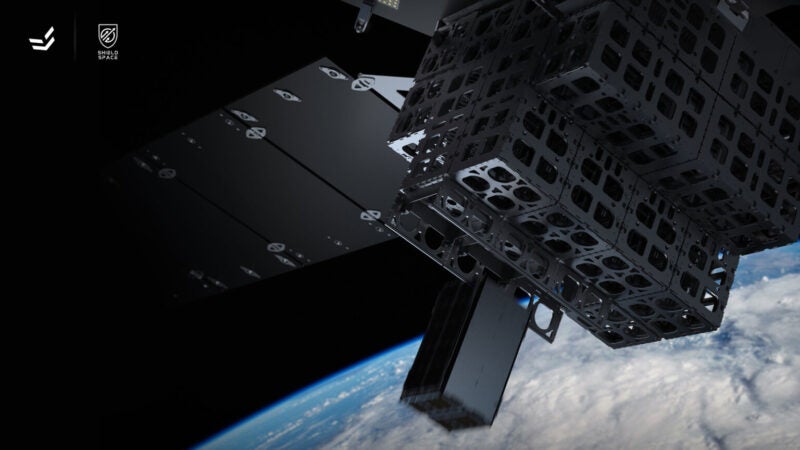
Following the conclusion of Mission Broadsword, the partnership will move into its next ambitious phase: Project Nexus. This project envisions a new class of spacecraft that functions as a "mothership-based space control system." Project Nexus will utilize EnduroSat’s larger 200 kg to 500 kg-class satellite platforms, integrated with Shield Space’s advanced mission systems.
Project Nexus is designed to act as a command, deployment, and support node for multiple smaller, autonomous interceptor spacecraft. This "hub-and-spoke" architecture allows a single primary platform to carry several smaller assets into orbit, deploying them as needed to respond to emerging threats. This approach offers several strategic advantages:
- Extended Reach: The mothership can provide long-range communication and power support to smaller interceptors that lack the fuel or battery capacity for sustained independent operations.
- Rapid Response: Interceptors can be pre-positioned on the mothership and deployed instantly when a threat is detected, bypassing the need for a new launch from Earth.
- Cost Efficiency: Using a single large bus to transport multiple mission-specific "effectors" reduces the overall cost per asset.
The concept of Project Nexus reflects a broader trend in military strategy toward "distributed lethality," where capabilities are spread across many smaller, cheaper, and more resilient systems rather than a few large, expensive, and vulnerable targets.
Contextualizing the Shift: Lessons from Ukraine and the Drone Revolution
The strategic logic behind the EnduroSat and Shield Space partnership is heavily influenced by recent developments in terrestrial warfare, specifically the conflict in Ukraine. The widespread use of low-cost, autonomous, and semi-autonomous drones has fundamentally altered the tempo of modern combat, shifting the advantage toward actors who can iterate and deploy technology rapidly.
Graeme Ritchie, co-founder and CEO of Shield Space, drew a direct parallel between these two domains. "Cheap autonomous drones have changed the tempo of warfare in Ukraine," Ritchie stated. "Space will experience the same acceleration, where machines must sense, decide, and maneuver faster than human command chains allow."
This perspective highlights a critical vulnerability in traditional space operations: the "human-in-the-loop" delay. Traditional satellites often rely on ground stations to process data and send commands, a process that can take minutes or even hours depending on orbital mechanics and communication windows. In a high-intensity space conflict, where an adversary might attempt to disable a satellite in seconds, such delays are unacceptable. Autonomous systems like those developed by Shield Space remove this bottleneck, allowing the spacecraft to respond to threats in real-time.
Market Analysis: Disrupting the Traditional Defense Industrial Base
The entry of EnduroSat and Shield Space into the defense market poses a direct challenge to the "Big Space" model championed by traditional defense primes like Lockheed Martin, Northrop Grumman, and Boeing. Historically, defense satellites have been "exquisite" systems—massive, multi-billion-dollar assets that take a decade to develop and are intended to operate for 15 to 20 years.
However, the rapid advancement of counter-space technologies (such as ground-based lasers, electronic jamming, and anti-satellite missiles) has made these large platforms "fat targets." The partnership’s focus on 200-500 kg satellites and 9-month delivery cycles aligns with the U.S. Space Force’s "Victus Nox" (Latin for "Conquer the Night") initiative, which demonstrated the ability to launch a satellite within 60 hours of a mission requirement being identified.
By offering a European-led alternative to these capabilities, EnduroSat and Shield Space are addressing a critical need for "sovereign defense." EU member states and the UK are increasingly wary of relying solely on U.S. or commercial proprietary technology for their national security. An all-European partnership ensures that the intellectual property, supply chains, and operational control remain within the continent, bolstering European strategic autonomy.
Chronology of the European Space Defense Evolution
To understand the significance of this partnership, it is necessary to look at the timeline of European space defense policy over the last few years:
- 2021: The European Union officially launches the EU Space Programme, emphasizing the role of space in security and defense.
- 2022: The Strategic Compass for the EU is approved, identifying space as a contested domain and calling for a dedicated Space Strategy for Security and Defence.
- 2023: The EU releases its first-ever Space Strategy for Security and Defence, which highlights the need for better Space Domain Awareness and the protection of space assets.
- April 2024: EnduroSat and Shield Space announce their partnership, providing a commercial and technological pathway to fulfill the goals set out in the EU strategy.
- 2027 (Projected): Launch of Mission Broadsword to demonstrate RPO capabilities.
- Post-2027: Deployment of Project Nexus and the "mothership" architecture.
Implications for Global Orbital Stability
While the partnership is framed as a defensive measure, the proliferation of autonomous RPO and interceptor technology carries significant implications for global orbital stability. The ability to approach and maneuver around other satellites is inherently dual-use; a system designed for "inspection" or "repair" can just as easily be used for "harassment" or "destruction."
The success of Project Nexus and Mission Broadsword will likely prompt other nations to accelerate their own autonomous space programs. This could lead to a "maneuver race" in orbit, where satellites are constantly shifting positions to avoid being approached by unknown actors. Furthermore, the 9-month deployment timeline reduces the "barrier to entry" for space conflict, as nations can replenish their constellations much faster than in the past.
Despite these complexities, the move toward faster, more autonomous space systems appears inevitable. As the orbital environment becomes more crowded and contested, the ability to "sense, decide, and maneuver" will become the primary metric of success. The EnduroSat and Shield Space partnership stands at the forefront of this transition, offering a glimpse into a future where the high ground of space is defended not by massive, static monuments of engineering, but by agile, intelligent, and rapidly deployable swarms of autonomous machines.
Conclusion: A New Paradigm for Sovereign Space Power
The collaboration between EnduroSat and Shield Space represents more than just a business deal; it is a blueprint for the next generation of space defense. By prioritizing speed, autonomy, and European sovereignty, the partnership addresses the most pressing challenges of modern orbital security. As Mission Broadsword approaches its 2027 launch date, the international community will be watching closely to see if this "NewSpace" approach can truly outpace the traditional giants of the aerospace industry. If successful, the 9-month mission cycle may soon become the new standard for a world that can no longer afford to wait years for protection in the stars.
