
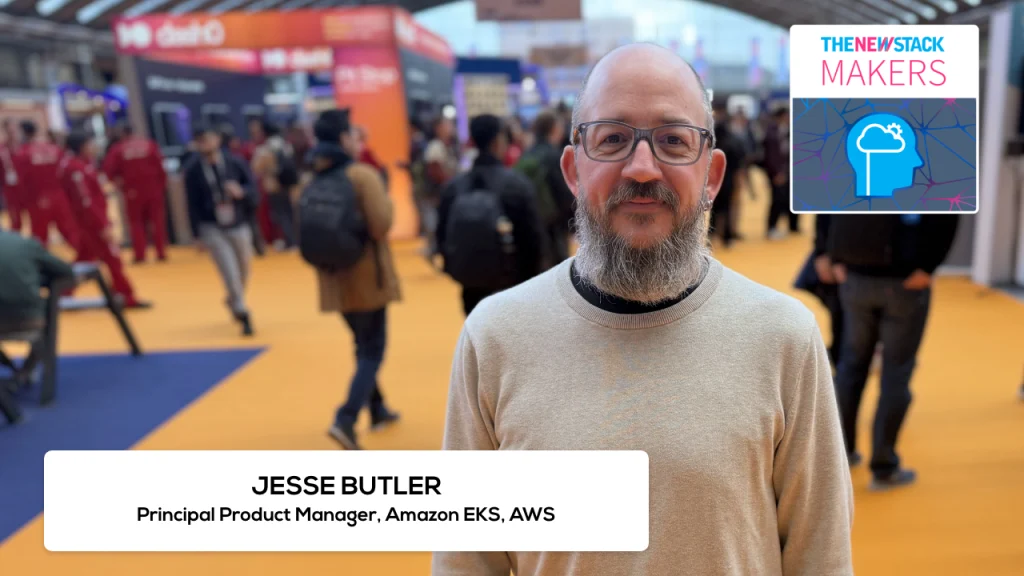

Amsterdam – At the forefront of the cloud-native revolution, Jesse Butler, principal product manager at AWS Elastic Kubernetes Service (EKS), articulated a vision for a more accessible and efficient cloud-native future during KubeCon + CloudNativeCon Europe 2026 in Amsterdam. With significant contributions to key Cloud Native Computing Foundation (CNCF) projects like Karpenter, Kro, and Cedar, Butler’s insights offer a compelling roadmap for simplifying the complexities inherent in modern cloud infrastructure. His ongoing mission, which began upon joining AWS in 2020, is to demystify Kubernetes, drawing inspiration from his deep-seated belief in the democratizing power of open-source software, a philosophy forged during his formative years in Unix environments.
The annual KubeCon + CloudNativeCon conference serves as a pivotal gathering for the global cloud-native community, bringing together developers, operators, and thought leaders to discuss the latest advancements, challenges, and future directions of technologies like Kubernetes. This year’s event in Amsterdam was no exception, attracting thousands of attendees eager to engage with cutting-edge innovations and strategic perspectives from industry leaders. Butler’s participation, marked by his keynote address and discussions surrounding his work on crucial CNCF projects, underscored a prevailing industry sentiment: the need to move beyond complexity and embrace a more seamless user experience in cloud-native operations.
The Evolving Landscape of Open Source and Community Collaboration
Butler’s perspective on the state of open source acknowledges the integral role of commercial entities within open platforms. He emphasized that the true engine of progress remains community-driven activities, powered by the tireless efforts of maintainers and committers. "The commercial aspect is appropriate within open platforms," Butler stated, "but essentially it all comes down to community-driven activities and the work of maintainers and committers." This collaborative spirit is meticulously fostered by organizations like the CNCF.
"That’s really one of the things that the CNCF does so well, it helps formulate, standardize, and assemble this community and make it like a formal, governed thing," Butler explained. He further elaborated on the dynamic interplay between open-source innovation and proprietary development, noting, "Companies can play a really important role too; just because one team is solving something in GitHub, that doesn’t mean that it’s workable for everybody, so there needs to be a fluid mix where we see a synthesis of open source technologies and proprietary core foundational innovation too."
Butler highlighted the critical function of CNCF member organizations in bringing unfinished open-source projects to a state of production-readiness. This symbiotic relationship ensures that promising technologies mature into robust, reliable tools for widespread adoption. He underscored the sheer scale of the CNCF’s undertaking, referring to it as "the biggest software engineering project that has ever existed on the planet," and its integration within the broader Linux Foundation. This vast ecosystem, Butler posited, thrives on the freedom of choice inherent in open source, offering a viable alternative to entrenched, proprietary technology stacks.
Towards an Invisible Kubernetes: Simplifying Cloud-Native Operations
The pervasive adoption of Kubernetes across enterprises—with approximately 80% of organizations now utilizing it meaningfully in production, according to recent CNCF surveys—attests to its transformative impact. However, this widespread adoption has also brought to the fore the persistent challenge of complexity. Butler’s keynote, provocatively titled "From complexity to clarity, making Kubernetes invisible," directly addressed this critical industry pain point.
Drawing a parallel with the evolution of Linux, which has largely receded into the background as a foundational utility, Butler articulated his ambition for Kubernetes. He believes that the ultimate goal for Kubernetes is to become so integrated and intuitive that it effectively "faded away into the background" for end-users. This vision of invisibility is not about diminishing Kubernetes’ power but about abstracting its inherent complexities. Butler outlined several strategies to achieve this, including abstracting services, coalescing functions into more digestible modules, and developing more intuitive interfaces for resource management. This push towards simplification is crucial for enabling broader adoption and unlocking the full potential of cloud-native architectures for a wider range of users and organizations.
Pioneering Projects: Karpenter, Kro, and Cedar
Butler’s work on several key CNCF projects exemplifies his commitment to this vision of simplification and enhanced functionality.
Karpenter: Real-Time Node Provisioning
Karpenter, an open-source, flexible, high-performance Kubernetes cluster autoscaler, has revolutionized node lifecycle management. Butler explained that Karpenter’s core innovation lies in its real-time provisioning of nodes. This approach eliminates the need for developers to manually manage auto-scaling configurations, allowing them to focus on deploying their applications. Karpenter operates by detecting workload pressure: when a developer schedules a task and no available node can accommodate it, Karpenter consults its configuration, dynamically provisions a new node, and seamlessly integrates it into the cluster. This on-demand approach optimizes resource utilization and significantly reduces latency in scaling operations, directly addressing a critical bottleneck in Kubernetes deployments. The project’s success has been widely recognized, with many organizations adopting it to improve their cluster elasticity and cost-efficiency.
Kro: Streamlining Resource Orchestration
Reflecting on his experience developing Kubernetes custom controllers, Butler described his motivation for creating Kro (Kubernetes Resource Orchestrator) as a direct response to the inefficiencies he encountered. "During that flight, I wrote the first instance of what is now Kro and took a couple of really novel approaches to composition and resource orchestration in the cluster and knew immediately this was something that the whole ecosystem could benefit from," he shared. Kro aims to simplify the complex task of gluing disparate resources together within a Kubernetes cluster, offering a more streamlined and efficient approach to resource orchestration. This project directly tackles the challenges of managing interdependencies and configurations across various Kubernetes resources, thereby reducing operational overhead and the potential for errors.
Cedar: Empowering Fine-Grained Authorization
Cedar, an open-source policy language and evaluation engine that AWS donated to the CNCF, represents a significant step forward in managing authorization controls within cloud-native environments. Unlike Kubernetes-specific solutions, Cedar is designed to handle fine-grained authorization across a wide spectrum of cloud-native applications and services. This flexibility makes it a versatile tool for organizations seeking to implement robust security policies and ensure compliance. By providing a standardized and powerful way to define and enforce access controls, Cedar contributes to the overall security posture and manageability of complex cloud deployments. Its donation to the CNCF further solidifies its commitment to open standards and community-driven development in the security domain.
The Unsung Heroes of Open Source and the Path Forward
Butler concluded his remarks by advocating for greater recognition and support for the maintainers who form the backbone of the open-source ecosystem. "Overall, I have to say that maintainers need more love," he urged. "None of these guys are trying to get rich when they fix a container debug, right? Open source is everywhere today, from your laptop to your smartphone to your aircraft seat, but the people behind so much of this technology are not doing it for glory, so we do have to take care of this ecosystem." This sentiment highlights the critical importance of sustaining the health and vitality of the open-source community, which underpins so much of modern technology.
Looking ahead, Butler expressed optimism for a future where "agentic automation and human ingenuity will come together to make open-source software better for users everywhere." This vision points towards an era where advanced AI-driven tools augment human capabilities, further streamlining development, deployment, and management processes. The ongoing drive to simplify Kubernetes, coupled with the unwavering commitment to openness throughout the CNCF, suggests a trajectory towards more accessible, powerful, and ultimately, more user-friendly cloud-native computing. The insights shared at KubeCon + CloudNativeCon Europe 2026, particularly from figures like Jesse Butler, signal a clear and promising direction for the evolution of cloud-native technologies, emphasizing both innovation and the fundamental principle of open collaboration. The journey from complexity to clarity is well underway, promising to unlock new levels of efficiency and accessibility for developers and organizations worldwide.
