
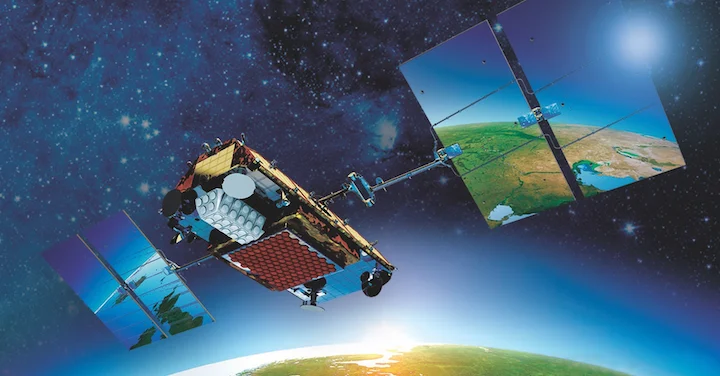

Iridium Communications Inc. has released its financial and operational results for the first quarter of 2026, revealing a period of steady growth characterized by a significant expansion in its Internet of Things (IoT) subscriber base and a strategic pivot toward standardized non-terrestrial network (NTN) services. The company reported a total revenue of $219.1 million for the quarter, representing a 2% increase compared to the same period in the previous year. This growth comes at a time of heightened market interest in mobile satellite service (MSS) spectrum, driven largely by high-profile partnerships between terrestrial tech giants and satellite operators. As the satellite industry shifts toward direct-to-device connectivity and standardized protocols, Iridium’s leadership emphasized the intrinsic value of its L-band spectrum and its ongoing efforts to modernize its service offerings through the upcoming Iridium NTN Direct service.
Financial Performance and Revenue Streams
The $219.1 million in total revenue for the first quarter of 2026 was supported by a robust service revenue of $158 million, which continues to be the bedrock of Iridium’s business model. Service revenue, which includes recurring income from its diverse subscriber base, remains a critical metric for the company’s long-term stability. The remaining $61 million of the quarterly revenue was derived from equipment sales and engineering projects, reflecting continued demand for Iridium’s specialized hardware and its role in bespoke government and commercial satellite integrations.
Despite the rise in revenue, net income for the quarter stood at $21.6 million, a decrease from the $30.4 million reported in the first quarter of 2025. This decline in net profitability is attributed to increased operational costs associated with the development of new technologies and the maintenance of the company’s global constellation. However, Iridium’s operational EBITDA remains a key indicator of its health, as the company continues to generate significant cash flow to support its shareholder return programs and capital expenditures.
One of the most notable aspects of the quarterly report was the performance of the commercial IoT sector. IoT data revenue reached $46 million, a 5% increase year-over-year. This growth underscores the increasing reliance on satellite connectivity for industrial monitoring, asset tracking, and remote sensing in regions where terrestrial cellular networks are unavailable. Conversely, the commercial broadband segment faced challenges, with revenue declining 5% to $12.2 million. This dip was accompanied by a slight decrease in the broadband subscriber count, suggesting a shift in market dynamics as customers potentially migrate toward higher-capacity, low-Earth orbit (LEO) alternatives for data-heavy applications.
The Strategic Importance of L-Band and S-Band Spectrum
The first quarter of 2026 was marked by a significant shift in the public and investor perception of satellite spectrum. Following the announcement of a major deal between Amazon and Globalstar, market attention turned toward the finite nature of L-band and S-band frequencies. These bands are particularly valuable because of their ability to penetrate weather and atmospheric interference, and their compatibility with small, low-power antennas suitable for handheld devices.
Iridium CEO Matt Desch addressed this trend during the earnings call, noting that the Amazon-Globalstar deal has served as a catalyst for recognizing the "importance and significance" of Iridium’s own spectrum assets. Iridium operates a unique, cross-linked mesh architecture in L-band, which provides truly global coverage, including the polar regions. This makes Iridium’s spectrum a premium asset for companies looking to provide ubiquitous connectivity for consumer devices and industrial sensors alike.
The surge in Iridium’s stock price in the weeks leading up to and following the Amazon announcement reflects investor sentiment that Iridium is well-positioned to capitalize on the "direct-to-device" (D2D) revolution. While other companies are racing to launch massive new constellations, Iridium’s existing, fully operational fleet of 66 active satellites provides an immediate platform for these emerging services.
Iridium NTN Direct and the Shift to 3GPP Standards
A central pillar of Iridium’s future strategy is the "Iridium NTN Direct" service. This initiative represents a departure from the company’s traditional reliance on proprietary hardware protocols, moving instead toward the 3GPP (3rd Generation Partnership Project) standards that govern global cellular communications. By adopting these standards, Iridium aims to allow standard, off-the-shelf chipsets used in smartphones and IoT devices to connect directly to its satellite constellation.
During the first quarter, Iridium conducted live over-the-air tests of the NTN Direct service. Desch reported that the performance of these tests has "impressed" mobile network operators (MNOs) and technology partners. The goal of NTN Direct is to provide a seamless "gap filler" for mobile users. When a user moves out of range of a traditional cell tower, their device could automatically switch to Iridium’s satellite network for messaging and emergency services without requiring a bulky external antenna.
The company anticipates a full commercial launch of NTN Direct later in 2026. This service is designed to be complementary to the high-bandwidth D2D solutions being developed by competitors like SpaceX’s Starlink and AST SpaceMobile. While those competitors aim to provide high-speed data and voice, Iridium is carving out a niche in low-latency, high-reliability messaging and narrow-band IoT. This "specialty application" focus ensures that Iridium remains indispensable for government and industrial users who prioritize connection certainty over raw speed.
Expanding the Four Growth Pillars
Matt Desch reiterated that while the spectrum conversation is important, Iridium remains focused on its four core growth areas: IoT expansion, Positioning, Navigation, and Timing (PNT) capabilities, national security, and aviation systems.
- IoT Expansion: With IoT subscribers now making up 83% of Iridium’s total 2,434,000 commercial subscribers, the company is doubling down on this segment. The addition of 18,000 subscribers in the first quarter highlights the steady demand for remote monitoring in agriculture, maritime logistics, and energy infrastructure.
- PNT Capabilities: Following the acquisition of Satelles, Iridium has integrated Satellite Time and Location (STL) services into its portfolio. This provides a vital backup to GPS, which is increasingly vulnerable to jamming and spoofing. Iridium’s PNT services are gaining traction among critical infrastructure providers and financial institutions that require precise, unhackable timing signals.
- National Security: Iridium has a long-standing relationship with the U.S. Department of Defense and other global security agencies. The company’s secure, encrypted communication links are essential for tactical operations in remote environments. The first quarter saw continued engagement with government partners on next-generation secure communications.
- Aviation Systems: Iridium Certus continues to be a standard for cockpit safety and data services. As the aviation industry recovers and expands, the demand for reliable, global L-band connectivity for flight tracking and pilot communications remains strong.
Market Context and Competitive Landscape
The satellite industry in 2026 is vastly different from the one in which Iridium launched its NEXT constellation nearly a decade ago. The entry of "New Space" players like Amazon’s Project Kuiper and SpaceX has fundamentally changed the economics of orbit. However, Iridium has managed to maintain a unique position by focusing on the "narrow-band" niche rather than competing directly in the "wide-band" consumer internet space.
The Iridium NEXT constellation, completed in 2019, was a $3 billion investment that replaced the company’s aging first-generation satellites. This modern fleet is expected to remain operational well into the 2030s, providing Iridium with a long "capital-light" period where it can focus on service innovation rather than expensive launch campaigns. This financial breathing room is what allows the company to invest in NTN Direct and PNT while simultaneously returning capital to shareholders.
The broader implications of Iridium’s Q1 results suggest a maturing industry where the value is shifting from the hardware (the satellites themselves) to the spectrum and the software standards. By embracing 3GPP standards, Iridium is effectively "future-proofing" its constellation, ensuring that it remains compatible with the billions of mobile devices produced every year.
Chronology of Recent Events Leading to Q1 2026
- 2019: Completion of the Iridium NEXT constellation launch program, establishing a modern, cross-linked LEO mesh network.
- 2023-2024: Rise of the Direct-to-Device (D2D) market, with Apple and Globalstar pioneering satellite-enabled emergency SOS features.
- Early 2025: Iridium announces its intention to develop NTN Direct, moving toward 3GPP Release 17 and 18 standards.
- Late 2025: Acquisition of Satelles, formally entering the PNT market to provide alternatives to GPS.
- March 2026: Amazon and Globalstar announce a strategic spectrum and capacity deal, causing a ripple effect across the satellite industry and driving up the valuation of MSS spectrum.
- April 2026: Iridium reports Q1 results, confirming the success of over-the-air NTN tests and maintaining its full-year guidance.
Conclusion and Outlook for 2026
Iridium has reiterated its full-year 2026 outlook, projecting that service revenue will grow between 0% and 2%. This conservative guidance reflects a company in a transitional phase—moving from a proprietary hardware-centric model to a standardized, software-defined service model. While the "flat" growth projection might seem modest compared to the explosive growth of some tech startups, it represents a stable, high-margin business that is deeply embedded in the global telecommunications infrastructure.
The remainder of 2026 will be a critical period for Iridium as it moves toward the commercial launch of NTN Direct. Success in this area would not only open up a massive new market of smartphone users but also solidify Iridium’s role as the primary provider of reliable, low-bandwidth global connectivity. As the "spectrum wars" continue and more tech giants look to the skies to solve terrestrial coverage gaps, Iridium’s position as a proven, reliable, and standardized operator makes it a central figure in the next era of global communications. The first quarter of 2026 may be remembered as the moment when the market finally aligned with Iridium’s long-held view: that in the race to connect the world, the most valuable territory isn’t on the ground, but in the invisible lanes of the L-band spectrum.
