
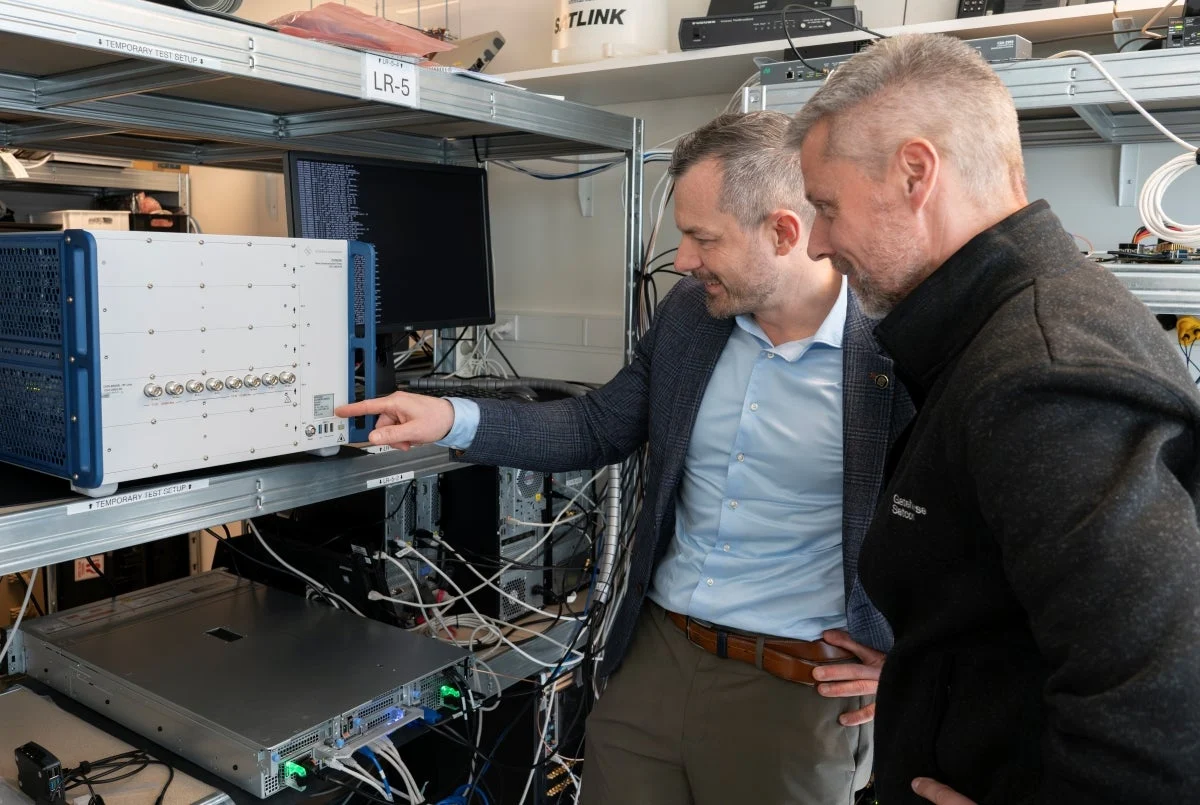

Gatehouse Satcom, a premier provider of satellite communication software solutions, and Rohde & Schwarz, a global leader in test and measurement instrumentation, have formalized a strategic partnership to pioneer advanced testing and validation frameworks for 5G Non-Terrestrial Networks (NTN). This collaboration marks a significant milestone in the aerospace and telecommunications sectors, as it combines high-fidelity software stacks with state-of-the-art hardware to address the unique challenges of satellite-to-terrestrial connectivity. By integrating Gatehouse Satcom’s specialized 5G NTN software with the Rohde & Schwarz CMX500 radio communication tester, the two companies aim to provide the industry with a comprehensive environment for simulating and validating satellite links across Geostationary Orbit (GEO) and Low Earth Orbit (LEO) constellations.
Under the terms of the agreement, Gatehouse Satcom will utilize the Rohde & Schwarz CMX500 platform to refine and develop orbit and channel emulation capabilities. In exchange, Gatehouse will provide Rohde & Schwarz with end-to-end test results, technical insights, and engineering feedback derived from their hands-on implementation of NTN protocols. This reciprocal relationship is designed to shorten validation cycles for satellite operators and hardware manufacturers, ensuring that 5G NTN deployments are robust, reliable, and compliant with evolving international standards.
The Technological Foundation of the 5G NTN Collaboration
The core of this partnership revolves around the 3rd Generation Partnership Project (3GPP) standards, specifically Release 17 and Release 18, which introduced the framework for integrating satellite segments into the 5G ecosystem. Non-terrestrial networks represent a paradigm shift in global connectivity, allowing standard 5G devices to connect directly to satellites in areas where terrestrial cellular infrastructure is absent or damaged.
To achieve this, the testing environment must account for extreme physical variables. Unlike terrestrial 5G, where base stations are stationary and distances are relatively short, NTN involves base stations (satellites) moving at velocities exceeding 27,000 kilometers per hour in LEO, or positioned at altitudes of 35,786 kilometers in GEO. These factors introduce massive propagation delays and significant Doppler shifts that can disrupt signal synchronization.
The Rohde & Schwarz CMX500 acts as a "one-box" solution for signaling and non-signaling tests, capable of emulating the entire network environment. When paired with Gatehouse Satcom’s software, the platform can simulate the precise orbital mechanics of a satellite constellation. This allows engineers to test how a User Equipment (UE) device handles handovers between satellites or how the network compensates for the delay in a GEO-based link, which can be as high as 540 milliseconds round-trip.
Addressing the Complexity of LEO and GEO Orbit Emulation
A primary focus of the Gatehouse and Rohde & Schwarz alliance is the development of advanced orbit and channel emulation. The behavior of a 5G signal varies drastically depending on the orbital altitude of the satellite.
In Geostationary Orbit (GEO), the satellite remains fixed relative to a point on Earth. While this simplifies tracking, the immense distance creates latency issues that can cause 5G protocols—originally designed for millisecond-level responses—to time out. The collaboration seeks to refine "timers" and "random access" procedures within the software stack to ensure that the 5G handshake remains stable over long distances.
In Low Earth Orbit (LEO), the challenges are reversed. Latency is much lower (comparable to long-distance terrestrial fiber), but the satellites are in constant, rapid motion. This necessitates frequent handovers and sophisticated frequency compensation. The CMX500 platform, enriched by Gatehouse’s technical feedback, will allow developers to recreate these high-mobility scenarios in a laboratory setting, identifying system-level bugs long before a satellite is launched into space.
Timeline and Context of the NTN Evolution
The drive toward 5G NTN has accelerated over the last three years, driven by a convergence of the space industry and the telecommunications sector.
- 2022 (Release 17): The 3GPP officially included NTN in its standards, defining the requirements for Narrowband Internet of Things (NB-IoT) and New Radio (NR) over satellite.
- 2023: Early commercial trials began, with companies like SpaceX, AST SpaceMobile, and Lynk demonstrating basic "direct-to-cell" messaging capabilities.
- 2024: The industry shifted from "proof of concept" to "mass scalability." This period highlighted a critical gap: the lack of standardized, high-end testing equipment that could handle both the software complexities of 5G and the physical complexities of space.
- Early 2025: The partnership between Gatehouse Satcom and Rohde & Schwarz was initiated to bridge this gap, providing a turnkey solution for the next generation of dual-mode (satellite and terrestrial) devices.
By establishing this collaboration now, both companies are positioning themselves at the forefront of the Release 18 rollout, which promises further enhancements in coverage, capacity, and mobility for non-terrestrial networks.
Market Data and the Economic Impact of Satellite-to-Phone Technology
The economic stakes for 5G NTN are substantial. According to market research from Northern Sky Research (NSR) and GSMA Intelligence, the satellite-to-device market is projected to reach a value of over $30 billion by 2032. There are currently over 5 billion mobile subscribers globally, but roughly 15% of the Earth’s landmass remains without cellular coverage.
Furthermore, the Internet of Things (IoT) sector is a major driver of this technology. Industries such as maritime shipping, global logistics, agriculture, and environmental monitoring require ubiquitous coverage that only satellites can provide. The Gatehouse-Rohde & Schwarz partnership directly addresses the validation needs of these high-reliability sectors.
By providing a more "realistic and reliable testing environment," as noted by Gatehouse leadership, the collaboration reduces the financial risk for satellite startups and established telecommunications giants alike. A single failed satellite deployment can cost hundreds of millions of dollars; rigorous ground testing via the CMX500 and Gatehouse software acts as a vital insurance policy against software-driven mission failures.
Official Perspectives on the Collaboration
The leadership at both organizations has emphasized that this partnership is about more than just a vendor-client relationship; it is a collaborative effort to mature the entire NTN ecosystem.
Peter Mariager, Vice President of 5G Technology at Gatehouse Satcom, highlighted the necessity of this move in a recent statement. He noted that as the industry moves closer to full-scale commercial deployment, the need for testing environments that mirror the harsh realities of space becomes paramount. Mariager emphasized that Gatehouse’s hands-on experience with NTN software allows them to identify "edge cases" that standard testing equipment might miss, and by sharing this data with Rohde & Schwarz, they are helping to build a more robust toolkit for the entire industry.
Technical experts from Rohde & Schwarz have echoed this sentiment, noting that the feedback from Gatehouse Satcom is invaluable for the iterative development of the CMX500. By understanding how a 5G stack interacts with simulated orbital paths, Rohde & Schwarz can update their firmware to better serve the needs of aerospace engineers who are increasingly adopting 5G standards over proprietary protocols.
Broader Implications for Global Connectivity and Public Safety
The successful validation of 5G NTN has implications that extend far beyond corporate profitability. One of the most significant impacts is in the realm of public safety and disaster response. In the event of a natural disaster—such as a hurricane, earthquake, or wildfire—terrestrial cell towers are often the first infrastructure to fail. 5G NTN allows for "graceful degradation" of service, where a smartphone can automatically switch to a satellite link to maintain emergency communications.
Moreover, the standardization of these links means that consumers will not need specialized, bulky satellite phones. The goal of the Gatehouse and Rohde & Schwarz collaboration is to ensure that the standard smartphone in a user’s pocket can seamlessly communicate with a satellite 500 kilometers overhead.
In the maritime and aviation sectors, this technology will enable continuous, high-speed broadband for passengers and crew, replacing the expensive and often slow legacy satellite systems currently in use. By moving toward a unified 5G standard for both ground and space, the industry is moving toward a future where "dead zones" are a thing of the past.
Future Outlook: Toward 6G and Beyond
As Gatehouse Satcom and Rohde & Schwarz refine their current testing protocols, they are also laying the groundwork for the future. The roadmap for 6G already includes "3D connectivity" as a core pillar, envisioning an even deeper integration of terrestrial, aerial (drones), and space-based nodes.
The work being done today on the CMX500 platform will serve as the baseline for these future developments. As software-defined satellites become the norm, the ability to update and validate network configurations in real-time will be essential. The partnership between these two European technology leaders ensures that the infrastructure for this validation is ready to meet the demands of the "New Space" economy.
In conclusion, the formalization of the collaboration between Gatehouse Satcom and Rohde & Schwarz represents a critical step in the commercialization of 5G Non-Terrestrial Networks. By combining deep software expertise with world-class testing hardware, the partnership provides the necessary tools to overcome the significant physical and technical barriers of space-based communications. As validation cycles become faster and more accurate, the global community moves closer to a truly connected world, where the boundaries between terrestrial and satellite networks finally disappear.
