

The burgeoning field of artificial intelligence is witnessing a critical inflection point as AI agents, increasingly integrated into complex and high-stakes tasks, grapple with the fundamental challenge of memory. The current limitations of agentic memory are proving to be a significant bottleneck, impacting the quality and reliability of AI outputs. Addressing this burgeoning need, Walrus, in conjunction with its newly launched Software Development Kit (SDK) MemWal, is poised to redefine how AI agents store, access, and utilize their memories, promising enhanced verifiability, availability, portability, and sharability.
This development arrives at a time when enterprises and individuals alike are placing greater trust in AI agents for increasingly sophisticated operations, from managing intricate business workflows to providing personalized assistance. However, the proprietary and often siloed nature of existing memory layers presents a significant hurdle. These limitations can lead to data inconsistencies, vendor lock-in, and a lack of transparency, particularly concerning in applications where accuracy and auditability are paramount.
Abinhav Garg, Group Product Manager at Mysten Labs, articulated the core problem and the proposed solution in a recent discussion. "With Walrus plus MemWal, memory lives on an open, verifiable data layer, so that means it’s not tied to any one model or vendor," Garg explained. This architectural shift is crucial, enabling users to seamlessly switch between leading AI model providers, such as OpenAI and Anthropic, without the risk of losing or compromising their agent’s accumulated knowledge. The underlying infrastructure ensures that data is stored with robust, verifiable guarantees, making it tamper-proof. This feature is especially vital as AI agents transition into more critical workflows where precision and the ability to audit actions are non-negotiable.
The implications of this verifiability are far-reaching. Data residing on the Walrus platform inherently benefits from its built-in assurances of integrity and accessibility. This allows for "easier sharing of memory between agents across teams and organizations," a capability Garg described as a "must for agent collaboration." Imagine customer support agents across different departments accessing a unified and verifiable history of customer interactions, leading to more consistent and informed service.
Bridging the Gap: MemWal’s Integration and Developer Experience
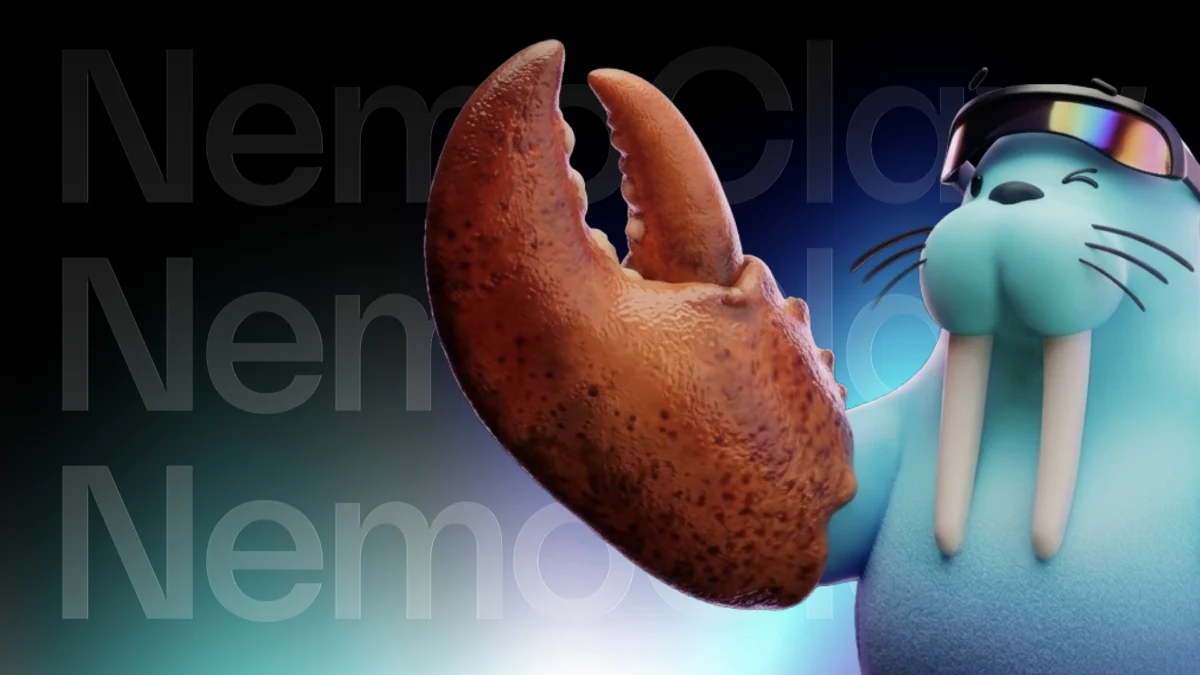
Recognizing the importance of seamless integration into existing development ecosystems, MemWal has recently rolled out a plugin that connects with popular agent orchestration frameworks, including OpenClaw and NemoClaw. This strategic move aims to democratize access to advanced agentic memory solutions. "We wanted to make the verifiable long term memory easy to adapt in real systems," Garg stated, emphasizing that this integration facilitates a "seamless" workflow for developers.
Previously, developers seeking to implement verifiable, decentralized storage for their agents would have faced a steeper learning curve, requiring them to navigate the complexities of integrating decentralized storage solutions like Walrus. This could introduce friction and potential delays in development cycles. The new plugin streamlines this process, allowing builders to "just equip their agents with durable, verifiable memory directly with the tools that they’re already using." This means developers can leverage their existing expertise and tooling to enhance their agents with a robust and trustworthy memory layer, accelerating innovation.
Privacy as a Cornerstone of Agentic Memory
As AI agents become more deeply embedded in daily operations, the issue of privacy is escalating in importance. Agents are increasingly tasked with handling sensitive and proprietary information, ranging from confidential enterprise data and financial records to deeply personal user contexts. The expectations around confidentiality in these scenarios are significantly elevated.
Garg highlighted that MemWal and Walrus address this critical concern through a native encryption layer, incorporating both privacy safeguards and programmable access control. "Even though the storage itself is decentralized, the contents remain confidential and governed by policy—even the storage providers cannot read it," he explained. This means that while the data is distributed across a network, ensuring its availability and resilience, its contents are shielded from unauthorized access, including from the infrastructure providers themselves.
For users, this represents a paradigm shift. The era of entrusting sensitive data to opaque, centralized systems without clear guarantees of security and privacy is drawing to a close. Garg asserted that "private, controlled, and auditable storage for agentic memory will become a defining requirement over time." This focus on user control and data sovereignty is becoming a competitive differentiator in the AI landscape.
Unlocking New Frontiers: Transformative Use Cases for Agentic Memory
The empowerment of agentic memory with the attributes of verifiability, availability, portability, and sharability unlocks a vast spectrum of novel applications. Beyond enhanced customer support, consider the potential for sophisticated collaboration between agents operating across different teams or even different organizations. Agents could work in tandem, drawing from a shared, verifiable understanding of a client’s history, leading to a more holistic and efficient approach to service delivery.
Garg shared insights into potential future applications, mentioning a partnership focused on coordinating agents within a marketplace ecosystem. In this scenario, agents acting as publishers and consumers would need to interact and communicate over time. This "messaging over a period of time" can itself serve as a form of collective memory, facilitating complex transactions and collaborations.
Another compelling area of exploration involves the application of agentic memory in robotics. Robots operating in dynamic, real-world environments, such as disaster response scenarios, would benefit immensely from shared, persistent memory. Imagine a fleet of robots coordinating complex tasks over hours or even weeks, relying on a common, verifiable memory to understand their environment, track progress, and adapt to unforeseen challenges. This shared context is essential for effective autonomous operation in critical situations.
A Vision for a Standardized Agent Stack
Looking ahead, Garg anticipates a significant "standardization of the stack" for AI agents. This future vision involves a clear delineation between distinct functional components: compute, data, memory, and coordination. The prevailing sentiment is that memory and data should not be tethered to any single AI model or proprietary platform.
In this emerging architecture, Walrus is positioned to serve as the foundational, durable data layer, providing the underlying infrastructure for secure and verifiable storage. MemWal, in turn, acts as the intelligent memory layer that sits atop Walrus, enabling agents to effectively utilize and manage this data. This separation of concerns fosters interoperability, innovation, and user choice, breaking down the silos that have characterized the AI landscape to date.
The availability of a quick start guide for integrating MemWal memory into agents signifies a commitment to accelerating adoption and empowering developers to experiment with these new capabilities. As the AI industry matures, the solutions provided by Walrus and MemWal are likely to become integral to the development of more intelligent, reliable, and trustworthy AI systems. The focus on verifiability, privacy, and interoperability marks a significant step towards realizing the full potential of agentic AI.
