
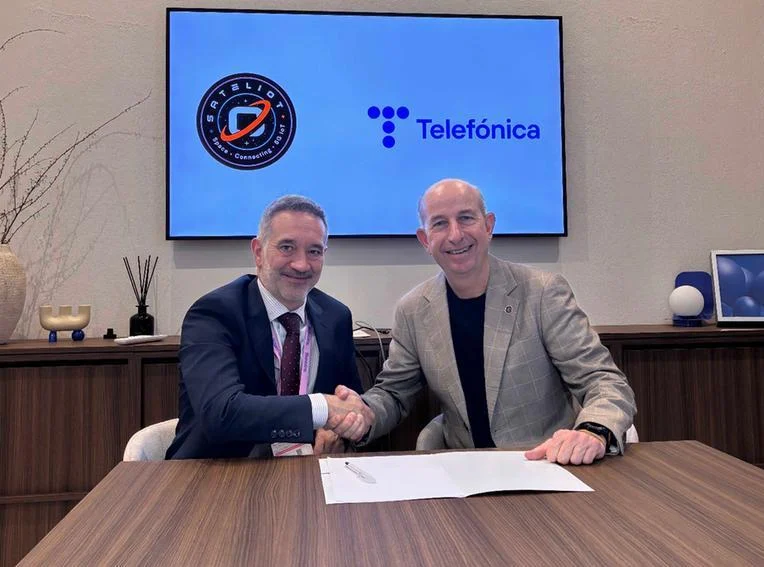

Telefónica España and Sateliot, the Spanish satellite telecommunications operator, have formalized a landmark agreement to integrate satellite-based Internet of Things (IoT) connectivity into Telefónica’s existing terrestrial network. This collaboration marks a significant evolution in the telecommunications landscape, aiming to provide seamless coverage in geographically isolated regions where traditional cellular infrastructure is either absent or economically unfeasible. The partnership is specifically designed to address the growing demand for secure, resilient communications in the fields of national defense, security, and critical infrastructure management.
By leveraging Sateliot’s constellation of Low-Earth Orbit (LEO) satellites, Telefónica intends to extend the reach of its Narrowband IoT (NB-IoT) services. The integration utilizes the 5G New Radio Non-Terrestrial Network (NR-NTN) standard, a technological framework that allows standard 5G devices to connect directly to satellites without the need for specialized hardware or proprietary modems. This standard-based approach ensures interoperability across various sectors, enabling a unified connectivity experience that transitions fluidly between terrestrial cell towers and orbital assets.
The Evolution of Hybrid 5G Architecture
The core of this new collaboration lies in the development of a hybrid network architecture. Unlike traditional satellite communications, which often require bulky antennas and expensive service plans, the 5G NR-NTN standard allows for the use of standard SIM cards and low-cost IoT sensors. This "hybridity" means that an IoT device—whether it is a sensor on a shipping container, a remote weather station, or a military asset—can remain connected to Telefónica’s terrestrial network when available and automatically switch to Sateliot’s LEO constellation when it moves out of cellular range.
A critical component of this architecture is the "5G Standalone (SA) bubble" deployment. These bubbles are essentially localized, private 5G networks that can be deployed in specific environments, such as a remote military base or a disaster relief zone. By connecting these terrestrial bubbles to Sateliot’s satellite network, Telefónica can provide a secure and autonomous communication environment that is resilient against local infrastructure failures or intentional interference.
Javier López Gutiérrez, Director of Defense and Security at Telefónica Spain, emphasized that this approach lays the groundwork for future direct-to-device (D2D) capabilities. By extending terrestrial connectivity into the space domain, the company is reinforcing coverage in critical environments where downtime is not an option. The integration is expected to offer higher reliability for data transmission, lower latency than traditional geostationary satellites, and a simplified logistics chain for device deployment.
Strategic Applications in Defense and Security
The defense sector represents one of the most significant use cases for this integrated technology. Modern military operations increasingly rely on a vast array of interconnected sensors and devices for situational awareness, logistics tracking, and personnel monitoring. However, operating in remote or hostile environments often means operating outside the reach of conventional mobile networks.
The Sateliot-Telefónica partnership addresses these challenges by providing a sovereign connectivity solution. In the context of national security, having a domestic provider (Sateliot is headquartered in Barcelona, and Telefónica is Spain’s national carrier) ensures that sensitive data remains within controlled frameworks. The interoperability required for military fields involves complex encryption and authentication protocols, which the partners are currently refining to meet the stringent standards of the Spanish Armed Forces and other international security bodies.
Beyond the military, the technology has profound implications for civil security and emergency response. In the event of natural disasters such as wildfires or floods, terrestrial networks are often the first infrastructure to fail. A hybrid satellite-terrestrial system ensures that emergency services can maintain communication and that automated sensors can continue to transmit vital data, such as water levels or fire progression, to central command centers.
A Chronology of Collaboration and Innovation
The current agreement is the culmination of several years of intensive research and development between the two entities. The timeline of their partnership reflects the rapid maturation of the satellite IoT sector:
- July 2022: Telefónica Tech and Sateliot announced their first collaboration to test the integration of Sateliot’s LEO satellite network with Telefónica’s Kite platform. The goal was to explore how NB-IoT could be scaled globally using satellite technology.
- July 2023: The partners achieved a major technological milestone by demonstrating the first-ever 5G roaming connection from space. Using a standard SIM card on a regular IoT device, they successfully transmitted data from a Sateliot satellite to Telefónica’s core network. This proved that no hardware modifications were necessary for existing IoT devices to access satellite coverage.
- Late 2024: Sateliot secured €100 million in funding to accelerate the deployment of its constellation. This capital injection was supported by a mix of private equity and strategic investors, underscoring market confidence in the 5G NR-NTN standard.
- 2025-2026: The partnership enters its current phase, focusing on the commercial rollout of hybrid solutions and the specific integration of defense-grade security features.
Sateliot’s Orbital Expansion and Infrastructure
To support this ambitious project, Sateliot is aggressively expanding its orbital presence. To date, the company has launched six satellites into Low-Earth Orbit. These satellites are designed according to 3GPP Release 17 standards, which specifically include provisions for non-terrestrial networks.
The company’s roadmap includes the launch of five additional satellites in 2026, bringing the constellation closer to its initial target for commercial viability. The ultimate goal is a 16-satellite constellation that will provide near-continuous coverage for IoT applications. This fleet will serve as a global demonstrator for 5G NR technology, capable of handling not just low-bandwidth IoT data but also incorporating capabilities for voice, video, and high-speed data transmission as the technology evolves.
The €100 million raised recently is earmarked for the construction and launch of these assets, as well as the continued development of the ground segment infrastructure required to process satellite signals and hand them off to terrestrial carriers like Telefónica.
Market Context and Economic Implications
The move by Telefónica and Sateliot comes at a time when the satellite IoT market is poised for exponential growth. According to industry analysts, the global satellite IoT market is expected to grow at a Compound Annual Growth Rate (CAGR) of over 20% through 2030. This growth is driven by the fact that approximately 85% of the Earth’s surface lacks reliable cellular coverage.
For industries such as maritime shipping, large-scale agriculture, and international logistics, the lack of ubiquitous coverage represents a significant "dark spot" in their digital transformation efforts. A shipping container equipped with a standard cellular IoT tracker currently loses connectivity once it leaves the port. By integrating Sateliot’s satellite service, Telefónica can offer its enterprise customers a "connect-anywhere" service, significantly increasing the value of their IoT investments.
Furthermore, this partnership strengthens Spain’s position within the "New Space" economy. By developing domestic capabilities in satellite manufacturing, launch management, and telecommunications integration, Spain is reducing its reliance on non-European satellite providers. This aligns with broader European Union initiatives, such as the IRIS² (Infrastructure for Resilience, Interconnectivity and Security by Satellite) program, which aims to provide a secure and sovereign satellite constellation for the EU.
Future Outlook: The Path to Direct-to-Device
While the current focus is on IoT sensors and defense applications, the implications of the Telefónica-Sateliot agreement extend to the consumer market. The "direct-to-device" (D2D) capability mentioned by Javier López Gutiérrez suggests a future where standard smartphones could connect to satellites for emergency messaging or basic data services when users are in remote areas like national parks or offshore locations.
This trend is already gaining momentum globally, with companies like SpaceX (Starlink), AST SpaceMobile, and Lynk Global pursuing similar goals. However, the Sateliot-Telefónica approach is distinct in its strict adherence to 3GPP standards, which ensures that they can work with any device manufacturer that follows the global 5G roadmap.
As Sateliot prepares for its 2026 launches and Telefónica begins the commercial deployment of these hybrid solutions, the telecommunications industry will be watching closely. The success of this partnership could serve as a blueprint for how traditional mobile network operators (MNOs) around the world can integrate space-based assets to eliminate coverage gaps once and for all. By combining the reliability of terrestrial 5G with the reach of LEO satellites, the two companies are not just expanding a network; they are redefining the boundaries of global connectivity.
