
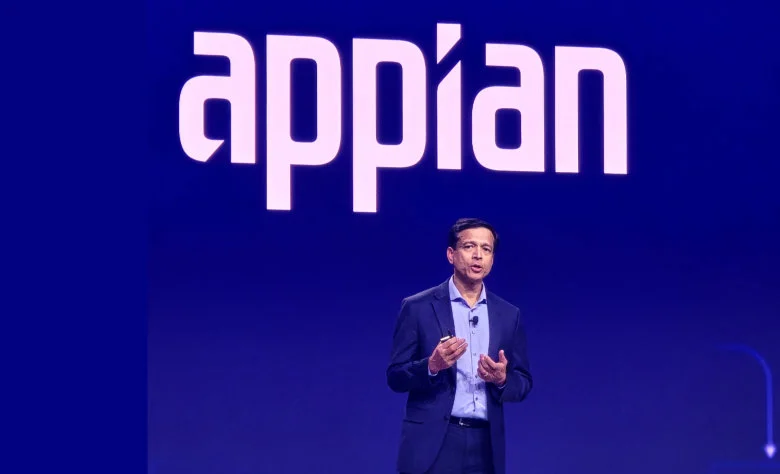

The landscape of corporate technology has reached a critical inflection point where the novelty of generative artificial intelligence is being replaced by a demand for operational stability and quantifiable returns. At the Appian World 2026 conference, Sanat Joshi, Executive Vice President of Product and Solutions at Appian, articulated a fundamental shift in how global organizations approach automation. While the initial wave of AI adoption was characterized by experimental "pilots" and personal productivity tools, the current era is defined by what Joshi describes as "Serious AI"—a framework designed to integrate machine learning directly into the rigid, regulated structures of enterprise workflows. Internally referred to by Appian staff as "Boring AI," this philosophy prioritizes the mundane but essential tasks of measurement, modernization, and mediation over the erratic brilliance of unconstrained large language models.
The Evolution of Enterprise AI: From Hype to Utility
The transition toward "Serious AI" follows a predictable technological lifecycle. Following the public release of advanced generative models in late 2022, enterprises spent three years navigating a spectrum of enthusiasm and skepticism. By early 2025, many organizations reported a "trough of disillusionment," where the costs of maintaining AI infrastructure and the risks of "hallucinations" began to outweigh the perceived benefits of chat-based interfaces.
During his keynote address at Appian World 2026, Appian CEO Matt Calkins argued that for AI to become a reliable corporate asset, it must be "wrapped in process control." This perspective suggests that AI should not function as an independent agent but as a component within a governed system. The industry has moved away from "vibe coding"—a term used to describe the informal, prompt-based generation of software—and toward structured, spec-driven development. This evolution is driven by the realization that while AI can mimic human creativity, it lacks the inherent understanding of corporate compliance, data privacy, and historical process logic required for high-stakes industries such as banking, healthcare, and government.
The Measurement Barrier: Quantifying the Value of Automation
One of the primary obstacles to widespread AI adoption has been the inability of IT departments to provide boards of directors with a clear Return on Investment (ROI). Sanat Joshi noted that while AI has improved individual worker productivity, those gains have rarely "fallen to the bottom line." To address this, enterprise leaders are now focusing on measurement as a core component of their AI strategy.
The deployment of AI within a process-managed environment allows for precise instrumentation. By using tools such as Appian’s Process HQ, organizations can establish a performance baseline before an AI agent is introduced. Once the agent is active, the system tracks variables such as cycle time, error rates, and resource allocation. This data provides the "receipts" that executives require to justify continued investment.
A practical example of this measurement-first approach is found in document-centric workflows. Traditionally, unstructured documents required human intervention to interpret and input data into structured systems, often causing delays of 24 to 72 hours. By deploying specialized agents like the DocCenter agent, companies have moved toward "straight-through processing." The value here is not just in the speed of the AI, but in the visibility of the improvement. Because the AI operates within a monitored process, the reduction in handoffs and costs is immediately visible in the organizational metrics.
Modernization: Making Legacy Systems AI-Legible
A significant portion of the world’s critical business logic remains trapped in legacy applications. These systems, often decades old, are frequently "illegible" to modern AI tools. Joshi highlighted that the barrier to modernization is often not the technical act of migration, but the loss of institutional knowledge regarding how the original systems function.
To bridge this gap, "Serious AI" is being utilized to reverse-engineer legacy code. By using Large Language Models (LLMs) to read ancient documentation, analyze old codebases, and synthesize stakeholder input, companies are creating structured artifacts that describe system requirements in business-friendly terms. This "spec-driven development" serves as a safeguard against the risks of AI-generated code. Instead of allowing an LLM to blindly write thousands of lines of JSON or Python, the system generates high-level design objects—such as data models or customer definitions—that human supervisors can inspect and approve.
Market data suggests that this AI-assisted modernization can accelerate system migration by 50% to 70%. For a global enterprise, this acceleration represents millions of dollars in saved labor and a significantly faster path to digital transformation. By transforming "arcane" code into readable abstractions, organizations ensure that their transition to AI-ready infrastructure is both transparent and auditable.
Mediation and the Rise of the Headless Platform
As users increasingly demand natural language interfaces and "zero-training" environments, the role of the enterprise platform is shifting from a front-end interface to a "headless" mediation layer. This third pillar of the "Serious AI" strategy involves the use of the Model Context Protocol (MCP) to govern how external AI agents interact with internal data.
In this model, the platform acts as a semantic and ontology layer—a "context layer" that describes the enterprise’s information, business rules, and available tools. When a user interacts with an agent (such as Claude or a custom GPT), that agent does not access the database directly. Instead, it interacts with the mediation layer, which enforces security, permissions, and audit trails.
Joshi emphasized that this mediation is essential for "agentic" environments to scale. Without a governed interface, agents risk accessing sensitive data or taking unauthorized actions. By exposing the data fabric through MCP, enterprises allow AI to "self-navigate" within a safe, predefined sandbox. This enables "ad hoc" interactions—such as a citizen developer asking an agent to identify top-spending customers—while ensuring that the underlying data remains secure and the logic remains consistent across the organization.
Industry Implications and Market Analysis
The shift toward "Boring AI" reflects a broader trend in the global technology market. According to recent industry reports, enterprise spending on AI is expected to shift from 80% experimental/20% operational in 2024 to 30% experimental/70% operational by 2027. This transition necessitates a focus on "infrastructure-grade" AI.
Analysts suggest that companies that successfully implement "Serious AI" will see a divergence from those that remain focused on generative novelties. The implications are particularly profound for regulated industries:
- Banking and Finance: Where auditability is mandatory, spec-driven development allows for AI use without violating compliance standards.
- Public Sector: Modernization efforts can finally address the "technical debt" of government systems that have been stagnant for years.
- Supply Chain: Real-time measurement and mediation allow for autonomous adjustments to logistics without human oversight, provided the AI operates within "process scaffolding."
Furthermore, the move toward "headless" platforms suggests a future where the specific brand of the AI model (whether OpenAI, Anthropic, or Meta) matters less than the quality of the organizational data and the robustness of the governance layer. The platform that provides the most reliable "context" will likely become the dominant player in the enterprise ecosystem.
Conclusion: The Necessity of the Mundane
The characterization of AI as "boring" is not a critique of its potential, but a validation of its maturity. In the professional world, the most valuable tools are often those that require the least amount of active management and provide the most consistent results. By focusing on measurement, modernization, and mediation, providers like Appian are attempting to move AI out of the laboratory and onto the factory floor.
The "Serious AI" movement acknowledges that the era of "playtime" is over. For AI to fulfill its promise of transforming the global economy, it must prove that it can show up, perform its assigned tasks, and leave a clear, auditable trail of its actions. While the hype of generative models captured the world’s imagination, it is the "boring" integration of these models into the foundational architecture of business that will ultimately deliver the promised productivity revolution. As Sanat Joshi concluded, the goal is for AI to become the infrastructure that people only notice if it fails—a silent, reliable, and mandatory component of the modern enterprise.
