
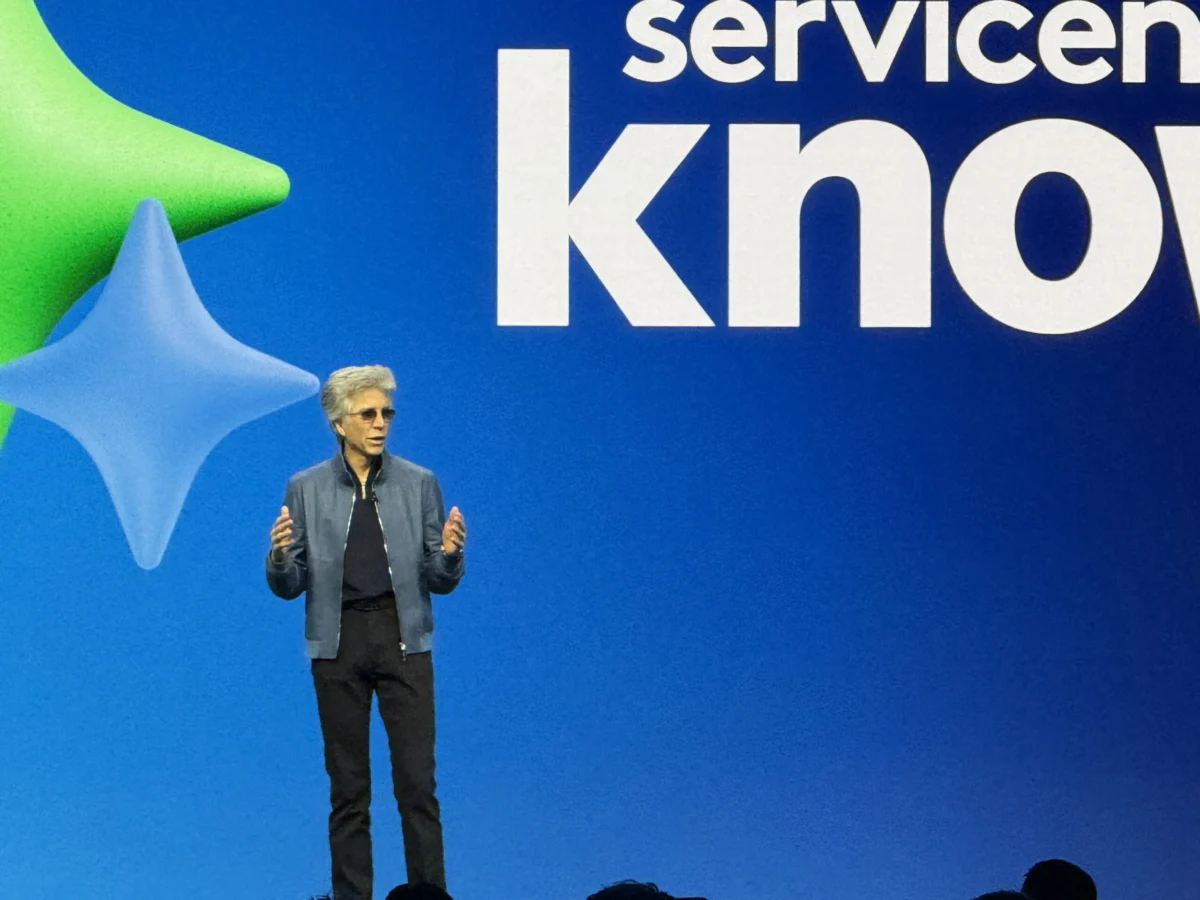

ServiceNow has unveiled a comprehensive expansion of its artificial intelligence ecosystem at the Knowledge 2026 user conference in Las Vegas, signaling a pivot from automated workflows to a paradigm of fully autonomous enterprise operations. At the heart of the announcement is the "Australia" platform release, which introduces the AI Control Tower and a suite of Autonomous Workforce specialists designed to permeate every major corporate function, from finance and legal to supply chain and security. The updates represent a culmination of ServiceNow’s aggressive acquisition strategy, integrating technologies from Armis, Veza, and Moveworks into a unified "command center" for the modern enterprise.
The strategic shift comes as organizations struggle to manage a fragmented landscape of generative AI (GenAI) deployments. According to ServiceNow leadership, the industry is moving past the experimentation phase into a period of "agentic" business, where AI agents do not merely suggest actions but execute them autonomously. To facilitate this, ServiceNow is positioning its platform as the governance and execution layer that prevents "agentic chaos" by providing oversight across third-party AI systems and internal workflows alike.
The Evolution of the AI Control Tower: From Governance to Command
The Australia release marks a significant evolution of the AI Control Tower, a feature first introduced in 2025. While the initial version focused on basic governance and inventory of AI models, the 2026 iteration has been reframed as a full-scale Enterprise AI Command Centre. Nenshad Bardoliwalla, Group VP of Product Management for AI at ServiceNow, noted that the expansion addresses a growing "anxiety around control, security, and trust" as more AI agents move into production environments.
The new AI Control Tower operates across five distinct dimensions:
- Discover: Identifying all AI instances and agents running within the enterprise, including those not officially inventoried by IT departments.
- Observe: Real-time monitoring of agent behavior, performance, and resource consumption.
- Govern: Establishing guardrails and ethical boundaries for AI decision-making.
- Secure: Protecting AI workloads from adversarial attacks and data leakage.
- Measure: Quantifying the actual return on investment (ROI) and efficiency gains derived from AI deployments.
A critical component of this release is the new AI Gateway. This infrastructure layer provides real-time observability for agentic workloads connecting to ServiceNow via the Model Context Protocol (MCP). This allows organizations to maintain a "single pane of glass" view of their AI ecosystem, even when using models from external providers like OpenAI, Google, or Anthropic.
The Autonomous Workforce: Digital Employees Across the Enterprise
Beyond governance, ServiceNow is doubling down on the "Autonomous Workforce," introducing AI specialists tailored for specific business functions. These are not merely chatbots but digital entities capable of executing end-to-end workflows within defined parameters.
The L1 IT Service Desk AI Specialist is now generally available, providing automated resolution for common technical issues. ServiceNow announced that this will be followed by a wave of new specialists covering IT operations (AIOps), site reliability engineering, and asset lifecycle management.
In the realm of Customer Relationship Management (CRM), new AI specialists are now available to handle sales qualification, quoting, order fulfillment, and invoice disputes. By June 2026, the company expects to release specialists for HR, finance, legal, and procurement. These specialists leverage a shared infrastructure consisting of the Configuration Management Database (CMDB), the Context Engine, and the Workflow Data Fabric, ensuring that every digital agent operates with a consistent understanding of the organization’s data and business logic.
Security and Risk: Integrating Armis and Veza
The security sector has become a primary growth engine for ServiceNow, with the business line surpassing $1 billion in annual contract value in 2025. The Knowledge 2026 conference highlights the full integration of Armis and Veza into the ServiceNow platform, forming the backbone of the new Autonomous Security & Risk product.
The acquisition of Armis for $7.75 billion—ServiceNow’s largest to date—provides the platform with agentless asset intelligence. Armis currently tracks nearly 7 billion connected assets globally, including IT, IoT, and medical devices. This data now flows directly into the ServiceNow CMDB, transforming it into a live, real-time map of an organization’s attack surface.
Complementing this is Veza’s access graph technology, which governs human and non-human identities. John Aisien, SVP and General Manager for Security and Risk, emphasized that this integration solves the "fragmentation problem" that has long plagued Chief Information Security Officers (CISOs). By linking detection, response, and identity governance, ServiceNow aims to implement a "zero permissions" architecture, ensuring that AI agents only have access to the specific data and systems required for a single task.
Action Fabric and the Open AI Ecosystem
In a move toward greater interoperability, ServiceNow launched "Action Fabric." This feature opens the platform’s "system of action" to any AI agent, regardless of whether it was built on ServiceNow, Microsoft Copilot, or a custom internal stack. Through a generally available MCP Server, agents can trigger governed ServiceNow workflows—such as approvals, catalog actions, or playbooks—without requiring a traditional user interface.
Anthropic has been named the first design partner for Action Fabric, integrating its Claude Cowork agent directly into the ServiceNow environment. This "headless" execution model is designed to ensure that while the "brain" of the AI might reside elsewhere, the "muscles"—the actual execution of business processes—remain governed by ServiceNow’s security and audit protocols.
Strategic Partnerships with Microsoft and NVIDIA
ServiceNow’s expansion is bolstered by deepened collaborations with industry giants Microsoft and NVIDIA.
The partnership with Microsoft involves extending AI Control Tower governance across the Microsoft Agent 365 ecosystem. ServiceNow AI specialists will soon be available in the Microsoft Agent 365 Marketplace, appearing in organizational charts as digital employees with clearly defined roles and accountability. This integration is currently in preview, with full availability expected later this year.
The collaboration with NVIDIA focuses on infrastructure and benchmarking. The companies introduced "Project Arc," an enterprise autonomous desktop agent secured by the NVIDIA OpenShell sandboxed runtime. Furthermore, the AI Control Tower is now included in the NVIDIA Enterprise AI Factory validated design, allowing governance to reach down to the infrastructure layer of large-scale model workloads.
To address the lack of standardized testing for AI agents, ServiceNow and NVIDIA released "NOWAI-Bench." This open-source benchmarking standard includes two frameworks—EnterpriseOps-Gym and EVA-Bench—to help organizations evaluate the performance and safety of their AI agents against industry peers.
Case Study: Rolls-Royce and the ROI of Predictive Intelligence
To demonstrate the practical impact of these technologies, Phil Priest, Head of Global Business Services at Rolls-Royce, shared results from the company’s deployment of "Merlin," an internal implementation of ServiceNow’s Now Assist.
Since its launch in August 2025, the system has reached 12,000 employees and manages over 10,000 conversations per month. The data reveals significant operational gains:
- Efficiency: 5,000 hours of administrative time saved.
- Deflection: A 54% deflection rate for IT incidents.
- Resolution Time: Mean time to resolve incidents reduced to two days.
- Shop Floor Impact: 38,000 incidents resolved through predictive intelligence, translating to 300,000 saved hours for engineers assembling engines.
Priest highlighted the importance of governance in high-stakes areas like accounts payable and bank detail changes, where the risk of fraud is high. He noted that applying AI to an inefficient process only magnifies the inefficiency, echoing a sentiment that ServiceNow aims to address through its structured "Australia" platform release.
Chronology of Key Releases and Milestones
The rollout of the features announced at Knowledge 2026 follows a structured timeline:
- August 2025: Early adoption phase; Rolls-Royce launches Now Assist (Merlin).
- May 2026: Knowledge Conference; General availability of AI Control Tower (Australia Release) and L1 IT Service Desk Specialist.
- June 2026: Launch of IT AI specialists; Preview of Security and Risk AI specialists.
- September 2026: Targeted general availability for Autonomous Security & Risk specialists.
- October 2026: Planned full-enterprise rollout of Now Assist across all Rolls-Royce services.
- H2 2026: Expected release of additional Action Fabric features and Microsoft Agent 365 Marketplace availability.
Broader Implications for the Enterprise Software Market
ServiceNow’s latest moves place it in direct competition with other platform giants like Salesforce, Microsoft, and Google Cloud, all of which are vying to become the primary orchestration layer for enterprise AI. By focusing on "governed execution," ServiceNow is betting that trust and security will be the deciding factors for enterprise buyers.
The shift from "automated workflows" to "automated work" represents a fundamental change in how software vendors view their role. If ServiceNow succeeds, its platform will no longer just be a tool for managing tickets or requests; it will be the employer of a digital workforce that handles the bulk of routine corporate activity.
However, the success of this vision depends on overcoming organizational silos. While the technology for an "Autonomous Workforce" exists, the implementation requires navigating complex internal budgets and cultural resistance to AI-driven change. As ServiceNow moves forward with the Australia release, the industry will be watching closely to see if these digital specialists can deliver on the promise of the "platform of platforms" in a real-world, agentic economy.
