
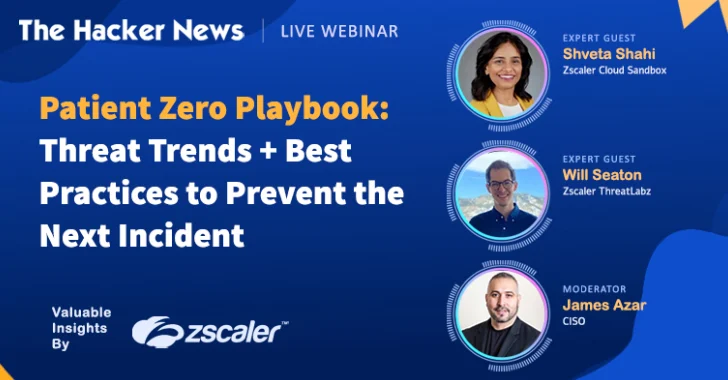

The landscape of cybersecurity in 2026 is increasingly defined not by the sophistication of perimeter defenses, but by the resilience of an organization’s internal posture against an inevitable initial breach, often triggered by a single human interaction. This critical vulnerability, colloquially known as the "Patient Zero" phenomenon, represents the frontline of modern cyber warfare, where advanced artificial intelligence (AI) tools are now routinely weaponized to bypass even the most robust technological safeguards. As cyber threats evolve with unprecedented speed and precision, the ability to identify, contain, and eradicate these initial infections before they metastasize into catastrophic enterprise-wide incidents has become the paramount challenge for security professionals globally.
Understanding "Patient Zero": The Genesis of a Cyber Epidemic
The term "Patient Zero" originates from epidemiology, designating the first documented case of a disease in a population, whose identification is crucial for understanding transmission patterns and containing outbreaks. In the realm of cybersecurity, this concept has been meticulously adopted to describe the initial point of compromise within an organization’s network – the first device, system, or user account successfully infiltrated by an attacker. This "first click," often seemingly innocuous, transforms an employee’s workstation or a server into a beachhead, a critical foothold from which malicious actors can launch broader, more destructive campaigns.
Unlike isolated malware infections of the past, a "Patient Zero" compromise typically signifies a targeted intrusion, where the attacker’s objective extends far beyond the initial entry point. Once inside, the adversary rapidly pivots to reconnaissance, lateral movement, privilege escalation, and ultimately, data exfiltration or system disruption. The urgency in identifying and isolating Patient Zero lies in preventing this rapid escalation, akin to containing a viral outbreak before it spreads uncontrollably through the population. Historic breaches, from the sophisticated Stuxnet attack leveraging USB drives to widespread ransomware campaigns initiated via phishing, consistently demonstrate that the initial access point, the cyber Patient Zero, is the most vulnerable and critical juncture in an attack’s lifecycle.
The Human Element: The Enduring Vulnerability in an AI Age
Despite decades of advancements in security technology, the human element remains the most persistent and often exploited vulnerability in cybersecurity. As the adage goes, "The hardest part of cybersecurity isn’t the technology, it’s the people." Every significant breach reported in recent years frequently traces its origin to a single employee succumbing to a clever social engineering tactic. In 2026, this vulnerability is being exponentially magnified by the sophisticated application of AI by malicious actors.
Social engineering, encompassing tactics like phishing, spear-phishing, vishing (voice phishing), and smishing (SMS phishing), preys on fundamental human psychology: trust, curiosity, urgency, and fear. Attackers craft convincing narratives designed to trick individuals into revealing credentials, clicking malicious links, or downloading infected files. Data from the 2025 IBM Cost of a Data Breach Report indicated that human error and social engineering collectively contributed to over 80% of successful breaches, underscoring the enduring challenge. This statistic is projected to remain consistently high, if not increase, in 2026 as AI further refines these attack vectors. The sheer volume and hyper-personalization of AI-generated lures make it increasingly difficult for even security-aware employees to discern legitimate communications from malicious ones, turning every inbox into a potential Patient Zero entry point.
AI’s Double-Edged Sword: Amplifying Attacker Capabilities
The integration of artificial intelligence into offensive cyber operations has fundamentally reshaped the threat landscape, granting attackers unprecedented capabilities in precision, scale, and evasion. This represents a significant challenge for defenders, as AI-powered attacks can bypass traditional security controls with alarming efficacy.
- AI-Powered Phishing and Social Engineering: Large Language Models (LLMs) are now routinely employed by threat actors to generate highly realistic and contextually relevant phishing emails, social media messages, and even deepfake voice or video calls. These AI systems can conduct automated reconnaissance, scraping vast amounts of public data from social media, corporate websites, and news articles to craft hyper-personalized lures. This level of customization bypasses generic email filters and makes the attacks far more convincing, exploiting specific psychological triggers unique to the target. For instance, an AI might generate an email seemingly from a trusted colleague, referencing a recent project or personal event, making it almost indistinguishable from a legitimate communication.
- AI-Driven Exploitation and Evasion: Beyond initial contact, AI is being leveraged to discover zero-day vulnerabilities more rapidly, generate bespoke exploits, and customize payloads to evade detection by conventional antivirus and intrusion detection systems. AI algorithms can analyze network traffic and system behavior in real-time, adapting their attack patterns to mimic legitimate activity, thus making lateral movement and data exfiltration stealthier and harder to trace.
- Chronology of an AI-Enhanced Patient Zero Attack:
- Phase 1: AI-Driven Reconnaissance: Automated scripts scan public databases, social media, and corporate portals to identify potential targets, their roles, connections, and even personal interests. AI algorithms then process this data to create detailed psychological profiles.
- Phase 2: AI-Powered Lure Generation: Using LLMs, the attacker crafts highly convincing, personalized phishing emails, instant messages, or deepfake voice calls. These lures are tailored to exploit specific vulnerabilities or interests identified during reconnaissance, aiming for maximum impact on the chosen "Patient Zero."
- Phase 3: Delivery and Initial Compromise: The "Patient Zero" interacts with the malicious content (e.g., clicks a link, opens an attachment). The AI-generated payload, often polymorphic or customized, evades signature-based defenses, establishing a foothold within the target’s device.
- Phase 4: AI-Assisted Post-Compromise Automation: Once inside, AI-driven tools automate tasks such as network mapping, credential harvesting, privilege escalation, and lateral movement, drastically reducing the time an attacker needs for "hands-on-keyboard" operations and accelerating the spread of the compromise throughout the network. This speed makes traditional manual incident response far less effective.
The Escalating Stakes: Costs and Consequences of Uncontained Breaches
The financial and reputational ramifications of a successful cyberattack originating from a Patient Zero event are staggering and continue to trend upwards in 2026. Industry analysis from early 2026 suggests the average cost of a data breach has surged past $5.2 million globally, with mega-breaches affecting large enterprises reaching into hundreds of millions. These costs are multifaceted:
- Direct Financial Costs: This includes expenses for forensic investigations, remediation efforts, legal fees, public relations campaigns, credit monitoring services for affected individuals, and crucially, hefty regulatory fines.
- Indirect Costs: Business disruption, loss of operational efficiency, decreased productivity, and ultimately, lost revenue contribute significantly. For instance, a ransomware attack originating from a Patient Zero can bring critical business operations to a standstill for days or even weeks.
- Reputational Damage: Beyond monetary losses, the erosion of customer trust and damage to brand reputation can have long-lasting effects, impacting customer loyalty, market share, and future business opportunities.
- Regulatory Penalties: The global regulatory landscape has become significantly more stringent. Frameworks such as GDPR in Europe, CCPA in California, and emerging regulations like NIS2 (Network and Information Systems Directive 2) across the EU, impose substantial fines for inadequate data protection and delayed breach notifications. By 2026, regulatory bodies are demonstrating zero tolerance for negligence in data security, evidenced by record-breaking fines issued in the preceding years, underscoring the critical need for robust incident response.
The Imperative of Rapid Response: Containing the Infection
Given the speed at which modern cyberattacks can propagate from a Patient Zero, the time to detect and contain a breach has become the single most critical factor in mitigating its overall impact. Studies consistently indicate that breaches contained within 30 days cost significantly less than those that persist longer. However, the average time to identify and contain a breach still hovered around 250-300 days in 2025, a stark indicator of the challenges organizations face.
Traditional security tools, often reliant on signature-based detection, are proving increasingly inadequate against the stealthy, custom-made attacks designed specifically for a target organization. These tools excel at identifying "known" viruses but struggle with novel, polymorphic, or zero-day exploits delivered through sophisticated social engineering. The focus must shift from merely preventing an initial click to rapidly detecting and containing the consequences of that click. Applying the "kill chain" concept, security teams aim to stop an attack at the earliest possible stage, with the Patient Zero event being the critical first point of intervention. The faster an organization can identify the initial compromise, isolate the affected system, and eradicate the threat, the greater its chances of preventing a minor incident from escalating into a catastrophic organizational failure.
Evolving Defense Strategies: Fortifying Against the Inevitable
To counter the sophisticated tactics of AI-powered attackers, cybersecurity strategies are undergoing a significant transformation, moving beyond traditional perimeter defenses to embrace a more adaptive and resilient posture.
- The "Assume Breach" Mentality and Zero Trust: A cornerstone of modern defense is the "assume breach" mentality, which dictates that organizations should operate under the assumption that their defenses will eventually be compromised. This paradigm shift necessitates a proactive approach to security planning, focusing on detection, containment, and recovery rather than solely on prevention. Complementing this is the Zero Trust security model, epitomized by the mantra "never trust, always verify." This model eliminates implicit trust from any user, device, or application, regardless of its location relative to the network perimeter. It enforces strict identity verification, micro-segmentation, and least privilege access, ensuring that even if a Patient Zero is compromised, their ability to move laterally within the network is severely restricted.
- AI for Defense: While AI empowers attackers, it is equally indispensable for defenders.
- Behavioral Analytics (UEBA): AI-driven User and Entity Behavior Analytics (UEBA) platforms are crucial for detecting anomalies in user and system behavior that indicate a compromise, even when legitimate credentials are used. These systems establish baselines of normal activity and flag deviations, providing early warnings of potential Patient Zero infections.
- Extended Detection and Response (XDR): XDR platforms unify security telemetry across endpoints, networks, cloud environments, and identities. This holistic view, powered by AI and machine learning, enables faster correlation of disparate alerts, providing deeper context and accelerating threat detection and response, crucial for identifying and containing a Patient Zero before it spreads.
- Automated Incident Response (SOAR): Security Orchestration, Automation, and Response (SOAR) platforms leverage AI to automate initial containment steps, such as isolating infected devices, blocking malicious IP addresses, and resetting compromised credentials, drastically reducing response times.
- Threat Intelligence: AI processes vast amounts of global threat intelligence, predicting emerging attack vectors and updating defensive mechanisms proactively, thereby enhancing an organization’s ability to anticipate and neutralize threats.
- Security Awareness Training: Given the human element’s persistent vulnerability, continuous and adaptive security awareness training is paramount. This training must evolve to incorporate AI-generated attack simulations, equipping employees with the knowledge and practical experience to identify and report sophisticated, personalized phishing attempts.
- Endpoint Detection and Response (EDR): Advanced EDR solutions provide real-time monitoring, detection, and response capabilities on endpoints, offering deep visibility into activities that could signal a Patient Zero compromise, allowing for immediate isolation and remediation.
Building a Resilient Defense: The Multi-Layered Approach
A truly resilient defense against the Patient Zero threat in 2026 requires a comprehensive, multi-layered strategy that integrates technology, process, and people.
- Proactive Threat Hunting: Security teams must move beyond reactive defense by actively hunting for threats that may have bypassed automated defenses. This involves hypothesis-driven investigation and leveraging advanced analytics to uncover subtle indicators of compromise (IoCs) or tactics, techniques, and procedures (TTPs) of sophisticated attackers.
- Robust Incident Response Planning: A well-defined, regularly practiced incident response plan is indispensable. This plan must cover every stage of a breach, from initial detection and containment to eradication, recovery, and post-incident analysis. Regular tabletop exercises simulating Patient Zero scenarios help teams refine their procedures and ensure a swift, coordinated response.
- Immutable Data Backup and Recovery: To mitigate the devastating impact of ransomware, which often leverages Patient Zero entry points, organizations must implement immutable backups that cannot be altered or deleted by attackers. Tested recovery procedures are vital to ensure business continuity even in the face of a successful attack.
- Supply Chain Security: Organizations must extend their security diligence to third-party vendors and partners. A Patient Zero compromise within a supplier’s network can serve as a conduit for attacks against the primary organization, as seen in numerous high-profile incidents. Robust vendor risk management and contractual security requirements are essential.
Expert Insights and Industry Outlook
Cybersecurity leaders and analysts universally concur on the escalating challenge posed by the Patient Zero phenomenon.
- "The CISO’s role has fundamentally transformed from preventing all breaches to managing risk and ensuring rapid recovery," stated a hypothetical CISO from GlobalTech Solutions. "We must empower our teams with advanced AI-driven tools and continuous, adaptive training, understanding that the human element is both our greatest strength and our most significant vulnerability. It’s about building resilience, not just fortifying walls."
- A hypothetical analyst from Sentinel Cyber Research added, "The arms race between AI attackers and AI defenders is intensifying. Organizations that invest strategically in adaptive, AI-driven security platforms combined with strong human expertise and a ‘assume breach’ mindset will be the ones that not only survive but thrive in this challenging environment. The future belongs to those who can detect and respond at machine speed."
- From a regulatory perspective, a hypothetical Policy Advisor for the European Commission on Digital Security remarked, "Governments worldwide are increasingly recognizing the systemic risk posed by cyber incidents. We anticipate further legislation focusing on mandatory incident reporting, enhanced supply chain security, and demonstrable resilience, moving beyond mere compliance to proactive risk management. Accountability for data protection starts from the first point of entry."
The Broader Implications: A Shifting Paradigm in Enterprise Security
The Patient Zero concept and the AI-driven evolution of initial access attacks carry profound implications for enterprise security, necessitating a paradigm shift across various dimensions:
- Strategic Imperative: Cybersecurity is no longer solely an IT function but a critical board-level strategic imperative. Boards of directors must understand and actively govern cyber risk, allocating appropriate resources and fostering a culture of security throughout the organization.
- Talent Gap: The increasing demand for skilled cybersecurity professionals, particularly those adept at AI integration, incident response, and threat hunting, continues to widen the talent gap. Investing in training and retention programs for security teams is crucial.
- Interconnectedness: The global and interconnected nature of digital ecosystems means that a Patient Zero incident in one sector or geography can rapidly cascade, creating systemic risks across industries and national borders.
- Ethical AI in Security: As AI becomes more prevalent in defense, there is a growing imperative to ensure its ethical deployment. This includes considerations of transparency, bias mitigation, and responsible use to avoid unintended consequences or privacy infringements.
Conclusion
In 2026, the battle for enterprise security is increasingly being fought at the point of initial compromise. While technological safeguards continue to evolve, the human factor remains central to the Patient Zero phenomenon. The relentless innovation in AI, weaponized by malicious actors, demands an equally sophisticated and adaptive defense. Organizations can no longer afford to focus solely on preventing attacks; they must cultivate a robust, multi-layered security posture that assumes breach, leverages AI for rapid detection and response, and empowers its human workforce as the ultimate line of defense. The future of enterprise security hinges on an organization’s ability to not just prevent, but to swiftly detect, contain, and recover from the inevitable first click, ensuring that a single point of entry does not unravel the entire digital fabric of the business. Securing the modern enterprise means mastering the "Patient Zero" playbook, transforming potential weakness into an enduring strength.
