

In the mid-20th century, few could have predicted that Nokia, then a diversified Finnish industrial conglomerate known for everything from rubber boots to toilet paper, would become the global technology powerhouse it was in the early 2000s. Even fewer could have foreseen its pivotal role in an extraordinary tale of redemption and unexpected fortune for a small Finnish village. This is the story of Onni Nurmi, a man burdened by debt and a desire to make amends, whose seemingly modest investment in a local company laid the groundwork for his hometown’s lasting prosperity.
Nokia’s Pre-Digital Roots: A Diversified Industrial Conglomerate
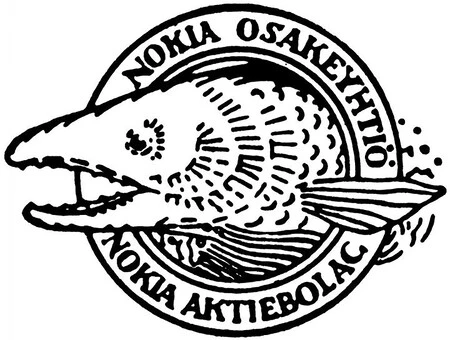
To understand the magnitude of Onni Nurmi’s investment, it is crucial to first grasp the nature of Nokia in the mid-1900s. Far from the mobile phone giant that would dominate the late 20th century, Nokia was a sprawling industrial entity with roots stretching back to 1865. Founded by mining engineer Fredrik Idestam as a paper mill in Tampere, Finland, the company expanded rapidly. By the early 20th century, it had diversified significantly, encompassing a wide array of manufacturing operations. The Finnish Rubber Works, established in 1898, produced rubber boots, tires, and industrial rubber products. Concurrently, the Finnish Cable Works, founded in 1912, manufactured electrical cables and electronics. These three distinct companies — Nokia Company (paper), Finnish Rubber Works, and Finnish Cable Works — were informally linked through common ownership by the 1920s, though they operated as separate legal entities. It wasn’t until 1967 that these companies officially merged to form Nokia Corporation, a colossal conglomerate deeply embedded in Finland’s industrial fabric.
At the time of Nurmi’s investment, Nokia’s primary profile was industrial. Its products ranged from car tires, bicycle tires, and rubber footwear to power cables, paper products, and even household items like toilet paper. While it was a significant employer and a source of national pride in Finland, it held no particular allure as a high-growth technology stock on the global stage. Its stock was primarily viewed as a stable, albeit unexciting, investment in a well-established industrial enterprise, attracting local investors rather than international speculators.
Onni Nurmi’s Burden and Return
Against this backdrop, the story of Onni Nurmi unfolds. A native of Pukkila, a modest rural municipality in the Uusimaa region of Finland, Nurmi experienced a profound personal and financial setback in the mid-1900s. Details of his specific business venture remain somewhat obscure, but it is widely understood that a failed enterprise left him with a crippling debt, one that significantly impacted not only his own finances but also those of many fellow villagers who had entrusted him with their savings or supported his endeavors. This "painful debt" forced Nurmi to emigrate to the United States in search of a new beginning and the means to rectify his past failures. His departure, however, was marked by the heavy burden of having financially ruined a significant portion of his community, a fact that weighed heavily on his conscience.
After approximately fifteen years abroad, Nurmi, now older and perhaps wiser, felt an irrepressible pull to return to his homeland. His primary motivation was clear: to settle the debts he had incurred and restore his honor among his community in Pukkila. Upon his return, he settled in Helsinki, the Finnish capital, where he found employment as a property manager. It was during this period that his attention was unexpectedly drawn to the burgeoning world of the stock market. Despite having no formal training or prior experience in financial investments, Nurmi saw potential in the volatile yet promising landscape of equities. It was a bold move for someone whose previous financial venture had ended in disaster, but it underscored his determination to not only rebuild his own life but also to fulfill his solemn obligation to his village.
An Unconventional Investment: Betting on a Local Giant
In an act that would prove to be remarkably prescient, Nurmi decided to invest in Nokia. His choice was not driven by an astute understanding of future technological trends or an analysis of market disruptors. Instead, it was likely influenced by Nokia’s status as a well-known, seemingly stable Finnish company, a familiar name even if its core business was far removed from the futuristic visions of technology. For Nurmi, investing in a local industrial giant, however unassuming its stock might have seemed to financial experts, likely represented a secure path to accumulate the wealth needed for his repayment.
By 1959, Nurmi had amassed a significant holding of Nokia shares. In a poignant testament to his unwavering commitment to Pukkila, he drafted his last will and testament. In it, he bequeathed all his Nokia shares to the municipality of Pukkila. Crucially, this gift came with a specific, non-negotiable condition: the proceeds from these shares were to be exclusively dedicated to the welfare of the elderly residents of Pukkila. This clause, penned by a man with no financial background, would later prove to be the most vital element of his extraordinary legacy. Onni Nurmi passed away three years later, in 1962, his death passing largely unnoticed by the wider world. Similarly, his inheritance initially garnered little attention. The 780 Nokia shares he left behind were valued at approximately $30,000 at the time, which, adjusted for inflation, would be roughly $320,000 in today’s money—a respectable sum, but far from an astronomical fortune. The inheritance was quietly received, and for years, it remained a dormant asset, a mere footnote in the municipal records of Pukkila.
The Rise of a Tech Behemoth and Pukkila’s Awakening
The ensuing decades saw an unprecedented transformation in Nokia’s trajectory. Beginning in the 1980s, the company made strategic moves into the burgeoning electronics and telecommunications sectors. Acquisitions like Salora and Mobira laid the groundwork for its pivot towards mobile communications. By the 1990s, Nokia had shed many of its traditional industrial divisions, focusing almost entirely on mobile phones and network infrastructure. This strategic realignment coincided with the explosive growth of the global mobile phone market. Nokia, with its innovative designs, robust technology, and intuitive user interfaces, quickly ascended to become the undisputed leader in this new industry. Iconic models like the Nokia 3310 and 1100 became cultural phenomena, symbols of reliability and connectivity. By the early 2000s, Nokia commanded an astounding share of the global mobile phone market, becoming the world’s largest manufacturer of mobile devices and a symbol of Finnish technological prowess. Its market capitalization soared, reaching dizzying heights and making it one of the most valuable companies globally.
This meteoric rise had a profound and unexpected impact on the remote village of Pukkila. The 780 Nokia shares, held faithfully in accordance with Nurmi’s will, underwent successive stock splits as the company’s value escalated. Stock splits are corporate actions that increase the number of shares in a company by dividing existing shares into multiple new shares. While a split doesn’t change the total value of an investor’s holding initially, it makes shares more accessible and can signal confidence, often preceding further value appreciation. As Nokia’s stock price surged, so did the total market value of Pukkila’s inherited portfolio. What was once a modest sum grew exponentially, bolstered further by accumulated dividends. The quiet, almost forgotten inheritance transformed Pukkila into an unexpectedly wealthy municipality. The village, once known for its rural charm and agricultural roots, suddenly found itself possessing a multi-million-dollar asset.
A Village Divided: Legacy vs. Immediate Gain
The realization of this immense wealth presented the small community of Pukkila with an unprecedented challenge and a moral dilemma. The municipal council and its residents were faced with a significant decision: how best to utilize this newfound fortune. A natural division emerged within the community. One faction advocated for liquidating the shares, distributing the proceeds directly to the residents, or using the funds for various immediate municipal needs. The temptation of such a large cash injection was understandable for a small, typically resource-constrained village. Imagine the possibilities: improved infrastructure, tax reductions, or even direct payments that could significantly boost the local economy.
However, a strong counter-argument emerged, championed by those who felt a profound obligation to honor the precise terms of Onni Nurmi’s will. Nurmi had specified that the funds were to be used for the "welfare of the elderly" in Pukkila. This faction argued that deviating from this explicit instruction would be a betrayal of Nurmi’s legacy and his personal journey of redemption. They emphasized the ethical imperative to respect the wishes of a man who had dedicated his life to repaying a past wrong and whose foresight, however unintentional, had made this windfall possible.
After considerable debate and reflection, the latter view ultimately prevailed. The municipality resolved to uphold Nurmi’s conditions, deciding to channel the substantial capital towards a dedicated project for its senior citizens. This decision underscored the community’s strong moral compass and its deep respect for the man who, from beyond the grave, had transformed their fortunes.
The Onni Welfare Centre: A Dream Realized
The culmination of this extraordinary saga was the construction of the Onni Welfare Centre in Pukkila. Named in honor of Onni Nurmi – and fittingly, "Onni" also means "happiness" or "luck" in Finnish – this ambitious project aimed to provide state-of-the-art facilities and comprehensive services for the elderly residents of the municipality. Planning and construction spanned several years, reflecting the careful consideration and significant investment involved. The center was designed not merely as a care facility but as a vibrant community hub, offering a holistic approach to senior welfare.
Construction of the Onni Welfare Centre was completed in September 2007, and it officially opened its doors to the public in 2008. The facility was, and remains, a marvel for a town of Pukkila’s size (approximately 1,700 residents). It boasts a range of modern amenities, including a swimming pool for therapeutic and recreational purposes, a fully equipped gymnasium to promote physical activity, and a welcoming cafeteria that serves as a social gathering place. The center offers various programs and services tailored to the needs of the elderly, ensuring their comfort, health, and social engagement. The existence of such a comprehensive and high-quality facility would have been utterly impossible for Pukkila to finance through its regular municipal budget, highlighting the transformative power of Nurmi’s legacy.
The Paradox of Timing: Nokia’s Decline and Pukkila’s Foresight
Perhaps the most remarkable aspect of Onni Nurmi’s investment strategy, or lack thereof, was the timing of Nokia’s peak and subsequent decline relative to Pukkila’s utilization of the funds. Unbeknownst to Nurmi when he drafted his will, the clause prohibiting the sale of the shares would prove to be an accidental stroke of genius. It ensured that the village held onto the shares throughout Nokia’s incredible ascent, maximizing the value before a dramatic shift in the technology landscape.
Starting around 2007, the very year the Onni Centre was completed, Nokia faced an existential threat from the revolutionary introduction of Apple’s iPhone and the rise of Google’s Android operating system. These new entrants fundamentally redefined the mobile phone market, shifting focus from hardware features and call quality to software ecosystems, touchscreens, and a vast array of applications. Nokia, slow to adapt to these seismic changes, began a precipitous decline. Its market share plummeted, its stock value eroded, and it never regained its former glory in the mobile phone sector. The company, once an unassailable titan, eventually sold its mobile phone division to Microsoft in 2014.

Had Pukkila chosen to sell the shares earlier, or had Nurmi’s will not contained the restrictive clause, the village might have missed the peak of Nokia’s value or, conversely, held onto the shares as their value dwindled significantly after 2007. The “no-sell” clause, imposed by a man without financial acumen, inadvertently became the most profitable investment decision the village could have made. It compelled Pukkila to realize its gains at a critical juncture, effectively cashing out at or near the peak of Nokia’s market dominance, thereby securing the funds necessary for the welfare center just before the company’s downturn.
A Lasting Legacy: Redemption, Community, and the Power of Unconventional Philanthropy
Today, the Onni Welfare Centre stands proudly in Pukkila, a tangible monument to a unique story of redemption, community spirit, and the unpredictable nature of investment. It continues to serve the elderly residents of the village, providing a crucial resource that profoundly enhances their quality of life. For a town of 1,700 people, such a facility is an invaluable asset, fostering a strong sense of community and care for its most vulnerable members.
Onni Nurmi was not a financial wizard, nor was he a technology visionary. He was a man deeply marked by a past failure, driven by an earnest desire to right a wrong and repay a debt to his community. He likely never conceived of a mobile phone, let alone the global impact Nokia would have. His investment was a personal act of faith, a means to an end. Yet, through a remarkable confluence of corporate evolution, market dynamics, and a simple, heartfelt condition in a will, he achieved far more than mere repayment. He bequeathed to Pukkila a legacy of lasting well-being, transforming a painful past into a prosperous future.
The story of Onni Nurmi and Pukkila serves as a powerful reminder of several profound truths. It underscores the human capacity for redemption, the enduring power of a community’s commitment to its values, and the sometimes-unforeseen consequences of even the most modest actions. It highlights how an unconventional act of philanthropy, guided by a sense of moral obligation rather than financial strategy, can yield extraordinary and enduring benefits, forever linking the fate of a small Finnish village to the incredible, roller-coaster journey of a global industrial giant. Nurmi’s story is a testament that sometimes, the greatest returns are not measured in profit margins, but in the enduring welfare of a community.
