
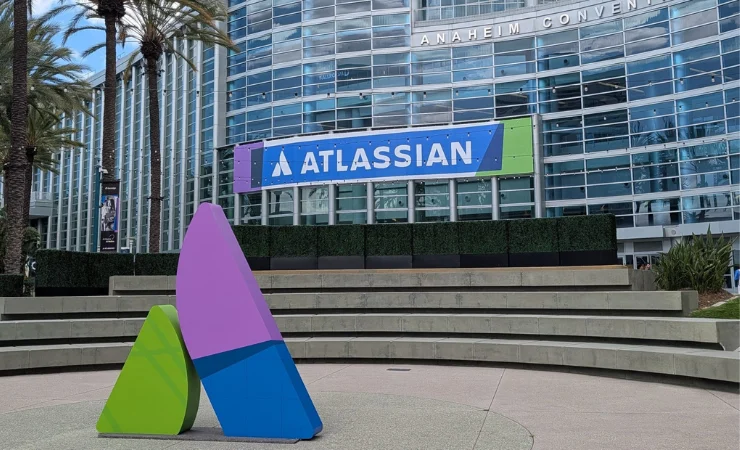

Jason Andrews, the Vice President of Engineering Operations at Cisco, oversees an organizational infrastructure that supports 20,000 engineers, manages more than 60 distinct product lines, and facilitates over $36 billion in annual revenue. In a recent detailed discussion at Atlassian’s Team ’24 and subsequent industry forums, Andrews shared the comprehensive roadmap of Cisco’s internal transformation—a journey characterized by the radical consolidation of 75 disparate software tools into a single, unified cloud platform. This shift was not merely a technical migration but a fundamental reimagining of how one of the world’s largest networking and cybersecurity companies operates at scale. The results of this overhaul are significant: a 54% reduction in software expenditure and an estimated $5.3 million in annual savings derived from returning 15 minutes of productivity per week to 10,000 users.
The Philosophy of Transformation Over Migration
The cornerstone of Cisco’s strategy, as articulated by Andrews, is the distinction between "transforming" and "migrating." In the context of enterprise digital strategy, "lift and shift" refers to moving existing processes and data to a new environment—usually the cloud—without modifying the underlying workflow. Andrews argues that this approach is fundamentally flawed for organizations seeking genuine value. According to his analysis, simply moving inefficient legacy processes to a more modern infrastructure yields the same inefficiencies, often at a higher cost due to cloud licensing models.
For Cisco, the transition required a "ground-up" rethink. This meant evaluating why certain processes existed and whether they served the current needs of a fast-paced, AI-driven market. The difficulty of this task was compounded by the institutional memory of a 40-year-old company. When attempting to architect new workflows, Andrews encountered resistance from veteran engineers who had spent decades building and maintaining the existing systems.
In one notable instance, a senior engineer with 25 years of experience at Cisco initially claimed that a proposed workflow change was impossible due to established "process." When Andrews inquired who owned the process in question, the engineer realized that the authority to change it rested within the very room where they were sitting. This anecdote highlights a critical barrier in enterprise transformation: the perception of internal processes as immutable laws rather than adaptable guidelines. By empowering these veteran employees to redesign their workflows from scratch, Cisco was able to unlock a 3% to 5% productivity boost across its engineering teams. While Andrews admits that measuring developer productivity is notoriously difficult, this figure was derived from a consensus among 50 engineering leaders across the organization.
Navigating the Chronology of AI Adoption and Compliance
A major component of Cisco’s modern toolkit is Atlassian Rovo, an AI-powered search and assistance tool designed to surface information across various enterprise applications. However, the path to deploying Rovo was not immediate. Despite Andrews’ initial enthusiasm following the tool’s unveiling, the reality of enterprise-grade security and legal compliance necessitated a year-long review process.
The timeline of AI integration at Cisco serves as a blueprint for other Fortune 500 companies. The initial "field trial" phase was followed by a rigorous due diligence period. At one point, the technology was activated and then promptly deactivated by legal and compliance teams to ensure all data-handling frameworks were robust enough for the sensitive nature of Cisco’s intellectual property. This "false start" is a common occurrence in large-scale AI deployments, where the speed of technological innovation often outpaces the development of corporate governance frameworks.
The delay underscored a vital lesson for engineering leaders: the integration of generative AI requires a proactive and ongoing dialogue with legal departments. Because AI models handle data in novel ways—raising concerns about data leakage, encryption, and the storage of "secrets" (such as API keys or passwords) in clear text—the compliance phase is as critical as the technical implementation. At Cisco, it took a full year for the legal team to finalize the controls necessary for wide-scale adoption.
Practical Applications of AI in Large-Scale Engineering
Once Rovo was fully integrated, the early use cases focused on Retrieval-Augmented Generation (RAG). Engineers used the tool to query technical documentation, such as identifying which features were included in specific software versions (e.g., version 17.6.2). While these "standard" queries provided immediate value, the more transformative impact was found in cross-platform reporting.
Cisco’s operational environment is complex; while they have consolidated much of their work onto a central Atlassian platform, they still maintain hundreds of independent Jira instances across different business units. Traditionally, compiling a unified view of project health or resource allocation required manual data extraction, multiple meetings, and significant administrative overhead.
With the introduction of AI agents, these reports can now be generated in seconds. Andrews noted that this shift allows senior engineers and managers to move away from the administrative burden of "compiling reports" and toward the high-value work of "solving business problems." By automating the synthesis of data from disparate sources, the AI acts as a connective tissue across the organization’s vast technical landscape.
The Next Frontier: Managing AI Agents as Assets
As Cisco moves deeper into a multi-agent AI environment, the conversation has shifted toward governance and infrastructure management. One of the most forward-looking concepts discussed by Andrews is the treatment of AI agents as managed assets within a Configuration Management Database (CMDB).
In traditional IT service management, a CMDB tracks every piece of hardware and software (assets) within a company. Andrews argues that as AI agents begin to drive critical workflows—such as automating hardware procurement or managing software deployments—they must be treated with the same level of oversight as a physical server or a software license. This includes monitoring their "health," identifying when they go offline, and ensuring they operate within security parameters.
This need for "agent operations" is particularly relevant given Cisco’s physical scale. The company manages approximately 38,000 racks and 2.4 million devices across three primary locations. Hardware procurement is handled through a custom ERP application. By connecting this internal application to a unified "teamwork graph" via AI, Cisco is beginning to identify opportunities for hardware reuse. For example, the system can flag existing hardware in a warehouse that could be redeployed to a new project, rather than the company purchasing new equipment. This cross-system context transforms AI from a simple chatbot into a strategic tool for resource optimization and sustainability.
Beyond Coding Metrics: The "Time to Revenue" North Star
In the current tech landscape, many organizations justify their AI investments by pointing to "lines of code written" or "developer velocity." Andrews, however, views these as secondary metrics. His primary focus for the coming year is "Time to Revenue"—the duration it takes for a product to move from initial conception to a state where it generates income for the company.
For a hardware-centric company like Cisco, which produces switches and routers with deeply embedded security software, the bottleneck is rarely how fast an individual developer can write a block of code. Instead, the delays occur during the integration of various teams—such as when the switch hardware team must sync their work with the security software team.
Andrews posits that if AI can improve the end-to-end "day one to day 100" cycle by even 10%, the financial impact is exponential. In a company with $36 billion in annual revenue, a 10% improvement in time-to-market can translate into billions of dollars in realized value. This perspective shifts the focus of AI adoption from individual productivity to systemic efficiency.
Analysis of Implications for the Enterprise Sector
The Cisco case study provides several critical insights for the broader technology sector. First, it demonstrates that tool consolidation is a prerequisite for effective AI adoption. Without a unified data layer, AI tools like Rovo cannot provide the cross-system context necessary for complex reporting and decision-making.
Second, the "year in legal review" experienced by Cisco suggests that AI adoption is currently a governance-led process rather than a technology-led one. Organizations that succeed in the next five years will be those that develop agile compliance frameworks capable of evaluating AI tools without stifling innovation.
Finally, the shift toward managing AI agents as assets marks a maturation of the AI market. We are moving away from the "experimental" phase of generative AI, where tools are used for simple tasks, and into an "operational" phase where AI is integrated into the core business logic.
Conclusion and Future Outlook
The transformation led by Jason Andrews at Cisco serves as a high-stakes validation of the "platform over products" philosophy. By reducing tool sprawl and forcing a cultural shift among long-tenured staff, Cisco has created an environment where AI can deliver measurable financial and operational returns.
As the organization looks toward the future, the focus remains on refining the governance of these new technologies. The goal is to ensure that as AI agents become more autonomous, they remain secure, transparent, and aligned with the company’s ultimate objective: reducing the friction between engineering effort and revenue generation. For other global enterprises, the message from Cisco is clear: the path to AI-driven value requires both the courage to dismantle legacy processes and the patience to build a robust foundation of governance.
