
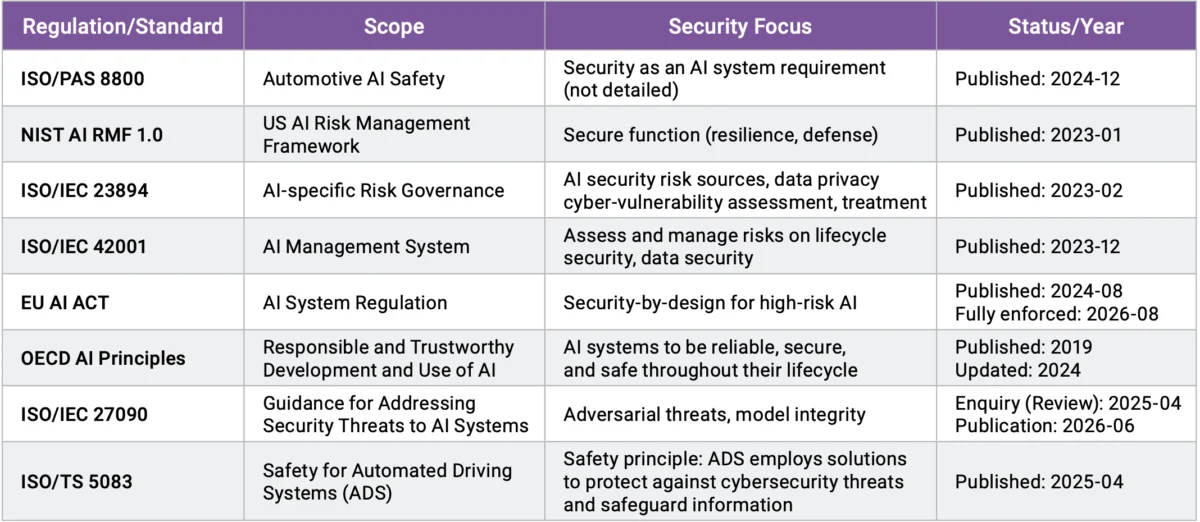

The global semiconductor ecosystem is currently undergoing a radical transformation as artificial intelligence is integrated into every stage of the silicon lifecycle, from initial architectural specification to physical layout and post-silicon validation. This technological leap, while promising unprecedented gains in productivity and chip performance, is moving at a velocity that far outstrips the development of regulatory frameworks or industry-wide governance standards. The rapid adoption of foundational models and agentic AI systems within Electronic Design Automation (EDA) workflows has raised the specter of large-scale intellectual property (IP) theft and systemic security breaches, for which the industry currently has no unified defense.
As AI moves from a supportive tool to an autonomous agent influencing design and verification outcomes, the risks associated with data integrity and proprietary confidentiality have magnified. While industry leaders acknowledge the necessity of AI governance, current efforts remain largely fragmented and focused on the intent of responsible AI rather than on measurable, enforceable outcomes. The semiconductor industry now faces a critical juncture where traditional regulatory approaches are trailing behind the pace of innovation, potentially leaving the hardware foundation of the modern world vulnerable to exploitation and legal ambiguity.
The Evolution of AI in the Semiconductor Workflow
The integration of AI into chip design is not a sudden phenomenon but rather an acceleration of a decade-long trend toward automation. Traditionally, chip design relied on EDA tools that utilized deterministic algorithms to solve complex problems in placement, routing, and timing analysis. However, the introduction of Large Language Models (LLMs) and generative AI has shifted the paradigm.
Today, AI is being utilized in two primary capacities within the semiconductor sector. The first involves data management and cybersecurity operations, where AI is used to monitor Security Operations Centers (SOCs) and analyze massive volumes of telemetry data to identify threats that would overwhelm human analysts. The second, and more controversial, use case involves the generation and verification of hardware description language (HDL) code, such as Verilog and VHDL.
Agentic AI systems—AI that can act independently to achieve specific goals—are now being tested to automate the iterative "loops" of design. These systems can take a high-level specification and generate potential architectures, optimize them for power and area, and even suggest verification test benches. While this increases speed, it introduces a "black box" element into the hardware supply chain, where the origin and safety of a specific block of code may be difficult to verify.
The Intellectual Property Paradox and the PDK Dilemma
One of the most pressing concerns for semiconductor firms is the protection of intellectual property when utilizing third-party AI models. The semiconductor pyramid relies on a complex web of NDAs and End-User License Agreements (ULAs) between foundries, EDA vendors, and design houses.
Alexander Petr, senior director at Keysight EDA, notes that the current legal infrastructure is ill-equipped for the AI era. Foundries provide Process Design Kits (PDKs)—highly sensitive sets of data that describe the manufacturing parameters of a specific process node—to design houses under strict confidentiality. However, as design houses seek to automate their flows, there is an increasing temptation to feed these PDKs into foundational models to train "design assistants."
Currently, most NDAs do not explicitly address how AI models should handle foundry IP. Furthermore, standard ULAs for EDA tools often contain clauses against reverse engineering but remain silent on the ingestion of tool documentation and APIs into LLMs. This creates a risk where a foundational model, if not strictly secured on-premises, could inadvertently leak a company’s "secret sauce" or a foundry’s manufacturing secrets into a collective training set, making it accessible to competitors.
Historical Context: Lessons from Safety-Critical Industries
The semiconductor industry is not the first to grapple with the tension between rapid innovation and safety. A historical look at the 1990s reveals a similar struggle within the military, aerospace, and automotive sectors. As electronic content in vehicles and aircraft increased, the industry moved to establish rigorous standards such as ISO 26262 for functional safety and various DO-178C standards for airborne systems.

John Weil, vice president at Synaptics, points out that while the industry eventually converged on these standards to guide engineers on building reliable systems, no such equivalent exists for AI-driven hardware design today. In the automotive sector, the bar for quality and safety has consistently risen, particularly for Advanced Driver Assistance Systems (ADAS). Experts suggest that safety-critical industries like automotive and aerospace will likely serve as the proving ground for the first practical models of AI accountability. The rigorous "trickle-down" effect from these sectors may eventually provide the framework for broader semiconductor AI governance.
Global Regulatory Fragmentation and the EU AI Act
The lack of a unified global standard is a significant hurdle. Currently, different regions are pursuing divergent paths:
- The European Union: The EU AI Act represents the most comprehensive attempt to date to regulate AI, focusing on risk-based classifications. However, critics argue that it remains focused on software applications and high-level ethics, often missing the technical nuances of silicon-level integration.
- The United States: Governance has largely been driven by Executive Orders and voluntary commitments from major AI developers, focusing on national security and the prevention of catastrophic risks.
- China: Regulation is heavily focused on content control and the alignment of AI outputs with state policy, alongside significant investment in domestic AI-driven chip design tools to bypass Western sanctions.
This fragmentation creates a "compliance nightmare" for multinational semiconductor firms that design chips in one jurisdiction, manufacture them in another, and sell them globally. Without international interoperability, a chip designed with an AI tool in the U.S. might face legal hurdles or "data sovereignty" issues when processed or verified by a service provider in Europe or Asia.
Software Development Pressures and Hardware Verification
In the realm of software, AI has already become ubiquitous, with tools like GitHub Copilot generating vast swaths of JavaScript and C code. In the hardware domain, the adoption is slower but the stakes are higher. Unlike software, which can be patched post-release, a "bug" or a security vulnerability in silicon is often permanent and requires a multi-million-dollar "respin" to fix.
Jason Oberg, a fellow at Arteris, highlights a growing concern regarding the "verification gap." If a design team uses AI to generate RTL (Register Transfer Level) code 10 times faster than a human, the verification team must also accelerate their work. If they use AI to generate the tests for the AI-generated code, a dangerous feedback loop is created. If the AI-generated test passes the AI-generated design, there is no guarantee of actual correctness or the absence of malicious "hardware Trojans." The industry lacks a "continuous assurance" mechanism to monitor AI behavior during the design phase and at runtime.
Technical and Ethical Implications of Non-Deterministic AI
A fundamental challenge in AI governance is the non-deterministic nature of Large Language Models. Unlike traditional EDA tools that produce the same result for the same input, an LLM can provide varying responses. This lack of predictability is antithetical to the precision required in semiconductor engineering.
Sylvain Guilley, CTO at Secure-IC, emphasizes that for AI systems to be trusted in chip design, they must be "explainable." If an AI agent moves a block of logic or alters a power grid, the human architect must be able to understand why that decision was made. Current governance frameworks focus on the "intent" of the AI developer but fail to mandate the "explainability" of the AI’s specific design choices.
Analysis: The Path Forward for Industry Standards
To bridge the gap between innovation and security, the semiconductor industry must move toward an outcome-driven governance model. This would likely include several key pillars:
- Mandatory Runtime Monitoring: Implementing "silicon eyes" or on-chip monitors that can detect if an AI-designed component is behaving outside of its intended parameters.
- Updated Legal Frameworks: Revising NDAs and ULAs to explicitly define "AI Ingestion Rights," ensuring that proprietary data used for training remains within a secure perimeter.
- Synthetic Data Governance: As AI begins to train on synthetic data generated by other AI, standards must be set to prevent "model collapse" or the amplification of design biases.
- Global Interoperability: Industry bodies like SEMI or the IEEE may need to take a more aggressive role in harmonizing regional regulations into a single set of technical standards for AI in EDA.
The market currently rewards the first movers—those who use AI to get to market faster. However, without a mandate for governance, the industry risks a major "AI-driven" security failure that could lead to draconian government interventions, which might ultimately stifle innovation more than proactive self-regulation would.
As the industry moves toward "Physical AI"—where AI directly controls autonomous vehicles, medical devices, and industrial robotics—the need for enforceable accountability becomes a matter of public safety. The goal of AI governance is not to slow the pace of chip design, but to ensure that the foundation of our digital world remains secure, transparent, and resilient in the face of autonomous evolution.
