
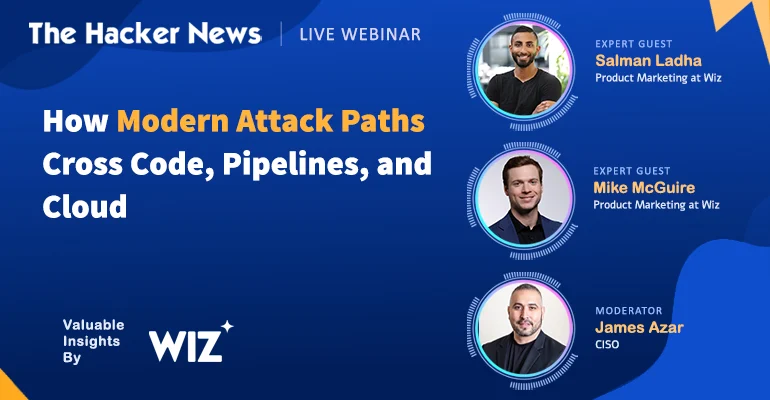

In an increasingly complex digital landscape, where cyber threats evolve with unprecedented speed, the traditional paradigms of application security (AppSec) are proving insufficient. A critical shift in understanding and mitigating risk is imperative, as highlighted by an upcoming strategic briefing from cybersecurity experts at Wiz, scheduled for May 13, 2026. This vital webinar aims to dissect the modern attacker’s methodology, focusing on how seemingly minor vulnerabilities are chained together to form a "Lethal Chain" leading directly to an organization’s most sensitive data, and crucially, how defenders can proactively disrupt these sophisticated attack paths. The briefing comes at a time when organizations worldwide are grappling with alert fatigue and the strategic challenge of prioritizing genuine threats amidst a deluge of security notifications, a phenomenon aptly likened to "chasing thousands of ‘toast’ alerts" while more insidious dangers proliferate silently.
The contemporary threat landscape is characterized by its stealth and sophistication, moving far beyond the era of brute-force attacks or singular, glaring vulnerabilities. Today’s advanced persistent threat (APT) groups and financially motivated cybercriminals rarely seek a single "open door." Instead, their methodologies have evolved to exploit a series of low-risk, seemingly innocuous "cracks" that, when viewed in isolation, may not trigger significant concern. These could range from a minor coding bug in an application layer to a subtle misconfiguration within a vast cloud infrastructure, or even an unpatched dependency in a containerized environment. The true danger emerges when these disparate weaknesses are meticulously connected, forming an uninterrupted, high-confidence attack path – a "Lethal Chain" – that ultimately compromises critical assets.
Industry reports consistently underscore the escalating costs and prevalence of multi-stage cyberattacks. For instance, data from leading cybersecurity firms and government agencies frequently indicates that a significant percentage of successful breaches involve lateral movement and the exploitation of chained vulnerabilities rather than a single point of entry. While specific figures vary by year and sector, the trend points towards attackers spending more time in reconnaissance and internal network navigation before achieving their objectives. This strategic pivot by adversaries renders traditional, siloed security tools—which typically focus on either code analysis (Static Application Security Testing – SAST, Dynamic Application Security Testing – DAST) or cloud infrastructure posture management (Cloud Security Posture Management – CSPM) in isolation—woefully inadequate. Organizations operating with such fragmented visibility are effectively "flying blind," unable to perceive the full, interconnected attack surface that a determined adversary meticulously maps out.
The concept of "alert fatigue" further exacerbates this predicament. Security Operations Centers (SOCs) are frequently inundated with thousands, sometimes millions, of alerts generated by various security tools daily. Many of these alerts are indeed "toast alerts"—minor issues that, while technically vulnerabilities, do not represent an immediate, direct threat to critical data. The sheer volume of these low-priority notifications desensitizes security teams, causing legitimate, high-severity alerts to be overlooked or deprioritized. This environment inadvertently creates a fertile ground for sophisticated attackers, who can exploit the noise to conceal their methodical progression through a system, connecting those "tiny flaws" into a devastating chain reaction.
The genesis of the "Lethal Chain" approach can be traced to the increasing complexity of modern IT environments. The widespread adoption of cloud-native architectures, microservices, DevOps methodologies, and continuous integration/continuous deployment (CI/CD) pipelines has dramatically expanded the attack surface. While these innovations drive business agility and scalability, they also introduce intricate interdependencies and potential points of failure that are difficult to monitor comprehensively. A misconfigured container registry, for instance, might be exploited to gain access to a CI/CD pipeline, which then could be leveraged to inject malicious code into production applications, ultimately leading to data exfiltration from a cloud storage bucket. Each step, individually, might appear as a low-risk alert, but the cumulative effect creates a devastating path.
Recognizing this critical gap, the upcoming strategic briefing featuring Wiz experts Mike McGuire and Salman Ladha is designed to provide actionable insights into these evolving attack patterns. The webinar is particularly timely given the persistent challenges organizations face in correlating disparate security findings across their entire technology stack – from developer workstations and code repositories to production cloud environments. The experts will delve into the practicalities of identifying, understanding, and ultimately breaking these "Lethal Chains" before they can be fully exploited.
The briefing will specifically cover several crucial areas, moving beyond theoretical discussions to provide tangible strategies. While the full agenda will be detailed during the session, it is anticipated to include:
- Deconstructing Modern Attack Methodologies: A deep dive into the tactics, techniques, and procedures (TTPs) employed by advanced threat actors to identify and exploit chained vulnerabilities across hybrid and multi-cloud environments. This segment will likely explore real-world examples (anonymized for privacy) of how seemingly unrelated flaws are linked.
- The Limitations of Siloed Security Tools: An analytical examination of why traditional security tools, which operate in isolation (e.g., SAST for code, CSPM for cloud configurations, network firewalls for perimeter defense), fail to provide a holistic view of attack paths. The discussion will emphasize how context is lost when security findings are not integrated and analyzed across the entire technology stack.
- Mapping the "Lethal Chain": Practical guidance on how organizations can shift from reactive alert-chasing to proactive attack path mapping. This will involve understanding the interconnectedness of assets, identifying critical choke points, and visualizing potential routes an attacker could take to sensitive data. The discussion is expected to introduce methodologies for prioritizing risks based on their connectivity and potential impact rather than isolated severity scores.
- Strategies for Breaking the Chain: Actionable recommendations for implementing security controls and processes that effectively disrupt these multi-stage attacks. This could include architectural changes, enhanced identity and access management (IAM) strategies, secure configuration best practices, and integrating security earlier into the software development lifecycle (Shift Left security) with a focus on contextual understanding.
- The Role of a Unified Security Posture: Exploring how a comprehensive, graph-based approach to security—one that maps relationships between code, configurations, identities, and runtime assets—can provide the necessary visibility to identify and remediate "Lethal Chains." This approach helps security teams see the "big picture" and understand how a vulnerability in one layer can be leveraged to compromise another.
- Prioritizing Remediation Efforts: Practical advice on how to move beyond simply fixing every "toast alert" to strategically prioritizing vulnerabilities that are part of an active or potential "Lethal Chain." This involves understanding the blast radius and potential impact of connected vulnerabilities.
The value proposition of attending this live briefing extends significantly beyond the content itself. Participants will have direct access to Mike McGuire and Salman Ladha during an open Q&A session following the main presentation. This interactive segment offers a unique opportunity for security professionals to pose specific questions related to their unique architectural challenges, pipeline complexities, or specific threat concerns. Such personalized engagement with industry leaders can provide invaluable insights and tailored advice that general presentations often cannot.
The implications of adopting a "Lethal Chain" perspective are profound for the broader cybersecurity industry. It signals a maturation in how we perceive and address risk, moving from a reactive, vulnerability-centric approach to a proactive, attacker-centric one. Organizations that embrace this shift will be better equipped to allocate their security resources more effectively, reducing alert fatigue and focusing on the most critical threats. This strategic reorientation is not merely about implementing new tools but fundamentally changing the mindset of security teams, fostering a deeper understanding of attacker motivations and methodologies.
From a regulatory and compliance standpoint, understanding and demonstrating the ability to prevent "Lethal Chain" attacks will become increasingly important. Data privacy regulations (like GDPR, CCPA) and industry-specific compliance frameworks (e.g., PCI DSS, HIPAA) often mandate robust security controls and incident response capabilities. Proactively mapping and breaking attack paths can significantly bolster an organization’s compliance posture, reducing the likelihood of costly breaches and subsequent regulatory penalties. The financial implications of a successful breach are staggering, encompassing not only direct costs like incident response and remediation but also long-term damages such as reputational harm, customer churn, and legal fees. By focusing on "Lethal Chains," organizations can significantly reduce their overall risk exposure and protect their bottom line.
For security leaders, the briefing offers a strategic blueprint for enhancing their organization’s resilience against the most sophisticated cyber threats. It empowers them to articulate the true risk to executive leadership, moving beyond technical jargon to explain the business impact of interconnected vulnerabilities. This facilitates better decision-making regarding security investments and resource allocation. For practitioners, it provides the practical knowledge and tools to identify and mitigate complex attack vectors that often go unnoticed by conventional security practices.
Recognizing the global nature of cybersecurity challenges, the organizers have made arrangements for those unable to attend the live session. By registering in advance, individuals will receive a full recording of the briefing immediately after its conclusion, ensuring that these critical insights are accessible to a wider audience regardless of time zone or scheduling conflicts. This commitment to widespread education underscores the urgency of addressing the "Lethal Chain" problem within the AppSec domain.
This strategic briefing represents a crucial step forward in arming cybersecurity professionals with the knowledge and methodologies required to defend against the next generation of cyber threats. By illuminating how attackers connect "tiny flaws" into a "Lethal Chain" to compromise data, and by offering practical strategies to break these chains, Wiz experts aim to empower organizations to stop guessing and start mapping their true security posture. It is an indispensable opportunity for any security leader or practitioner committed to moving beyond reactive defense to proactive, intelligent security.
For those interested in delving deeper into the evolving world of AppSec and understanding how to effectively dismantle these sophisticated attack paths, registration for the Strategic Briefing is available now. Stay informed and ahead of the curve by following industry thought leaders on platforms like Google News, Twitter, and LinkedIn for further exclusive content and updates on critical cybersecurity developments.
