
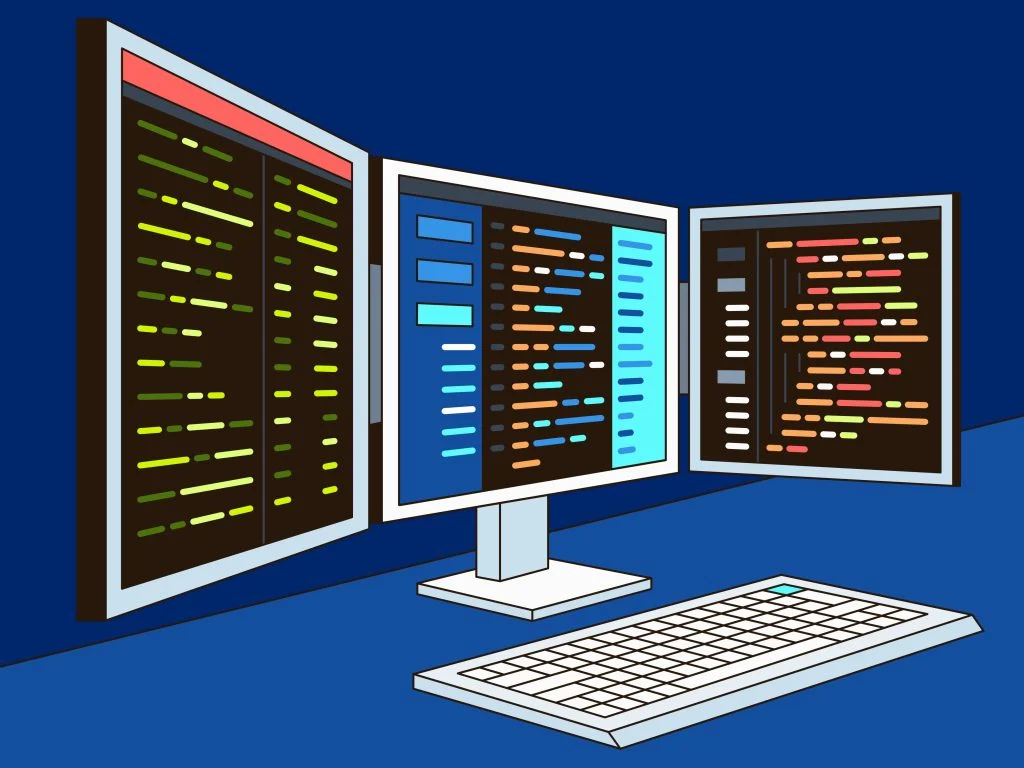

Anthropic has introduced Agent View within its Claude Code command-line interface (CLI) dashboard, a new feature designed to consolidate the management of multiple Claude Code sessions into a single, unified screen. This development aims to address the growing complexity developers face when orchestrating concurrent AI agent tasks, a process that has traditionally demanded intricate terminal window management and significant cognitive load. While the company positions Agent View as a significant step towards enhancing developer productivity, industry observers remain divided on its potential to fundamentally alter daily development practices, with concerns lingering about the underlying reliability and trustworthiness of AI agents.
The introduction of Agent View comes at a time when the integration of AI agents into software development lifecycles is accelerating. Previously, developers managing parallel AI agent threads often resorted to a combination of multiple terminal tabs and multiplexing tools like tmux. This approach, while functional, proved cumbersome, requiring constant context switching and meticulous tracking of each agent’s status, progress, and output. Anthropic’s new offering promises to centralize these disparate operations, providing a single pane of glass for launching, backgrounding, and interacting with various Claude Code sessions.
Key functionalities of Agent View include the ability to initiate new agents, seamlessly transition them to the background, and swiftly navigate between different conversational threads. The dashboard also provides visual status indicators, clearly delineating which sessions are actively running, awaiting input, or have successfully generated a pull request (PR). This immediate visual feedback is intended to reduce the mental overhead associated with managing complex agent workflows.
However, the practical impact of such interface enhancements is subject to debate. While a more streamlined user experience is undeniably beneficial, some experts question whether it addresses the more profound challenges hindering the widespread adoption and trust of AI agents in development environments.
Assessing the True Impact on Developer Workflows
The reception to Anthropic’s Agent View is mixed, with some developers viewing it as a welcome improvement and others remaining skeptical about its transformative potential.
Tom Moor, founder of Outline, commented to The New Stack, "For engineers who prefer working in the terminal, Agent View does a good job of centralizing the status of running agent threads." He acknowledged that this centralization is a tangible improvement over managing information scattered across numerous terminal windows. For Moor, consolidating these operational elements represents a positive step forward in managing the complexity of AI-assisted development.
Conversely, Rob May, CEO and co-founder of Neurometric AI, expressed reservations about Agent View’s ability to fundamentally change day-to-day developer operations. "It removes some friction, but it doesn’t change the underlying problem," May stated. He elaborated that while an improved dashboard is a welcome advancement, it does not inherently enhance the reliability of the AI agents themselves. "The hard part isn’t visibility. It’s trust," he emphasized, pointing to a critical gap that interface improvements alone cannot bridge.
May further articulated that for AI agents to truly empower developers in a supervisory capacity, as Anthropic seems to be encouraging, more substantial advancements are needed. This includes the development of robust policy-as-code frameworks, sophisticated exception handling mechanisms, and comprehensive audit trails. Without these foundational elements, the transition to a more hands-off, supervisory role for developers remains precarious, regardless of dashboard improvements.
Potential Use Cases and Limitations of Agent View
Despite the reservations, Agent View does present specific scenarios where it can offer practical assistance to developers. Anthropic highlights its utility in managing long-running agents, citing "PR babysitters" and "dashboard updaters" as prime examples of viable use cases. These are tasks where an AI agent might autonomously monitor code repositories for changes, generate pull requests for routine updates, or keep dashboards synchronized with project status.
The prospect of developers allowing agents to run unattended or semi-attended in these capacities elicits cautious optimism. May views this as a "next logical step for AI-forward companies," but stresses the continued necessity for vigilant oversight of processes and results. He strongly advises against deploying unattended agents for tasks that directly impact production systems due to the inherent risks.
The general sentiment among developers appears to be a willingness to delegate low-risk tasks to AI agents, even if they operate autonomously. However, for complex or high-stakes operations that could lead to costly and difficult-to-resolve errors, maintaining human oversight remains paramount. "Errors in long-running jobs are expensive to find and fix," May cautioned. "The debugging burden alone should make developers cautious." This underscores the critical need for developers to carefully evaluate the risk profile of any task assigned to an AI agent.
The Persistent Challenge of Rate Limits and Resource Management
A perennial concern for users of Anthropic’s AI models, including Claude Code, revolves around rate limits and associated costs. In recent months, users have reported encountering usage limitations more rapidly than anticipated. Anthropic has been actively working to expand its compute capacity, a strategic move underscored by significant investments and partnerships. These include collaborations with major technology players such as SpaceX, Amazon Web Services (AWS), Google, Broadcom, Microsoft, and Nvidia. These agreements are aimed at securing the substantial computational resources required to scale their AI operations.
Despite these efforts to bolster infrastructure, Anthropic’s announcement regarding Agent View includes the caveat, "Usual rate limits apply." This suggests that the new dashboard does not inherently bypass or alter existing usage constraints.
May highlights that rate limits and token costs are among the most underestimated challenges in agentic development. As developers increasingly run parallel agent sessions, the cumulative effect on token consumption and the likelihood of hitting rate limits will amplify. "This is one of the most underappreciated problems in agentic development right now," he stated.
Beyond computational resources, another resource at risk of exhaustion is human cognitive capacity. Moor pointed out that the very convenience of Agent View could paradoxically lead to overload. "You quickly become overloaded, context-switching between several different ongoing agents," he observed. This raises a pertinent question: could Agent View, by enabling more concurrent agent operations, inadvertently increase developers’ workloads and the pressure to manage an ever-expanding array of tasks?
Anthropic has provided organizations with the option to disable Agent View, a feature that could offer a degree of control over escalating costs and aid in compliance and auditability. This flexibility acknowledges the financial and regulatory considerations associated with widespread AI agent deployment.
Anthropic’s Vision: Nudging Developers Towards Supervision
Anthropic’s positioning of Agent View as the "one place to manage all your Claude Code sessions" strongly suggests a strategic push towards encouraging developers to adopt a more supervisory role. The underlying message appears to be one of trust: that developers can delegate tasks to AI agents and intervene only when necessary. However, this vision has yet to fully resonate with the developer community, who are still grappling with the fundamental requirements for widespread trust in AI.
The broader ecosystem for agentic development is still lacking crucial governance and auditability features necessary to underpin confidence for production-level deployments. May commented, "It’s a useful piece, but it’s not the control plane developers have been waiting for." He elaborated that many enterprises remain "stuck in pilot purgatory, not because they lack visibility into their agents, but because they haven’t solved reliability and accountability at scale."
This perspective suggests that while Agent View might offer incremental improvements in workflow management, it does not address the core impediments to enterprise-grade AI agent adoption. The path forward for AI in software development likely requires a more comprehensive suite of tools and frameworks that prioritize robust governance, verifiable reliability, and clear lines of accountability, particularly when AI agents are tasked with critical functions. The current iteration of Agent View, while a step in the right direction for interface consolidation, may not be sufficient on its own to unlock the full potential of AI-driven development at scale.
