
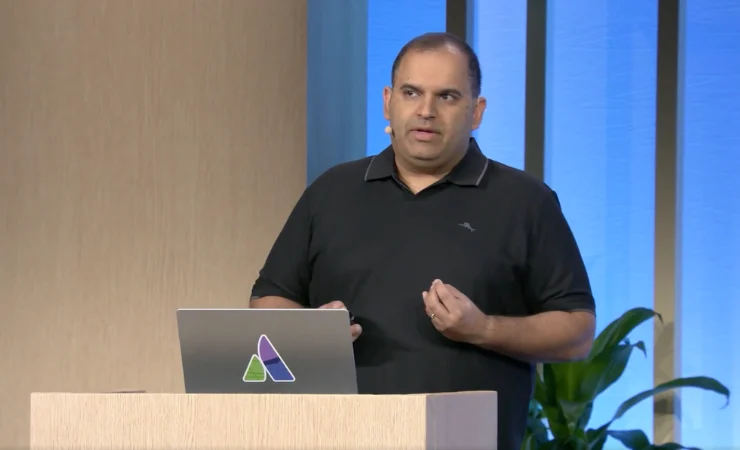

The practical utility of artificial intelligence in the modern enterprise is often obscured by high-level theoretical discussions, yet at the recent Atlassian Team ’26 event, the focus shifted toward granular, real-world applications. One of the most compelling demonstrations of this shift involves a scenario far removed from the traditional software development sprint: a mechanic in a car company’s field operation recording a voice note from a repair shop floor. Under the legacy workflow, a technical issue described by a mechanic would be manually logged, potentially taking days to reach the appropriate engineer, while similar patterns across different global locations would likely go unnoticed.
With the integration of Atlassian’s Rovo agents, this exchange has been compressed into a matter of hours. The AI identifies similar reports from multiple countries and dozens of different shops, routes the synthesized data to the correct engineering department, and facilitates a rapid response. This specific use case, highlighted by Jamil Valliani, Head of Product for AI at Atlassian, underscores a fundamental change in how the company views its role in the enterprise. It is no longer just about Jira boards and Confluence pages; it is about bridging the "information gap" that exists between disparate job functions and geographies.
The Context Backbone: Transforming the Teamwork Graph
At the heart of Atlassian’s AI strategy is the Teamwork Graph, a sophisticated data layer designed to map the complex relationships between work items, personnel, organizational decisions, and project outcomes. Initially conceived as the internal engine for Rovo, the Teamwork Graph has undergone a significant evolution in its accessibility.
Jamil Valliani noted that while the graph was always intended to be the "context backbone" for Rovo, the company’s recent findings suggested that this context is valuable to the broader AI ecosystem. In a strategic pivot, Atlassian has made the Teamwork Graph available for use by external AI tools. This is facilitated through the Graph CLI and Atlassian’s Model Context Protocol (MCP) server. According to Tamar Yehoshua, Atlassian’s Chief Product and AI Officer, the MCP server has quickly become one of the most-utilized in the market.
This move represents a departure from the "walled garden" approach often seen in the SaaS industry. By allowing any AI tool with a connector to reach into an organization’s Atlassian context, the company is positioning its historical data—years of Jira tickets and Confluence documentation—as a foundational asset for any agent stack a customer might choose to run. The investment a customer makes in documenting their work history now yields dividends across their entire technological landscape, not just within Atlassian-native applications.
Rapid Adoption and the Shift Toward Reasoning Models
The internal performance metrics for Rovo indicate a significant shift in user behavior. Usage of Rovo Chat has increased by 250% over the last six months. This growth was not driven by aggressive marketing but by an organic increase in user trust. As the system successfully handled increasingly complex queries, users began delegating more sophisticated tasks to the AI.
In response to this trend, Atlassian is moving beyond simple execution models toward "reasoning models." Unlike standard AI that follows a linear plan, these advanced models possess the capability to assess their own output. If a result does not meet the initial requirements or if the logic appears flawed, the model can revisit and revise its plan autonomously.
Furthermore, Atlassian is preparing to launch cloud-based processes for long-running tasks. This feature will allow Rovo Chat to operate in the background, conducting extensive research or data synthesis over several hours or days. The AI can engage in a dialogue with the user to clarify points as needed and report back once the comprehensive task is complete. This evolution reflects a broader industry trend where AI is moving from a "copilot" that helps a human work to an "agent" that performs the work independently under human oversight.
Defining the AI Workforce: Skills vs. Agents
As enterprises begin to build their own custom AI solutions within Rovo Studio, a clear distinction has emerged between "skills" and "agents." For many organizations, understanding this difference is key to successful deployment.
- Skills: These are defined as repeatable, predictable sets of actions. Examples include triaging a bug list, summarizing a meeting, or checking a document for compliance with brand guidelines. Skills are designed to be "ingredients" that can be plugged into various conversations or larger agent workflows.
- Agents: These are built to address unique business challenges that do not fit into a standard template. An agent might handle a complex cross-departmental product launch or manage a unique customer onboarding process that requires synthesizing data from multiple non-standard sources.
The long-term goal for Atlassian is to blur the lines between these two categories, allowing the platform to automatically determine whether a task requires a pre-defined skill or a more complex agentic response. However, for current users, this mental model provides a framework for scaling AI across an organization without redundant programming.
Technical Benchmarks and Data Freshness
A perennial challenge for AI in the enterprise is the "recency" of data. An AI that provides answers based on month-old data is of limited use in a fast-moving technical environment. Atlassian has addressed this through two primary mechanisms: real-time updates for native products and accelerated ingestion for external connectors.
For Atlassian-native products like Jira and Confluence, the Teamwork Graph updates in near real-time. For external data sources, Atlassian has collaborated with over 50 SaaS partners to improve ingestion speeds. The initial baseline load for external data is now 40 times faster than it was six months ago, reducing the time required to sync external systems from days to a matter of hours.
The system also utilizes "high-priority signals" to maintain data relevance. For instance, if a user pastes a link to a Google Doc into a Jira issue and marks it as relevant, the Teamwork Graph recognizes this action as a priority event. The system immediately refreshes the content of that specific document and maps the relationship between the user who posted it, the people they shared it with, and the specific issue it concerns. This ensures that the AI possesses not just the data, but the social and professional context surrounding it.
Navigating Regulatory Hurdles and the "Trash" of Innovation
Despite the technical advancements, the path to implementation is not without obstacles, particularly in heavily regulated sectors such as finance, healthcare, and government. Valliani acknowledged that the hardest terrain involves these industries, primarily because the regulatory landscape is shifting as quickly as the technology itself.
Requirements for model hosting and data residency that were standard six months ago have already been superseded by new mandates. Atlassian’s strategy in this environment is one of rapid iteration and "disposable" development. Valliani noted that the company is comfortable building features that may become obsolete within months, describing this as the "trash" that inevitably accompanies a high-velocity innovation cycle.
This pragmatic approach extends to the company’s view of the AI hype cycle. Valliani argued that while much of the public discourse focuses on the "science" and the underlying large language models (LLMs), the true economic opportunity lies in the translation of that intelligence into ground-level solutions. The goal is to help businesses move forward by solving practical problems, such as the communication gap between the mechanic and the engineer, rather than merely showcasing technical prowess.
Strategic Acquisitions and the Enterprise Pivot
The acquisition of The Browser Company and the subsequent development of the "Dia" browser further illustrate Atlassian’s enterprise-first focus. During Team ’26, Josh Miller, CEO of The Browser Company, emphasized that Dia is being tailored specifically for knowledge workers rather than general consumers.
Key enterprise features currently in development for Dia include:
- Mobile Device Management (MDM) support.
- SOC 2 Type 2 attestation for security compliance.
- Advanced prompt injection protection.
- Deep integration with Atlassian Guard.
The phasing out of the "pro" tier in favor of a model integrated into Atlassian’s enterprise licensing (the Collections model) signals a clear direction. Atlassian is not interested in competing for the average consumer’s attention; it is building a specialized toolset for the professional environment where security and administrative control are paramount.
Analysis: The Shift from "Shiny Things" to Production Reality
The atmosphere at Team ’26 was notably different from previous years. The presentations, led by co-founder Mike Cannon-Brookes, were characterized by a "calmer, buyer-focused" tone. Instead of showcasing experimental features in a vacuum, the keynote featured live demos performed on Atlassian’s own production data—some of which included legacy code over two decades old.
The underlying message was clear: AI value in the enterprise comes from working with "the mess you have." Most organizations do not have the luxury of a clean slate; they have years of fragmented data, legacy systems, and complex human hierarchies. Atlassian’s current roadmap is designed to act as a "nervous system" that can navigate this complexity.
The company’s trajectory over the next six months is focused on increasing the autonomy of Rovo agents and refining the human-in-the-loop model. The objective is to move away from "approval gates," which can slow down workflows, toward a "course-correction" model where humans oversee the AI’s direction without needing to micromanage every output. As the platform matures, managing a fleet of AI agents is intended to become as intuitive as managing a standard Jira board, effectively making AI an invisible but essential component of the modern workplace.
