
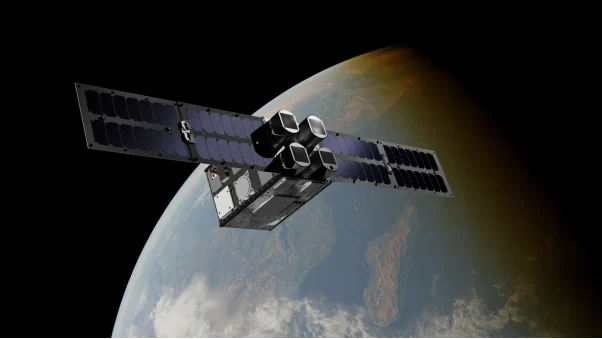

The European space sector reached a significant milestone on May 18 with the announcement of a strategic partnership between Skynopy, a rapidly emerging ground station service provider, and U-Space, the Toulouse-based manufacturer specializing in high-performance small satellites. Under the terms of the newly signed agreement, Skynopy will provide comprehensive ground station services for the operation of two flagship U-Space missions currently positioned in Low-Earth Orbit (LEO): the SOAP and PANDORE satellites. This collaboration not only secures the operational continuity of these missions but also integrates both companies into a broader research and development initiative under the European Space Agency (ESA) framework, signaling a shift toward more automated and data-rich ground segment operations in the "New Space" economy.
The contract represents a pivotal moment for U-Space as it seeks to streamline its mission control processes and maximize the data throughput of its orbital assets. By leveraging Skynopy’s infrastructure, U-Space aims to overcome the traditional bottlenecks associated with satellite-to-ground communications, particularly as the demand for high-resolution, real-time data increases across the global space industry. The partnership is structured to support the entire lifecycle of the missions, from initial signal acquisition to the delivery of processed telemetry and payload data.
Mission Profiles: SOAP and PANDORE
The two satellites at the heart of this agreement, SOAP and PANDORE, represent the cutting edge of European small satellite utility. Each mission addresses a critical challenge in modern space operations: space debris management and the resilience of global navigation systems.
The SOAP (Space-Based Situational Awareness) satellite is a dedicated platform designed to enhance space surveillance capabilities. As the orbital environment becomes increasingly crowded with both active satellites and defunct debris, the ability to catalog and track small objects has become a matter of international security. SOAP aims to demonstrate the specific advantages of space-based situational awareness (SBSS) over traditional ground-based radar and optical tracking. By operating in LEO, the satellite can gather higher-accuracy data on small debris that is often invisible to ground sensors due to atmospheric interference or distance. The mission’s success is expected to significantly improve the fidelity of orbital catalogs, thereby reducing the risk of collisions for all space faring nations.
PANDORE serves as an in-orbit demonstration (IOD) mission with a focus on positioning, navigation, and timing (PNT). It carries the Synchrocube payload, developed by Safran Space, which is designed to validate LEO-based positioning and synchronization services. In an era where Global Navigation Satellite Systems (GNSS) like GPS or Galileo are increasingly vulnerable to jamming, spoofing, and signal degradation, PANDORE provides a vital proof-of-concept for backup systems. The mission explores how small satellite constellations in LEO can offer a "PNT overlay," providing resilient signals that can complement or replace traditional GNSS data in contested or compromised environments.
The ESA PUSH Program and Technical Innovation
Beyond the immediate operational contract, U-Space and Skynopy are deepening their technical cooperation through the European Space Agency’s PUSH (Providing Upstream Services for Higher-value missions) program. This initiative is specifically designed to foster the development and validation of advanced upstream services that can enhance the performance of European satellite platforms.
A primary objective of the collaboration under the PUSH program is the implementation of dynamic modulation in the X-band frequency for U-Space’s satellite platforms. X-band is a high-frequency band commonly used for high-speed data downlinks, but its efficiency is often hampered by atmospheric conditions and the varying geometry between a moving satellite and a fixed ground station. By introducing dynamic modulation—specifically Variable Coding and Modulation (VCM)—the satellites can automatically adjust their data transmission rates in real-time based on the quality of the signal link.
This technical advancement is funded by ESA and Skynopy, presenting a zero-cost innovation opportunity for U-Space. For the broader industry, the successful implementation of VCM on small satellite platforms marks a transition of "big sat" technology into the CubeSat and small-sat sectors. This allows for significantly higher data volumes to be downloaded during short orbital passes, maximizing the return on investment for satellite operators.
The Ground-Station-as-a-Service Model
The selection of Skynopy as the service provider highlights a growing trend in the space industry: the shift toward Ground-Station-as-a-Service (GSaaS). Traditionally, satellite operators were required to build and maintain their own network of ground antennas or negotiate complex, hardware-specific contracts with various providers. Skynopy’s approach modernizes this by offering a software-centric platform that prioritizes integration and data transparency.
U-Space officials noted that Skynopy’s platform provides their engineering teams with unprecedented access to real-time metrics, including signal strength, Signal-to-Noise Ratio (SNR), demodulation quality, and data delivery latency. This level of granular detail allows mission controllers to diagnose issues instantly and optimize the performance of the satellite’s onboard communication systems.
Furthermore, Skynopy’s focus on robust programming interfaces (APIs) and a graphical supervision dashboard has been credited with drastically reducing integration timelines. In the fast-paced New Space sector, the ability to interface a ground station network with Mission Control Software (MCS) through standardized code rather than bespoke hardware configurations is a major competitive advantage. This automation reduces the need for manual intervention in day-to-day operations, allowing U-Space to scale its satellite fleet without a linear increase in operational headcount.
Official Responses and Strategic Vision
The partnership has been met with enthusiasm from the leadership of both organizations, reflecting a shared vision for the future of European space autonomy. Antoine Ressouche, general manager and co-founder of U-Space, emphasized that the decision to partner with Skynopy followed a rigorous market analysis.
"Skynopy became the obvious choice once we seriously compared what was available on the market," Ressouche stated. "The depth of their interface, the quality of real-time metrics, and above all the ability to adapt the modulation rate during a pass fundamentally change how you operate a satellite in LEO. With X-band and VCM on the horizon, we are positioning our future satellites to deliver download performance our customers simply would not expect from a small satellite."
Industry analysts suggest that this partnership is a clear indicator of the maturing "New Space" ecosystem in France, particularly in the Toulouse region, which has long been the heart of the European aerospace industry. By combining U-Space’s manufacturing prowess with Skynopy’s innovative ground segment solutions, the two companies are creating a vertically integrated capability that strengthens Europe’s position in the global small satellite market.
Chronology of Development and Future Outlook
The collaboration between Skynopy and U-Space did not emerge in a vacuum but is the result of a multi-year trend toward decentralizing space operations.
- Early 2020s: U-Space establishes itself in Toulouse, focusing on the rapid production of high-performance nanosatellites and microsatellites.
- 2022-2023: The SOAP and PANDORE missions are conceptualized and developed, with the European Space Agency providing support for the PUSH initiative to bolster European technological sovereignty.
- Late 2023: Skynopy enters the market with a mission to simplify ground segment access, targeting the growing number of LEO constellation operators.
- May 18, 2024: The formal announcement of the contract and the joint ESA PUSH program collaboration is made public.
Looking ahead, the implications of this deal extend far beyond the two satellites currently in orbit. As Skynopy and U-Space validate the use of dynamic X-band modulation, the findings will likely inform future ESA standards for small satellite communications. For U-Space, the ability to offer "high-bandwidth" small satellites makes their platforms more attractive to commercial and governmental clients who require massive data sets, such as those involved in hyperspectral Earth observation or high-frequency signals intelligence.
For Skynopy, the contract serves as a high-profile validation of their GSaaS model. As more companies look to deploy LEO constellations, the demand for a "plug-and-play" ground segment that offers high technical depth and low latency will only grow. The partnership also underscores the importance of public-private partnerships, as seen with the ESA funding, in de-risking new technologies that eventually become industry standards.
In conclusion, the Skynopy and U-Space agreement represents a strategic alignment that addresses the three most pressing needs of the modern space industry: operational efficiency, data-driven insights, and technological innovation. By focusing on the ground segment—the often-overlooked link in the space value chain—these two companies are ensuring that the next generation of small satellites can perform at the level of their much larger, more expensive predecessors. This move not only secures the success of the SOAP and PANDORE missions but also sets a new benchmark for how space missions are managed and executed in the 21st century.
