

The United Kingdom has significantly bolstered its national security and space monitoring capabilities with the announcement that its new flagship space domain awareness (SDA) software, Borealis, has reached initial operating capability (IOC) six months ahead of its original schedule. This milestone, announced by the Ministry of Defence (MoD) on May 22, represents a critical advancement in the UK’s ability to track, identify, and characterize objects in orbit. Integrated into the National Space Operations Centre (NSpOC), Borealis serves as the primary intelligence engine for the UK’s space surveillance and protection missions, ensuring the safety of both sovereign and commercial assets in an increasingly crowded and contested orbital environment.
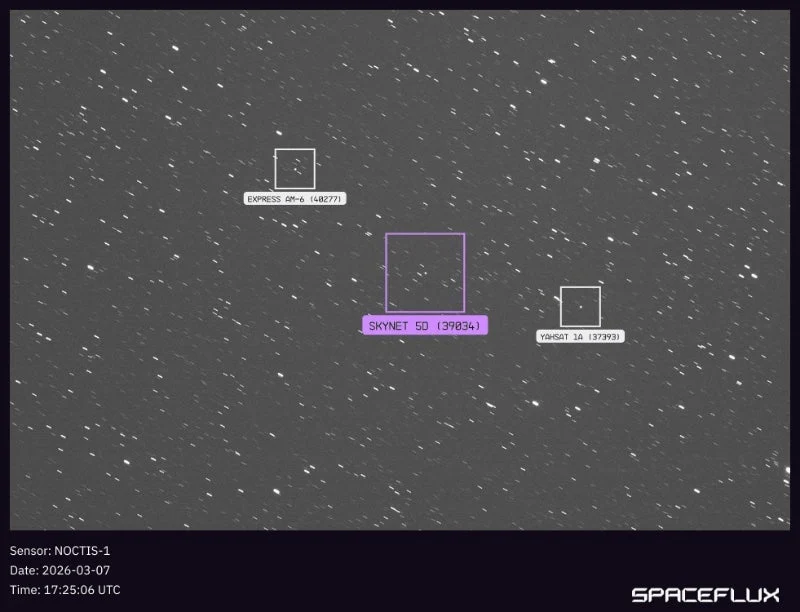
The deployment of Borealis is complemented by the operational debut of the Noctis-1 military telescope, a ground-based optical sensor formerly known as Nyx-Alpha. By combining sophisticated data processing software with high-resolution sovereign sensing capabilities, the UK is establishing a robust end-to-end infrastructure designed to mitigate risks ranging from orbital debris collisions to intentional interference by adversarial actors. This dual achievement highlights the UK’s commitment to the 2021 National Space Strategy, which identifies space as a fundamental pillar of national infrastructure and a "contested domain" requiring constant vigilance.
The Technological Foundation of Borealis and the Role of CGI
The development of the Borealis system was spearheaded by the global IT and business consulting firm CGI, which served as the prime contractor under a £65 million ($87 million) agreement. The contract, part of a broader surge in UK defense spending targeted at high-tech domains, tasked CGI with creating a platform capable of processing vast quantities of data from a diverse array of sensors. The project involved a dedicated team of more than 100 engineers and software specialists who focused on delivering a system that offers significant improvements over legacy tracking tools.
Borealis introduces a suite of advanced features designed to streamline the workflow of operators within the National Space Operations Centre. Key among these are increased automation in data ingestion and analysis, which reduces the cognitive load on personnel and allows for faster response times during potential conjunction events—scenarios where two objects in space are predicted to pass dangerously close to one another. The software also features enhanced visualization tools that provide a three-dimensional representation of the orbital environment, allowing commanders to better understand complex spatial relationships between satellites and debris.
Furthermore, Borealis incorporates more accurate orbit determination algorithms. These mathematical models are essential for predicting the future positions of satellites and fragments of space junk. By integrating additional data sources—including commercial radar, optical sensors, and international partner feeds—the system provides a more comprehensive and precise "Common Operating Picture" of the space domain.
Noctis-1 and the Emergence of Sovereign Optical Sensing
A critical component of the UK’s updated SDA architecture is the Noctis-1 telescope. The MoD recently released the first images captured by this military-grade instrument, featuring the UK’s Skynet 5D communications satellite. Skynet 5D is a cornerstone of the British military’s global communications network, providing secure, high-bandwidth services to the armed forces. The ability to monitor such high-value assets with sovereign sensors is a major strategic advantage, as it reduces reliance on third-party data and provides independent verification of a satellite’s status and surroundings.
The Noctis program represents a shift toward "sovereign eyes" in space. While the UK has long collaborated with the United States and other Five Eyes partners on space surveillance, the ability to generate its own high-fidelity optical data is paramount for national autonomy. Optical sensors like Noctis-1 are particularly effective for tracking objects in Geostationary Orbit (GEO), approximately 36,000 kilometers above the Earth, where many critical communications and early-warning satellites reside.
The MoD has confirmed that a second telescope, Noctis-2, is currently in development. Once operational, the pair of telescopes will provide broader coverage and redundancy, ensuring that the UK can maintain persistent surveillance of key orbital sectors regardless of atmospheric conditions or localized sensor downtime. The data generated by the Noctis family is fed directly into the Borealis system, where "edge software" is used to process and model actionable intelligence for operators.
Chronology of Development and Strategic Implementation
The timeline for the Borealis and Noctis projects reflects an accelerated procurement and development cycle, driven by the urgent need to address evolving space threats. The UK Space Command was established in April 2021 to unify space capabilities across the Royal Navy, British Army, and Royal Air Force. Shortly thereafter, the investment in SDA software and sensing hardware was prioritized.
- 2021-2022: The UK government identifies Space Domain Awareness as a top priority in the Integrated Review and the National Space Strategy.
- Contract Award: CGI is selected as the prime contractor for the £65 million Borealis project, beginning an intensive engineering phase involving agile software development practices.
- Sensor Rebranding: The Nyx-Alpha telescope project is integrated into the wider SDA framework and rebranded as Noctis-1 to align with the new nomenclature of UK Space Command assets.
- Development and Testing: Throughout 2023, the Borealis software undergoes rigorous testing at the National Space Operations Centre, utilizing simulated and real-world data to refine its predictive capabilities.
- May 22, 2024: The MoD officially announces Initial Operating Capability for Borealis, six months ahead of the projected delivery date. The first images from Noctis-1 are simultaneously released to the public.
The early delivery of Borealis is seen as a major success for the MoD’s procurement arm, demonstrating that complex, software-defined defense capabilities can be fielded rapidly when industry and government interests are closely aligned.
Official Responses and Strategic Vision
The operational status of Borealis and Noctis-1 has drawn high-level praise from both political and military leadership. Luke Pollard, the Minister for Defence Readiness and Industry, emphasized the defensive nature of the investment. "Space is now a contested domain," Pollard stated. "Protecting our satellites from adversaries keeps our economy moving and keeps us all safe. As we increase defence spending, we are investing in new defensive capabilities in all domains, including U.K. space-based capabilities."
This sentiment was echoed by Maj. Gen. Paul Tedman, Commander of UK Space Command, who highlighted the importance of data-driven decision-making. "Noctis-1, with Noctis-2 swiftly to follow, will provide us the sovereign eyes we need to augment our space domain awareness," Tedman said. "Data is the coin of the realm in space operations. Borealis exploits edge software to make sense of the vast amounts of information we ingest and then model actionable choices to my operators in the National Space Operations Centre. Together, they represent a significant enhancement to the UK’s space capability."
The mention of "edge software" by Maj. Gen. Tedman is particularly significant. It refers to the ability to process data closer to the source (the sensor) rather than relying on centralized data centers, which reduces latency and allows for near-real-time analysis of orbital maneuvers or potential threats.
Broader Impact: Security, Economics, and International Cooperation
The implications of the Borealis and Noctis systems extend far beyond military utility. The UK space sector is a vital component of the national economy, contributing billions of pounds in GVA (Gross Value Added) and supporting tens of thousands of highly skilled jobs. Satellites are essential for daily life, enabling everything from global positioning and timing (PNT) to weather forecasting and financial transactions.
Mitigating the Debris Crisis
The proliferation of space debris is a growing concern for all spacefaring nations. With tens of thousands of trackable objects and millions of smaller fragments currently in orbit, the risk of a "Kessler Syndrome" event—a chain reaction of collisions—is a constant threat. Borealis provides the UK with the tools to participate more effectively in global debris mitigation efforts, sharing high-accuracy tracking data with international partners to prevent catastrophic collisions.
Countering Adversarial Ambitions
As nations like Russia and China develop and test anti-satellite (ASAT) technologies and "inspector" satellites capable of maneuvering close to other spacecraft, the ability to detect and attribute such actions is a deterrent in itself. Borealis allows the UK to monitor the behavior of foreign satellites more closely, providing the government with the evidence needed for diplomatic or defensive responses to provocative orbital activity.
Strengthening Alliances
The UK’s enhanced SDA capabilities also make it a more valuable partner within the Combined Space Operations (CSpO) initiative, which includes the United States, Canada, Australia, New Zealand, France, and Germany. By contributing high-quality sovereign data to the collective pool, the UK reinforces the security of the Western alliance’s space architecture.
Future Outlook and Conclusion
The achievement of Initial Operating Capability for Borealis is just the beginning of a multi-year roadmap for UK Space Command. The focus will now shift toward achieving Full Operating Capability (FOC), which will involve the integration of Noctis-2 and the incorporation of more advanced artificial intelligence and machine learning modules. These AI enhancements will further automate the detection of "unusual" satellite behavior, allowing the system to flag potential threats before they manifest.
As the orbital environment becomes increasingly crowded with "mega-constellations" like SpaceX’s Starlink and Amazon’s Kuiper, the demand for sophisticated space traffic management (STM) will only grow. The UK, through the synergy of Borealis and the Noctis telescope array, is positioning itself as a global leader in space safety and security. This proactive investment ensures that the UK can protect its interests in the final frontier, safeguarding the technology that underpins modern civilization and national defense.
