

The global smartphone industry is currently navigating one of its most significant architectural shifts in a decade as Apple moves to eliminate the physical SIM card slot in favor of embedded SIM (eSIM) technology. This transition, which gained momentum with the United States release of the iPhone 14 and has reached a critical inflection point with the iPhone 15 lineup, represents a fundamental change in how consumers interact with cellular networks. While the move has been met with both praise for its forward-thinking engineering and criticism regarding consumer flexibility, it marks the beginning of the end for the removable plastic SIM card—a staple of mobile telephony since the early 1990s. As Apple continues to push the boundaries of hardware integration, the iPhone 15 serves as the primary vehicle for a transition that impacts carriers, international travelers, and the broader consumer electronics supply chain.
Understanding the Technical Architecture of eSIM Technology
To understand the implications of an eSIM-only iPhone, one must first define the underlying technology. An eSIM, or embedded Universal Integrated Circuit Card (eUICC), is a rewritable, non-removable chip soldered directly onto a device’s motherboard during the manufacturing process. Unlike the traditional nano-SIM, which is a passive piece of plastic with a gold-plated contact chip, the eSIM is an active, programmable component. It functions using Remote SIM Provisioning (RSP) standards established by the GSMA, the global organization representing the interests of mobile operators.
The technical advantage of eSIM lies in its ability to store multiple "profiles" simultaneously. While a physical SIM card is hardcoded to a specific carrier’s credentials, an eSIM can be programmed and reprogrammed over-the-air (OTA). This allows users to switch between network providers via software settings rather than physical hardware manipulation. For the iPhone 15, this technology enables "Dual eSIM" functionality, allowing users to maintain two active cellular plans at once, or store up to eight or more inactive profiles to be toggled as needed.
A Chronology of the SIM Card’s Decline
The transition to eSIM has not occurred in a vacuum; it is the result of a deliberate, multi-year roadmap orchestrated by Apple and supported by major telecommunications infrastructure.
- 1991: The first SIM cards (Subscriber Identity Modules) were the size of credit cards.
- 1996–2003: The industry moved to Mini-SIM and Micro-SIM formats to save space.
- 2012: Apple introduced the Nano-SIM with the iPhone 5, further shrinking the footprint.
- 2018: The iPhone XS, XS Max, and XR were the first Apple devices to feature eSIM support alongside a physical slot, introducing the hybrid model.
- 2021: The iPhone 13 series introduced Dual eSIM support, though the physical slot remained.
- 2022: Apple made the landmark decision to remove the SIM tray entirely for all iPhone 14 models sold in the United States.
- 2023: With the iPhone 15, rumors and subsequent market data confirmed Apple’s intent to expand the eSIM-only mandate to additional regions, including parts of Europe, while maintaining the physical slot in markets where carrier infrastructure lags, such as China.
This timeline illustrates a clear trajectory toward a "portless" device, where external openings are minimized to improve durability and design.
Engineering Advantages: Space, Durability, and Design
From a hardware engineering perspective, the removal of the SIM card tray is a significant victory. The internal architecture of a modern smartphone is a game of millimeters. By removing the SIM tray, the spring-loaded ejection mechanism, and the internal housing for the card, Apple gains valuable internal volume.
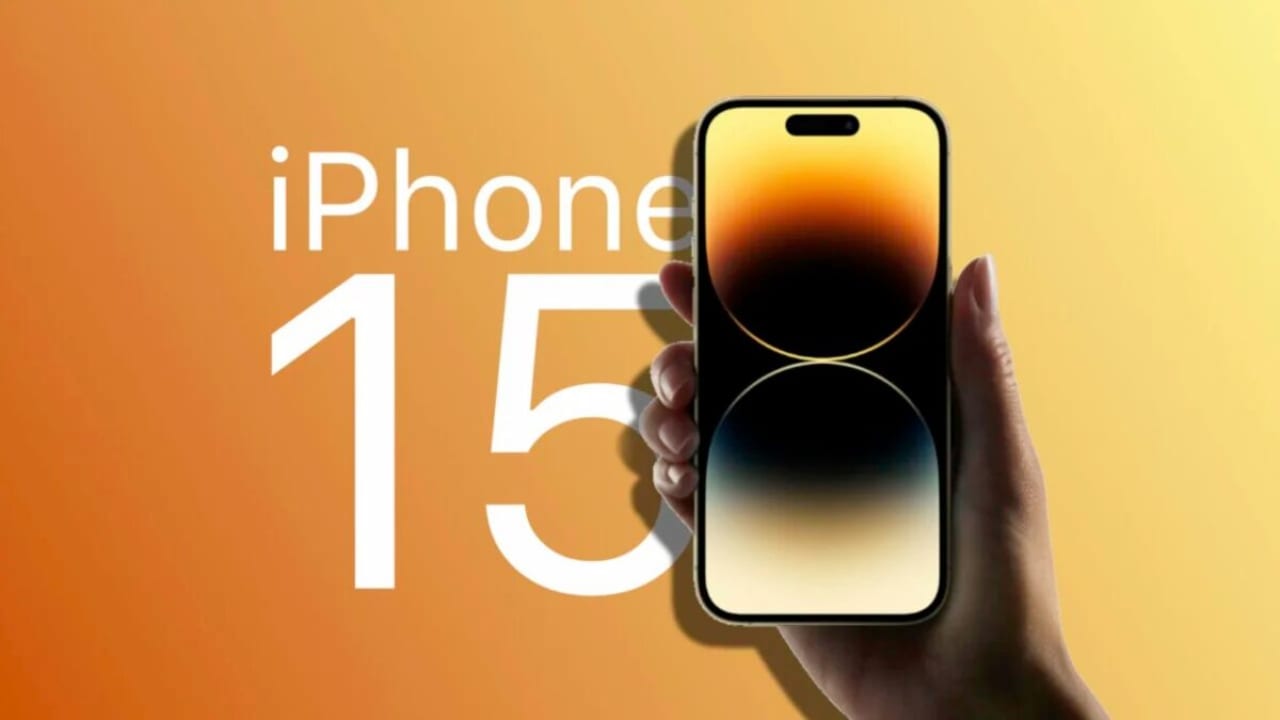
Industry analysts suggest that the space saved by eliminating the SIM slot can be repurposed for several critical components. For instance, it allows for a slightly larger battery capacity or the inclusion of more robust haptic engines. Additionally, the removal of the SIM tray eliminates one of the largest physical "breach points" in the device’s chassis. Every opening in a smartphone’s frame—whether it be a charging port, a speaker grille, or a SIM slot—is a potential entry point for water and dust. By sealing this area, the iPhone 15 can more reliably maintain its IP68 water-resistance rating, potentially surviving submersion at greater depths or for longer durations than previous generations.
Enhanced Security and the Mitigation of SIM Swapping
One of the most compelling arguments for the eSIM transition is the enhancement of consumer security. Traditional physical SIM cards are vulnerable to a type of fraud known as "SIM swapping." In this scenario, a malicious actor obtains a victim’s physical SIM card (either through theft or by social engineering a carrier into porting the number to a new card) and inserts it into a different device. This allows the attacker to bypass two-factor authentication (2FA) for bank accounts, email, and social media.
With an eSIM, this physical vulnerability is virtually eliminated. Because the eSIM is soldered to the device’s logic board, it cannot be removed and placed into another phone. To move an eSIM profile, a user must go through a secure, software-based authentication process, often requiring the original device or a secure QR code from the carrier. Furthermore, if an iPhone 15 is stolen, the thief cannot simply remove the SIM card to prevent the device from being tracked via the "Find My" network. As long as the device has power, the eSIM remains active, providing a constant data link for location tracking.
The Global Roaming Dilemma: Challenges for Travelers
Despite the technical and security benefits, the shift to eSIM-only has raised concerns among frequent international travelers and expatriates. For decades, the standard procedure for avoiding exorbitant roaming charges was to land in a foreign country and purchase a local "prepaid" SIM card at a kiosk. This physical exchange provided immediate, low-cost access to local networks.
The eSIM-only iPhone 15 complicates this traditional workflow. While many major international carriers now support eSIM, thousands of smaller regional providers in developing nations do not. For a traveler visiting a country where eSIM infrastructure is not yet mature, the iPhone 15 may become a "Wi-Fi only" device, forcing the user to rely on expensive roaming packages from their home carrier.
However, the travel industry is adapting. A new market of "eSIM aggregators" like Airalo, Holafly, and Gigago has emerged. These services allow users to purchase data plans for hundreds of countries through an app before they even depart. While these services often provide data-only plans (without a local phone number), they represent the new frontier of travel connectivity that aligns with Apple’s digital-first vision.
Carrier Dynamics and Market Impact
The transition to eSIM-only also shifts the power balance between hardware manufacturers and telecommunications carriers. Historically, carriers used physical SIM cards as a branding tool and a means of customer retention. The "unboxing" experience of a new phone often involved the carrier’s branded SIM card.
With eSIM, Apple takes greater control over the activation process. The "Quick Transfer" feature in iOS allows users to move their cellular plan from an old iPhone to a new iPhone 15 via Bluetooth, bypassing the carrier entirely. This reduces the need for consumers to visit retail stores or interact with carrier customer service. While major carriers like Verizon, AT&T, and T-Mobile in the U.S. have fully embraced this automation, smaller Mobile Virtual Network Operators (MVNOs) have struggled to update their backend systems to support seamless eSIM provisioning. This has created a temporary "digital divide" where some budget-conscious consumers find it more difficult to activate their devices on smaller, cheaper networks.
Environmental Implications: Reducing Plastic Waste
From an environmental standpoint, the move to eSIM is a clear positive. According to various environmental impact reports, the telecommunications industry produces billions of plastic SIM cards every year. These cards are made of PVC, silicon, and gold, and they are almost always packaged in larger plastic credit-card-sized holders.
By transitioning to eSIM, Apple and the broader industry can significantly reduce the amount of plastic waste and the carbon footprint associated with the manufacturing and shipping of physical cards. While the environmental impact of a single SIM card is negligible, the cumulative effect of hundreds of millions of iPhones transitioning to a digital standard is substantial. This aligns with Apple’s stated goal of becoming carbon neutral across its entire supply chain by 2030.
Broader Implications and the Future of Mobile Connectivity
The iPhone 15’s move toward an eSIM-only future is more than just a hardware change; it is a signal to the rest of the consumer electronics industry. Just as Apple’s removal of the 3.5mm headphone jack in 2016 forced the industry toward wireless audio, the removal of the SIM slot is forcing global carriers to modernize their infrastructure.
Analysts predict that within the next three to five years, flagship Android devices from manufacturers like Samsung and Google will follow suit, at least in Western markets. The ultimate goal for Apple appears to be a completely seamless, "zero-friction" setup process where a user can buy a phone, sign in with their Apple ID, and have their cellular service, apps, and data restored instantly without ever touching a piece of plastic or a metal pin.
In conclusion, while the iPhone 15’s eSIM-only design introduces certain logistical hurdles for international travelers and those on smaller networks, the benefits of improved security, enhanced device durability, and environmental sustainability are undeniable. The transition represents a logical step in the evolution of the smartphone from a collection of modular parts to a highly integrated, singular piece of technology. As the global telecommunications infrastructure catches up to Apple’s hardware ambitions, the physical SIM card will likely be remembered as a relic of a bygone era of mobile communication.
