
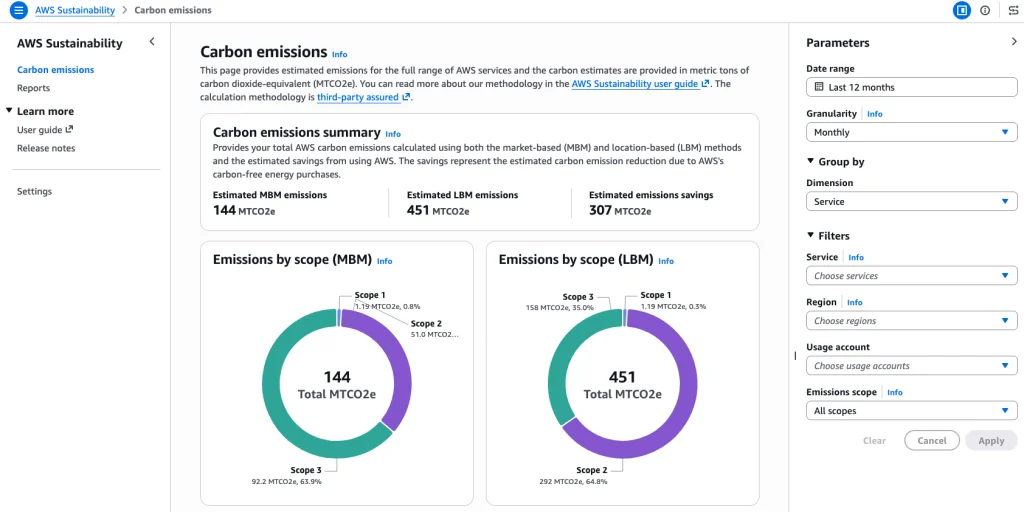

Amazon Web Services (AWS) has announced the launch of its new AWS Sustainability Console, a standalone service designed to consolidate all AWS sustainability reporting and resources into a single, accessible platform. This strategic move marks a significant advancement in empowering AWS customers to measure, understand, and reduce the environmental footprint of their cloud workloads, reinforcing Amazon’s broader commitment to its ambitious Climate Pledge. The console builds upon the foundations of the previously available Customer Carbon Footprint Tool (CCFT) but introduces a suite of enhanced capabilities and a streamlined access model, directly addressing long-standing customer requests for greater flexibility and granular control over their environmental data.
A New Era of Cloud Sustainability Management
The launch of the AWS Sustainability Console represents a pivotal moment for enterprises leveraging cloud infrastructure, offering an unprecedented level of transparency into their operational carbon emissions. Historically, accessing detailed carbon footprint data within AWS necessitated billing-level permissions, a practical impediment for many organizations. Sustainability professionals and reporting teams, often distinct from finance and billing departments, found themselves navigating complex permission structures that were not inherently designed for environmental reporting workflows. The new console directly resolves this by introducing its own independent permissions model, allowing sustainability experts direct access to critical emissions data without requiring them to also hold sensitive billing and cost management permissions. This separation is crucial for fostering collaboration between different internal stakeholders and ensuring data integrity and security.
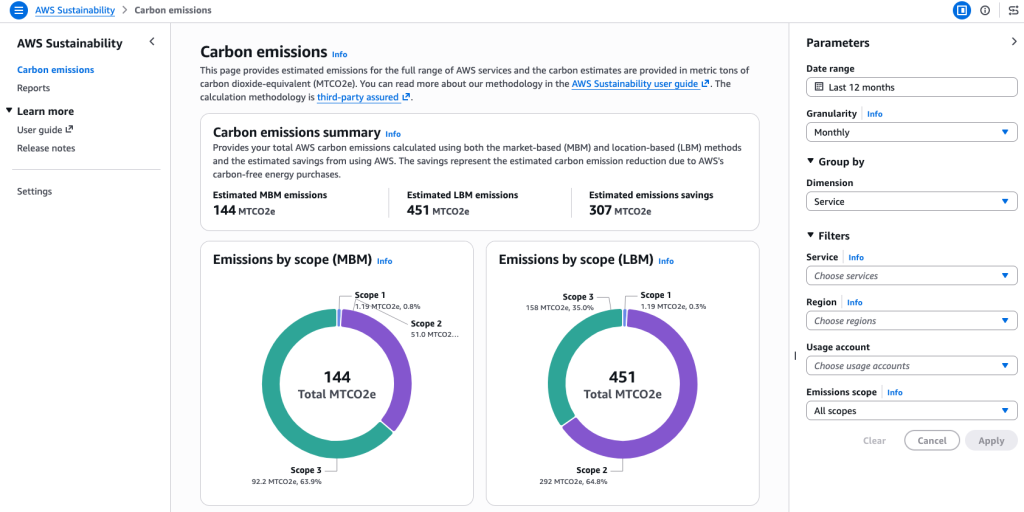
The console provides a comprehensive breakdown of Scope 1, Scope 2, and Scope 3 emissions attributed to AWS usage. This data is meticulously segmented by AWS Region and individual services, including prominent offerings like Amazon CloudFront, Amazon Elastic Compute Cloud (Amazon EC2), and Amazon Simple Storage Service (Amazon S3). While the underlying data and methodology for calculating these emissions remain consistent with those used by the Customer Carbon Footprint Tool – a methodology independently verified by Apex, a third-party consultant – the console dramatically improves how users can access, analyze, and interact with this vital information.
Responding to Evolving Reporting Demands
As global sustainability reporting requirements continue to escalate in complexity and scope, organizations are increasingly seeking robust tools to manage their environmental disclosures. The AWS Sustainability Console addresses this by offering enhanced reporting flexibility. A dedicated Reports page allows users to download preset monthly and annual carbon emissions reports, encompassing both market-based method (MBM) and location-based method (LBM) data. Furthermore, users can now construct custom comma-separated values (CSV) reports, selecting specific fields, time granularity, and various filters to meet unique internal or external reporting mandates.
A common challenge for multinational corporations and diverse organizations is the misalignment between calendar years and their internal fiscal reporting periods. The new console tackles this friction point directly, allowing users to configure the platform to match their organization’s specific fiscal year. Once set, all data views and exports within the console will reflect these customized fiscal years and quarters, significantly streamlining the parallel efforts of finance and sustainability teams and reducing manual data manipulation.
Beyond graphical interfaces and downloadable reports, the console also introduces a new API and integrates with existing AWS SDKs. This programmatic access empowers teams to seamlessly integrate emissions data into their existing reporting pipelines, custom dashboards, or compliance workflows. This feature is particularly valuable for organizations managing a large number of AWS accounts, enabling automated data extraction for specific months or facilitating the establishment of custom account groupings that may not align with their existing AWS Organizations structure. The console’s "Release notes" page, accessible via the "Learn more" tab, will serve as a central hub for users to stay informed about the latest feature releases and methodology updates.
The Broader Context: Amazon’s Climate Pledge and Cloud Sustainability
The launch of the AWS Sustainability Console is deeply embedded within Amazon’s overarching commitment to environmental stewardship, most notably articulated through The Climate Pledge. Launched in 2019, The Climate Pledge is a groundbreaking commitment to achieve net-zero carbon across Amazon’s operations by 2040 – a decade ahead of the Paris Agreement’s 2050 target. This ambitious goal permeates every facet of Amazon’s business, profoundly influencing how AWS designs, builds, and operates its global network of data centers and cloud services.
AWS has consistently highlighted its efforts to minimize the environmental impact of its infrastructure. This includes significant investments in renewable energy projects, with Amazon already being the world’s largest corporate purchaser of renewable energy. The company is on track to power its operations with 100% renewable energy by 2025, a target it is well on its way to achieving. Beyond energy, AWS focuses on water stewardship, promoting water efficiency in its data centers and engaging in water replenishment projects. The inherent efficiency of cloud computing itself, which allows multiple users to share resources and benefit from economies of scale, is also a core part of its sustainability narrative, often proving more carbon-efficient than on-premises data centers.
However, recognizing that shared responsibility extends to its customers, AWS is equally committed to providing tools that enable users to actively participate in reducing their own environmental footprint. The Sustainability Console is the latest, and arguably most comprehensive, iteration of this commitment. It acknowledges that while AWS is responsible for the carbon efficiency of the underlying infrastructure ("shared responsibility model" for sustainability), customers are responsible for optimizing their workloads and understanding their impact on that infrastructure.
Understanding Carbon Emissions: Scope 1, 2, and 3

For a comprehensive understanding of the data presented in the AWS Sustainability Console, it is crucial to grasp the definitions of Scope 1, Scope 2, and Scope 3 emissions, as defined by the Greenhouse Gas Protocol:
- Scope 1 Emissions: These are direct emissions from sources owned or controlled by the reporting entity. In the context of an AWS data center, this would primarily include emissions from the combustion of fuel in owned or controlled data center generators for backup power.
- Scope 2 Emissions: These are indirect emissions from the generation of purchased electricity, steam, heating, or cooling consumed by the reporting entity. For AWS, this involves the electricity consumed by its data centers. The console presents two methods for accounting for Scope 2:
- Market-Based Method (MBM): Reflects emissions from electricity that companies have purposefully chosen or purchased (e.g., through renewable energy certificates or power purchase agreements). This method accounts for energy attribute certificates (EACs).
- Location-Based Method (LBM): Reflects the average emissions intensity of the grids where electricity consumption occurs. This method uses regional or national grid average emissions factors.
- Scope 3 Emissions: These encompass all other indirect emissions that occur in a company’s value chain, both upstream and downstream, that are not included in Scope 1 or Scope 2. For AWS and its customers, this can include a vast array of activities, such as the manufacturing of servers and other hardware, the construction of data centers, employee commuting, and waste generated in operations. AWS’s methodology document, independently verified by Apex, provides a detailed breakdown of how these scopes are attributed within the context of cloud usage.
By providing this granular breakdown, the console enables organizations to not only report on their total carbon footprint but also to identify specific areas of impact, fostering more targeted optimization strategies.
Democratizing Data and Driving Action
The combination of a user-friendly visual console, offering customizable views and filters by date range, service, and region, alongside programmatic access via API and AWS CLI, signifies a powerful shift. Previously, customers might have relied solely on data exports or the less accessible CCFT. Now, they have multiple robust avenues to interact with their emissions data. This duality allows users to quickly explore and identify "hotspots" – services or regions contributing disproportionately to their carbon footprint – directly within the console. Simultaneously, the API and SDK integrations facilitate the automation of complex reporting requirements, allowing for seamless integration into existing business intelligence tools and compliance frameworks.
This increased accessibility and flexibility are critical in an era where Environmental, Social, and Governance (ESG) reporting is no longer a niche concern but a mainstream imperative. Regulators, investors, customers, and employees are increasingly demanding transparency and accountability regarding corporate environmental performance. The AWS Sustainability Console positions customers to meet these demands with greater ease and accuracy, providing verifiable data to support their sustainability claims and demonstrate progress towards their own environmental goals.
Looking Ahead: Evolution and Impact
AWS has stated that the Sustainability Console is designed to evolve, with plans to continuously release new features and capabilities in response to customer feedback and the dynamic landscape of sustainability reporting. This commitment suggests a future where the console could integrate with more advanced analytics, offer predictive insights, or even suggest optimization pathways for specific workloads to reduce their environmental impact further.
The introduction of this dedicated console also underscores a broader trend within the cloud computing industry: sustainability is moving from a peripheral concern to a core differentiator. As enterprises become more conscious of their environmental responsibilities, the ability of cloud providers to offer transparent, actionable sustainability data will become a critical factor in vendor selection. By empowering its customers with these tools, AWS not only strengthens its own sustainability narrative but also contributes to fostering a more environmentally responsible digital economy overall.
Availability and Transition
The AWS Sustainability Console is available immediately at no additional cost. Users can access it directly from the AWS Management Console by searching for "sustainability." For immediate insights, historical data is available dating back to January 2022, allowing organizations to analyze past emissions trends and establish baselines.
In conjunction with this launch, AWS has also announced that the Customer Carbon Footprint Tool (CCFT), previously housed within the AWS Billing console, will be deprecated on June 30, 2026. This transition period provides ample time for users to migrate to the new AWS Sustainability service, which offers superior functionalities and eliminates the need for billing console permissions. Detailed guidance and additional information are available in the AWS Sustainability user guide. This strategic deprecation ensures a unified, enhanced experience for all customers focused on managing their cloud-related environmental impact.
