
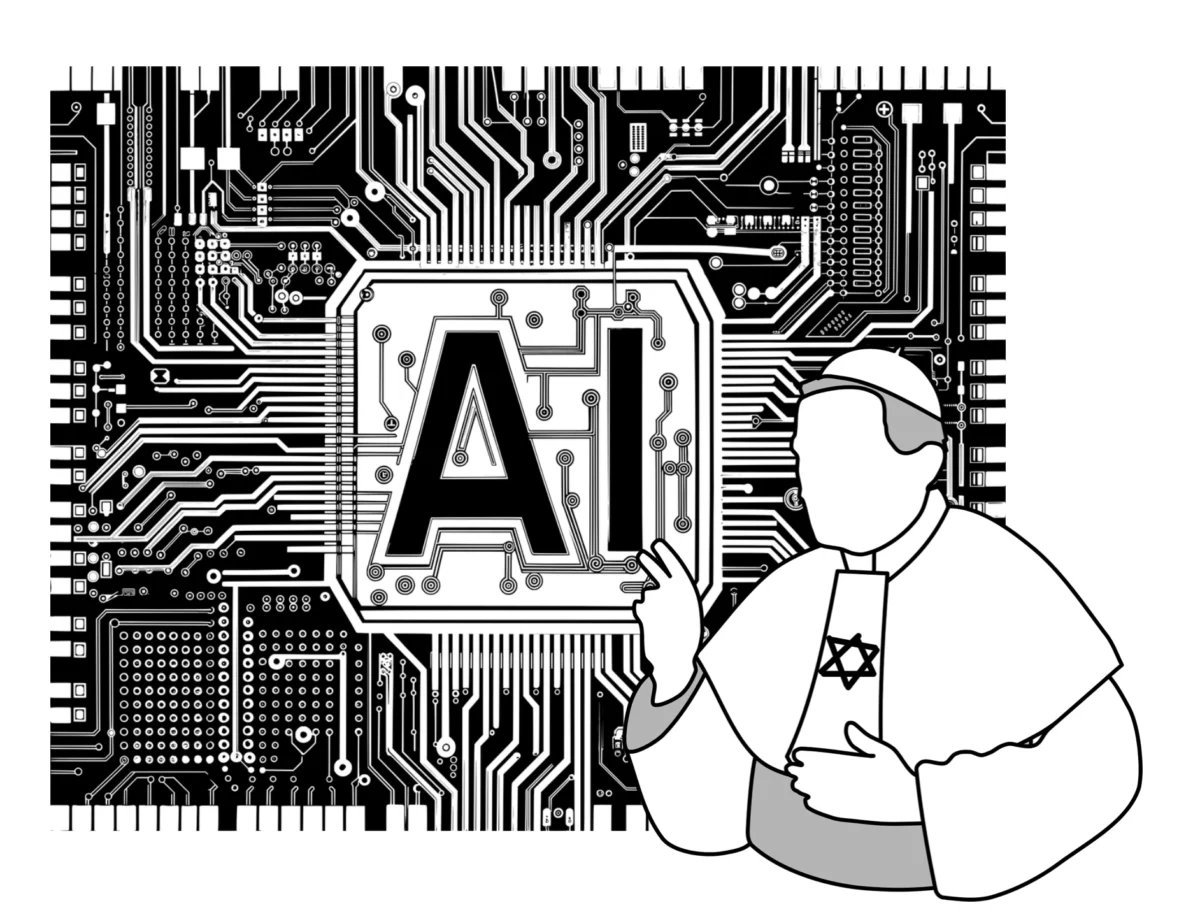

Pope Leo XIV, the first American to ascend to the papacy, released a definitive and expansive encyclical yesterday titled Magnifica Humanitas (Magnificent Humanity), signaling a profound shift in the Vatican’s engagement with 21st-century technology. The 42,000-word document, addressed to the world’s Catholic bishops but clearly intended for a global audience of policymakers and technologists, provides a rigorous moral framework for the development of artificial intelligence (AI). In doing so, the Pontiff has positioned the Holy See in direct opposition to the deregulatory trends of the current United States administration and the profit-driven motives of Silicon Valley’s elite.
The publication of Magnifica Humanitas arrives at a critical juncture in the global AI race. As generative models and autonomous systems become integrated into every facet of civic life—from judicial sentencing to frontline warfare—the Pope’s intervention serves as both a theological treatise and a political manifesto. The document is notable not only for its length and density but for its willingness to name specific economic and political ideologies that Leo XIV argues are leading humanity toward a "digital Tower of Babel."
Historical Context and the Evolution of Vatican Tech Ethics
While the Catholic Church has engaged with scientific progress for centuries, the specific focus on digital ethics intensified under Leo XIV’s predecessor, Pope Francis, who championed the "Rome Call for AI Ethics" in 2020. However, Magnifica Humanitas represents a significant escalation in both scope and tone. By framing the AI debate as an "anthropological crisis," Leo XIV draws on a lineage of Catholic social teaching that dates back to Rerum Novarum (1891), which addressed the industrial revolution.
The "American Pope" brings a unique perspective to this struggle. Having witnessed the rise of the tech sector in his home country, Leo XIV’s critique is informed by a deep familiarity with the Silicon Valley ethos. This background lends a particular weight to his warnings about the "technocratic paradigm," a term he uses to describe the belief that all human problems can be solved through algorithmic optimization.
The Babel Metaphor: A Critique of Technocratic Ambition
The encyclical opens with a deliberate reference to the biblical Tower of Babel. Leo XIV uses this metaphor to describe the current state of global AI development, where collective human effort is directed toward a plan that "dominates and ultimately de-humanizes." He poses a fundamental question to the engineers and investors of the modern age: "What are we building?"
Quoting Saint Paul VI, the Pope reminds his readers that scientific progress is a "valuable good" but warns that it becomes a threat when it is not accompanied by "authentic moral and social progress." The document argues that the current trajectory of AI development favors "having more" over "being more." This distinction is central to Leo XIV’s philosophy; he asserts that while an AI can calculate, it cannot "exist" in the human sense.
The Pope is particularly critical of the industry’s pursuit of Artificial General Intelligence (AGI). He writes that these systems, no matter how sophisticated, are merely imitators of human function. They lack a body, they do not experience joy or pain, and they cannot grasp the "ultimate meaning of situations." By stripping AI of its mystique, the Pope seeks to remind the world that machines lack a moral conscience and, therefore, should never be granted the authority to make decisions that require human empathy or spiritual discernment.
The Clash with "Trump 2.0" and the Call for Global Regulation
One of the most politically charged sections of the encyclical deals with the regulation of technology. Leo XIV explicitly rejects the "hands-off" approach favored by the current US administration and many tech CEOs, including Salesforce’s Marc Benioff, who has frequently argued against heavy-handed government intervention.
The Pope argues that "alignment"—the tech industry’s term for ensuring AI behaves according to human values—is insufficient if those values are determined by a small group of developers and shareholders. He calls for "shared standards of social justice" and "active political involvement" to slow the pace of development when it threatens to outstrip society’s ability to adapt.
Furthermore, the document addresses the "invisible infrastructure" of AI. Leo XIV warns that if the public does not participate in defining the ethical frameworks of these systems, the moral vision of a privileged few will be imposed upon the many. He advocates for the principle of subsidiarity, insisting that local communities and intermediary organizations must have a say in how AI is deployed in their lives. This includes a radical proposal for the regulation of data, which the Pope describes as a "product of many contributors" that should not be treated as private property to be sold by "data barons."
Economic Justice and the "Evil" of AI-Driven Unemployment
Leo XIV’s American roots are perhaps most evident in his detailed analysis of the labor market. The encyclical classifies mass unemployment caused by automation as a "grave evil." While acknowledging that technology can relieve humans of "arduous or dangerous tasks," the Pope insists that the protection of employment must remain the general rule.
The document directly challenges the "invisible hand" of the market, a cornerstone of Western capitalist thought. Leo XIV argues that in the age of robotics, the market alone cannot be trusted to distribute the benefits of innovation equitably. He calls on governments to orient their economies toward the "common good," ensuring that the pursuit of profit does not systematically sacrifice human dignity.
Supporting data from recent economic reports suggests that up to 40% of global employment could be disrupted by AI in the next decade. The Vatican’s stance is that this is not an inevitable byproduct of progress, but a choice that requires political and moral intervention. The Pope’s message is a clear rebuke to the "MAGA-era" economic policies that prioritize deregulation and corporate expansion.
AI Disarmament: A New Doctrine for Warfare
In a move that has already caused ripples in the defense sector, Leo XIV introduces the concept of "AI disarmament." This is not merely a call to limit autonomous weapons, but a demand to "free AI from the mentality of armed competition." This competition, he notes, is both military and economic, driven by a desire for geopolitical dominance.
The encyclical provides a set of "non-negotiable requirements" for the use of AI in conflict:
- Traceability: Every decision-making process must be reconstructible so that accountability is never shifted to "the machine."
- Human Control: The decision to use lethal force must remain under "effective, self-aware, and responsible human control."
- International Frameworks: A global consensus must be reached to curb the technological arms race and protect civilian infrastructure.
The Pope’s condemnation of "opaque or automated" strikes is a direct critique of current military trends, where the speed of AI is often prioritized over the "moral threshold of conflict." This stance places the Church at odds with major defense contractors and nations—including the United States and China—that are currently racing to integrate AI into their command-and-control structures.
Chronology of the Encyclical’s Release
- January 2026: Rumors of a major tech-focused encyclical begin to circulate following the Pope’s private meetings with European and American labor leaders.
- March 2026: At the World Economic Forum in Davos, tech CEOs argue for "innovation-friendly" AI policies. Pope Leo XIV reportedly sends a private letter to several attendees expressing "deep concern."
- May 1, 2026: The Vatican Press Office announces the upcoming publication of Magnifica Humanitas on the Feast of Saint Joseph the Worker.
- May 15, 2026: The full 42,000-word document is released in eight languages.
Initial Reactions and Global Implications
The reaction to Magnifica Humanitas has been swift and divided. In Washington, sources close to the administration have expressed skepticism, viewing the Pope’s call for regulation as an overreach into secular economic policy. Conversely, labor unions and human rights organizations have hailed the document as a "moral compass" for the digital age.
Silicon Valley has responded with a mix of diplomatic caution and quiet frustration. While some tech leaders have welcomed the "dialogue," others point out that the Pope’s call for "slowing things down" could cede the technological advantage to authoritarian regimes that do not share the Vatican’s ethical concerns.
The long-term implications of this encyclical are likely to be found in the legislative chambers of the European Union and the Global South. By providing a theological basis for AI regulation, Leo XIV has given Catholic-majority nations—and many others who share these concerns—the moral high ground to challenge the hegemony of US and Chinese tech giants.
As the world grapples with the rapid ascent of artificial intelligence, Magnifica Humanitas stands as a reminder that technological power does not automatically confer the right to govern. For Pope Leo XIV, the "magnificence" of humanity lies not in what we can build, but in our capacity for love, responsibility, and the pursuit of justice—qualities that no algorithm can ever truly possess.
