
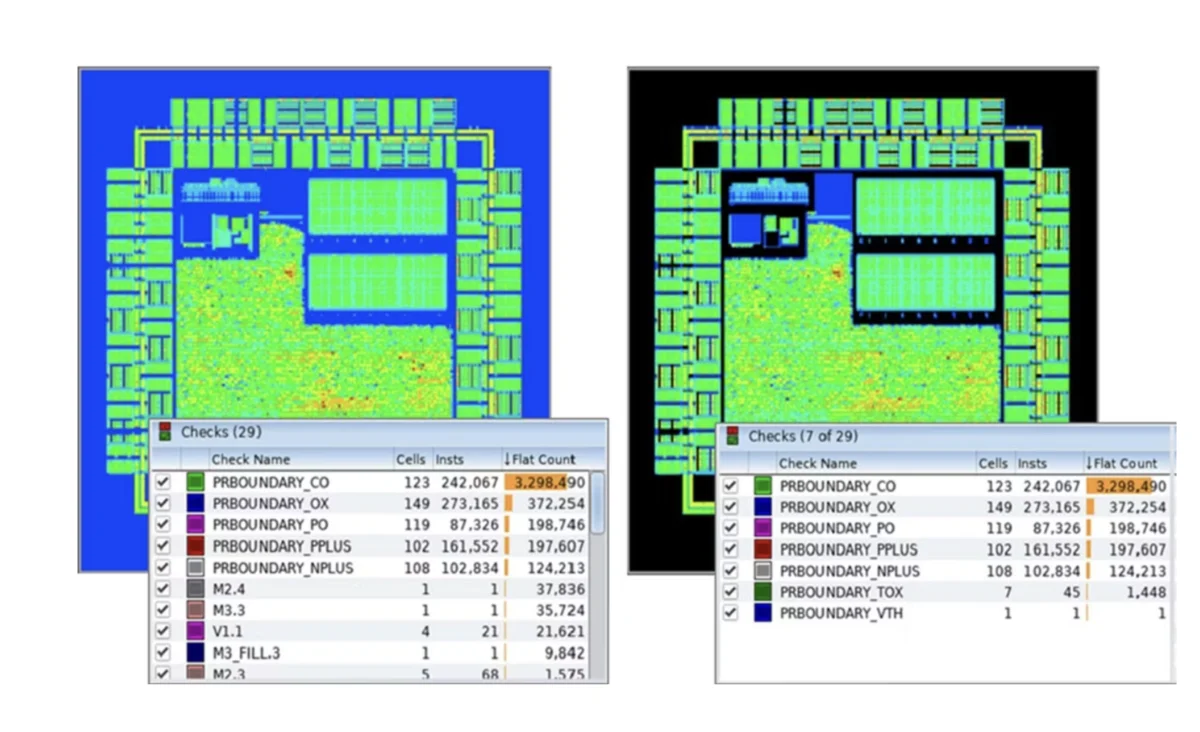

The semiconductor industry is currently navigating a period of unprecedented complexity as system-on-chip (SoC) designs migrate toward 3nm, 2nm, and beyond. At these advanced process nodes, the sheer volume of physical verification data has reached a breaking point, where traditional manual debug processes are no longer sustainable. To address this bottleneck, Siemens Digital Industries Software has significantly expanded the capabilities of its Calibre Vision AI platform. Originally introduced in 2025 to provide AI-guided triage for massive datasets, the 2026 evolution of the platform marks a transition into a real-time, collaborative environment designed to compress Design Rule Check (DRC) iteration cycles. By automating the identification of systemic issues and enabling teams to act on results while checks are still running, the platform aims to eliminate the "debug lag" that frequently delays the tape-out of high-performance computing (HPC) and mobile processors.
The Scaling Crisis: From Millions to Billions of Violations
The move to advanced nodes has fundamentally altered the landscape of physical verification. In previous generations, a full-chip DRC run might have yielded several thousand or even a few million violations, which could be managed by a dedicated team of layout engineers over several weeks. However, as transistors shrink and design rules become more restrictive—incorporating multi-patterning, extreme ultraviolet (EUV) lithography constraints, and complex gate-all-around (GAA) architectures—the volume of errors has exploded.
Today, early-stage full-chip DRC runs on 3nm designs frequently produce hundreds of millions, and in extreme cases, billions of violations. This "violation explosion" creates a secondary crisis: the inability to distinguish between minor "noise" and systemic design flaws that require architectural changes. When a single placement error in a standard cell is repeated ten million times across a chip, it can bury unique, critical errors that might lead to catastrophic silicon failure. The time required just to load these results into a traditional viewer can take hours, and the cognitive load on engineers to categorize them can lead to weeks of wasted effort.
The Chronology of Calibre Vision AI Development
The development of Calibre Vision AI was a direct response to this scaling crisis. The platform’s roadmap reflects the industry’s shift from simple error detection to intelligent error management.
In 2025, Siemens launched the first iteration of Calibre Vision AI. This version introduced the concept of instance-complete, AI-guided triage. Using machine learning algorithms, the software was able to analyze the massive "OASIS" or "GDSII" layout files and group violations by their root cause. This allowed designers to see that five million violations were actually caused by a single misaligned via in a specific library component. By fixing the root cause, millions of errors could be cleared in a single step.
By 2026, the platform evolved from a diagnostic tool into a proactive closure environment. The latest update focuses on "real-time" and "collaborative" workflows. Recognizing that waiting for a 24-hour DRC run to finish before starting the debug process is a luxury designers can no longer afford, Siemens introduced features that allow for incremental data processing and multi-user coordination. This evolution reflects a broader trend in Electronic Design Automation (EDA) known as "Shift Left," where verification tasks are moved earlier in the design cycle to prevent the accumulation of late-stage errors.

Technical Innovations in the 2026 Release
The 2026 enhancements to Calibre Vision AI are centered on removing the friction between the verification engine and the human designer. Several key features define this new iteration:
Incremental OASIS Results Loading
Traditional verification workflows require the DRC engine to finish its run and write a complete results database before a designer can open the file. With the new incremental loading capability, Calibre Vision AI can stream results to the designer as they are generated. This allows teams to begin triaging and fixing the most critical violations—such as power grid shorts or wide-metal spacing issues—while the rest of the chip is still being checked.
Enhanced AI-Guided Signal Grouping
The platform’s AI engine has been refined to recognize more complex patterns. "Signal grouping" refers to the ability to identify violations that are electrically or topologically related. By clustering these errors, the AI provides a "heat map" of the design, pointing engineers toward areas where the design intent and the manufacturing rules are most at odds.
Persistent Signal Properties and Status
In a multi-iteration design cycle, one of the most significant time-wasters is re-evaluating the same errors across different runs. The 2026 update introduces persistent properties, allowing designers to tag specific violations as "waived," "in-progress," or "fixed." This status carries over to the next DRC run, ensuring that the team does not lose context and can focus exclusively on new or unresolved issues.
Tighter Integration with Design Implementation Tools
Verification does not happen in a vacuum. To be effective, the insights from Calibre Vision AI must be fed back into the Place-and-Route (P&R) tools where the actual layout changes occur. Siemens has improved the bridge between the Vision AI environment and major implementation platforms, allowing for a seamless transition from "insight" to "action."
Supporting Data and Economic Implications
The economic stakes of DRC closure are immense. According to industry data, the cost of a 3nm mask set can exceed $15 million, and every week a product is delayed from reaching the market can result in millions of dollars in lost revenue, particularly in the fast-moving consumer electronics and data center sectors.
Internal testing and early adopter feedback indicate that Calibre Vision AI can reduce the overall DRC iteration time by as much as 30% to 50% at advanced nodes. For a complex SoC that typically requires 15 to 20 full-chip iterations before tape-out, this reduction can save several weeks of development time. Furthermore, by automating the triage process, companies can reallocate their most senior layout engineers from manual error sorting to high-value design optimization tasks, effectively increasing the productivity of the engineering workforce.

The data suggests that without AI-guided tools, the human-to-violation ratio would require an unsustainable increase in headcount. By using AI to distill billions of data points into a few hundred "actionable clusters," the platform restores the feasibility of manual design review at the 2nm frontier.
Industry Reactions and Market Context
While Siemens has not disclosed specific customer names for the 2026 release, the broader EDA market has signaled a clear demand for these technologies. Leading foundries like TSMC, Samsung, and Intel Foundry Services have all emphasized the need for "intelligent verification" to support their latest process nodes.
Analysts in the semiconductor space view the evolution of Calibre Vision AI as a necessary step in the maturation of the EDA ecosystem. "The bottleneck in chip design has shifted from ‘how do we build it’ to ‘how do we verify it,’" says one industry observer. "Siemens’ focus on the collaborative aspect is particularly important. We are seeing a move away from siloed design teams toward a ‘DevOps’ model for hardware, where layout, circuit, and manufacturing teams work in a shared, real-time data environment."
The reaction from the design community has been largely positive, though some experts note that the success of such tools depends on the quality of the training data and the ability of the AI to handle "corner cases" that fall outside of standard design patterns. Siemens has addressed this by ensuring that Calibre Vision AI remains a "human-in-the-loop" system, where the AI provides suggestions and organization, but the final sign-off remains with the engineer.
Broader Impact on the Semiconductor Ecosystem
The implications of Calibre Vision AI extend beyond individual design teams. As the industry moves toward "system-technology co-optimization" (STCO), the ability to quickly close DRC becomes a competitive advantage. Companies that can iterate faster can explore more aggressive design architectures, such as 3D-IC stacking and chiplet-based designs, which introduce their own unique sets of verification challenges.
Furthermore, the platform’s ability to preserve context and coordinate fixes across block and integration boundaries is critical for the growing chiplet market. In a chiplet ecosystem, different components may be designed by different companies using different process nodes. A unified environment like Calibre Vision AI can help manage the complex "assembly-level" DRC that occurs when these disparate pieces are integrated into a single package.
Looking forward, the integration of AI into physical verification is expected to become standard practice. The 2026 evolution of Calibre Vision AI represents a milestone in this journey, proving that even as the scale of semiconductor design reaches the billions, intelligent automation can provide a path to closure. By eliminating wasted debug cycles and providing faster insights, the platform ensures that the next generation of silicon remains both manufacturable and economically viable. In the race to 2nm and beyond, the winners will likely be those who can most effectively harness the power of AI to navigate the sea of data that defines modern chip manufacturing.
