
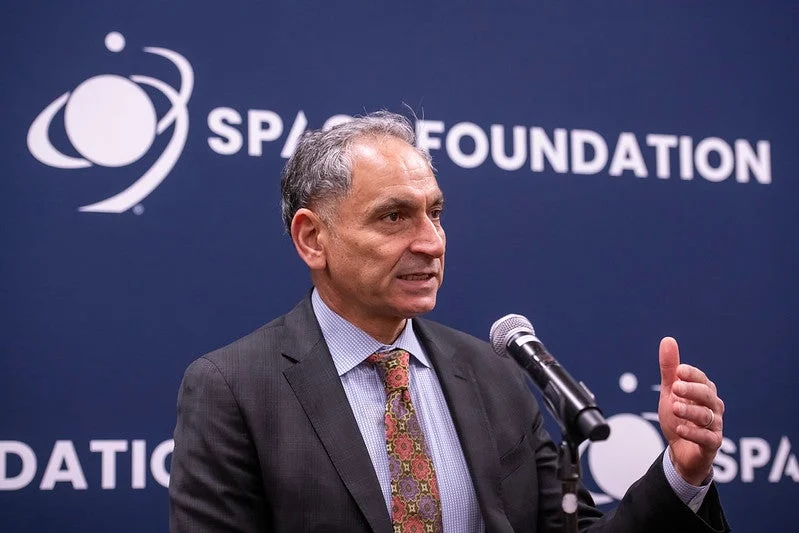

The Department of the Air Force and the Space Development Agency have officially solidified their leadership structure as the Pentagon accelerates its efforts to modernize orbital infrastructure and counter emerging hypersonic threats. Gurpartap “GP” Sandhoo, who has served as the acting director of the Space Development Agency (SDA) since September of the previous year, was formally appointed as the agency’s director effective May 11. This leadership transition marks a pivotal moment for the SDA as it moves from its experimental origins toward becoming a foundational pillar of the United States Space Force’s operational architecture. Alongside Sandhoo’s appointment, Michael Eppolito, previously the acting deputy director and chief program officer, has been elevated to the permanent role of deputy director.
In a move that underscores the Department of Defense’s commitment to streamlined acquisition and rapid capability delivery, Sandhoo was also designated as the Space Force Portfolio Acquisition Executive (PAE) for Missile Warning and Tracking (MWT). This dual-hatted role reflects a strategic reorganization within the Space Force, designed to unify the development of next-generation sensor networks under a single authority. The appointment follows a recommendation made in April by Lt. Gen. Philip Garrant, commander of the Space Force’s Space Systems Command (SSC), who advocated for Sandhoo to lead the MWT portfolio to ensure seamless integration between the SDA’s low-Earth orbit (LEO) constellations and the broader missile defense enterprise.
The Evolution of the Space Development Agency
The Space Development Agency was established in 2019 with a specific mandate: to disrupt the traditional, decade-long procurement cycles that had historically characterized military satellite programs. Initially formed under the Office of the Under Secretary of Defense for Research and Engineering, the SDA was tasked with building the Proliferated Warfighter Space Architecture (PWSA). This architecture represents a fundamental shift away from a small number of large, expensive, and vulnerable satellites in high orbits toward a "mesh network" of hundreds of smaller, mass-produced satellites in low-Earth orbit.
The agency’s transition into the Space Force in October 2022 was a milestone in its institutional maturation. Under Sandhoo’s acting leadership, the SDA has maintained a rigorous launch cadence, successfully deploying initial tranches of satellites that prove the viability of optical inter-satellite links and low-latency data transfer. By confirming Sandhoo as the permanent director, the Department of the Air Force is signaling continuity and confidence in the SDA’s "spiral development" model, which delivers new capabilities to the warfighter every two years.
Strategic Significance of the Portfolio Acquisition Executive Role
The appointment of Sandhoo as the PAE for Missile Warning and Tracking is part of a broader Department of Defense initiative to reform how military technology is bought and managed. Traditionally, acquisition programs were often siloed, leading to redundant efforts and compatibility issues between different branches of service. The PAE model is designed to empower a single executive with the authority to manage a diverse portfolio of related programs as a unified entity.
Thomas Ainsworth, acting assistant secretary of the Air Force for Space Acquisition and Integration, emphasized that this structure is intended to provide leaders like Sandhoo with the resources and autonomy necessary to succeed. By holding the PAE title, Sandhoo gains enhanced control over program funding, allowing for greater flexibility to shift resources between projects as technical challenges or strategic priorities evolve. This "portfolio-level" management is seen as essential for the Missile Warning and Tracking mission, which must coordinate between ground-based radars, legacy satellites in Geostationary Earth Orbit (GEO), and the new proliferated layers in LEO.
Advancing the Proliferated Warfighter Space Architecture
Central to Sandhoo’s mandate is the continued rollout of the PWSA, which is divided into several "tranches" of increasing complexity. The data and communication capabilities provided by this architecture are intended to be the "backbone" of Joint All-Domain Command and Control (JADC2), the Pentagon’s vision for a fully networked force where data flows seamlessly between sensors and shooters across land, sea, air, and space.
Tranche 0: The Demonstration Phase
Tranche 0 served as the "Warfighter Immersion" stage, consisting of approximately 28 satellites. These assets were designed to demonstrate the feasibility of the Transport Layer (data communications) and the Tracking Layer (missile warning). Despite the challenges of the COVID-19 pandemic and global supply chain disruptions, the SDA successfully launched the majority of these satellites in 2023, proving that the agency could move from a clean-sheet design to orbit in under three years.
Tranche 1: Initial Warfighting Capability
Currently in development and production, Tranche 1 will expand the constellation to more than 160 satellites. This layer is intended to provide regional persistent coverage, allowing for the tactical use of satellite data in active theaters of operation. Sandhoo’s leadership will be critical in ensuring that the various vendors involved—including Lockheed Martin, Northrop Grumman, and York Space Systems—meet the aggressive delivery schedules required to achieve operational status by 2025.
Tranche 2: Global Persistence
The upcoming Tranche 2, which Sandhoo will now oversee as Director, aims to achieve full global coverage. This phase will involve hundreds of additional satellites and will introduce advanced features such as enhanced electronic warfare protection and more sophisticated sensors for detecting hypersonic glide vehicles (HGVs). The scale of Tranche 2 represents a significant industrial challenge, requiring the SDA to manage a massive supply chain of satellite buses, optical terminals, and launch providers.
The Missile Warning and Tracking Imperative
The decision to name Sandhoo as the PAE for Missile Warning and Tracking highlights the growing threat posed by hypersonic weapons. Traditional missile defense systems, designed to track ballistic missiles that follow a predictable parabolic arc, are less effective against HGVs that can maneuver within the atmosphere at speeds exceeding Mach 5.
To counter this, the Department of Defense is shifting toward a multi-layered sensing approach. The SDA’s Tracking Layer is a vital component of this strategy. By placing sensors in LEO, the military can maintain a much "closer" eye on the Earth’s surface, allowing for the detection of the dimmer heat signatures produced by hypersonic vehicles.
As the PAE for MWT, Sandhoo will be responsible for synchronizing the SDA’s Tracking Layer with the Space Systems Command’s Resilient Missile Warning and Tracking – Medium Earth Orbit (MEO) program. This integrated "high-low" architecture is intended to ensure that there are no gaps in coverage, providing the U.S. military with the "custody" of a target from launch to interception.
Leadership Profile: Gurpartap "GP" Sandhoo
Sandhoo brings a deep technical and bureaucratic pedigree to the role. Before his tenure at the SDA, he held senior positions within the Naval Research Laboratory (NRL) and has a long history of working at the intersection of advanced research and operational requirements. His colleagues often cite his ability to navigate the complexities of the Pentagon’s "Fourth Estate"—the various agencies and offices that sit outside the traditional military departments—as a key asset.
Since taking over as acting director following the departure of the agency’s inaugural leaders, Sandhoo has been a vocal advocate for the "SDA way." This philosophy prioritizes speed, the use of commercial technology, and a willingness to accept "good enough" solutions today rather than waiting for perfect solutions a decade from now. His formal appointment is seen as a validation of this culture, ensuring that the SDA remains a fast-moving entity even as it integrates more deeply into the larger Space Force bureaucracy.
Organizational Impact and Future Outlook
The formalization of the SDA leadership comes at a time of significant budgetary scrutiny. As the Space Force’s budget continues to grow, lawmakers in Congress have expressed both support for the SDA’s mission and concerns regarding the potential for duplication of effort between the SDA and the Space Systems Command.
By consolidating the Missile Warning and Tracking portfolio under Sandhoo, the Department of the Air Force is addressing these concerns directly. The move creates a single point of accountability for one of the military’s most expensive and critical mission areas. It also streamlines the communication between the acquisition community and the operational commands that will eventually use these space-based capabilities.
The implications of Sandhoo’s appointment extend beyond the halls of the Pentagon. For the commercial space industry, the move provides a sense of stability. Companies that have invested heavily in LEO satellite production lines can expect a consistent demand signal from the SDA under Sandhoo’s direction. Furthermore, the emphasis on the PAE model suggests that the Department of Defense will continue to seek out leaders who can bridge the gap between innovative technology development and large-scale program management.
As Sandhoo officially takes the helm, the SDA faces a rigorous timeline. The next two years will see a series of critical launches and the commencement of the Tranche 2 procurement cycle. With the dual responsibilities of Agency Director and Portfolio Acquisition Executive, Sandhoo is now positioned as one of the most influential figures in the modern space race, tasked with ensuring that the United States maintains its technological edge in an increasingly contested and congested orbital environment.
The successful integration of these roles will likely serve as a template for future acquisition reforms across the Department of the Air Force. If the SDA can continue to deliver on its promise of rapid, proliferated space capabilities, the "GP Sandhoo era" may be remembered as the period when the U.S. military finally broke the mold of traditional satellite procurement, ushering in a new age of resilient and responsive space power.
