
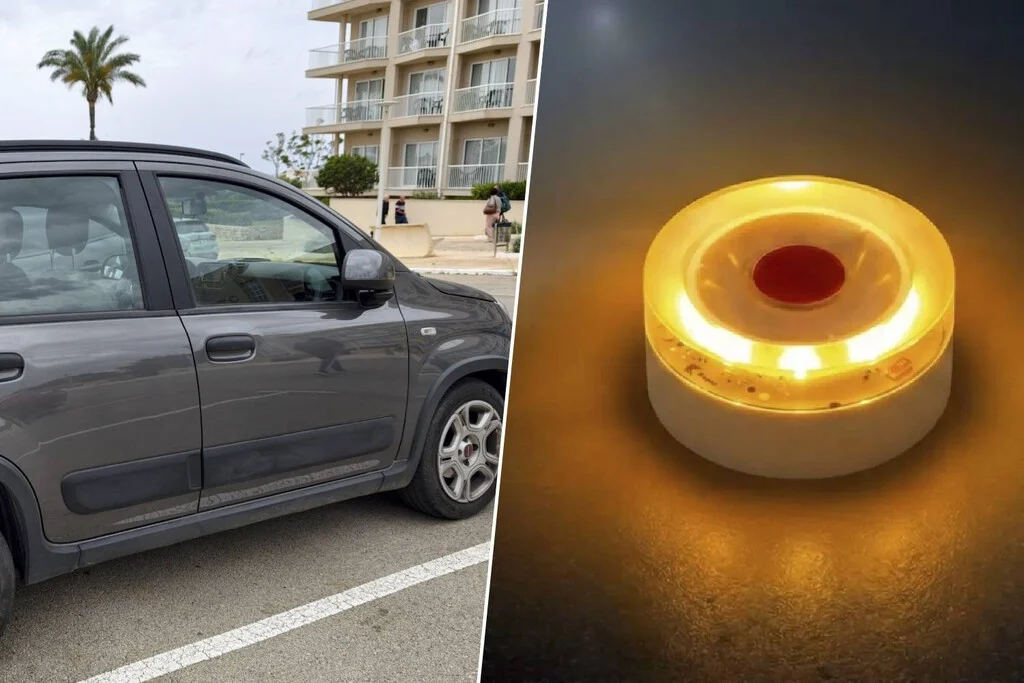

As of January 1, 2026, the use of the V16 emergency beacon will become exclusively mandatory on Spanish roads, completely phasing out the traditional warning triangles. This significant shift in road safety legislation, aimed at enhancing driver and passenger safety during roadside emergencies, extends its reach far beyond personal vehicles, creating specific implications for the extensive car rental sector that caters to both domestic and international tourism across Spain. The current period represents a crucial transition where V16 devices are already permitted as an alternative and are increasingly expected, yet compliance within the rental industry presents a complex landscape of legal obligations, operational challenges, and consumer awareness gaps.
The Evolution of Roadside Emergency Signaling: From Triangles to V16 Beacons
For decades, the standard procedure for a vehicle breakdown or accident on Spanish roads involved placing two warning triangles at a specified distance from the vehicle to alert approaching traffic. While effective to a degree, this method often required drivers to exit their vehicles and walk along potentially dangerous roadsides, particularly on high-speed routes or in low visibility conditions. This inherent risk factor, coupled with the cumbersome nature of deploying triangles, prompted the Dirección General de Tráfico (DGT) to seek a safer, more efficient alternative.
The solution emerged in the form of the V16 emergency beacon, a compact, autonomous device designed to be placed on the highest part of a stationary vehicle (typically the roof) without the driver needing to leave the safety of the passenger compartment. These devices emit a highly visible, flashing amber light, significantly improving a vehicle’s visibility to other road users, especially in adverse weather conditions or at night. Beyond its visual signaling capabilities, the more advanced V16 beacons incorporate geolocation technology, allowing them to automatically transmit the vehicle’s precise location to the DGT 3.0 platform. This connectivity facilitates rapid assistance from emergency services and provides real-time alerts to other drivers via roadside panels and navigation systems, thereby mitigating the risk of secondary accidents.
The legislative journey for the V16 beacon began with its initial approval and integration into the General Vehicle Regulations. From July 1, 2021, drivers were permitted to use V16 beacons as an alternative to warning triangles. This marked the beginning of a transitional period designed to allow manufacturers, distributors, and consumers to adapt to the new technology. The definitive deadline, set for January 1, 2026, will see the complete prohibition of warning triangles and the exclusive mandatory use of certified V16 beacons equipped with geolocation capabilities. This phased approach underscores the DGT’s commitment to a gradual, yet firm, shift towards a more modern and safer road safety paradigm.
The Scope of Obligation: Rental Cars and Tourism at the Forefront
The mandate for V16 beacons is comprehensive, applying to virtually all vehicle categories operating on Spanish roads. This includes passenger cars (turismos), buses, adaptable mixed vehicles, goods transport vehicles, and non-special vehicle combinations. Exemptions are limited to motorcycles and foreign-registered vehicles not matriculated in Spain. This broad scope unequivocally includes vehicles rented for tourist or business purposes within Spain.
The implications for the car rental industry are substantial. Spain is a global tourism powerhouse, attracting tens of millions of visitors annually, many of whom rely on rental cars to explore the country. In 2023, Spain welcomed over 85 million international tourists, a significant portion of whom would have engaged with the rental car market. This means that a vast number of temporary drivers, often unfamiliar with Spanish road regulations and potentially with limited knowledge of local languages, will be operating vehicles that are legally required to carry a V16 beacon. The expectation is that, just like a spare tire or a first-aid kit, the V16 beacon should be a standard safety component provided with every rental vehicle.
The anecdote of a recent traveler discovering the absence of a V16 beacon in their rental car highlights a critical compliance gap. Despite opting for comprehensive insurance and seemingly thorough preparation for their holiday journey, the essential safety device was missing. This experience underscores a broader issue: while consumers are increasingly aware of the V16 mandate for personal vehicles, the responsibility for rental cars often remains ambiguous, leading to potential risks for renters and legal liabilities for rental companies.
DGT’s Unambiguous Stance: Who Pays and Who Provides?
To clarify the responsibility for providing the V16 device in rental scenarios, the Dirección General de Tráfico has issued clear guidelines. On its official website, the DGT addresses the specific question of who is obligated to supply the device in the case of vehicle renting or leasing companies. The DGT’s unequivocal response states: "The obligation rests with the owner, unless, through an express contractual agreement, it is passed on or assumed by the long-term lessee."
This statement is foundational. It establishes that, by default, the rental company – as the vehicle’s owner (titular) – is responsible for ensuring that the rented vehicle is equipped with a compliant V16 beacon. The only exception is if the rental contract explicitly and clearly stipulates that the renter is responsible for providing their own V16 device. Such a clause would need to be prominently displayed and mutually agreed upon, departing from the standard expectation that a vehicle is provided "ready for use" with all necessary safety equipment.
This legal interpretation aligns with the precedent set by previous safety requirements, such as the now-obsolete warning triangles or high-visibility vests. Just as rental companies were expected to provide these items as part of a safe and compliant vehicle package, the same expectation now applies to the V16 beacon. The DGT’s position aims to prevent situations where renters might inadvertently face penalties for non-compliance due to the rental company’s oversight or deliberate omission.
Challenges and Adaptations for the Car Rental Industry
The implementation of the V16 mandate presents a multifaceted challenge for the car rental industry in Spain.
Logistical Hurdles: Rental fleets consist of thousands of vehicles, constantly moving between locations. Equipping each vehicle with a certified V16 beacon, ensuring it is present, functional, and correctly placed upon each rental, requires significant logistical coordination. Companies must manage inventory, check device battery life, and ensure proper securement within the vehicle to prevent theft or damage.
Financial Implications: The cost of purchasing V16 beacons for an entire fleet can be substantial. While individual beacons are relatively inexpensive (ranging from €20 to €50, with advanced connected models potentially costing more), multiplying this across thousands of vehicles represents a significant capital outlay. This cost may be absorbed by companies, or potentially passed on to consumers through slightly increased rental fees.
Consumer Information and Awareness: Rental companies also face the challenge of informing renters, particularly international tourists, about the V16 beacon’s presence, its purpose, and how to use it correctly in an emergency. Language barriers can complicate this, necessitating clear, multilingual instructions, possibly via QR codes or digital manuals accessible through rental apps. A robust communication strategy is essential to prevent confusion and ensure safe usage.
Liability and Compliance Risk: Non-compliance carries legal risks. If a renter is fined for not possessing a V16 beacon in a rental car where the contract did not explicitly shift responsibility, the rental company could be held liable. Furthermore, in the unfortunate event of an accident or secondary incident exacerbated by the absence of a V16 beacon, the company could face more severe legal repercussions.
Representatives from industry associations, such as the Spanish Federation of Vehicle Rental Businesses (FENEVAL) and the Association of National Vehicle Renters (ANEVAL), have acknowledged these challenges. They highlight the need for clear communication from authorities, standardized compliance protocols, and potential collaborative efforts to streamline the procurement and deployment of V16 devices across their diverse member base. While committed to road safety, they also emphasize the operational complexities inherent in fleet management on this scale.
Consumer Rights and Due Diligence: What Renters Need to Know
Given the DGT’s clear stance, renters in Spain have a right to expect a V16 beacon to be provided with their rental vehicle. To avoid potential issues, consumers are advised to take specific precautions:
Review the Rental Contract Carefully: Before signing, renters should thoroughly read the "fine print" of their rental agreement. Any clause that attempts to shift the responsibility for providing the V16 beacon to the renter must be clearly identified and understood. If such a clause exists and the renter does not have their own V16 device, they should question it or reconsider the rental.
Inspect the Vehicle Upon Collection: At the time of vehicle handover, renters should conduct a brief but thorough check to ensure the V16 beacon is present and accessible. Typically, these devices are found in the glove compartment, under the seat, or in the boot. If it is missing, the renter should immediately alert the rental agent and request that one be provided. This action creates a record that the vehicle was not initially compliant.
Document Discrepancies: If a V16 beacon is not provided and the rental company refuses to supply one, renters should document this interaction, perhaps by taking photos of the vehicle’s interior (showing no beacon) and noting the time, date, and name of the agent. This documentation could be crucial in disputing any future fines or charges.
Understand Usage: Renters should also familiarise themselves with how to activate and place the V16 beacon correctly. While designed for ease of use, a quick understanding of its operation (e.g., magnetic base for roof placement, single button activation) can save critical seconds in an emergency.

By exercising due diligence, renters can protect themselves from potential fines (which can range from €80 to €200 for non-compliance) and, more importantly, ensure their safety and the safety of others on the road during their travels.
Broader Safety Implications and Data-Driven Insights
The transition to V16 beacons is not merely a regulatory update; it is a strategic move designed to significantly enhance road safety. Statistics from the DGT consistently highlight the dangers associated with roadside incidents. Each year, numerous accidents, some fatal, occur involving stationary vehicles or pedestrians performing signaling tasks. For example, DGT data has shown that accidents involving breakdowns on high-speed roads are particularly risky, with a disproportionately high rate of severe injuries or fatalities among those exiting their vehicles.
The V16 beacon directly addresses these risks by:
- Reducing Exposure to Danger: Eliminating the need for drivers to leave their vehicle to place warning triangles.
- Improving Visibility: Providing a highly visible light source that is elevated and flashes, making it detectable from a greater distance than triangles, especially in adverse conditions like fog, heavy rain, or darkness.
- Faster Alerting: Connected V16 devices instantly alert the DGT 3.0 platform, which then relays information to other drivers and emergency services, reducing response times and preventing secondary collisions.
While comprehensive data on the V16’s impact is still being gathered during this transitional period, early indicators and simulations suggest a positive effect on accident reduction. The European Union has also recognized the potential of such connected safety devices, with the Spanish initiative often cited as a model for future adoption across the continent. This endorsement from a broader European context further validates the strategic importance of the V16 beacon.
The Connected Future: DGT 3.0 and Intelligent Mobility
The most advanced V16 beacons are more than just flashing lights; they are integral components of Spain’s ambitious DGT 3.0 platform. This platform represents a paradigm shift towards intelligent mobility, leveraging real-time data to improve road safety and traffic management. When a connected V16 beacon is activated, it transmits its exact GPS coordinates to the DGT 3.0 cloud. This information is then processed and disseminated:
- Emergency Services: Police, ambulances, and roadside assistance are immediately notified of the precise location of the incident, allowing for faster dispatch and arrival.
- Roadside Panels: Variable message signs on motorways can display warnings about incidents ahead, advising drivers to reduce speed or change lanes.
- Navigation Systems: Popular GPS applications and in-car navigation systems can receive real-time alerts, rerouting drivers or providing warnings about hazards.
This level of connectivity transforms a simple emergency signal into a critical data point within a vast network designed to create safer and more efficient road conditions. For rental vehicles, this means that even if a tourist is unfamiliar with the local area, their activated V16 beacon will ensure that help can find them quickly and that other drivers are alerted, irrespective of language barriers. The integration of rental fleets into this connected ecosystem is a key step towards realizing the full potential of DGT 3.0.
Ensuring Compliance and Future Outlook
The DGT’s clear directive places the onus squarely on rental companies to provide V16 beacons. As the 2026 deadline approaches, pressure on the industry to achieve full compliance will intensify. Enforcement actions by traffic authorities are likely to become more stringent, with fines serving as a deterrent for non-compliant vehicles.
Looking ahead, the collaboration between regulatory bodies, the automotive industry, and the rental sector will be crucial. Initiatives such as bulk purchasing agreements for V16 devices, standardized communication protocols for renters, and perhaps even integrated V16 technology directly into new vehicle models could streamline the transition. Consumer awareness campaigns, particularly targeting international tourists, will also be vital to ensure that all road users understand their rights and responsibilities concerning this vital safety device.
The V16 beacon represents a significant leap forward in Spanish road safety. Its mandatory implementation, particularly its application to the vast rental car market, underscores a commitment to protecting all individuals on the road. While the transition presents challenges, the long-term benefits in terms of reduced accidents, faster emergency response, and enhanced driver confidence are expected to far outweigh the initial hurdles, cementing Spain’s position at the forefront of modern road safety innovation.
