
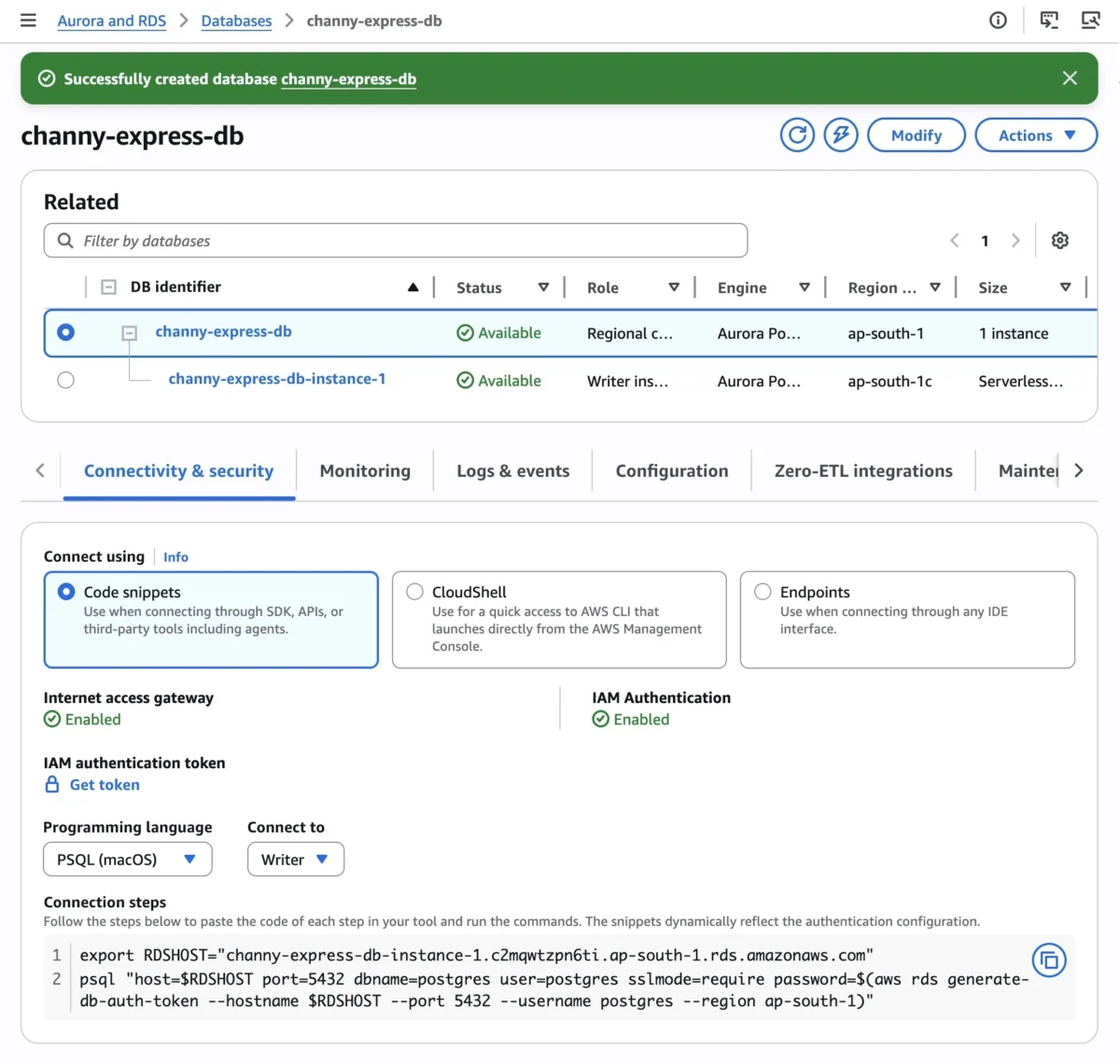

The landscape of cloud-native application development has witnessed a significant acceleration with the announcement of the general availability of a new express configuration for Amazon Aurora PostgreSQL. This streamlined database creation experience, featuring preconfigured defaults, is designed to enable developers to deploy a production-ready serverless database in mere seconds, fundamentally reshaping the initial setup phase. This pivotal release underscores AWS’s overarching commitment, articulated by Colin Lazier, Vice President of Databases at AWS, at re:Invent 2025, to empower developers to "build at the speed of an idea," facilitating swift transitions from conceptualization to fully operational applications.
Strategic Vision from re:Invent 2025

The genesis of the Aurora PostgreSQL express configuration can be traced back to re:Invent 2025, AWS’s flagship global conference, where the future of cloud computing is often unveiled. During his keynote, Colin Lazier highlighted the critical importance of minimizing friction in the development lifecycle. He showcased how existing AWS services like Amazon DynamoDB and Amazon Aurora DSQL already allow for the creation of production-ready tables and databases in seconds, setting a precedent for rapid deployment. The preview of a similar "speed-to-deploy" capability for Amazon Aurora serverless databases at the event generated considerable interest and a strong demand from customers for immediate access. This general availability announcement is a direct response to that customer feedback, translating a strategic vision into a tangible tool for developers worldwide. The emphasis on speed is not merely a convenience; it reflects a deeper understanding of modern development methodologies, where agile sprints and continuous integration/continuous deployment (CI/CD) pipelines necessitate infrastructure that can keep pace with iterative development.
Revolutionizing Database Provisioning: The Express Configuration
The core innovation lies in the Aurora PostgreSQL express configuration’s ability to provision a serverless database with unprecedented speed and minimal effort. Through a simplified console experience, developers can now deploy a fully functional Aurora PostgreSQL serverless database with just two clicks. This contrasts sharply with traditional database setup processes, which often involve navigating multiple configuration screens, making numerous decisions, and potentially waiting extended periods for provisioning to complete.

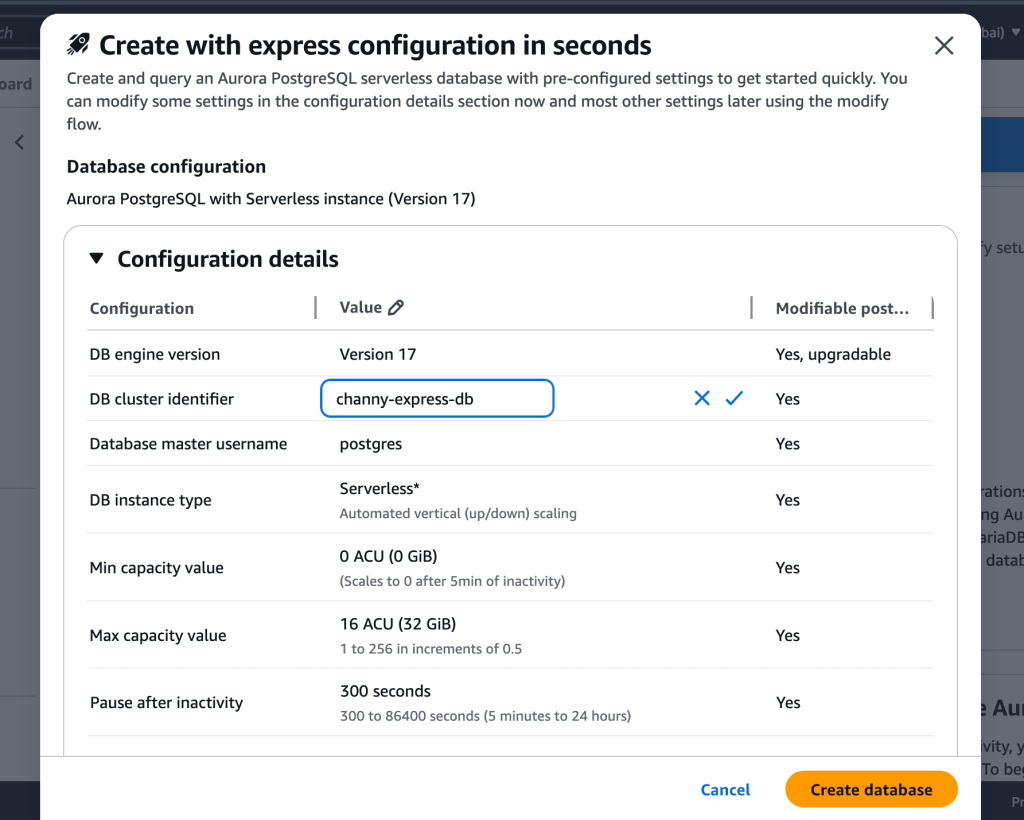
Despite its streamlined nature, the express configuration retains essential flexibility. Users can modify key settings both during and after the initial database creation. For instance, the capacity range for the serverless instance can be adjusted at the time of creation, allowing for immediate scaling to anticipated workloads. Post-creation, developers can further enhance their database by adding read replicas for improved availability and performance, or by modifying parameter groups to fine-tune database behavior. This blend of rapid deployment and configurable control ensures that while getting started is quick, the resulting database is still tailored to specific application requirements and adheres to best practices for production environments.
Simplified Networking and Enhanced Security
A significant feature of the express configuration is its approach to networking and security. Aurora clusters created with this configuration are provisioned without an Amazon Virtual Private Cloud (Amazon VPC) network by default. Instead, they include an internet access gateway, enabling secure connections from popular development tools without the need for complex VPN setups or AWS Direct Connect. This simplification dramatically lowers the barrier to entry for developers, particularly those new to AWS or those focused on rapid prototyping where intricate network configurations can be a time sink. The internet access gateway is designed for secure connections, routing traffic through a highly available, distributed layer across multiple Availability Zones, ensuring the same level of resilience and fault tolerance expected from an Aurora cluster. This innovation allows applications to connect securely from virtually anywhere in the world using the standard PostgreSQL wire protocol, fostering greater collaboration and accessibility for distributed development teams.
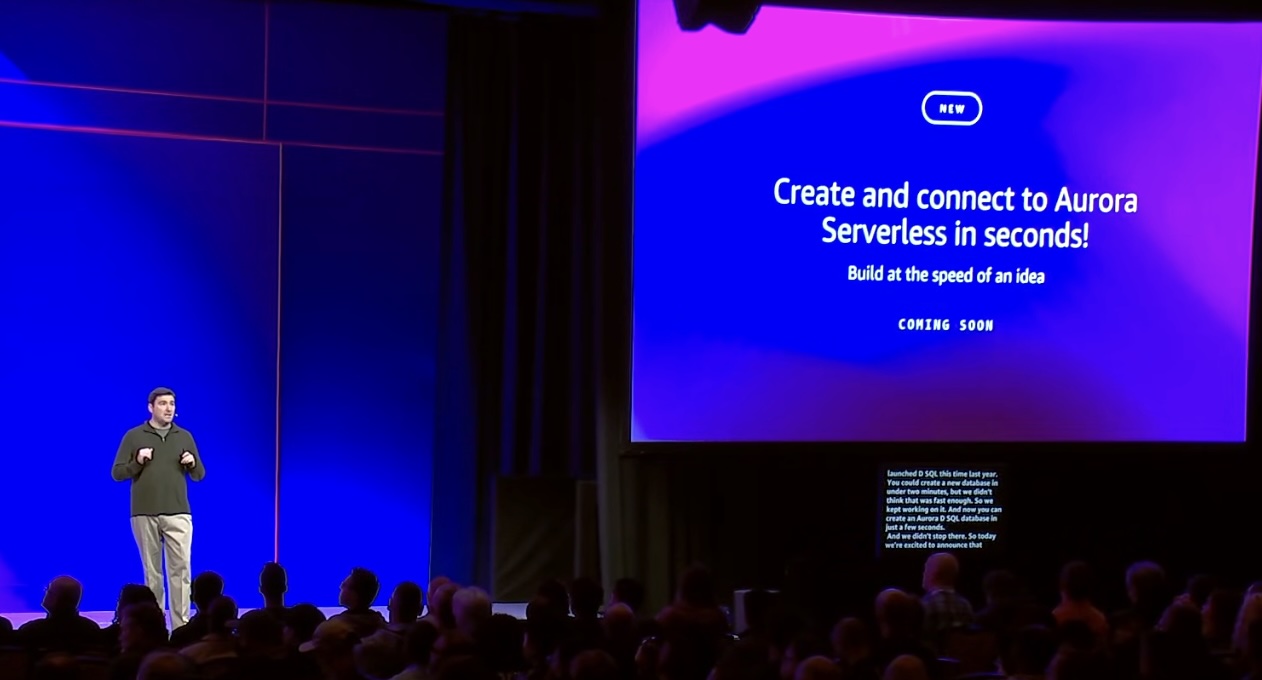
Furthermore, the express configuration prioritizes security from the outset by automatically setting up AWS Identity and Access Management (IAM) authentication for the administrator user. This enables passwordless database authentication, a critical security best practice, from the moment the database is created, eliminating the need for additional configuration steps. IAM authentication tokens provide a robust and temporary credential mechanism, significantly reducing the risk associated with static passwords and aligning with the principle of least privilege.
Comprehensive Ecosystem for Developer Productivity
The launch of Aurora PostgreSQL express configuration is not an isolated feature; it is part of a broader AWS strategy to enhance developer experience and accelerate application development across its ecosystem. Several complementary capabilities have been introduced or highlighted to facilitate onboarding and running applications with Aurora:
-
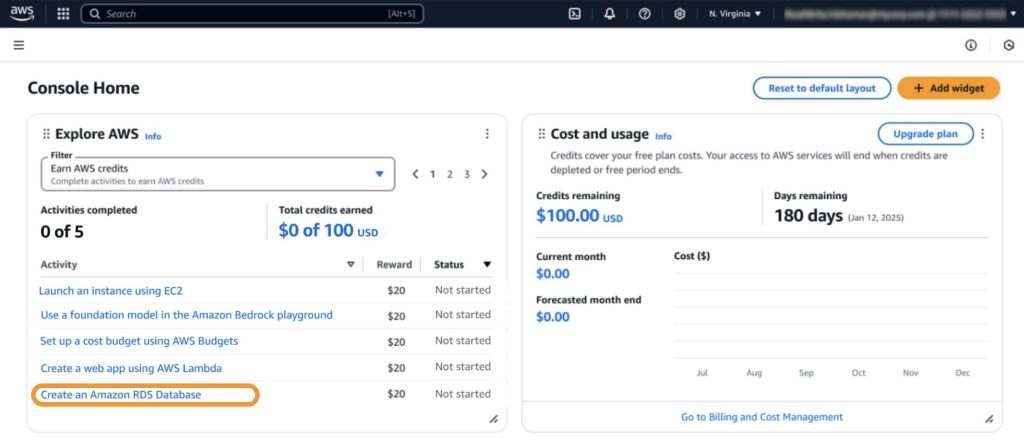
AWS Free Tier Expansion: To democratize access and encourage experimentation, Amazon Aurora is now available under the AWS Free Tier. New AWS customers can receive up to $200 in AWS credits, with $100 upon sign-up and an additional $100 earned through the usage of services like Amazon Relational Database Service (Amazon RDS), AWS Lambda, and Amazon Bedrock. This initiative allows developers to gain hands-on experience with Aurora at no upfront cost, fostering innovation and learning without financial barriers.
-
Integrated Querying with AWS CloudShell: For immediate interaction post-creation, developers can directly query an Aurora database using AWS CloudShell. This browser-based shell, accessible directly from the AWS console, comes pre-populated with relevant commands to connect to the newly created cluster, offering an instant command-line environment for running SQL commands and testing database functionality without local client installations.
-
Vercel Integrations for AI-Powered Development: Recognizing the growing prominence of serverless platforms and AI-assisted development, AWS has deepened its integrations with Vercel. Through the Vercel Marketplace, developers can create and connect to AWS databases, including Aurora PostgreSQL, Aurora DSQL, and DynamoDB, directly from the Vercel environment in seconds. A particularly noteworthy integration is with v0 by Vercel, an AI-powered tool that transforms natural language ideas into production-ready, full-stack web applications. This capability, now supporting Aurora PostgreSQL, allows developers to scaffold applications with a robust database backend using conversational prompts, dramatically reducing development time and complexity. Existing databases created via express configuration can also be seamlessly connected to Vercel projects, bridging rapid infrastructure provisioning with cutting-edge front-end development.
-
AI Agent-Assisted Development with Kiro: Further enhancing developer productivity, AWS introduced Aurora PostgreSQL integration with Kiro. Kiro is an AI agent-assisted development platform that helps developers build applications faster through intelligent code generation, debugging, and workflow automation. The Kiro power for Aurora PostgreSQL, available within the Kiro IDE or via one-click installation from the Kiro powers webpage, allows developers to leverage AI assistance specifically tailored for Aurora PostgreSQL-backed applications. This integration signifies a move towards intelligent development environments that anticipate needs and automate repetitive tasks, allowing developers to focus on core logic and innovation.
Technical Accessibility and Connection Methods
Creating an Aurora PostgreSQL serverless database is now remarkably straightforward, whether through the graphical console, command-line interface, or programmatic SDKs.
-
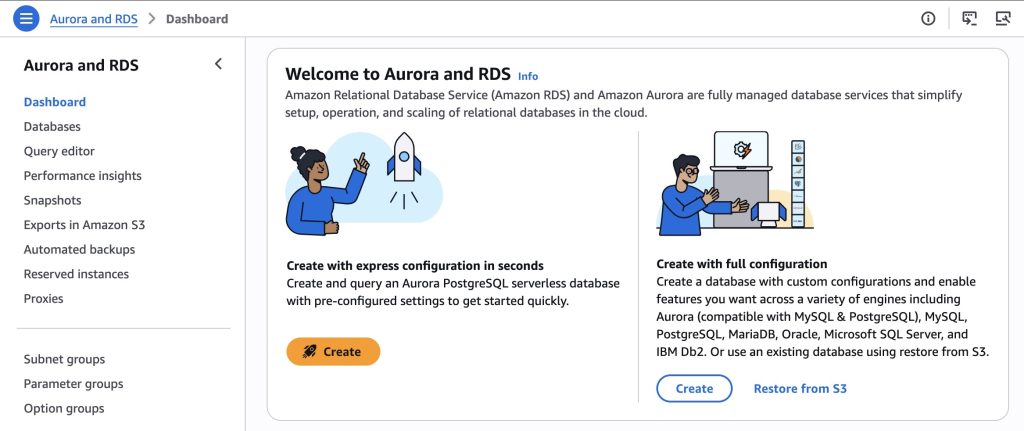
AWS Console: The process begins in the Aurora and RDS console. Developers navigate to the Dashboard and select "Create" alongside a distinctive rocket icon, signifying rapid deployment. A "Create with express configuration" dialog box presents pre-configured settings, allowing for quick review and optional modifications to the DB cluster identifier or capacity range before finalizing creation with a single click on "Create database." A success banner and a change in database status to "Available" confirm the instant provisioning.
-
AWS CLI and SDKs: For automation and Infrastructure as Code (IaC) practices, the AWS Command Line Interface (AWS CLI) and AWS SDKs offer equivalent functionality. A simple parameter,
--with-express-configuration, added to thecreate-db-clustercommand, enables the creation of both an Aurora cluster and an instance within it with a single API call, ready for queries in seconds. This programmatic approach is crucial for developers integrating database provisioning into automated pipelines or managing infrastructure at scale.
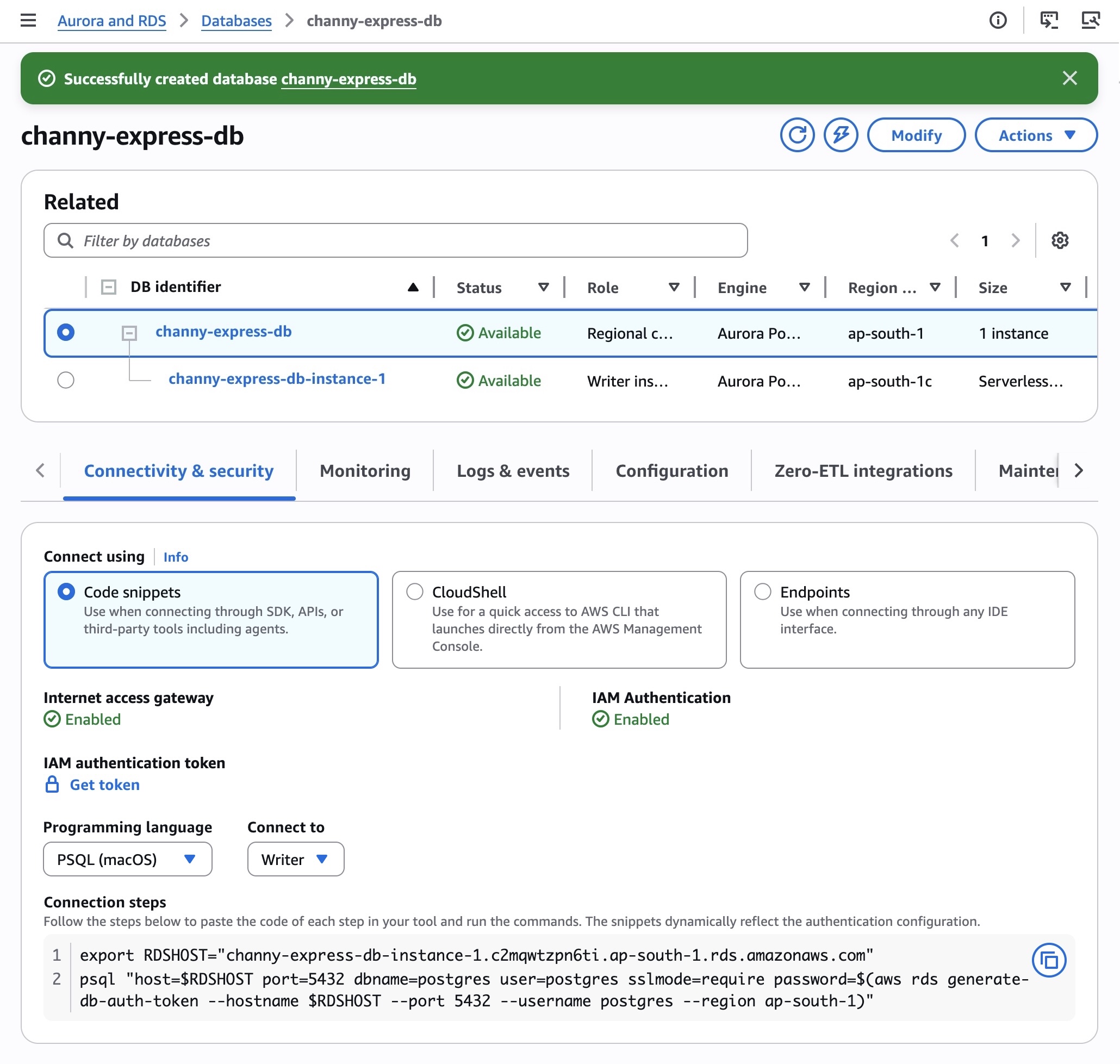
Once the database is ready, the "Connectivity & security" tab in the console provides three primary connection options:
- Code Snippets: For connecting via SDKs, APIs, or third-party tools, code snippets are dynamically generated for various programming languages (e.g., .NET, Golang, JDBC, Node.js, PHP, PSQL, Python, TypeScript). These snippets incorporate IAM authentication tokens, facilitating secure, passwordless connections.
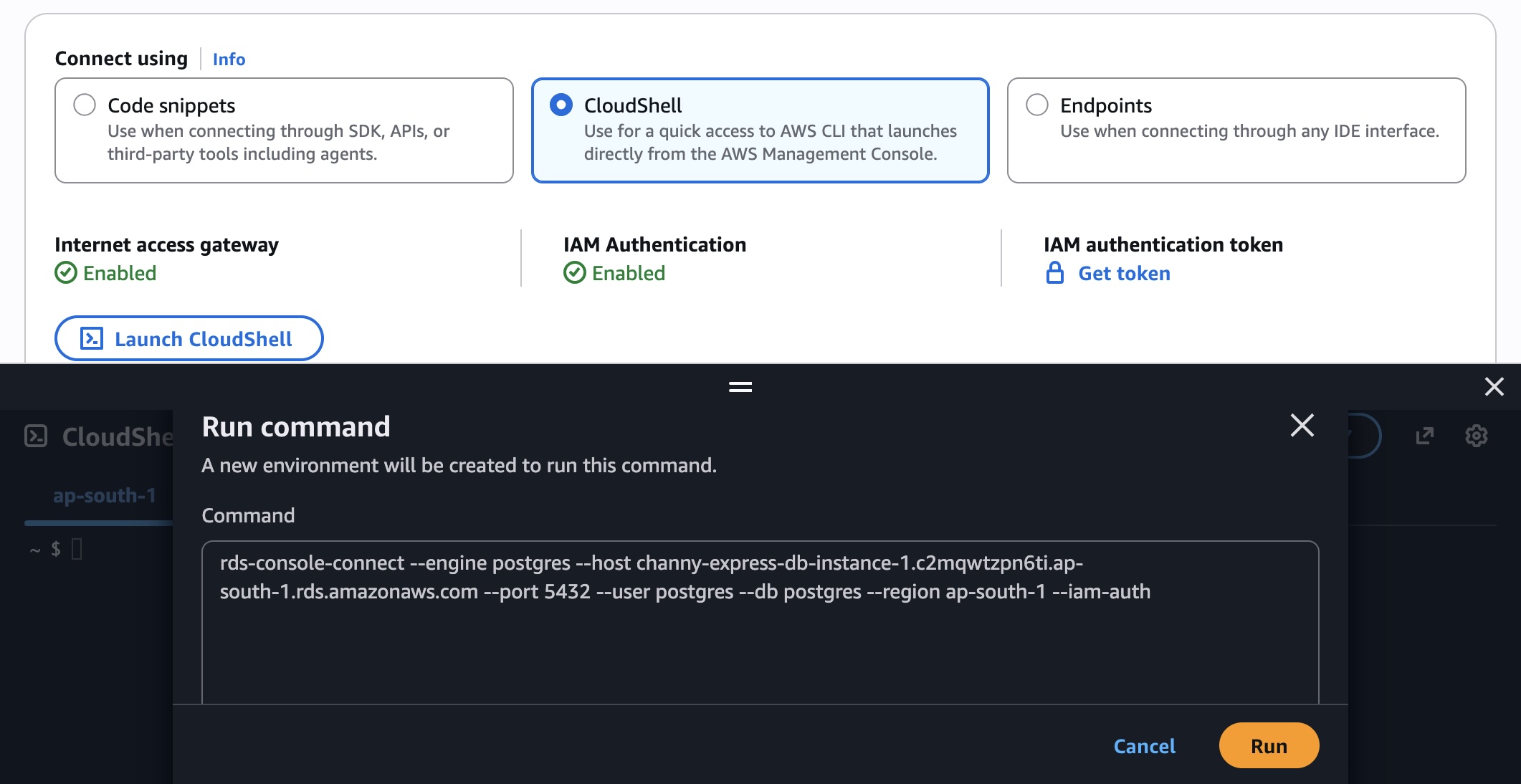
- CloudShell: As mentioned, this option launches AWS CloudShell with a pre-populated command to connect to the specific cluster, providing immediate access to a
psqlprompt. - Endpoints: For tools that traditionally rely on username and password credentials, such as pgAdmin, the console provides an option to "Get token." This generates an AWS IAM authentication token for the master username, valid for 15 minutes, which can be used in place of a password. This ensures compatibility with a wide array of existing tools while maintaining robust IAM-based security.
Broader Market Implications and Future Outlook
The introduction of Amazon Aurora PostgreSQL express configuration carries significant implications for the cloud database market and the broader developer community. By dramatically reducing the time and complexity involved in provisioning a high-performance, scalable database, AWS is effectively democratizing access to advanced database technology. This move is particularly beneficial for startups, individual developers, and small to medium-sized businesses that may lack the resources or expertise for complex infrastructure management but require robust database solutions.
This strategic enhancement solidifies AWS’s competitive position in the cloud database sector, addressing a critical pain point for developers: the initial setup time. In a market where developer experience (DevEx) is increasingly a differentiator, frictionless onboarding becomes a powerful advantage. The alignment with serverless principles, AI-driven development tools, and generous Free Tier offerings positions Aurora as a highly accessible and future-proof database solution. It reinforces the industry trend towards managed services that abstract away operational complexities, allowing developers to focus on building innovative applications rather than managing underlying infrastructure.
Availability and Pricing
The Aurora PostgreSQL express configuration is now generally available across all AWS commercial Regions, ensuring broad accessibility for developers globally. The pricing model for Aurora Serverless remains consistent: customers pay only for the capacity consumed, based on Aurora Capacity Units (ACUs) billed per second. This cost-effective model, where the database automatically scales capacity up or down to zero based on application needs, makes it ideal for variable workloads, development/test environments, and applications with unpredictable usage patterns.
AWS encourages developers to explore this new capability through the Aurora and RDS console and to provide feedback via AWS re:Post for Aurora PostgreSQL or their standard AWS Support contacts, indicating a continuous commitment to iterative improvement driven by user insights. This release marks a substantial leap forward in simplifying cloud database deployment, aligning infrastructure provisioning with the agile demands of modern software development.
