

The Brain’s Alert System and Digital Dependency
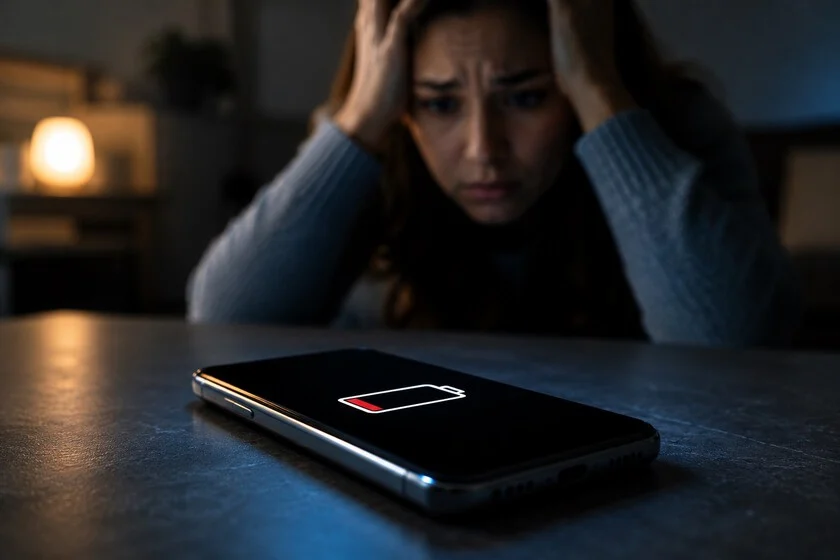
In recent years, this specific form of digital distress has been aptly termed "low battery anxiety." Far from a hyperbolic expression, researchers categorize it as a distinct manifestation within the broader spectrum of "nomophobia," a portmanteau for "no mobile-phone phobia," which describes the irrational fear of being without a mobile phone or its connectivity. This condition, first coined in a 2008 UK study by YouGov, has gained significant traction in psychological and technological discourse as smartphones have become indispensable tools.
The neurological basis for this anxiety is deeply rooted in our primal survival mechanisms. When the human brain perceives an imminent loss of access to something upon which it has become continuously dependent, it activates a sophisticated alert system analogous to the response triggered by other perceived threats. This is not to suggest that a dying phone battery poses an objective physical danger, but rather that the brain has undergone a profound learning process. It has assimilated the mobile device as the primary conduit for navigating contemporary life – mediating essential functions from navigation through unfamiliar urban landscapes, maintaining crucial social and professional contacts, facilitating work responsibilities, ensuring personal safety in unknown environments, to managing financial transactions and accessing critical information.
When this perceived threat of disconnection emerges, the sympathetic nervous system, responsible for the "fight or flight" response, is subtly engaged. This engagement leads to a measurable, albeit slight, increase in cortisol levels, the body’s primary stress hormone, elevating the individual’s state of alertness. The cumulative effect is a heightened sense of unease, restlessness, and even panic, all stemming from the anticipated severing of the digital umbilical cord.
The Psychological Threshold: More Than Just a Number
A particularly intriguing aspect of low battery anxiety is the specific threshold at which this alarm system typically activates. Counterintuitively, the peak of discomfort is rarely when the phone finally powers down at 0% or even at a precarious 5% or 1%. Instead, a significant body of research into this behavioral pattern, including studies published in journals like Computers in Human Behavior, indicates that the distress often reaches its zenith when the battery level hovers around the 20% mark.
The explanation for this lies in the intricate mechanism of anticipation. The human brain is not merely reactive; it is profoundly predictive. It doesn’t wait for a problem to manifest fully before initiating a response; instead, it begins to calculate potential negative scenarios the moment a precursor is detected. Observing the battery percentage drop to 20% is sufficient to trigger this sophisticated alert system, prompting a rapid assessment of forthcoming challenges and potential disruptions. This anticipatory anxiety is a powerful driver of stress, as individuals mentally run through a gamut of "what if" scenarios: "What if I get lost?", "What if I miss an important call?", "What if I can’t pay for my coffee?", "What if there’s an emergency?"
Furthermore, this anticipatory stress is significantly amplified by the immediate environmental context. The same individual who might barely register a 15% battery level while comfortably at home, surrounded by chargers, could experience a profound surge of anxiety with that identical percentage in a high-stakes situation. Imagine being in a bustling, unfamiliar airport, navigating a new city, or in the midst of a critical business negotiation where constant connectivity is paramount. In these scenarios, the perceived consequences of a dying phone battery are dramatically heightened. The battery’s actual capacity remains unchanged, but the subjective perception of potential vulnerability and the ramifications of digital disconnection are drastically altered, underscoring the interplay between technology, psychology, and situational context.
From Communication Tool to Life’s Digital Hub: A Rapid Evolution
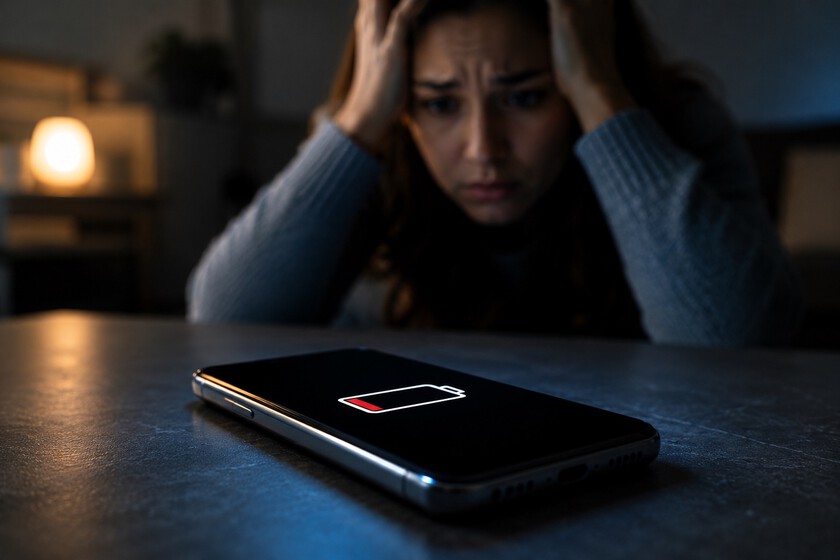
The profound shift in our relationship with mobile phones, culminating in phenomena like nomophobia and low battery anxiety, has unfolded with remarkable speed over the past decade. What began as a convenient device primarily for voice calls and text messages has metastasized into the central nervous system of modern existence. This accelerated dependence has fundamentally reshaped daily routines and expectations.
In the early 2000s, mobile phones were largely supplementary. By the 2010s, with the advent of smartphones and pervasive mobile internet, their role expanded exponentially. Today, the smartphone is no longer just a communication device; it is a multi-functional "digital Swiss Army knife" that consolidates an astonishing array of essential services and personal data. It serves as our primary navigation system, replacing traditional maps and GPS devices. It has largely supplanted physical credit cards and cash, becoming our digital wallet for payments and banking. Boarding passes for flights, tickets for public transport, and even digital keys for cars and homes are increasingly integrated into the mobile ecosystem. For many, it is the primary gateway to their professional lives, managing emails, calendars, and collaborative platforms. Critically, it is the ubiquitous channel for maintaining communication with virtually every significant person in one’s life, from family and friends to colleagues and emergency contacts.
This consolidation of critical functions into a single handheld device means that the perceived cost of losing it—even temporarily due to a depleted battery—is astronomically higher than the cost of losing any of those functions individually in a pre-smartphone era. Losing a map was an inconvenience; losing a phone today could mean being stranded. Forgetting a wallet was problematic; losing phone payment capabilities can halt daily transactions. This evolution has transformed the smartphone from a luxury item into a fundamental utility, creating a profound psychological attachment that mirrors, in some ways, our reliance on basic necessities like electricity or running water.
Statistics underscore this pervasive dependency. Global smartphone penetration now exceeds 80% in many developed nations, with users spending an average of 4-5 hours daily on their devices. Studies consistently show that a significant percentage of users, particularly younger demographics, experience anxiety when separated from their phones, even for short periods. This dependency is not merely habitual; it is a learned behavior reinforced by constant positive feedback loops and the fear of missing out (FOMO).
The Broader Repercussions of Digital Disconnection Anxiety
The implications of nomophobia and low battery anxiety extend far beyond individual discomfort, touching upon broader aspects of mental health, societal functioning, and even economic productivity. From a mental health perspective, the constant vigilance over battery levels and the fear of disconnection contribute to chronic low-level stress. This sustained state of anxiety can manifest in various ways, including restlessness, irritability, poor concentration, and disrupted sleep patterns, all of which detract from overall well-being. The very technology designed to connect us can inadvertently create new forms of psychological burden.
Socially, the pervasive reliance on smartphones can paradoxically lead to a decline in genuine human interaction. Individuals may prioritize their digital connections over present company, or become so engrossed in their devices that they miss opportunities for real-world engagement. The fear of being unreachable can also lead to an "always-on" culture, blurring the lines between work and personal life and making it difficult for individuals to fully disconnect and recharge, both literally and figuratively.
Economically, the implications are also significant. Businesses increasingly rely on mobile applications for employee communication, customer service, and operational efficiency. A workforce plagued by digital disconnection anxiety might experience reduced productivity due to distractions or the inability to perform critical tasks without mobile access. The demand for reliable power solutions—from ubiquitous charging stations in public spaces to the booming market for portable power banks—is a direct economic consequence of this widespread dependency. Furthermore, the push for ever-faster charging technologies and longer battery life in new devices reflects a direct response to consumer anxiety, influencing product development and market trends.
Tech Industry’s Countermeasures: Innovating Against Anxiety
Recognizing the pervasive nature of low battery anxiety and its impact on user experience, the technology industry has actively responded by developing and refining solutions aimed at alleviating this modern malaise. These responses typically fall into two main categories: optimizing battery longevity and minimizing charging downtime.

Leading smartphone manufacturers, such as Samsung, have invested heavily in sophisticated battery management systems. For instance, features like "Adaptive Power Saving" in Galaxy devices leverage artificial intelligence and machine learning to understand individual user patterns. By analyzing app usage, location data, and typical screen-on times, these systems can automatically adjust power consumption, dynamically allocating resources to frequently used applications while restricting background processes for less critical ones. This proactive approach aims to extend battery life without requiring constant manual intervention from the user, effectively pushing back the anxiety-inducing 20% threshold. Moreover, advanced algorithms can predict when a user is likely to need more autonomy—for example, during a long commute or travel day—and suggest activating enhanced power-saving modes before critical levels are reached.
The other major technological innovation directly combating battery anxiety is rapid charging technology. If anxiety is largely driven by the anticipation of depletion, then significantly reducing the time it takes to replenish the battery directly attacks the problem at its root. The evolution of fast charging from a niche feature to a standard expectation has been dramatic. What once took several hours can now be achieved in a fraction of the time, with many flagship phones reaching 50% charge in under 30 minutes, and some even achieving a full charge in less than an hour.
This capability fundamentally alters the emotional equation. The knowledge that a mere ten to fifteen minutes of charging can provide several hours of additional usage acts as a powerful psychological buffer. It transforms a potentially crippling vulnerability into a manageable pause. This rapid recovery capability is often more reassuring to users than a marginal increase in overall battery life, as it offers an immediate remedy to the threat of disconnection. It shifts the focus from passively watching the battery drain to actively and quickly mitigating the problem when it arises. While not a complete eradication of the underlying psychological dependence, these technological advancements represent the most immediate and tangible responses to a discomfort that, for millions, has ceased to be trivial.
Navigating the Future: Towards Digital Wellness and Sustainable Solutions
Despite the advancements in battery technology and power management, the deeper challenge of low battery anxiety persists, highlighting a complex and evolving relationship between humans and their digital tools. The current technological solutions, while highly effective in mitigating immediate stress, do not fundamentally address the root cause of the anxiety, which lies in our profound and often unquestioned dependence on these devices.
Looking ahead, the future of addressing digital dependency will likely involve a multi-faceted approach that extends beyond mere hardware and software improvements. Researchers and developers are exploring concepts like "digital wellness" features, which encourage mindful use of smartphones, provide insights into screen time, and offer tools for setting boundaries. Operating systems increasingly incorporate modes like "Focus" or "Do Not Disturb" that allow users to intentionally disconnect without fear of missing critical information, thereby reducing the background hum of anticipatory anxiety.
Further innovations in battery technology, such as solid-state batteries or alternative power sources, could eventually lead to phones with multi-day autonomy, fundamentally altering the psychological landscape of charging. The widespread deployment of wireless charging infrastructure, both inductive pads and potentially over-the-air charging, could also make power replenishment so seamless and ubiquitous that battery levels become a non-issue.
Ultimately, however, a lasting solution to low battery anxiety and nomophobia requires a societal re-evaluation of our digital habits. Encouraging periods of intentional digital detox, fostering environments where smartphone use is less central, and educating individuals about the psychological impacts of constant connectivity are crucial steps. As technology continues to weave itself into the fabric of our lives, the challenge lies not just in making devices more efficient, but in cultivating a healthier, more balanced relationship with them—one where convenience does not inadvertently foster dependence and anxiety. The journey towards digital well-being is an ongoing one, demanding both technological ingenuity and a conscious shift in human behavior.
