
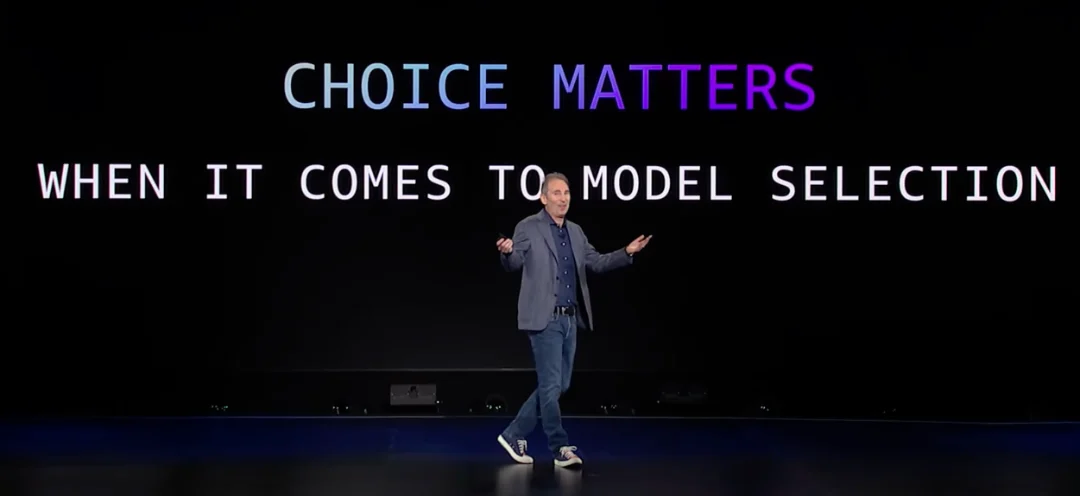

The landscape of enterprise artificial intelligence underwent a significant shift this week as Amazon Web Services (AWS) announced the integration of several advanced frontier models onto its managed AI platform, Amazon Bedrock. The latest updates introduce OpenAI’s GPT-6 Sol and GPT-6 Luna, alongside Anthropic’s Claude Opus 5.5, reflecting a broader industry pivot away from monolithic AI deployments toward a specialized, cost-optimized approach. Rather than relying on a single generalized model for all enterprise tasks, organizations utilizing AWS can now select specific architectures optimized for distinct workflows, balancing operational latency, computational costs, and functional intelligence.
This expansion arrives at a critical juncture in the enterprise cloud market, where businesses increasingly demand granular control over their AI infrastructure expenses. With the rapid proliferation of autonomous agents, multi-step reasoning pipelines, and large-scale data processing requirements, cloud providers are racing to provide diverse model options that cater to specialized computational demands.
Background Context and Technological Evolution
The integration of next-generation foundational models into managed cloud services represents the maturation of the generative AI market. Over the past three years, the primary metric of success for artificial intelligence developers was raw capability—measured by benchmarks evaluating coding proficiency, legal reasoning, and conversational nuance. However, as organizations transition from exploratory proof-of-concept projects to production-grade, high-volume operational workflows, economic efficiency and operational latency have emerged as dominant concerns.
Amazon Bedrock, launched to provide enterprise customers with secure, scalable access to high-performing foundation models via API without requiring infrastructure management, has become a primary battleground for major AI labs. By hosting models from providers like Anthropic, OpenAI, Meta, and Cohere, AWS allows corporate clients to experiment with and deploy heterogeneous AI systems within a unified security and compliance framework.
The arrival of the GPT-6 series and Claude Opus 5.5 addresses long-standing enterprise complaints regarding high token costs and excessive latency during complex, multi-step tasks. Industry analysts note that the ability to route specific tasks to lighter, faster models while reserving resource-intensive models for complex problem-solving represents a fundamental evolution in enterprise cloud architecture.
Chronology of the Latest Amazon Bedrock Releases
The recent deployment of these frontier models follows a structured rollout strategy by AWS and its ecosystem partners aimed at capturing enterprise workloads across various operational tiers.
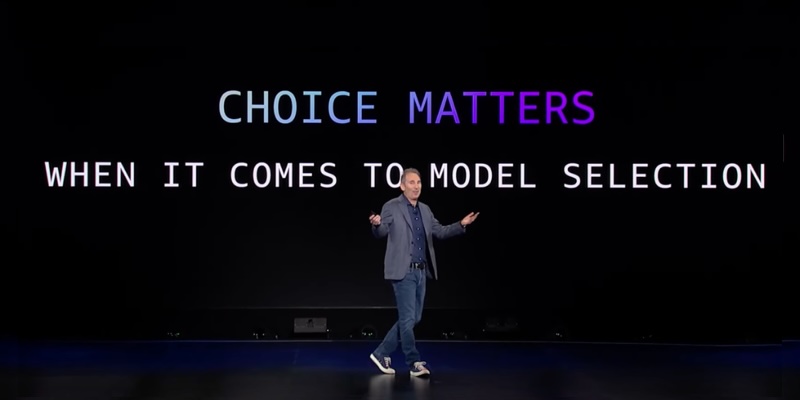
During the initial deployment phase, select enterprise preview customers gained access to evaluation endpoints to test model responsiveness under production loads. Initial telemetry data indicated substantial performance gains in automated software engineering pipelines and data transformation scripts.
Following the preview window, AWS officially integrated the models into the core Amazon Bedrock service catalog, making them globally available across supported commercial regions. This deployment enables organizations to leverage AWS native features—such as Amazon Bedrock Guardrails, Model Evaluation, and Knowledge Bases for Retrieval-Augmented Generation (RAG)—directly with the new model architectures.
Concurrently, supporting observability and monitoring tools were updated to track token consumption, latency metrics, and error rates associated with the new endpoints. This ensures that IT administrators maintain strict oversight of AI expenditures as automation scales within their organizations.
Detailed Breakdown of the New Models
The newly integrated models bring distinct technical capabilities tailored to specific enterprise requirements:
GPT-6 Sol is engineered specifically to handle the rigorous, recurring demands of software development and IT operations. Development teams frequently encounter tasks requiring sustained context windows, intricate debugging logic, and adherence to specific codebase guidelines. GPT-6 Sol provides enhanced reasoning capabilities designed to streamline these developer workflows, reducing the manual overhead required for code review, refactoring, and infrastructure management. Crucially, OpenAI and AWS have positioned this model at a significantly lower price point compared to its predecessor, the GPT-5.6 architecture, lowering the financial barrier for continuous integration and deployment pipelines.
GPT-6 Luna is optimized for focused, repeatable tasks that must be executed at high volume. Many enterprise applications—such as automated customer support triage, receipt processing, sentiment analysis, and data normalization—do not require the deep philosophical reasoning of frontier models, but they do require high throughput and predictable, low-latency responses. GPT-6 Luna delivers rapid execution for these transactional workloads, ensuring that businesses can scale their automated operations without incurring prohibitive computational costs.
Claude Opus 5.5 marks the introduction of Anthropic’s Claude 5.5 family to the AWS ecosystem. Designed with a focus on token efficiency, Claude Opus 5.5 accomplishes complex analytical tasks using fewer tokens than its predecessor, Opus 5. This reduction in token overhead translates directly to lower operational expenses and faster processing times. Furthermore, the model has been explicitly tuned for agentic coding and long-running autonomous tasks, allowing software agents to operate independently across extended execution cycles without drifting from their initial objectives or degrading in context retention.
Comparative Architectural and Economic Analysis

To fully understand the implications of these releases, industry stakeholders must evaluate how these models fit into the broader economic and technical hierarchy of cloud-hosted artificial intelligence.
| Model Name | Primary Provider | Optimized Use Case | Cost Efficiency Profile relative to Previous Gen | Key Technical Advantage |
|---|---|---|---|---|
| GPT-6 Sol | OpenAI | Software development, DevOps, complex reasoning | Significantly lower than GPT-5.6 | Sustained context, advanced debugging logic |
| GPT-6 Luna | OpenAI | High-volume transactional tasks, data processing | Highly optimized for throughput | Low latency, rapid execution for repeatable tasks |
| Claude Opus 5.5 | Anthropic | Agentic coding, long-running multi-step tasks | High token efficiency vs. Opus 5 | Reduced token consumption, extended context stability |
This structured differentiation allows enterprise architects to implement intelligent routing systems. For instance, an incoming customer query can be analyzed by a lightweight classifier; routine inquiries are routed to GPT-6 Luna, while complex dispute resolutions are escalated to Claude Opus 5.5 or GPT-6 Sol. This tiered approach prevents organizations from over-provisioning computational resources, transforming AI from a generalized overhead cost into a precision-engineered operational asset.
Industry Implications and Enterprise Impact
The widespread availability of these models on Amazon Bedrock underscores a broader trend in enterprise technology: the commoditization of foundational intelligence and the rising value of orchestration, security, and observability.
As the capability gap between competing frontier models narrows, enterprises are placing greater emphasis on data governance, security compliance, and integration friction. By hosting these models within AWS, corporate clients benefit from enterprise-grade security protocols, including compliance with regional data residency requirements, Virtual Private Cloud (VPC) integration, and encryption standards that satisfy stringent regulatory frameworks such as HIPAA, GDPR, and SOC 2.
Furthermore, the emphasis on agentic workflows—exemplified by the architectural tuning of Claude Opus 5.5 and GPT-6 Sol—signals that the industry is moving past simple conversational chat interfaces. Enterprises are increasingly deploying autonomous software agents capable of executing complex business processes from end to end. The success of these agents depends entirely on reliable, low-latency model performance and robust observability tools that allow human supervisors to audit agent decisions in real time.
Conclusion and Future Outlook
The addition of OpenAI’s GPT-6 Sol and Luna, alongside Anthropic’s Claude Opus 5.5 to Amazon Bedrock, marks another step forward in the maturation of enterprise AI infrastructure. By offering a diverse spectrum of intelligence, cost, and latency profiles, AWS is equipping developers and enterprise architects with the tools necessary to build sustainable, scalable, and economically viable artificial intelligence applications.
As the market continues to evolve, the primary differentiator for cloud providers will not simply be access to the smartest model, but the flexibility, security, and precision with which organizations can integrate those models into their existing business logic. Developers and IT leaders looking to explore these new capabilities can access the updated model endpoints directly through the Amazon Bedrock console, with comprehensive documentation and implementation guides available via the official AWS Machine Learning and AI blogs.
