
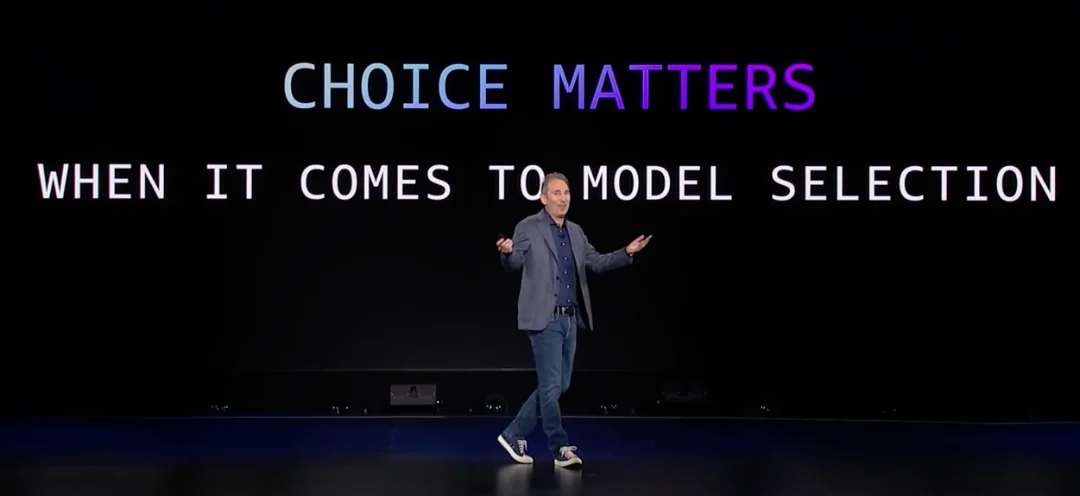

The enterprise artificial intelligence landscape shifted significantly last week as Amazon Web Services (AWS) announced the immediate availability of several frontier models on Amazon Bedrock, highlighted by the integration of OpenAI’s GPT-6 Sol and GPT-6 Luna, alongside Anthropic’s Claude Opus 5.5. This strategic expansion marks a departure from monolithic, one-size-fits-all AI deployment strategies toward a highly granular approach that prioritizes precision, cost-efficiency, and task-specific optimization. As organizations increasingly transition from experimental generative AI pilots to deeply integrated, autonomous agentic workflows, the demand for scalable infrastructure capable of balancing high-latency reasoning with cost-effective high-volume execution has become paramount.
The introduction of these models on AWS underscores a broader industry evolution. For years, the primary benchmark for foundational models centered on raw capability metrics, such as standardized reasoning tests and parameter scale. However, enterprise adoption trends over the past year have revealed that infrastructure decision-makers evaluate models through a more complex lens: the optimization curve balancing intelligence, operational latency, and inference cost. The newly introduced models address these enterprise concerns directly, offering distinct functional profiles designed to match specific tiers of corporate workloads.
Main Facts and Model Specifications
The deployment on Amazon Bedrock introduces three distinct frontier architectures, each targeted at specific enterprise requirements. OpenAI’s GPT-6 Sol is engineered specifically to handle the complex, recurring computational demands of software engineering and cloud operations. By focusing on advanced code synthesis, automated debugging, and multi-step infrastructure management, GPT-6 Sol aims to streamline developer workflows while drastically reducing the need for manual intervention in routine deployment pipelines.
In contrast, GPT-6 Luna is optimized for high-volume, repeatable business processes. Designed for enterprise scenarios that require consistent, structured outputs across millions of daily transactions—such as automated document classification, customer sentiment analysis, and routine data transformation—Luna delivers high-throughput execution at a fraction of the computational overhead associated with larger models. Notably, both GPT-6 Sol and GPT-6 Luna launch on Amazon Bedrock at price points significantly lower than their GPT-5.6 predecessors, signaling a deflationary trend in high-tier inference costs that will likely accelerate widespread enterprise adoption.
Complementing the OpenAI additions, Anthropic’s Claude Opus 5.5 represents the inaugural release in the highly anticipated Claude 5.5 model family. Claude Opus 5.5 is explicitly tuned for agentic coding and long-running, autonomous workflows. A key engineering achievement of this release is its enhanced token efficiency; the model accomplishes complex, multi-turn analytical tasks using fewer tokens than its predecessor, Opus 5. This reduction in token consumption directly translates to lower operational expenditures for enterprises running sustained, context-heavy analytical processes.
Chronology and Strategic Deployment Timeline
The integration of these models on Amazon Bedrock follows a carefully orchestrated release schedule designed to align with enterprise demand for enhanced governance and security controls. The rollout began with internal preview phases for select enterprise customers, allowing AWS to stress-test the inference endpoints under heavy concurrent workloads.
During the subsequent deployment window, AWS engineered the infrastructure to support these models within existing Bedrock security perimeters, ensuring that enterprise data privacy standards, VPC endpoints, and compliance frameworks remained fully operational. By making GPT-6 Sol, GPT-6 Luna, and Claude Opus 5.5 generally available simultaneously, AWS has provided its developer ecosystem with immediate access to a diversified model registry. This allows systems architects to re-evaluate and refactor existing LLM routing pipelines, directing simple classification tasks to efficient endpoints while reserving high-cost reasoning models strictly for complex architectural decisions.
Supporting Data and Market Context
The expansion of the Amazon Bedrock ecosystem occurs against a backdrop of rapid market growth and shifting enterprise priorities. According to recent cloud industry data, enterprise spending on managed generative AI services has grown by over 140% year-over-year, with multi-model architectures emerging as the dominant paradigm. Rather than standardizing on a single provider, more than 75% of Fortune 500 companies utilizing cloud-based AI now deploy a portfolio of models tailored to distinct operational tiers.
Furthermore, economic analyses of inference costs indicate that the price per million tokens for frontier-class models has decreased by approximately 55% over the past eighteen months. The pricing strategy adopted by OpenAI for the GPT-6 tier on AWS aligns with this deflationary curve, reflecting both hardware efficiencies driven by custom silicon deployments and optimized software compilation. Anthropic’s focus on token-efficiency gains in Claude Opus 5.5 addresses another critical economic vector: the total cost of context retention during long-running agentic sessions. By lowering the token penalty for maintaining deep contextual memory, models like Claude Opus 5.5 make autonomous, multi-hour software development and data curation agents economically viable for mid-market enterprises.

Industry Reactions and Ecosystem Implications
While formal public statements from competing cloud providers remain subdued, industry analysts and enterprise software vendors have widely praised the flexibility afforded by the Amazon Bedrock updates. System integrators note that the availability of fine-grained model tiers simplifies the implementation of model cascading—a technique where incoming queries are first evaluated by a fast, low-cost model (such as GPT-6 Luna) and only escalated to advanced reasoning engines (such as GPT-6 Sol or Claude Opus 5.5) when the complexity threshold demands it.
Furthermore, enterprise security and observability practices are rapidly adapting to this multi-model environment. As organizations scale their autonomous agent deployments, the need for robust telemetry, latency tracking, and cost governance tools has intensified. The recent wave of observability updates accompanying these model launches on AWS indicates that cloud tooling is successfully maturing to match the operational realities of agentic workflows. Developers can now monitor token usage, trace execution paths across multi-model pipelines, and enforce strict budgetary controls in real time.
Broader Economic and Technical Implications
The long-term implications of these developments extend far beyond immediate cost savings. By democratizing access to frontier-level agentic capabilities and hyper-efficient operational models, AWS and its partners are accelerating the transition from human-in-the-loop assistance to true autonomous execution.
As software engineering pipelines, supply chain optimization engines, and customer support systems increasingly rely on autonomous agents capable of sustained reasoning, the underlying cloud infrastructure must guarantee high availability, low latency, and deterministic performance. The seamless integration of OpenAI’s GPT-6 series and Anthropic’s Claude Opus 5.5 into Amazon Bedrock provides enterprises with the robust foundation necessary to build, scale, and govern these next-generation AI applications securely.
As the generative AI market matures, the competitive advantage will no longer belong solely to organizations with the most powerful single model, but to those that can orchestrate a diverse ecosystem of specialized models with maximum efficiency and precision. With these latest deployments, AWS has positioned Amazon Bedrock as a central hub for this multi-model, agent-driven future.
