
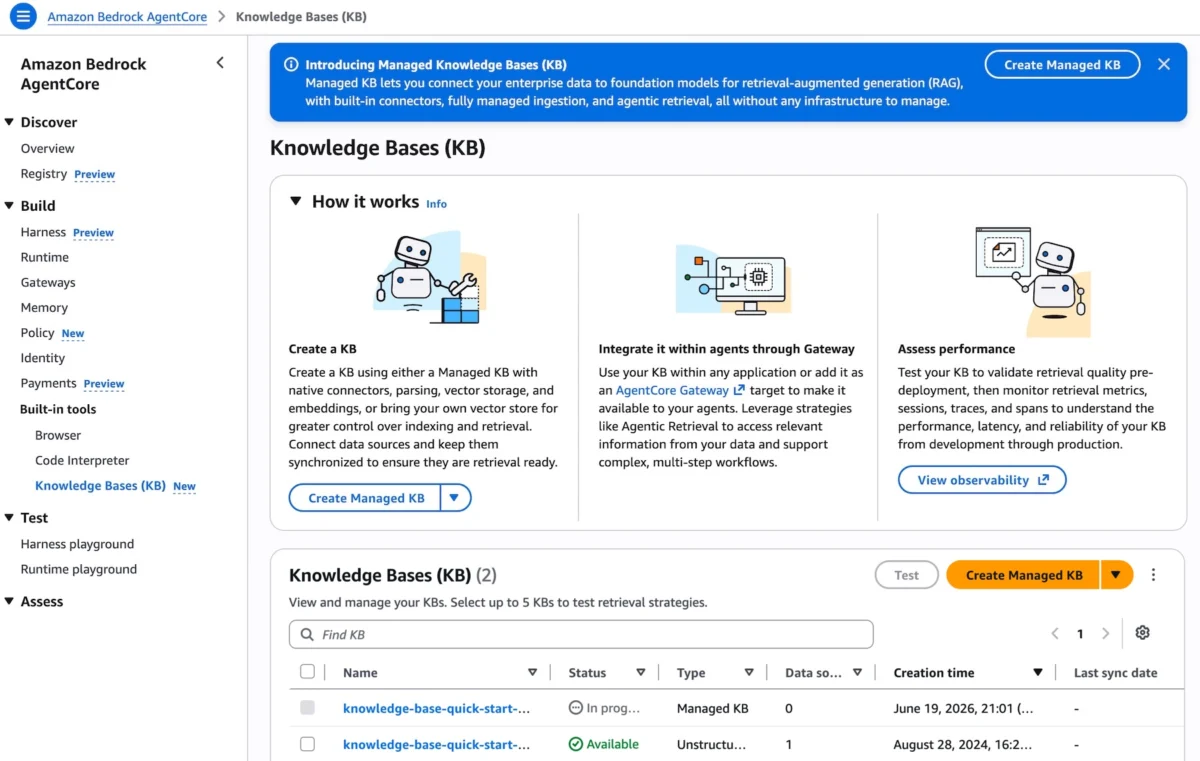

Amazon Web Services (AWS) today announced the launch of Amazon Bedrock Managed Knowledge Base, a comprehensive suite of capabilities designed to empower developers to construct enterprise-grade generative AI applications with proprietary data in a matter of minutes. This new offering significantly simplifies the complex process of building and managing Retrieval-Augmented Generation (RAG) pipelines, allowing organizations to deploy secure, reliable, and continuously updated access to their vast internal data reservoirs, thereby ensuring accurate, rapid, and trustworthy outcomes from their AI agents. By abstracting away intricate infrastructure management, AWS aims to shift the developer’s focus from operational overhead to delivering tangible business value.
The Evolution of Enterprise Generative AI and the RAG Imperative
The rapid ascent of generative AI has presented enterprises with unprecedented opportunities to automate tasks, enhance customer service, and accelerate innovation. However, integrating these powerful large language models (LLMs) with an organization’s specific, often sensitive, internal data has posed significant challenges. A primary concern has been the phenomenon of "hallucinations," where LLMs generate plausible but factually incorrect information. Retrieval-Augmented Generation (RAG) emerged as a critical architectural pattern to mitigate this risk, enabling LLMs to access and synthesize information from an external, authoritative knowledge base before generating a response. This grounding in factual data ensures greater accuracy and trustworthiness, which are non-negotiable for enterprise applications.
Prior to fully managed solutions like the Bedrock Managed Knowledge Base, developers tasked with implementing RAG pipelines faced a series of formidable hurdles. These often required extensive, undifferentiated engineering work that diverted resources from core application development. Key challenges included:
- Data Ingestion and Preparation: Enterprise data exists in myriad formats—structured databases, unstructured text documents, spreadsheets, PDFs, web pages, and more. Preparing this diverse data for retrieval involves complex processes like parsing, cleaning, chunking (breaking down large documents into manageable segments), and extracting relevant metadata. Each data type often demanded a bespoke processing strategy, leading to weeks or even months of development and experimentation.
- Infrastructure Provisioning and Management: Building a RAG pipeline necessitates setting up and managing multiple infrastructure components. This includes robust storage solutions for raw data, vector databases for efficient semantic search, embedding models to convert text into numerical vectors, and potentially re-ranker models to optimize retrieval relevance. Each of these components requires careful selection, configuration, scaling, and ongoing maintenance, consuming significant operational resources.
- Ensuring Data Currency and Accuracy: For enterprise applications, the knowledge base must be consistently up-to-date. Implementing reliable data synchronization mechanisms to reflect changes in source data, such as updated policies, product information, or financial reports, without manual intervention, is a complex engineering task.
- Optimizing Retrieval Performance and Relevance: Achieving highly accurate and relevant information retrieval for complex user queries is challenging. It often requires sophisticated indexing strategies, fine-tuning embedding models, and implementing advanced query processing techniques to ensure the most pertinent information is consistently surfaced.
- Security, Governance, and Compliance: Handling proprietary and potentially sensitive enterprise data mandates stringent security protocols, access controls, and compliance with various regulatory frameworks. Integrating these security measures across a multi-component RAG pipeline adds another layer of complexity.
- Orchestration and Scalability: As the volume of data and the number of queries grow, the RAG pipeline must scale seamlessly. Designing and implementing the orchestration logic that manages the flow from query processing to retrieval, generation, and response formatting, while ensuring high availability and performance, is a significant undertaking.
These persistent challenges often led to prolonged development cycles, increased operational costs, and a bottleneck in the widespread adoption of enterprise-grade generative AI applications. AWS’s strategic response with the Bedrock Managed Knowledge Base is to directly address these pain points, thereby accelerating the deployment of sophisticated AI solutions.
Introducing Amazon Bedrock Managed Knowledge Base: A Paradigm Shift
The Amazon Bedrock Managed Knowledge Base represents a significant advancement in democratizing generative AI development for the enterprise. It consolidates the disparate infrastructure components traditionally required for RAG pipelines into a single, fully managed service. This means developers no longer need to manually assemble and maintain storage, retrieval mechanisms, embedding models, re-ranker models, and foundation model selection. Instead, the service automatically handles these underlying complexities.
By default, the Bedrock Managed Knowledge Base streamlines the initial setup by automatically selecting and managing a default embeddings model, a re-ranker model, and a foundational model on behalf of the user. This intelligent automation allows developers to quickly initiate projects without the burden of extensive model evaluation or maintenance. This foundational abstraction is further enhanced by three core innovations that significantly improve ease of use and retrieval accuracy: Smart Parsing, Agentic Retriever, and seamless integration with Amazon Bedrock AgentCore Gateway.
Key Innovations Powering Next-Generation RAG

The service’s effectiveness hinges on its innovative features designed to tackle the most persistent challenges in RAG implementation:
Smart Parsing: Intelligent Data Ingestion for Accuracy
One of the most critical and time-consuming aspects of building a knowledge base is preparing diverse data types for accurate retrieval. Enterprises store information in a multitude of formats, from simple text files to complex PDFs with embedded tables, images, and varying layouts. Manually developing parsing strategies for each format is an arduous task.
Smart Parsing, a cornerstone of the Bedrock Managed Knowledge Base, automates this process. Once directed to enterprise data sources, it intelligently analyzes the data type and connector, then automatically determines and applies the optimal parsing strategy without requiring any additional configuration from the developer. This sophisticated capability combines multiple advanced techniques:
- Intelligent Chunking: Documents are not monolithic; relevant information often resides in specific sections. Smart Parsing intelligently breaks down large documents into semantically meaningful chunks, rather than arbitrary fixed-size segments. This ensures that a single chunk contains coherent information, improving the relevance of retrieved passages.
- Advanced Text Extraction: Beyond basic text extraction, this feature accurately pulls content from various document formats, including complex PDFs, Word documents, and web pages, preserving structural elements and hierarchy where possible.
- Table Extraction and Interpretation: Tables are dense sources of structured data within unstructured documents. Smart Parsing can accurately identify, extract, and interpret tabular data, making it retrievable as structured information rather than a block of plain text. This is crucial for queries that depend on numerical or categorical data often presented in tables.
- Metadata Extraction and Enrichment: Beyond the content itself, metadata (e.g., author, date, document type, source system) provides invaluable context. Smart Parsing automatically extracts and enriches documents with relevant metadata, which can be used to filter and refine search results, further enhancing retrieval accuracy.
This automated and intelligent approach to data ingestion is transformative. It eliminates the weeks of iterative experimentation typically required to achieve production-quality retrieval accuracy, allowing developers to focus on the logical application layer while still preserving the flexibility to customize parsing rules when specific, nuanced requirements arise.
Agentic Retriever: Mastering Complex Query Resolution
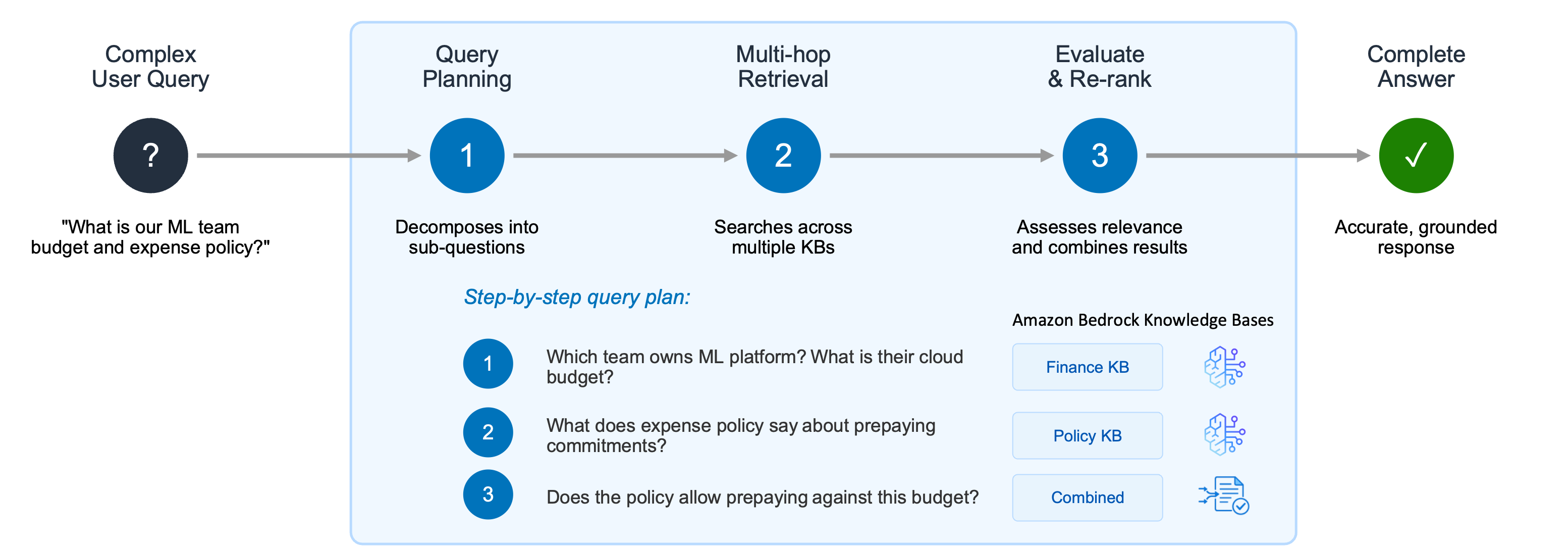
Traditional RAG systems often struggle with complex user queries that demand multi-step reasoning, recursive retrieval, and intermediate evaluations of results. A user asking, for instance, "What is the cloud infrastructure budget for the ML platform team, and does our expense policy allow prepaying annual commitments for such expenditures?" presents a multi-faceted problem. A simple, single-step retrieval might successfully identify documents related to the ML platform team’s budget but fail to connect this information with the nuances of the expense policy regarding prepayment.
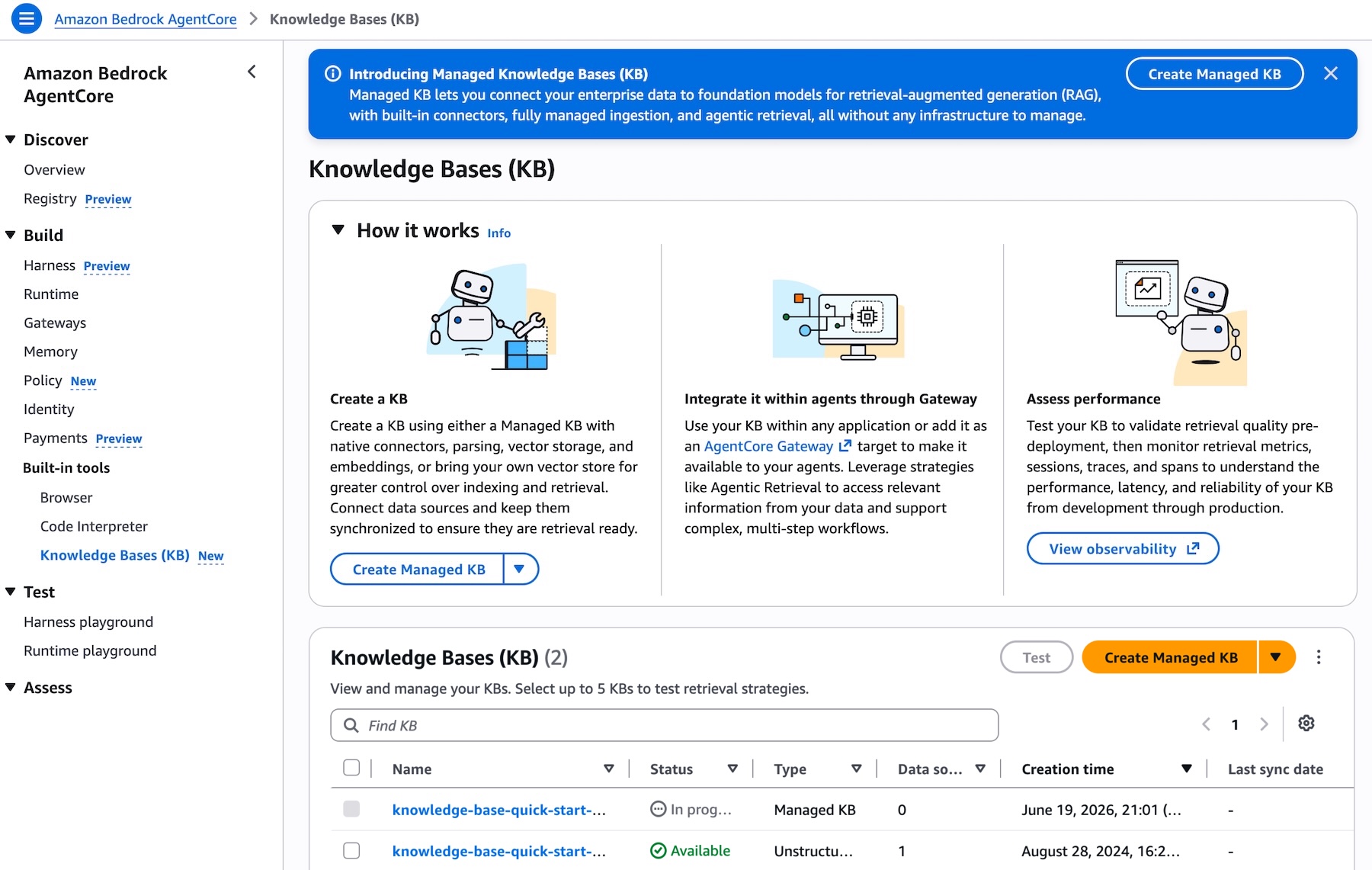
The Agentic Retriever in Amazon Bedrock Managed Knowledge Base is engineered to address such sophisticated queries. It goes beyond single-shot retrieval by intelligently creating a step-by-step query plan. For the example above, it might decompose the query into:
- "Identify the specific cloud infrastructure budget allocated to the ML platform team."
- "Consult the company’s expense policy regarding annual commitments and prepayment options."
- "Synthesize information from both retrieved sources to determine if the ML platform team’s budget allows for prepaying annual commitments under the current expense policy."
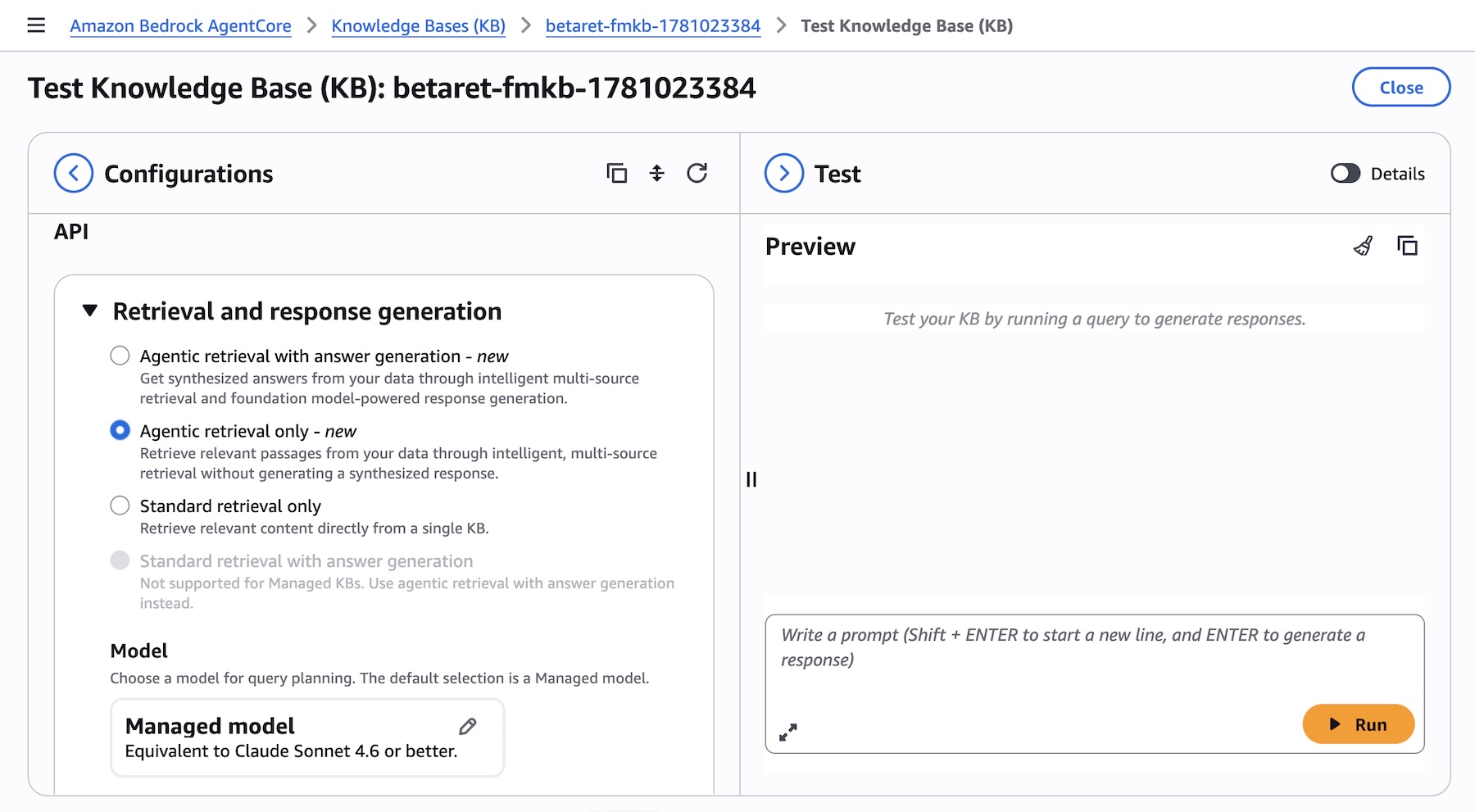
The system performs multi-hop retrieval and reasoning at each stage of the plan. It dynamically evaluates the retrieved passages, refines its search based on intermediate findings, and continues the process until sufficient relevant information has been gathered to formulate a comprehensive answer. By abstracting away the complexity of building and orchestrating a separate multi-hop reasoning pipeline, the Agentic Retriever dramatically improves accuracy for intricate queries, enabling developers to concentrate on the business logic of their agentic search applications rather than low-level orchestration. Developers can test this capability directly within the Amazon Bedrock AgentCore console, selecting "Agentic retrieval only" to observe its multi-step planning and execution.
Seamless Integration with AgentCore Gateway and the Model Context Protocol (MCP)
For generative AI applications to be truly powerful, they must seamlessly integrate with existing enterprise systems and leverage a wide array of tools. Amazon Bedrock Managed Knowledge Base achieves this through native integration with Amazon Bedrock AgentCore Gateway as a pre-built target type. This integration eliminates the need for manual coding and configuration, providing out-of-the-box benefits such as:
- Automated Integration: Developers can expose their knowledge base through AgentCore Gateway with just a few clicks, selecting the knowledge base ID. This drastically reduces integration effort.
- Built-in Observability and Evaluation: The integration provides access to comprehensive observability metrics and evaluation dashboards within AgentCore, allowing developers to monitor performance, identify areas for improvement, and validate the accuracy of their RAG pipelines.
- Automatic Permission Management: Role-based access controls (RBAC) are automatically generated, simplifying the management of permissions and ensuring secure access to sensitive enterprise data within the knowledge base.
- Model Context Protocol (MCP) Compliance: The Gateway exposes the standard Model Context Protocol (MCP), an open specification designed to standardize how AI agents discover and interact with tools and services. This compliance is a critical enabler for interoperability. It means that knowledge base tools are automatically discoverable by clients from any MCP-compatible framework, including popular open-source libraries like Strands Agents, LangChain, CrewAI, LlamaIndex, and LangGraph. This eliminates the need for custom integration code, fostering a more open and collaborative ecosystem for agent development.
Unparalleled Flexibility and Control
A key differentiator of Amazon Bedrock Managed Knowledge Base is its commitment to flexibility, a hallmark of the broader Amazon Bedrock platform. Unlike some managed solutions that might restrict users to specific model providers, Bedrock Managed Knowledge Base maintains a clear separation between infrastructure management and model selection.
This architectural choice offers significant advantages for enterprises:
- Foundation Model Agnosticism: Every foundation model available on Bedrock—from AWS’s own models to leading third-party providers—can power the generation step. This allows enterprises to choose the best model for their specific use case, balancing performance, cost, and ethical considerations.
- Customizable Retrieval Models: Developers retain the ability to select from different embedding and re-ranking models. This granular control allows teams to fine-tune retrieval accuracy and optimize cost-performance ratios without altering the underlying infrastructure.
- Future-Proofing and Innovation: By separating infrastructure from models, organizations can easily swap out foundation models or retrieval components as new, more capable, or more cost-effective models emerge. This agility ensures that their generative AI applications can evolve with the state of the art without incurring significant re-architecting costs.
- Vendor Lock-in Avoidance: This approach empowers organizations to maintain control over their model choices, reducing the risk of vendor lock-in and fostering a competitive environment among model providers, ultimately benefiting the customer.
This strategic design ensures that developers can dedicate their efforts to building innovative generative AI applications, confident that they can adapt their model choices based on evolving requirements, performance benchmarks, or new model capabilities without disruptive infrastructure changes.
Strategic Implications and Market Impact
The launch of Amazon Bedrock Managed Knowledge Base carries significant implications for the enterprise generative AI landscape. AWS’s move underscores its commitment to democratizing access to advanced AI capabilities, effectively lowering the barrier to entry for businesses of all sizes to leverage their proprietary data with generative AI.
Industry analysts suggest that by automating the most challenging aspects of RAG pipeline construction, AWS is directly addressing a critical bottleneck in enterprise AI adoption. The solution’s focus on ease of use, combined with robust security features and seamless integration with the broader AWS ecosystem, positions Bedrock as an increasingly comprehensive and attractive platform for enterprise AI development. This initiative is expected to accelerate the development of sophisticated AI agents, chatbots, intelligent search engines, and knowledge management systems that are grounded in factual, internal company data, thereby fostering greater trust and utility in AI-driven solutions.
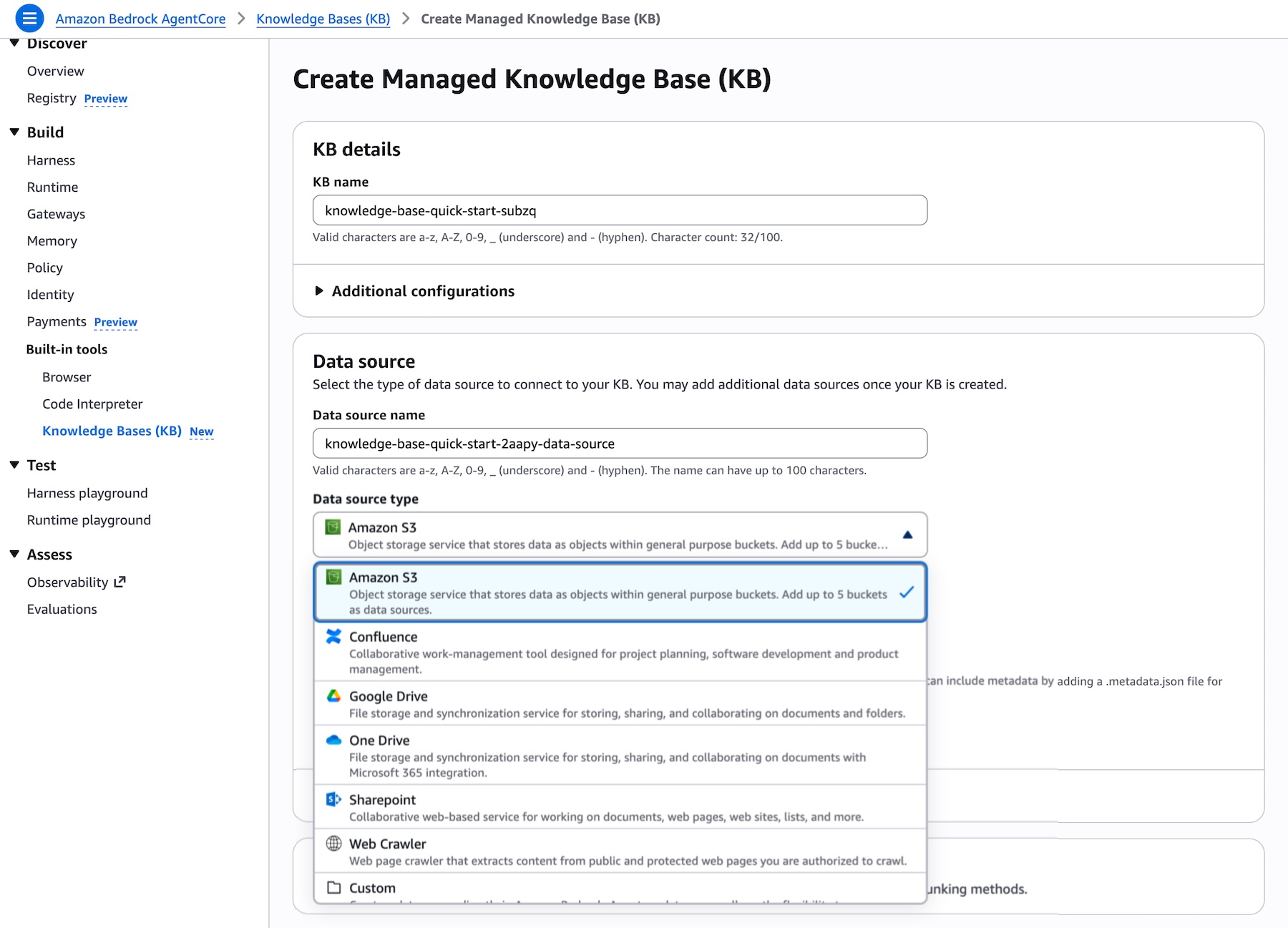
The ability to quickly integrate diverse data sources—from Amazon S3 to Confluence, Google Drive, SharePoint, and custom sources—with automated parsing and advanced retrieval mechanisms, transforms the typical multi-month RAG project into a task achievable in minutes or hours. This newfound agility will enable organizations to experiment more rapidly, iterate on AI applications more frequently, and ultimately bring AI-powered solutions to market faster.
Getting Started: Accessibility and Availability
Amazon Bedrock Managed Knowledge Base is immediately available to customers in key AWS Regions, including US East (N. Virginia), US West (Oregon), Asia Pacific (Sydney, Tokyo), Europe (Dublin, Frankfurt, London), and AWS GovCloud (US-West). AWS continues to expand its global infrastructure, and customers are encouraged to consult the AWS Capabilities by Region page for the latest availability and future roadmap information.
The service operates on a pay-as-you-go model, aligning with AWS’s standard pricing philosophy, which means customers incur no upfront commitments. Pricing is structured around two primary dimensions: the volume of indexed data stored within the knowledge base and the number of retrieval operations performed on demand. Detailed pricing information is accessible on the Amazon Bedrock pricing page. Furthermore, the service is eligible under the AWS Free Tier, providing new AWS customers with an opportunity to explore its capabilities at no initial cost.
Beyond its native integration with AgentCore, the Bedrock Managed Knowledge Base is designed for broad interoperability. It works seamlessly with any open-source framework, including CrewAI, LangGraph, LlamaIndex, and Strands Agents, and is compatible with any foundation model supported by Bedrock. Developers can leverage their preferred AI-assisted development environments, further facilitated by the AgentCore open-source MCP server. For those eager to begin, comprehensive guidance and resources are available through the Bedrock Knowledge Bases Developer Guide.
A Future of Accelerated Innovation
The launch of Amazon Bedrock Managed Knowledge Base marks a pivotal moment in the enterprise adoption of generative AI. By abstracting away the complex engineering challenges associated with RAG pipelines, AWS is empowering a broader range of developers to build secure, accurate, and scalable AI applications grounded in proprietary data. This strategic move not only enhances the Bedrock ecosystem but also promises to accelerate innovation across industries, enabling businesses to unlock the full potential of their data with artificial intelligence.
