
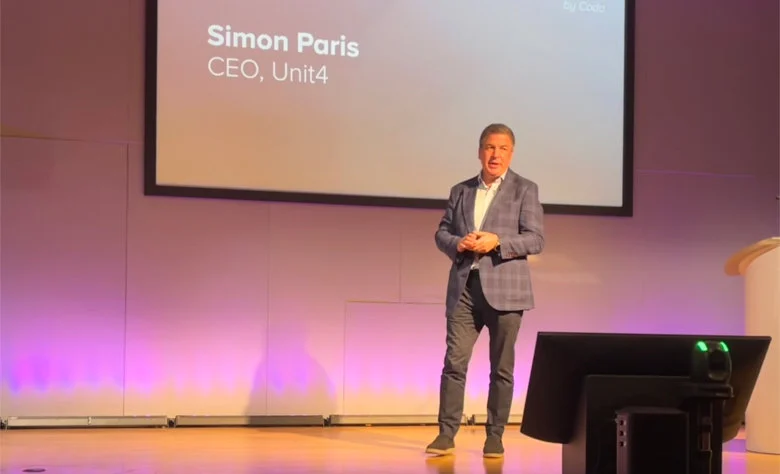

Unit4, a prominent provider of enterprise resource planning (ERP) solutions for service-centric organizations, has officially introduced a landmark "try-before-you-buy" initiative for its artificial intelligence capabilities, offering customers who enroll within the 2024 calendar year free access to its AI suite through August 31, 2027. This aggressive market strategy, announced alongside significant updates to the vendor’s cloud-native ERPx platform, aims to dismantle the barriers to AI adoption for midmarket enterprises while reinforcing Unit4’s position as a "European software champion." By providing nearly three years of subsidized access to advanced agentic AI, the company is betting that long-term experimentation will lead to deeper integration and permanent reliance on its intelligent systems.
The move comes at a critical juncture for the ERP industry, as global giants like SAP, Oracle, and Microsoft race to embed generative AI into their core financial and human capital management systems. However, Unit4’s approach distinguishes itself through a combination of financial incentives, a focus on data sovereignty, and a specialized architectural layer designed to give AI models a deeper understanding of specific business contexts. Under the leadership of CEO Simon Paris and CTO Claus Jepsen, the company is pivoting from being a transactional database of record to a "System of Knowledge" that can reason, automate, and advise.
Strategic Objectives of the Multi-Year AI Trial
The decision to offer a free trial extending into late 2027 is a calculated move to capture market share in industries such as professional services, non-profit organizations, and the public sector. Simon Paris emphasizes that the primary goal is to encourage risk-free experimentation. By removing the immediate financial pressure, Unit4 allows its clients—many of whom operate with tight margins or taxpayer-funded budgets—to explore how "agentic" capabilities can streamline complex workflows without an upfront capital expenditure.
The trial period is not merely a software giveaway; it is accompanied by a comprehensive support framework. Unit4’s professional services, customer success teams, and partner networks are being mobilized to provide "how-to" advice and implementation services. This holistic approach addresses a common pain point in the midmarket: the "skills gap" that often prevents organizations from effectively utilizing advanced technology even when it is available. The fair usage cap ensures that the system remains performant for all users while preventing excessive compute costs from escalating uncontrollably for the vendor.
Technological Architecture and Agentic Capabilities
At the heart of this announcement is the evolution of Unit4’s cloud-native ERPx platform to support agentic AI. Unlike standard chatbots that simply respond to queries, AI agents are designed to execute tasks, reason through multi-step processes, and interact with other software systems autonomously. Unit4 has revealed that approximately 70% of these new AI agents are compatible with both its modern ERPx platform and the older Azure-hosted versions of its software (ERP CR).
The remaining 30% of capabilities, which include more advanced reasoning and deep integration features, are exclusive to the ERPx platform. This tiered availability serves as a subtle but firm nudge for legacy customers to migrate to the cloud-native environment to unlock the full potential of the vendor’s innovation roadmap. Following the conclusion of the free period in 2027, Unit4 plans to implement a value-based pricing model. ERPx customers will see a 20% uplift on their base subscription for continued AI access, while those on the Azure-hosted legacy platform will face a 5% uplift, reflecting the more limited scope of AI features available on older architecture.
The Push for European Data Sovereignty
A cornerstone of Unit4’s strategy is its commitment to data sovereignty, a move designed to appeal specifically to European public sector entities and highly regulated industries. By partnering with European Large Language Model (LLM) providers such as Mistral (France) and Cohere (which has a significant European presence), Unit4 is offering an alternative to the US-centric AI dominance of OpenAI and Google.
Simon Paris has been vocal about his ambition to build a "European software champion" that respects the unique regulatory landscape of the continent. This involves ensuring that data residency, jurisdiction, and infrastructure location remain within the European Union or the UK. This strategy aligns with the EU AI Act, providing customers with the assurance that their sensitive financial and personnel data is not subject to foreign "back doors" or extraterritorial legal claims. For public service organizations in particular, the ability to deploy AI within a sovereign framework is often a prerequisite for adoption, rather than a luxury.
Contextual Intelligence: The "System of Knowledge"
To ensure that AI is effective for midmarket organizations, Unit4 has invested heavily in a "business context layer." CTO Claus Jepsen argues that general-purpose LLMs are insufficient for enterprise needs because they lack a fundamental understanding of accounting principles, procurement cycles, and industry-specific logic. To bridge this gap, Unit4 has conducted what Jepsen describes as "context archaeology."
The engineering team has refactored decades of implicit business logic—the "why" behind ERP processes—into a structured corpus of information. This semantic and ontological mapping allows the LLM to understand the relationship between a general ledger, a sales order, and a procurement request. By embedding this intelligence into the core of the system, Unit4 ensures that its AI agents do not just process data, but understand the meaning behind it. This differentiation is vital; as Jepsen notes, without this context, an ERP vendor risks becoming a mere "database with a chat interface," a position that offers little long-term competitive advantage.
Chronology of Unit4’s AI Evolution
The current announcement is the culmination of several years of strategic repositioning:
- 2020-2021: Launch of ERPx, the cloud-native platform designed for service-centric industries, replacing the monolithic structures of previous generations.
- 2022-2023: Integration of initial AI and machine learning features focused on anomaly detection and basic automation in accounts payable and expense management.
- Early 2024: Internal development of the "business context layer" and the shift toward agentic AI models.
- Late 2024: Launch of the "try-before-you-buy" offer, providing free access until August 2027 and formalizing partnerships with European LLM providers.
- 2025-2027: Expected phase of mass customer experimentation, supported by Unit4’s professional services and partner ecosystem.
Market Implications and Competitive Analysis
Unit4’s move is likely to put pressure on other midmarket ERP vendors, such as Sage, Infor, and IFS, to justify their own AI pricing models. While many vendors are charging premium "add-on" fees for AI capabilities from day one, Unit4’s three-year free window creates a compelling total cost of ownership (TCO) argument.
Industry analysts suggest that this strategy is designed to "lock in" customers during the critical transition period from legacy systems to cloud-native platforms. If a customer spends three years building their workflows around Unit4’s AI agents, the friction of switching to a competitor in 2027 becomes significantly higher. Furthermore, by focusing on "service-centric" industries (where people are the primary cost and asset), Unit4 is targeting sectors where AI-driven productivity gains in areas like project management and resource allocation can have the most immediate impact on the bottom line.
Ensuring Compliance and Trust
A significant challenge in enterprise AI is the "hallucination" problem, where LLMs provide confident but incorrect answers. Unit4 has addressed this by building a control plane that sits between the user and the AI. This plane performs rigorous checks on permissions, authorizations, and transactional integrity.
Claus Jepsen emphasizes that "confidence is not the same as correctness." By maintaining a strict separation between the generative capabilities of the LLM and the transactional engine of the ERP, Unit4 ensures that AI can suggest actions, but the system of record remains the ultimate arbiter of truth. This governance framework is essential for maintaining the trust of Chief Financial Officers (CFOs) who cannot afford errors in regulatory reporting or financial auditing.
Future Outlook: Beyond the Trial
As the trial progresses toward its 2027 conclusion, the success of Unit4’s initiative will be measured by the rate of conversion from trial users to paying AI subscribers. The vendor’s bet is that by 2027, AI will no longer be seen as an experimental feature but as an essential utility for business operations.
The move toward conversational interfaces—allowing users to interact with their ERP through Microsoft Teams or Slack—suggests a future where the traditional "screen-and-menu" ERP experience is replaced by a fluid, natural language dialogue. If Unit4 can successfully bridge the gap between complex back-office data and intuitive user experience, while maintaining its "sovereign" and "service-centric" identity, it may well secure its place as the primary alternative to the global ERP oligopoly. For now, the midmarket has been given a significant window to modernize at Unit4’s expense, a development that could accelerate digital transformation across the European services sector.
