
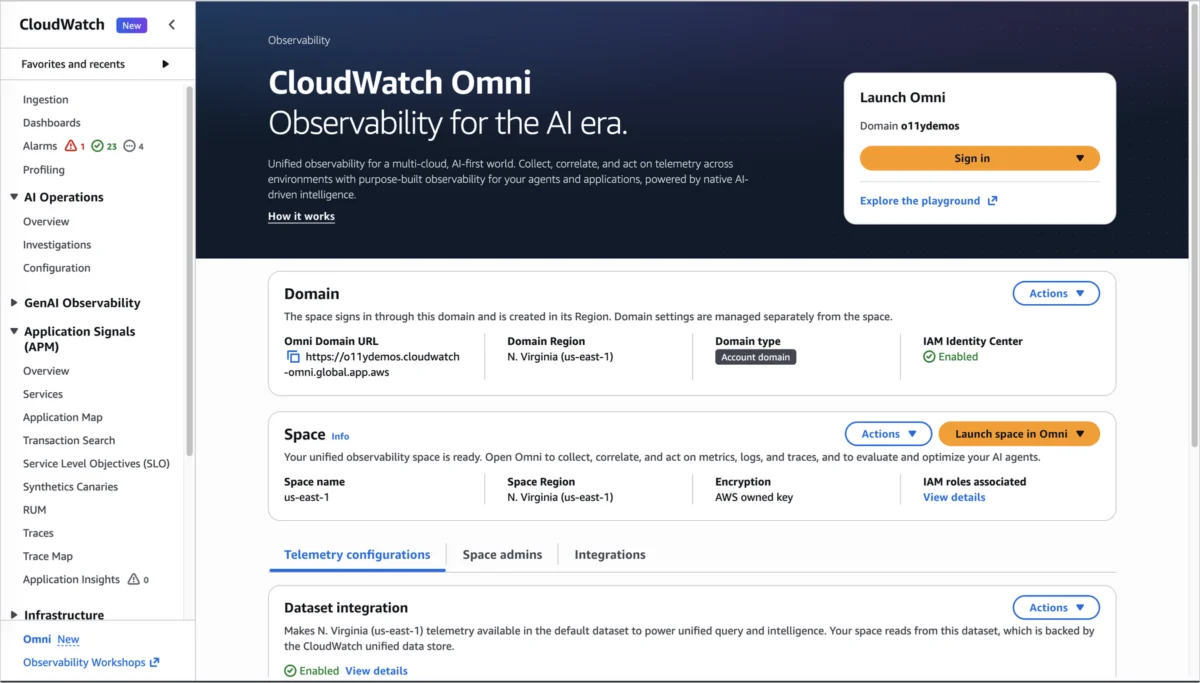

In an era where modern digital infrastructure grows increasingly complex and interdependent, engineering organizations face unprecedented friction when diagnosing and resolving software incidents. Historically, the process of monitoring system health has required operators to manually stitch together disparate signals across isolated dashboards, sift through endless logs, and swivel between multiple specialized tooling interfaces. This fragmentation often results in prolonged recovery times, loss of critical diagnostic context during team handoffs, and substantial engineering hours spent maintaining alerting thresholds rather than building features. Addressing these persistent operational bottlenecks, Amazon Web Services (AWS) has officially launched Amazon CloudWatch Omni, an advanced, AI-powered observability platform designed to unify application performance monitoring, infrastructure metrics, and generative AI agent telemetry into a single, collaborative workspace.
The release of CloudWatch Omni represents a fundamental shift in how engineering, reliability, and product teams interact with system telemetry. Built natively on OpenTelemetry—an industry standard for collecting and exporting telemetry data—Omni ingests existing metrics, logs, traces, and alarms without requiring organizations to reconfigure their current instrumentation pipelines. Furthermore, by decoupling the observability experience from the traditional AWS Management Console and introducing application-centric workspaces called Spaces, AWS is targeting the collaborative silos that historically impede rapid incident remediation.
Main Facts and Architectural Foundations
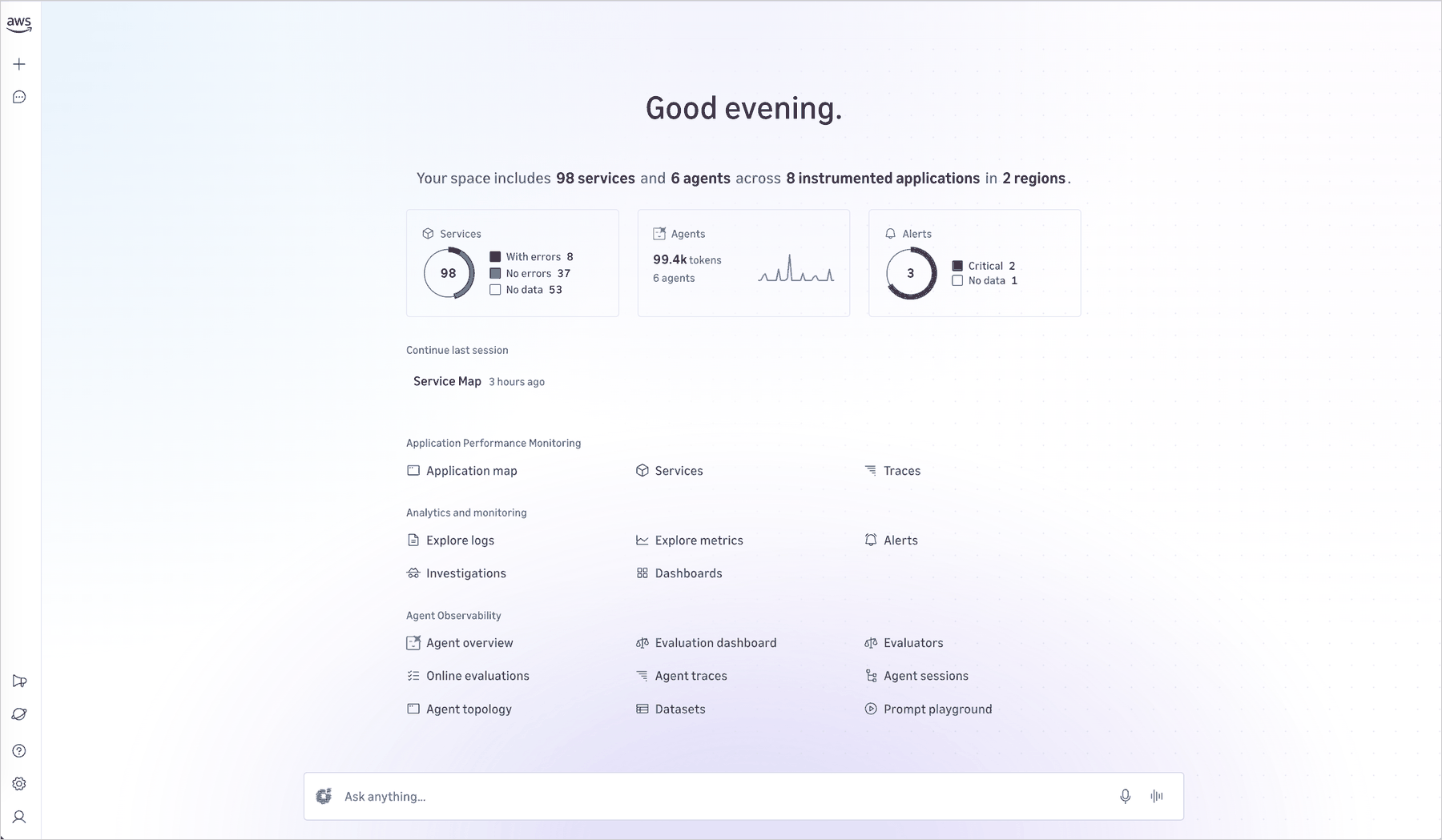
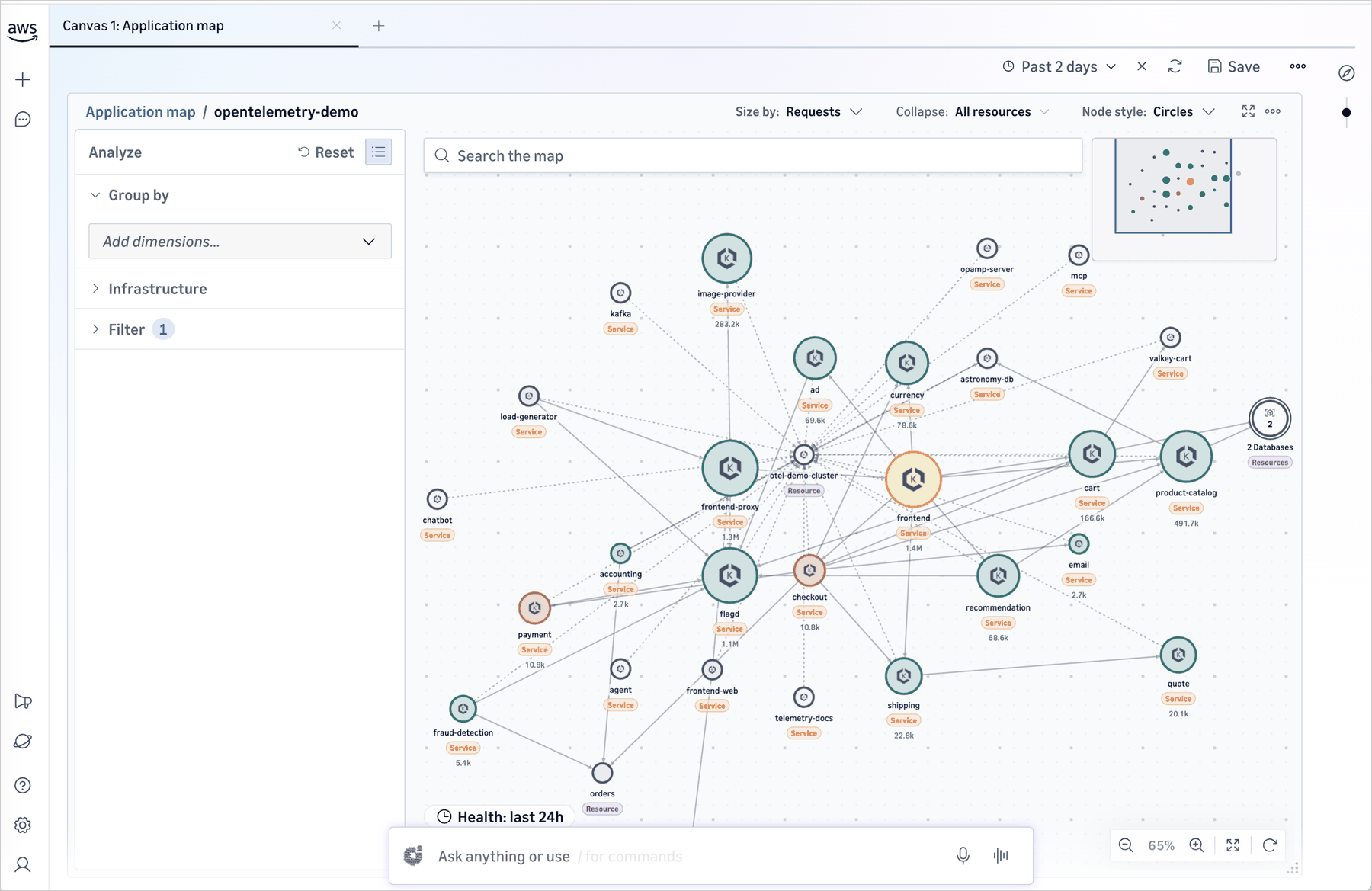
At its core, Amazon CloudWatch Omni bridges the gap between infrastructure monitoring and holistic application health. Rather than forcing engineers to analyze systems through the lens of individual infrastructure components or isolated data streams, Omni automatically discovers services, maps complex internal dependencies, and organizes telemetry around cohesive business applications.
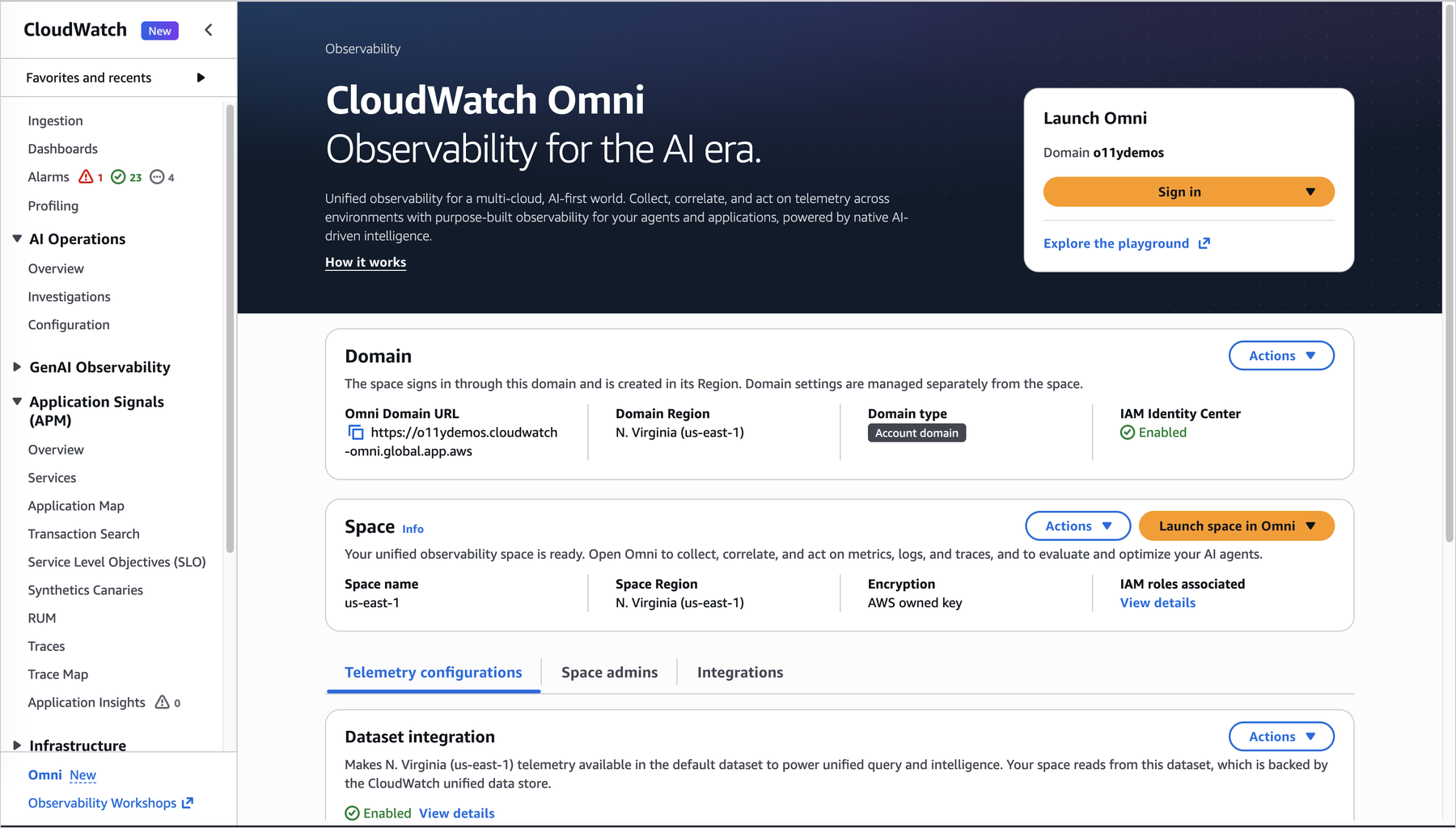
A cornerstone of the platform is its integration with enterprise identity providers. Teams can access CloudWatch Omni through a dedicated organizational URL utilizing enterprise Single Sign-On (SSO) via AWS IAM Identity Center, with seamless compatibility for major identity management providers such as Okta and Microsoft Entra ID. This architecture allows developers, Site Reliability Engineers (SREs), database administrators, and engineering managers to collaborate within a unified workspace without requiring direct access to underlying AWS account consoles.
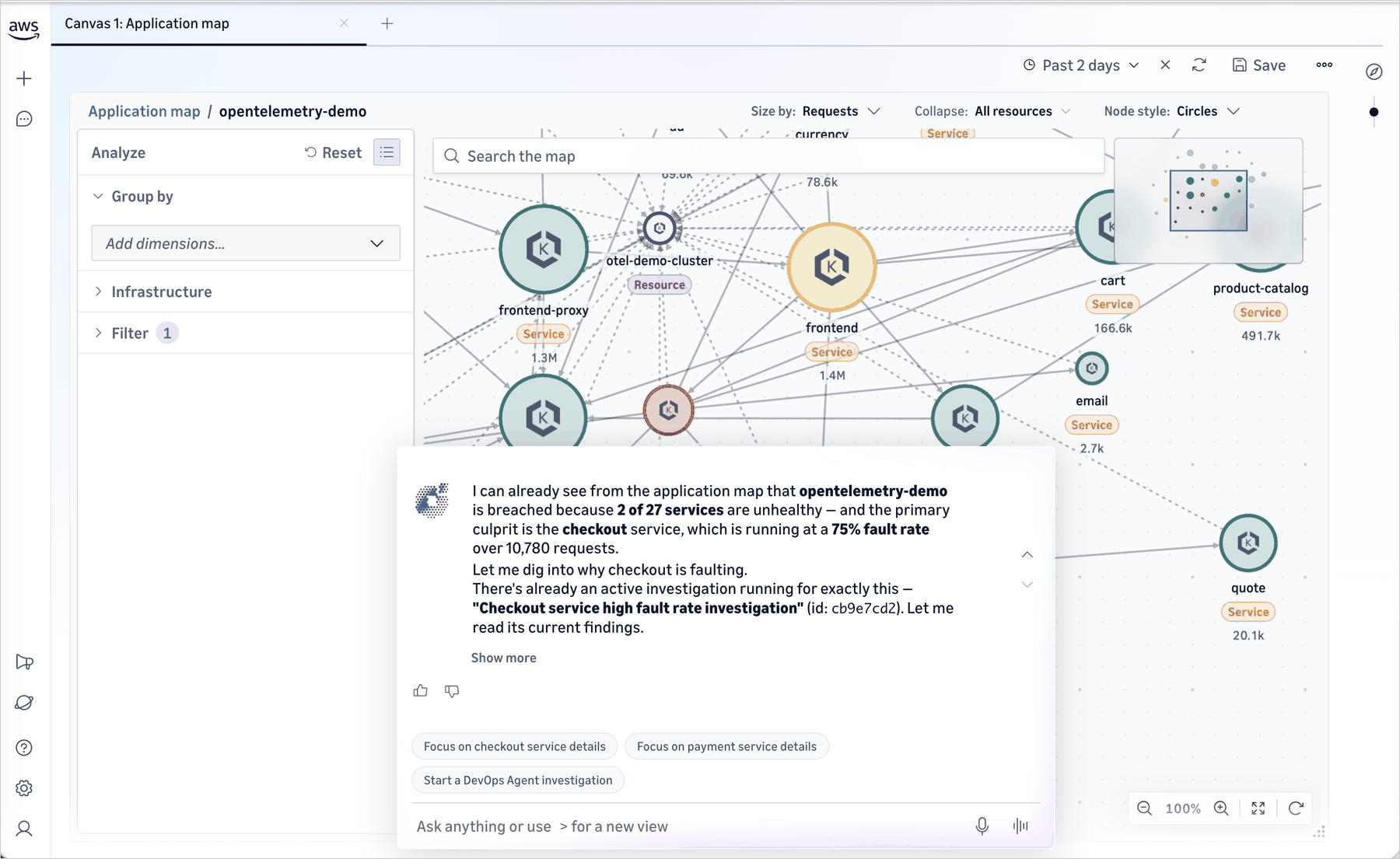
The platform’s intelligence layer is anchored by the Amazon DevOps Agent. Operating alongside human engineers during active investigations, this autonomous agent analyzes incoming telemetry, correlates disparate anomalies—such as a recent software deployment coinciding with a downstream API latency spike—and surfaces root-cause paths through dynamic dependency graphs. Moreover, Omni extends its observability reach beyond traditional microservices, offering native support for generative AI and agentic workloads. This dual capability allows engineering groups to monitor traditional distributed systems and modern AI agents within the exact same operational framework.

Background Context and Evolution of Observability
The introduction of CloudWatch Omni arrives against the backdrop of rapid architectural transformation across enterprise software development. Over the past decade, the industry transition from monolithic applications to microservices, serverless architectures, and containerized deployments drastically multiplied the number of discrete components generating operational data. While tools like Amazon CloudWatch have long provided robust primitives for metrics, logging, and distributed tracing, the sheer volume of data often led to cognitive overload.
Simultaneously, the recent explosion of generative AI and autonomous agentic workloads introduced entirely new classes of observability challenges. Unlike deterministic code execution paths, generative AI applications involve non-deterministic outputs, complex prompt chains, and external model integrations that traditional application performance monitoring (APM) tools were never designed to track. Recognizing these shifting requirements, AWS developed Omni to serve as a comprehensive umbrella platform—unifying standard application telemetry and emerging AI agent evaluation frameworks into a cohesive, streamlined experience.
The integration of OpenTelemetry as the underlying foundational framework highlights a broader industry trend toward open-source telemetry standards. By standardizing on OpenTelemetry Protocol (OTLP) endpoints, AWS has ensured that organizations can feed data into Omni regardless of whether their workloads reside on AWS infrastructure, multi-cloud environments, or on-premises data centers, significantly lowering the barrier to entry for prospective adopters.
Chronology of Development and Release
The path to Amazon CloudWatch Omni’s commercial availability reflects a methodical rollout strategy by AWS aimed at addressing developer pain points related to tool sprawl and incident response fatigue.
Initial industry signals pointed toward a growing demand for unified, natural-language-driven debugging interfaces as organizations struggled with alert fatigue. Throughout the early phases of platform development, AWS engineering teams focused heavily on perfecting automated topology discovery and natural language processing capabilities for telemetry data.
In the immediate lead-up to the commercial launch, AWS previewed the platform’s specialized generative AI observability features through companion technical releases, setting the stage for the broader application observability rollout. By September 2026, the company finalized enterprise identity provider integrations—including support for Okta and Microsoft Entra ID (formally updated in late September 2026)—culminating in the general availability of CloudWatch Omni directly through the CloudWatch console. Existing customers gained immediate, frictionless access to the platform, enabling them to provision dedicated Spaces and activate automated service discovery with a single click.
Supporting Data and Operational Workflow
To understand the practical implications of CloudWatch Omni, it is instructive to examine a typical incident lifecycle under the new framework. In legacy operational environments, an alert triggered by elevated error rates in a checkout service would typically prompt an on-call engineer to manually search through log aggregators, verify recent deployment pipelines, and query database performance metrics across separate screens. If the issue required escalation to a specialist team—such as a payments infrastructure group—crucial context was frequently lost in chat threads, screenshots, or incomplete handoff notes.
Under CloudWatch Omni, the sequence is streamlined through pre-loaded investigation sessions:
- Automated Detection and Context Loading: When an alarm fires on the checkout service, Omni immediately opens a collaborative session displaying the real-time service topology, correlated deployment events, and an initial diagnostic assessment generated by the Amazon DevOps Agent.
- Collaborative Investigation: The on-call SRE reviews trace views to identify failing endpoints and confirms a correlation with downstream payment API latency. Upon escalating the issue, a database or payments engineer joins the exact same session, instantly viewing all accumulated context and the DevOps Agent’s findings regarding a recent configuration change in the payment provider’s API gateway.
- Mitigation and Automated Reporting: Once the root cause is identified and a rollback or patch is executed, Omni automatically captures the entire investigation history. This eliminates the manual overhead traditionally required to draft comprehensive post-incident reports.
Setup and deployment metrics underscore the platform’s emphasis on minimal operational friction. Existing CloudWatch customers can provision their initial Space instantly, as the platform points directly to pre-existing logs, metrics, traces, and alarms without requiring data migration or re-architecture. For organization-wide rollouts, administrators configure domains and map identity providers via IAM Identity Center, allowing teams to begin querying their systems using plain-English natural language queries within minutes.
Official Responses and Industry Implications
While proprietary vendor statements highlight the technical achievements of the launch, industry analysts and enterprise engineering leaders have begun evaluating the broader strategic implications of AI-driven, application-centric observability.
Representatives from AWS emphasize that Omni is fundamentally designed to reduce cognitive load and break down organizational silos. By establishing a shared operational reality where developers, SREs, and managers look at the same application topology and investigation history, enterprises can drastically improve Mean Time to Resolution (MTTR) and reduce the burnout commonly associated with on-call rotations. Furthermore, the platform’s pricing model—integrated into standard Amazon CloudWatch pricing structures—aims to make advanced AI-assisted debugging accessible to organizations of varying scales without prohibitive auxiliary licensing fees.
From an economic and technical perspective, analysts note that platforms like CloudWatch Omni reflect a maturation in enterprise artificial intelligence deployment. Rather than treating AI as a standalone chatbot feature bolted onto legacy software, cloud providers are increasingly embedding autonomous agents directly into core operational workflows where they can act upon structured telemetry data with high contextual grounding. By anchoring the Amazon DevOps Agent strictly to verified telemetry streams, AWS has sought to mitigate the hallucination risks associated with generative AI, ensuring that automated troubleshooting recommendations remain tethered to the physical reality of the underlying infrastructure.
Broader Impact and Future Outlook
The launch of Amazon CloudWatch Omni marks a significant milestone in the evolution of enterprise cloud management. As software systems continue to grow in scale, incorporating intricate webs of microservices alongside non-deterministic generative AI agents, traditional manual monitoring approaches are rapidly becoming obsolete.
By unifying application topology mapping, OpenTelemetry ingestion, role-based enterprise identity management, and autonomous AI-powered investigation into a singular, collaborative workspace, AWS has established a new benchmark for what engineering teams should expect from their observability tooling. As organizations increasingly adopt multi-environment strategies and push deeper into agentic AI deployments, platforms that successfully bridge the gap between human collaboration and machine-speed diagnostics will likely play a foundational role in maintaining digital resilience across the global economy.
