
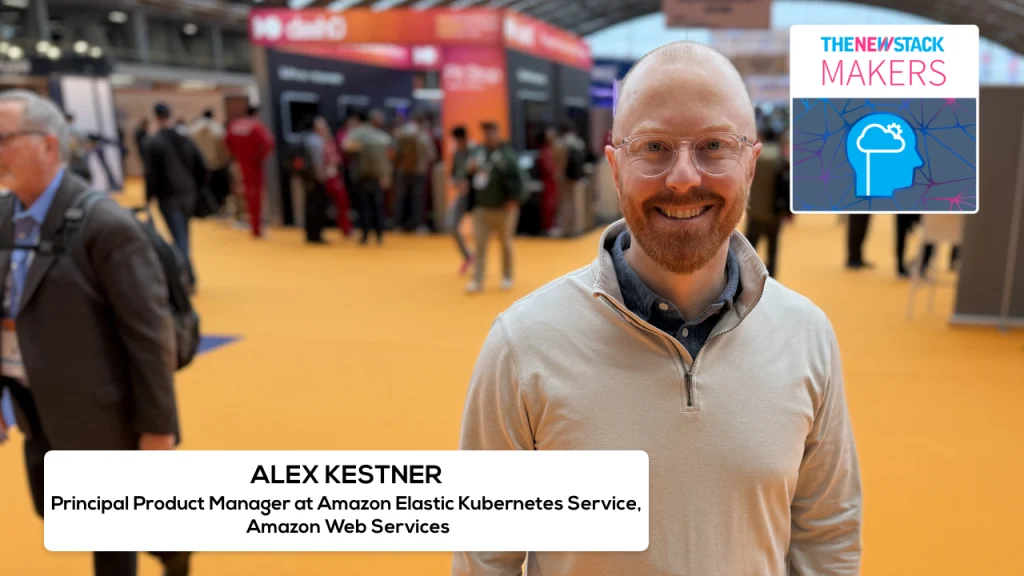

Amazon EKS Auto Mode, a significant advancement in managed Kubernetes services, is poised to redefine how organizations leverage the power of Kubernetes by abstracting away complex operational burdens. This innovation, championed by Alex Kestner, Principal Product Manager at Amazon Elastic Kubernetes Service (EKS), aims to liberate platform teams from the "undifferentiated heavy lifting" often associated with managing container orchestration platforms. The insights were shared during KubeCon + CloudNativeCon Europe 2026 in Amsterdam, a pivotal gathering for the cloud-native community.
The inherent power of Kubernetes, while offering unparalleled flexibility and scalability, also presents a steep learning curve and a significant operational overhead. This complexity, Kestner explains, often manifests in day-to-day tasks that divert valuable engineering resources from core business objectives. These tasks include the meticulous management of node lifecycles, ensuring security and up-to-dateness, optimizing instance types for performance and cost, and maintaining the consistency of cluster-wide operational software. It is precisely this "infrastructure toil" that Amazon EKS Auto Mode seeks to alleviate.
The Genesis of EKS Auto Mode: Addressing Operational Bottlenecks
The development of Amazon EKS Auto Mode stems from a deep understanding of the challenges faced by platform teams in modern cloud-native environments. While Kubernetes provides a robust framework for deploying and managing containerized applications, the operational complexities of maintaining that framework can become a significant impediment to innovation. Kestner highlighted that these operational tasks, while necessary, detract from the ability of developers to focus on building unique and differentiated value for their businesses.
"Most of the difficulties come from the day-to-day tasks that take platform teams’ time away from delivering true value for their business," Kestner articulated. "These are the things that impede developers when they are trying to create unique and differentiated value in applications that ship faster and serve users better." He elaborated on the recurring nature of these tasks, such as ensuring node security, applying timely updates, selecting appropriate instance types for cost-efficiency and performance, and maintaining the integrity of cluster-wide software components.
This operational burden, often referred to as "infrastructure toil," includes a range of activities from the initial provisioning of nodes to their eventual decommissioning. The complexity arises not only from the sheer volume of these tasks but also from the need for specialized expertise to manage them effectively. This is where AWS, through EKS Auto Mode, steps in to shoulder a substantial portion of this responsibility.
KubeCon + CloudNativeCon Europe 2026: A Platform for Innovation
KubeCon + CloudNativeCon Europe 2026, held in the vibrant city of Amsterdam, served as an ideal backdrop for KubeCon + CloudNativeCon Europe 2026, a premier event for the cloud-native ecosystem. This annual conference brings together developers, operators, and industry leaders to share advancements, best practices, and future directions in cloud-native technologies. The gathering in Amsterdam provided a global stage for AWS to present its latest innovations, engaging directly with the community that drives the adoption and evolution of these technologies.
Kestner’s participation in a "The New Stack Makers" discussion during the event underscored the significance of EKS Auto Mode within the broader AWS hyperscaler stack and its alignment with the principles of the Cloud Native Computing Foundation (CNCF). The CNCF, as the vendor-neutral home for many cloud-native projects, plays a crucial role in fostering open standards and collaborative development, a philosophy that underpins initiatives like EKS Auto Mode.
EKS Auto Mode: Automating the Undifferentiated Heavy Lifting
The core promise of Amazon EKS Auto Mode lies in its ability to automate the "undifferentiated heavy lifting" associated with Kubernetes operations. First unveiled at AWS re:Invent 2024, this feature is designed to streamline the entire node lifecycle, from its creation and configuration to its scaling and eventual retirement. By addressing commonalities in node execution and behavior, Auto Mode significantly reduces the manual intervention required from platform teams.
"Fundamentally, Auto Mode is meant to take on a lot of the undifferentiated, heavy lifting that we’re seeing platform teams do just to get the benefits of this incredible ecosystem that we see here with Kubernetes and the CNCF as a whole," Kestner stated. This automation extends to the management of the operational software that enables a Kubernetes cluster to interact seamlessly with other infrastructure primitives and, crucially for AWS users, with other AWS services.
AWS takes on the responsibility of running and maintaining these critical operational components outside the customer’s cluster. This architectural approach liberates cloud-native developers from the burden of managing these underlying systems, allowing them to concentrate on application development and delivery.
The Synergy with Amazon EC2 Managed Instances
A key enabler of EKS Auto Mode’s capabilities is its integration with Amazon EC2 Managed Instances. This collaboration with the AWS EC2 team introduces a simplified paradigm for running compute workloads on EC2, delegating significant operational control to AWS. When EKS Auto Mode provisions resources for a Kubernetes cluster, it leverages EC2 Managed Instances, ensuring that the underlying compute infrastructure is managed with a high degree of automation and reliability.
Amazon EC2 Managed Instances, as described by AWS, offer a streamlined approach to instance management, where the cloud service provider takes on a considerable portion of the operational overhead. This partnership ensures that the compute resources underpinning EKS clusters are not only performant and cost-effective but also benefit from AWS’s robust security and operational best practices.
Towards Predictable Workloads and Optimized Resource Utilization
The introduction of EKS Auto Mode raises the question of whether it can mitigate the unpredictability often associated with Kubernetes workloads, particularly concerning compliance, security, and cloud wastage. While Kestner acknowledges that the inherent diversity of cloud-native deployments means that complete unpredictability cannot be eliminated, EKS Auto Mode offers significant advancements in this area.
"While we can’t necessarily influence the diversity of customer use cases, Amazon EKS Auto Mode is there to provide a very application-oriented perspective to scaling and cost optimization… and that’s always going to help with capacity planning," Kestner explained. The feature’s design focuses on providing an application-centric view of resource needs, which directly aids in more accurate capacity planning and cost management.
A cornerstone of EKS Auto Mode’s functionality is its reliance on open-source standards and projects, most notably the Karpenter project. Karpenter is an open-source node provisioning project designed to efficiently launch nodes in response to incoming cluster requirements. It works by observing resource requests and launching appropriate nodes without manual intervention. This allows customers to define the specific infrastructure their workloads require, essentially specifying their compute needs behind the scenes. EKS Auto Mode then leverages this information to identify and provision the most optimal and cost-effective infrastructure to meet those demands.
This integration means that instead of over-provisioning to accommodate peak loads, or struggling with manual scaling adjustments, customers can rely on EKS Auto Mode and Karpenter to dynamically right-size their compute resources. This dynamic adaptation can lead to significant cost savings and improved resource utilization, as compute capacity is scaled precisely to the needs of the running applications.
Implications for the Cloud-Native Landscape
The introduction of Amazon EKS Auto Mode represents a significant step forward in making Kubernetes more accessible and manageable for a wider range of organizations. By abstracting away complex operational tasks, AWS empowers platform teams to focus on higher-value activities, accelerating innovation and improving the overall efficiency of cloud-native development.
The implications of this initiative are far-reaching. For businesses that have found Kubernetes too complex to adopt or manage effectively, EKS Auto Mode offers a compelling solution. It lowers the barrier to entry, allowing more organizations to harness the benefits of container orchestration without incurring prohibitive operational overhead.
Furthermore, in an era increasingly defined by the demands of artificial intelligence (AI) and machine learning (ML), the ability to efficiently manage and scale compute resources is paramount. The focus on application-oriented scaling and cost optimization within EKS Auto Mode is particularly relevant. As organizations deploy AI workloads that can be highly dynamic and resource-intensive, the need for intelligent, automated infrastructure management becomes critical.
While EKS Auto Mode may not entirely eliminate capacity planning challenges, it undeniably provides a robust set of tools and a strategic approach to address them. The ongoing evolution of foundational operational support technologies for platform teams remains a critical area of development, especially as the industry navigates the complexities of AI-driven infrastructure and the ever-expanding cloud-native landscape. The commitment to open-source standards, as exemplified by the integration with Karpenter, further reinforces AWS’s dedication to fostering a collaborative and sustainable cloud-native ecosystem.
As KubeCon + CloudNativeCon Europe 2026 demonstrated, the future of cloud-native computing is being shaped by innovations that prioritize developer productivity, operational efficiency, and cost optimization. Amazon EKS Auto Mode stands as a testament to this ongoing evolution, promising to unlock new levels of agility and innovation for organizations building and deploying applications in the cloud.
