

In a significant advancement for cloud-native operations, Amazon Web Services (AWS) has announced the immediate availability of Kubernetes version rollbacks for Amazon Elastic Kubernetes Service (Amazon EKS). This groundbreaking feature introduces a crucial safety net for cluster administrators, allowing them to reverse a Kubernetes version upgrade within seven days if unforeseen issues arise, effectively returning their clusters to a previously validated, stable state. The introduction of this capability marks a pivotal moment in addressing one of the most persistent and resource-intensive challenges faced by organizations leveraging Kubernetes: the inherent irreversibility of control plane upgrades.
For years, upgrading a Kubernetes control plane has been akin to traversing a one-way door. The open-source Kubernetes project, while continuously evolving, has historically lacked native support for control plane rollbacks. Once an upgrade was initiated and completed, there was no straightforward mechanism to revert to a previous version. This architectural constraint has forced enterprises, particularly those operating at scale or within heavily regulated environments, to devise elaborate and often costly compensating mechanisms. These strategies typically include extended "bake periods" for post-upgrade validation, the meticulous orchestration of "stagger groups" for phased rollouts, multi-layered automated sign-offs, and protracted upgrade cycles that could span several months.
The dilemma is exacerbated by Kubernetes’ rapid release cadence, with three minor versions typically released per year. For organizations managing hundreds or even thousands of clusters, keeping pace with these releases while mitigating the substantial risk of an irreversible upgrade failure has been a monumental undertaking. The fear of potential downtime, application instability, or outright breakage often leads teams to delay upgrades entirely. This reluctance to upgrade has severe downstream consequences, including clusters becoming stuck on older, unsupported versions, missing critical security patches, and eventually running up against extended support timelines, which can lead to compliance violations and increased operational risk. According to a 2023 CNCF survey, security remains a top concern for Kubernetes users, and delayed upgrades directly contribute to this vulnerability. Furthermore, the operational overhead of managing these complex upgrade processes contributes significantly to the total cost of ownership for Kubernetes deployments.
The Kubernetes community has recognized this challenge, with ongoing efforts like Kubernetes Enhancement Proposal (KEP) 4330 aiming to introduce "emulated versions" to ease rollback processes. While these community-driven initiatives represent real progress, they often involve keeping a cluster in a transitional, potentially less-than-fully-validated state. Amazon EKS’s new version rollback feature distinguishes itself by returning a cluster to a fully validated previous version that was actively running in production, not merely an emulation. This distinction is critical for enterprises where stability and reliability are paramount. For instance, if a critical application encounters a compatibility issue after an upgrade from Kubernetes 1.34 to 1.35, administrators can now roll back to 1.34 within the designated seven-day window, eliminating the need for frantic troubleshooting under pressure or the drastic measure of rebuilding the entire cluster from scratch. AWS aptly describes this capability as an "undo button" for Kubernetes version upgrades, fundamentally altering the risk profile associated with maintaining current cluster versions.
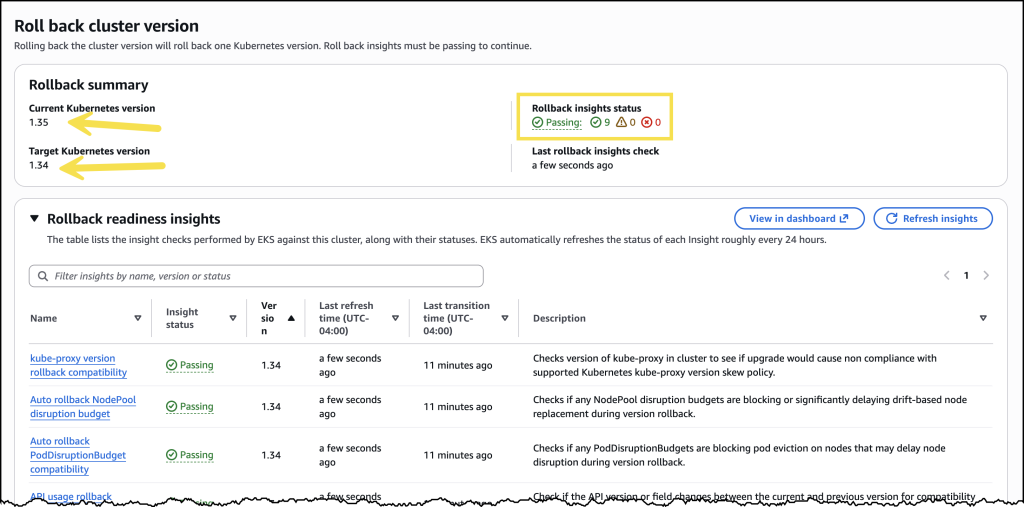
The rollback mechanism is designed to align with existing EKS upgrade methodologies, supporting the reversal of one minor version at a time. To further bolster operational safety, EKS incorporates an automated rollback readiness assessment via its cluster insights feature. Before initiating a rollback, cluster insights proactively evaluates the cluster’s state, flagging potential issues such as node version compatibility or critical add-on dependencies. This pre-check functionality provides administrators with actionable intelligence, allowing them to address potential roadblocks before proceeding. For experienced users who have already performed their assessments and require expedited action, a --force flag is available to bypass these checks. This comprehensive approach applies universally to all EKS clusters, whether customers opt to manage their own worker nodes or rely on AWS-managed node groups.
Enhanced Rollback Capabilities for EKS Auto Mode
The benefits of version rollbacks extend even further for customers leveraging EKS Auto Mode. Introduced to simplify the deployment of production-ready Kubernetes clusters, EKS Auto Mode automates the management of compute, networking, and storage, allowing developers to concentrate solely on their applications rather than the underlying infrastructure. However, the fully managed nature of Auto Mode introduces additional considerations for version rollbacks, as both the control plane and the associated managed nodes must be rolled back synchronously.

Node rollbacks, particularly in production environments, must respect crucial workload stability parameters, primarily Pod Disruption Budgets (PDBs). PDBs are Kubernetes objects that limit the number of pods of a replicated application that can be unavailable simultaneously, ensuring service continuity during voluntary disruptions like node draining or upgrades. Consequently, the node rollback process in EKS Auto Mode can take a variable amount of time, directly influenced by the configured PDBs. To provide administrators with granular control over this process, AWS has introduced a dedicated cancel API. This API allows users to halt a node rollback at any point, offering the flexibility to reassess the situation, adjust disruption budgets to accelerate the process, or even pivot to an alternative recovery strategy if the rollback is taking longer than anticipated or if new information comes to light. Crucially, EKS prioritizes workload stability by never bypassing disruption budgets by default during a rollback. While users retain the ability to modify or remove PDBs themselves to expedite the process, this default behavior underscores AWS’s commitment to minimizing service interruptions for critical applications.
A Practical Demonstration of the Rollback Process
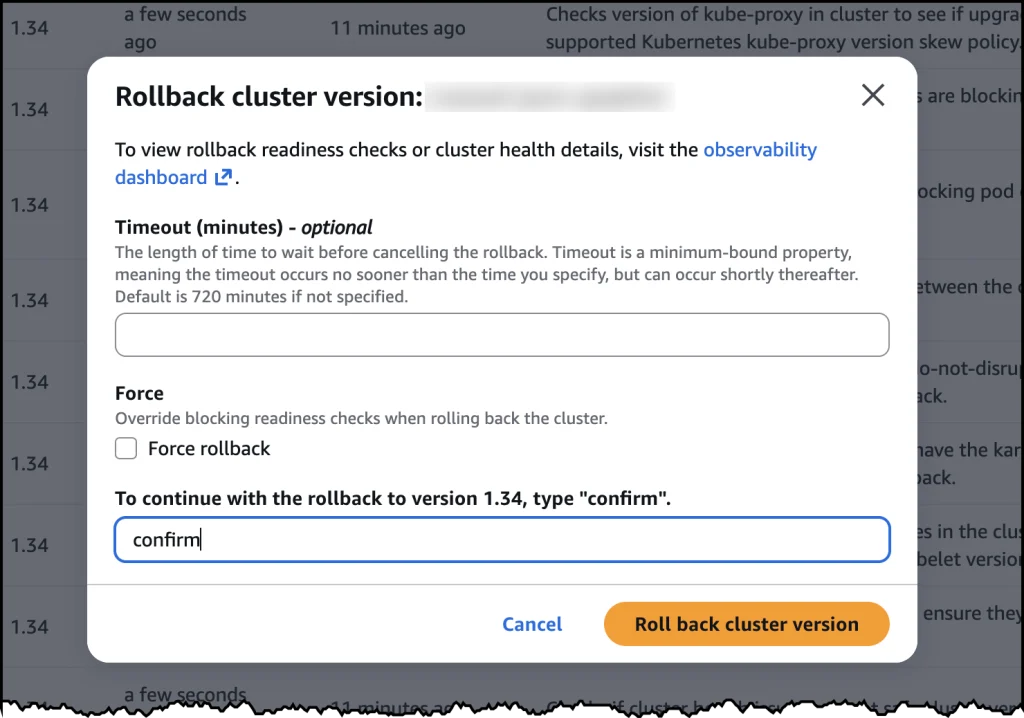
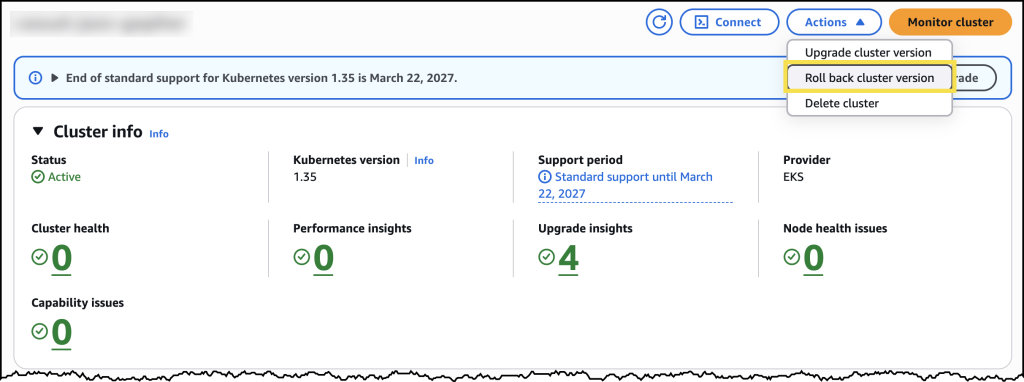
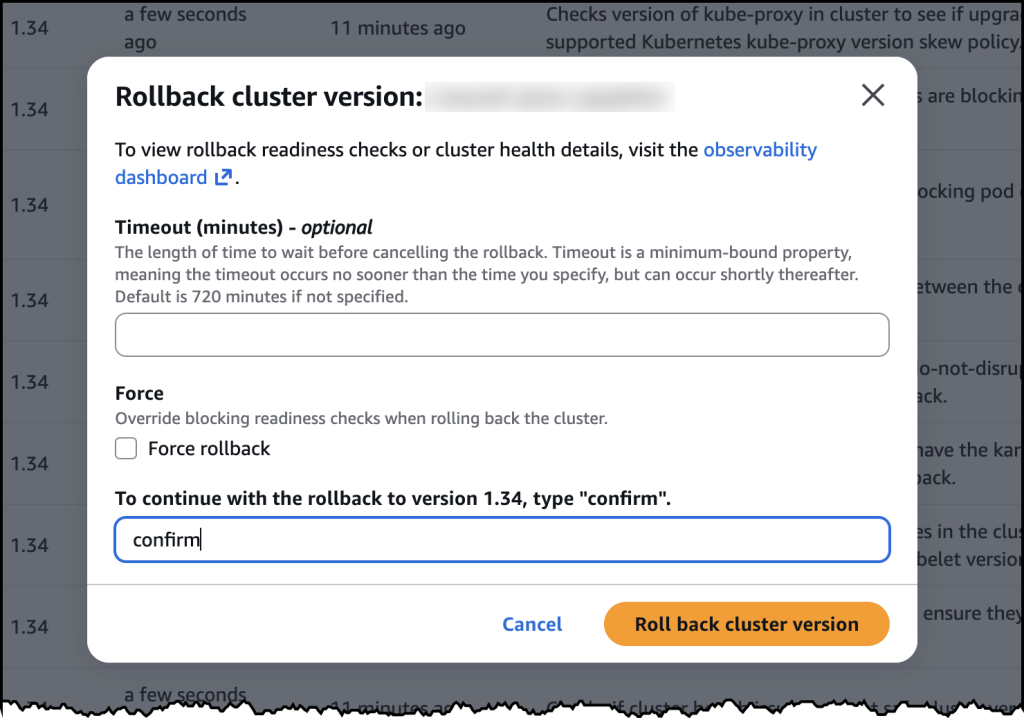
The user experience for initiating a version rollback is designed for intuitive operation within the Amazon EKS console. To demonstrate, an administrator navigating to the EKS console would select a cluster that had recently undergone an upgrade. On the cluster’s configuration page, a clear option to "initiate a version rollback" would be prominently displayed, alongside information detailing the current rollback window—the seven-day period during which the rollback is permissible.
Prior to commencing the rollback, the administrator would be prompted to review the rollback insights. This critical step presents a consolidated view of the cluster’s readiness, indicating the status of nodes, add-ons, and any other flagged items that require attention before proceeding. This proactive assessment helps prevent further issues and ensures a smoother, more predictable rollback. After confirming the intent to proceed, the rollback process begins. Throughout the entire operation, the cluster remains functional, ensuring minimal impact on running applications. The control plane rollback typically completes within approximately 20 minutes, a timeframe comparable to a standard upgrade. For EKS Auto Mode clusters, the associated nodes are gracefully rolled back, meticulously adhering to the configured pod disruption budgets to maintain application availability. Upon successful completion, the cluster is restored to its previous, stable Kubernetes version, operating as expected.
Availability, Cost, and Broader Implications
Kubernetes version rollbacks for Amazon EKS are available immediately at no additional cost in all commercial AWS Regions where Amazon EKS is offered. Customers will only incur their standard EKS service and compute costs, with no extra charges for utilizing this new rollback capability. This feature supports clusters running Kubernetes versions covered by both EKS standard support and extended support, providing comprehensive coverage across the lifecycle of EKS deployments. While control plane rollbacks are universally available for all EKS clusters, node rollbacks are specifically available for clusters operating in EKS Auto Mode, reflecting the distinct management paradigms.
The introduction of EKS version rollbacks carries profound implications across several critical dimensions for enterprises.
Security and Compliance: The ability to confidently upgrade and, if necessary, roll back, directly addresses one of the most significant security vulnerabilities in cloud-native environments: outdated software. By mitigating the fear of irreversible failure, organizations are empowered to adopt newer Kubernetes versions more frequently, ensuring they benefit from the latest security patches and bug fixes. This proactive posture is vital for maintaining a robust security perimeter and adhering to stringent regulatory compliance mandates, which often require running supported software versions and demonstrating rapid remediation capabilities. Faster upgrades mean a smaller window of vulnerability and reduced exposure to known exploits, enhancing overall security posture.
Operational Efficiency and Cost Savings: The traditional "compensating mechanisms" for Kubernetes upgrades – extensive testing, phased rollouts, manual checks – are incredibly resource-intensive, consuming significant engineering hours and delaying time-to-market for new features. EKS version rollbacks drastically reduce the need for such elaborate strategies, freeing up valuable engineering talent to focus on innovation rather than infrastructure maintenance. The feature minimizes the financial and reputational costs associated with failed upgrades, which can include prolonged downtime, data loss, and emergency incident response. By simplifying a complex process, AWS enables organizations to optimize their operational overhead, leading to substantial long-term cost savings.
Developer Experience and Innovation: Developers thrive in environments where infrastructure is reliable and responsive. The fear of breaking a production cluster can stifle experimentation and the adoption of new Kubernetes features that could enhance application performance or introduce new capabilities. With a reliable rollback option, developers and platform engineers can approach upgrades with greater confidence, accelerating the adoption of new Kubernetes versions and features. This fosters a more agile development environment, where innovation is encouraged, and the infrastructure keeps pace with evolving application requirements.
Competitive Landscape: This feature further solidifies Amazon EKS’s position as a leading managed Kubernetes service provider. By directly addressing a core pain point that has long plagued Kubernetes adopters, AWS enhances its value proposition against competitors like Google Kubernetes Engine (GKE) and Azure Kubernetes Service (AKS), as well as against organizations attempting to self-manage Kubernetes. This strategic move is likely to accelerate the migration of more sensitive and regulated workloads to EKS, as the added safety layer significantly de-risks a critical operational process.
Industry Analyst Perspectives (Inferred): Industry analysts are likely to laud this development as a significant step forward in making Kubernetes more enterprise-ready. "AWS continues to demonstrate its commitment to addressing real-world operational challenges for its cloud-native customers," one analyst might state. "This rollback feature is not just a convenience; it’s a foundational capability that will instill greater confidence in organizations hesitant to fully commit to Kubernetes due to upgrade complexities. It lowers the barrier to entry for highly regulated industries and strengthens EKS’s appeal as a robust, resilient platform."
The Kubernetes version rollback feature for Amazon EKS represents more than just a new tool; it’s a paradigm shift in how organizations can approach cluster management. By transforming the "one-way door" of Kubernetes upgrades into a process with a built-in "undo button," AWS empowers businesses to stay current, secure, and agile, unlocking the full potential of their cloud-native investments. This capability underscores AWS’s continuous innovation in managed services, ensuring that EKS remains a resilient, efficient, and user-friendly platform for orchestrating containerized applications at scale. To get started and explore this transformative feature, organizations can visit the Amazon EKS documentation or directly access the Amazon EKS console.
