
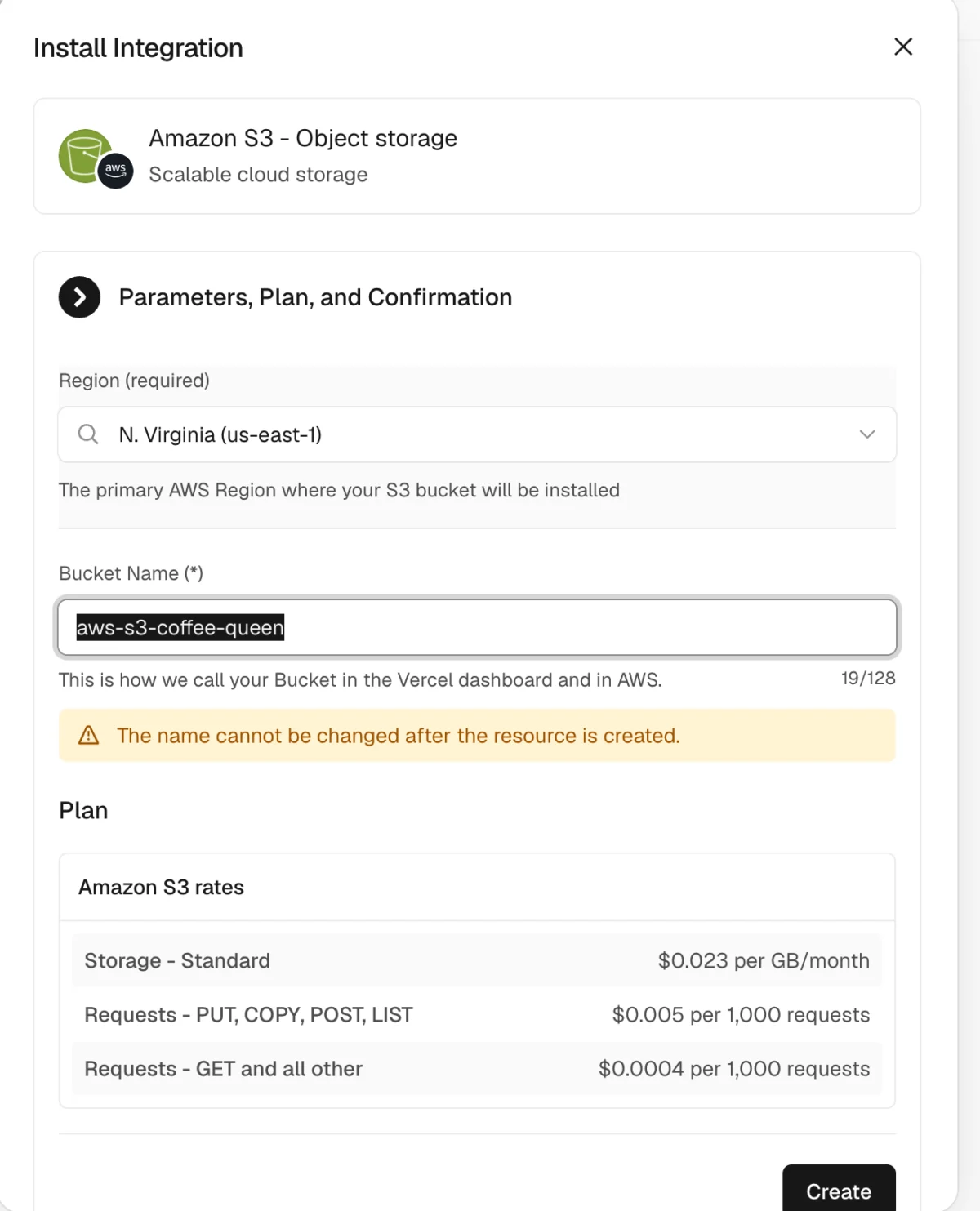

The modern architecture of web and artificial intelligence applications has taken another significant step toward operational unification as Amazon Web Services and Vercel announced the native integration of Amazon Simple Storage Service into the Vercel Marketplace and v0. This deployment pipeline advancement allows developers to provision, manage, and scale Amazon S3 storage resources—including specialized capabilities such as Amazon S3 Tables and Amazon S3 Vectors—directly within their primary development environments. By eliminating the historical friction of cross-platform credential management and manual infrastructure configuration, this collaboration bridges the gap between scalable enterprise cloud storage and agile, serverless frontend deployment.
Main Facts of the Integration
The newly introduced integration addresses three primary application workloads: everyday object storage, high-volume analytics, and semantic artificial intelligence searching. Millions of developers who currently rely on Vercel to build, deploy, and scale web applications can now bypass the traditional requirement of navigating the AWS Management Console to establish policies, security roles, and connection strings.
Instead, resource provisioning and connection configurations are handled automatically through the Vercel dashboard or via natural language commands in v0 by Vercel. This update complements existing integrations for enterprise-grade databases such as Amazon Aurora, Amazon DynamoDB, and Amazon OpenSearch Serverless. Consequently, engineering teams can now assemble an entire, comprehensive application stack entirely within the Vercel ecosystem. From relational database layers through to object storage, vector indices, and open table formats, all services operate under a single AWS account architecture and generate a unified monthly bill.
Background Context and Evolution of Cloud-Native Workflows
To understand the weight of this integration, one must examine the historical workflow friction that has long existed between frontend deployment environments and backend cloud utility providers. Historically, developers utilizing serverless deployment frameworks like Vercel had to maintain separate workflows for their application logic and their underlying persistence layers. Setting up an S3 bucket meant logging into the AWS Management Console, configuring Identity and Access Management (IAM) roles, generating static access keys, and manually injecting environment variables into client projects. This manual handoff often introduced security vulnerabilities, particularly when static keys were mismanaged or hardcoded into source repositories.
Over recent years, cloud providers and developer platform operators have increasingly prioritized operational simplification. The convergence of serverless compute and managed cloud storage has accelerated as organizations demand faster time-to-market metrics for generative AI and data-intensive applications. By integrating Amazon S3 directly into Vercel, AWS and Vercel are addressing a core architectural bottleneck. Rather than treating storage as an external, bolted-on utility, the platform now treats object storage, analytics tables, and vector embeddings as native primitives of the deployment lifecycle.
Chronology and Deployment Mechanics
The rollout of the native Amazon S3 integration introduces a streamlined operational chronology for developers seeking to incorporate scalable storage into their Next.js or generic web applications.
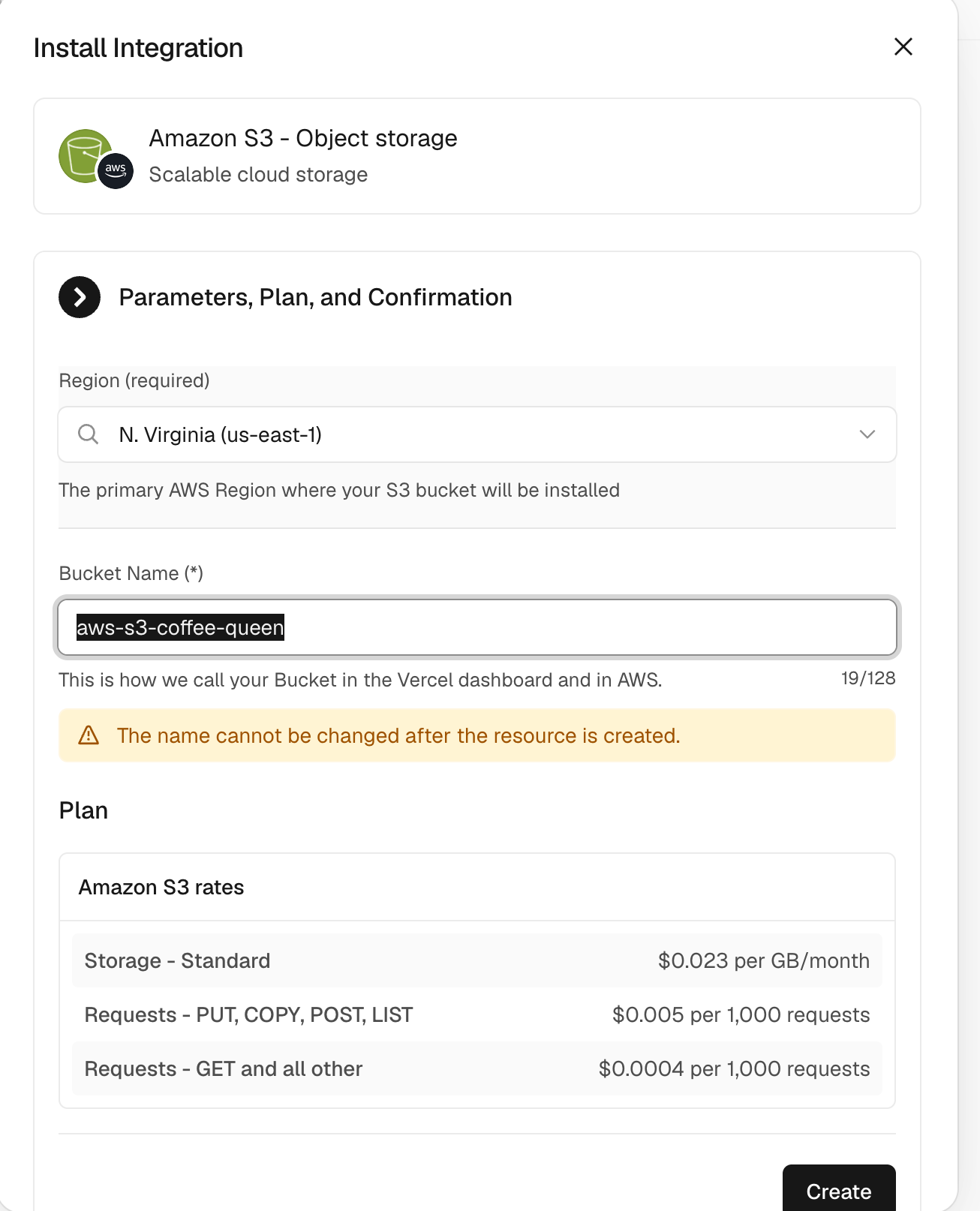
From the Vercel dashboard, engineering teams navigate to the Storage tab, select the Create option, designate AWS as the provider, and choose their desired bucket type alongside a target AWS Region. The platform handles the provisioning process in a matter of seconds. Once created, developers link the resource to their local project using the Vercel Command Line Interface by executing standard linking and environment variable synchronization commands.
Security architecture has been fundamentally modernized in this release through the implementation of OpenID Connect. Rather than relying on long-lived static keys, the integration injects core environmental markers such as the AWS Region, role ARNs, and resource identifiers. At runtime, the specialized awsCredentialsProvider function from Vercel’s runtime library exchanges a short-lived OIDC token with the AWS Security Token Service. This protocol issues temporary, highly scoped security credentials dynamically, ensuring that no static keys reside permanently within application codebases or configuration files.

Application Workloads: General Object Storage, Analytics, and AI Vectors
The integration supports three distinct functional tiers of Amazon S3, catering to diverse architectural requirements.
For everyday object storage, standard S3 general-purpose buckets integrate seamlessly with serverless runtime environments. Developers can execute standard upload, retrieval, and listing operations using official AWS Software Development Kits. In a typical Next.js application route, handling file uploads from a frontend interface requires minimal boilerplate, leveraging the dynamically injected OIDC credentials to authenticate secure multipart or single-part object uploads directly to the designated bucket.
For analytics workloads, Amazon S3 Tables provide purpose-built object storage optimized for analytical query engines, featuring fully managed Apache Iceberg tables with automated compaction and maintenance routines. Developers can incorporate lightweight analytical queries directly inside Vercel serverless functions by pairing S3 Tables with embedded engines such as DuckDB. By attaching the table bucket via its Amazon Resource Name, developers can execute complex aggregations, grouping operations, and analytical filtering over massive datasets without deploying an external, dedicated data warehouse cluster.
For artificial intelligence and semantic search applications, Amazon S3 Vectors deliver specialized storage configurations designed specifically to support AI agents, retrieval-augmented generation pipelines, and vector-based semantic searches. Because S3 Vectors support native storage and querying of vector embeddings without requiring a separate, standalone vector database, teams can store high-dimensional embeddings alongside their unstructured source documents. Developers generate embeddings using their preferred machine learning models and query the S3 Vector index directly through updated SDK clients to retrieve top-matching context for generative AI responses.
Natural Language Provisioning via v0 by Vercel
A notable dimension of the new integration is its deep compatibility with v0 by Vercel, the company’s generative user interface and application development tool. Developers can now utilize natural language prompts to scaffold both the user interface and the underlying cloud infrastructure simultaneously.
For instance, requesting a photo gallery application automatically provisions a general-purpose S3 bucket for image uploads. Asking for an enterprise support chatbot that answers queries based on corporate documentation provisions an Amazon S3 Vectors index. Similarly, prompting for a real-time analytics dashboard configures Amazon S3 Tables. In each scenario, v0 automatically establishes the connection parameters, injects the necessary environment variables, and generates functional frontend and backend code within the live preview panel.
Unified AWS Billing and Account Management Architecture
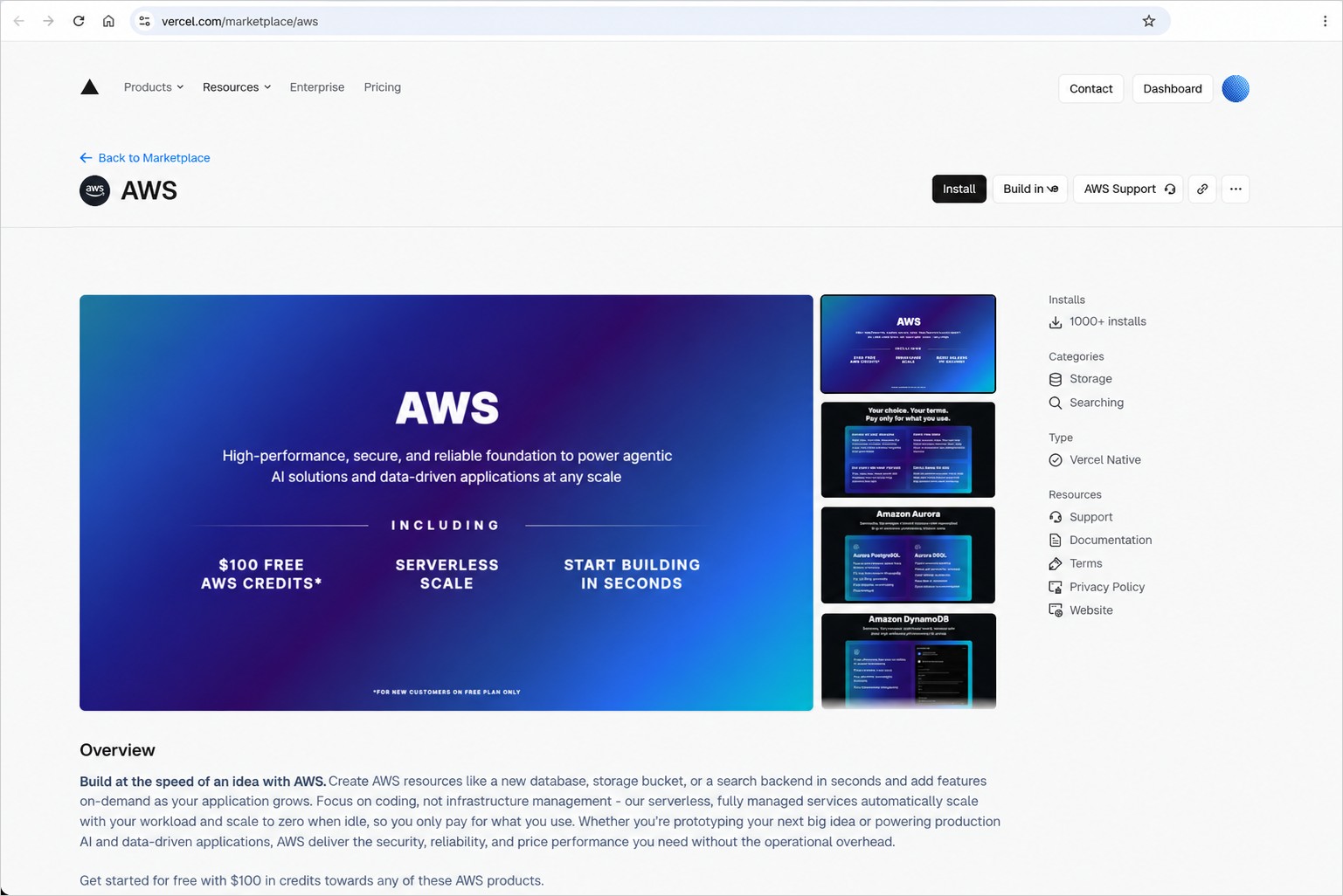
Operational flexibility remains a cornerstone of the Vercel and AWS partnership. Development teams have the option to establish a brand-new AWS account directly through the Vercel marketplace interface or link an existing, mature AWS infrastructure account.
For teams creating new accounts via the platform, Vercel facilitates an onboarding incentive offering monetary service credits valid for the initial months of operation. For organizations linking pre-existing AWS accounts, the platform respects existing enterprise agreements, volume discounts, and centralized financial reporting structures. Crucially, all S3 resources provisioned through this workflow reside entirely within the user’s designated AWS account. This ensures that enterprises maintain absolute ownership of their data governance policies, compliance postures, and native AWS security tooling while benefiting from Vercel’s streamlined deployment orchestration.
Fact-Based Analysis of Broader Industry Implications
Industry analysts observing the cloud computing and frontend deployment sectors note that native integrations of this caliber represent a broader industry shift toward platform consolidation and reduced cognitive load for software engineers. As web applications increasingly incorporate complex machine learning inference, real-time analytics, and massive media handling, the traditional boundaries between frontend hosting platforms and deep cloud infrastructure providers are rapidly dissolving.
By embedding enterprise-grade cloud primitives directly into developer-centric deployment platforms, AWS and Vercel are lowering the barriers to entry for advanced architectural patterns. Smaller development teams and independent software vendors can now deploy sophisticated, scalable applications powered by Apache Iceberg tables and high-dimensional vector search indices with a fraction of the DevOps overhead previously required. This reduction in operational friction is expected to accelerate the velocity of cloud-native application development, enabling engineering organizations to focus computational effort on core product differentiation rather than infrastructure plumbing.
Pricing, Regional Availability, and Ecosystem Participation
The Amazon S3 integration layer itself is provided by Vercel at no additional software licensing charge. Users incur standard, consumption-based Amazon S3 pricing for the specific storage capacity, data transfer, and query operations consumed within their AWS accounts.
The capabilities—including general-purpose buckets, S3 Tables, and S3 Vectors—are immediately available across all commercial AWS Regions supported by the Vercel platform. Developers can begin provisioning resources directly through the v0 interface or via the AWS partner page on the Vercel Marketplace. Furthermore, technical documentation, community troubleshooting guides, and API specifications are supported by modern AI developer tooling, including the AWS Model Context Protocol Server, allowing engineering teams to query implementation details seamlessly within their preferred development environments.
